The global pet care industry has experienced tremendous growth over the last decade, and cat litter has become one of the most important products for cat owners. While traditional clay-based litter still dominates many markets, environmentally friendly alternatives are rapidly gaining popularity. Among these alternatives, Tofu Cat Litter has emerged as one of the most innovative, sustainable, and cat-friendly options available today.
Known for its excellent clumping ability, low dust, natural ingredients, and flushable properties, tofu cat litter has become a preferred choice for modern pet owners who care about both their cats and the environment.
This comprehensive guide explains everything you need to know about tofu cat litter, including what it is, what materials are used to manufacture it, how it is produced, its advantages and disadvantages, safety considerations, usage instructions, and how it compares with other popular cat litter types.
What Is Tofu Cat Litter?
Tofu cat litter is a plant-based cat litter primarily made from soybean fiber, a byproduct generated during tofu and soy milk production.
After soybeans are processed to extract protein and oil, the remaining soybean residue contains valuable fiber that can be transformed into cat litter through drying, grinding, mixing, and pelletizing processes.
Unlike traditional bentonite clay litter, tofu cat litter is:
Biodegradable
Eco-friendly
Low dust
Lightweight
Flushable
Naturally odor controlling
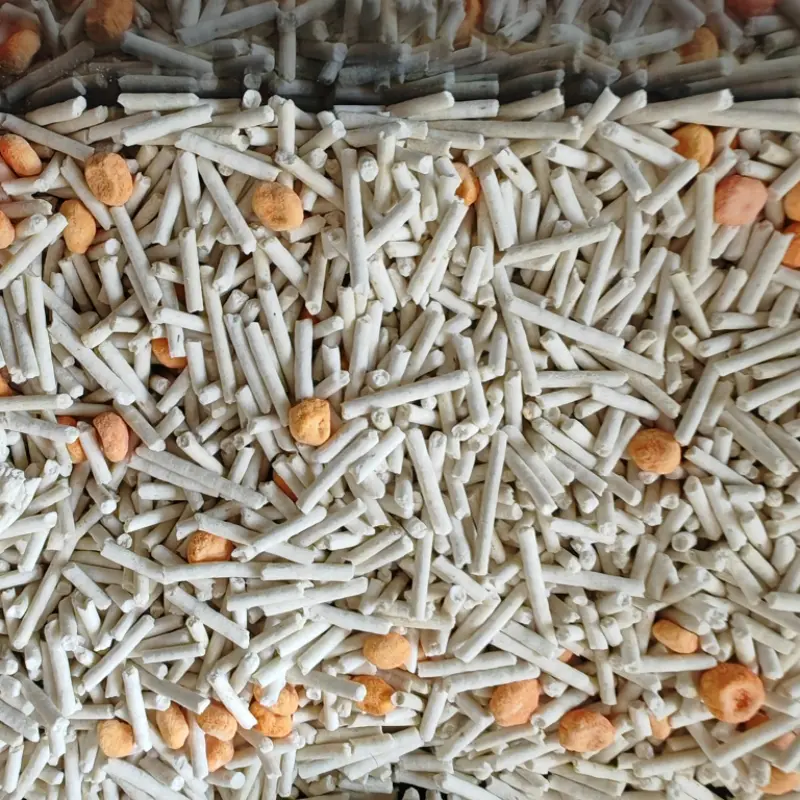
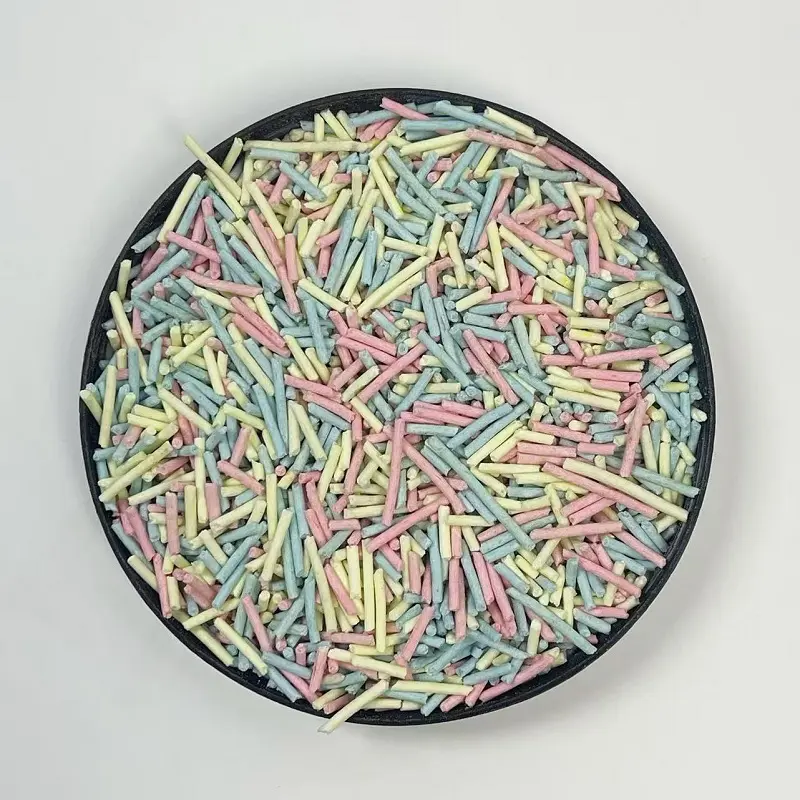
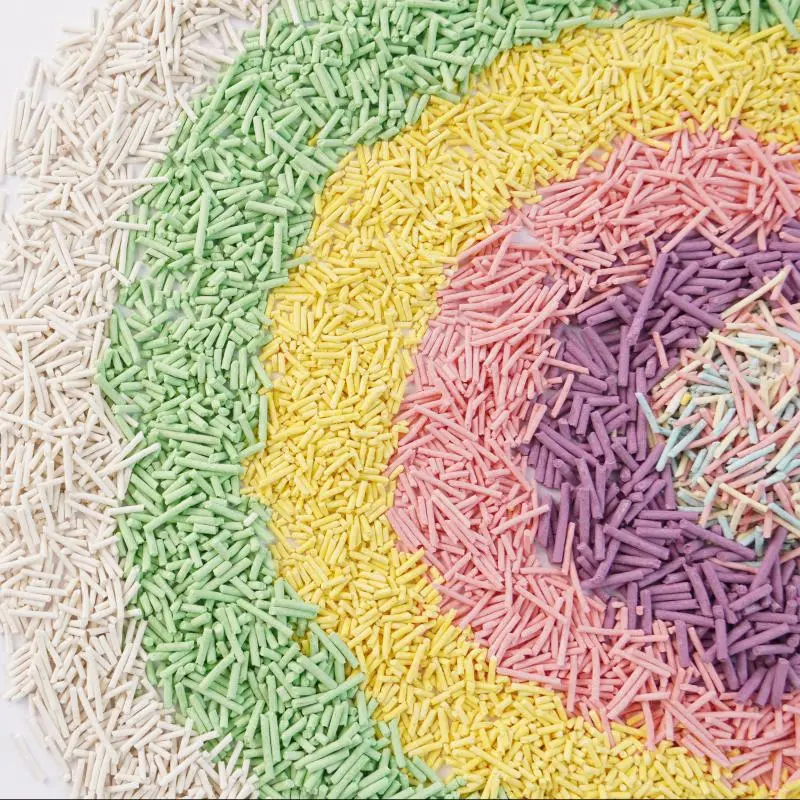
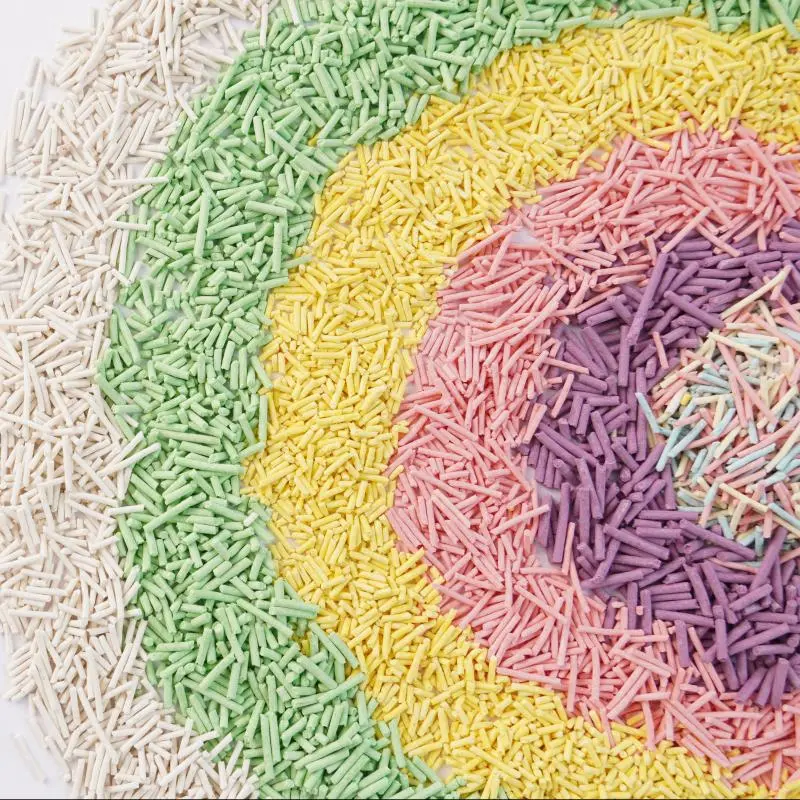
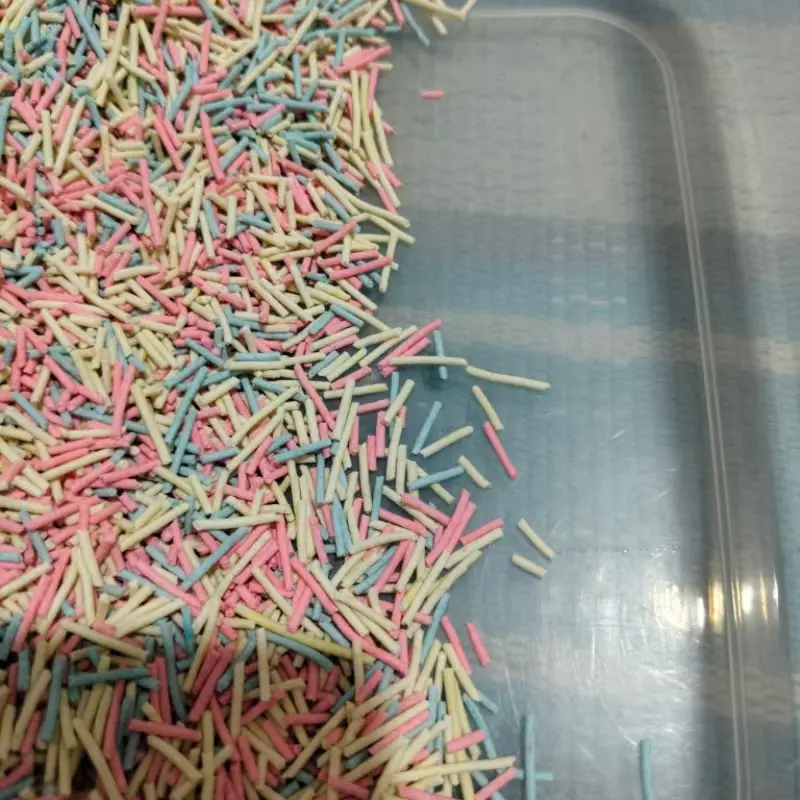
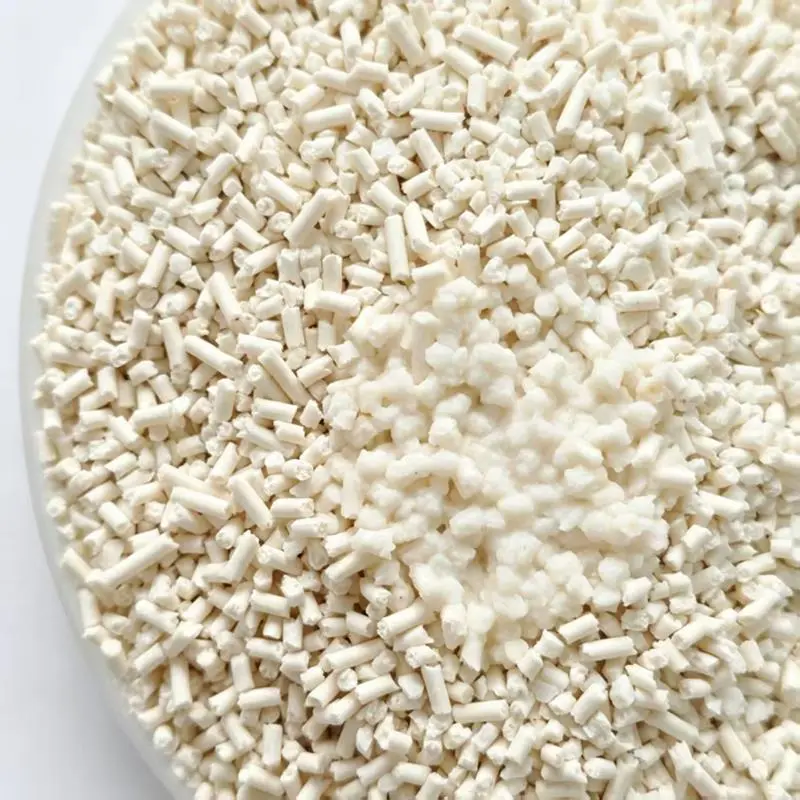
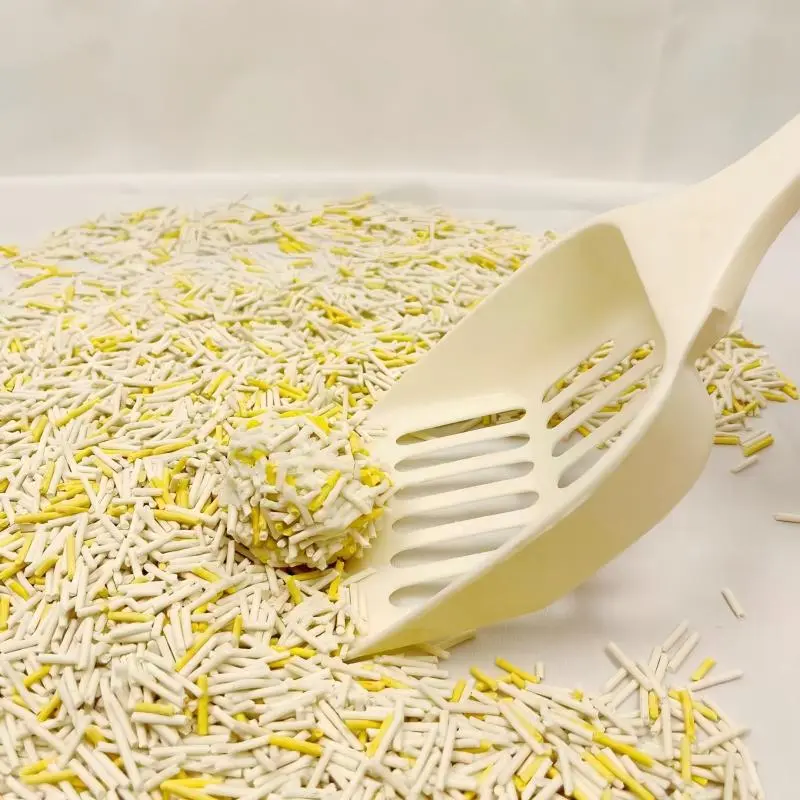
The litter typically appears as small cylindrical pellets measuring approximately 2–4 mm in diameter and 10–20 mm in length.
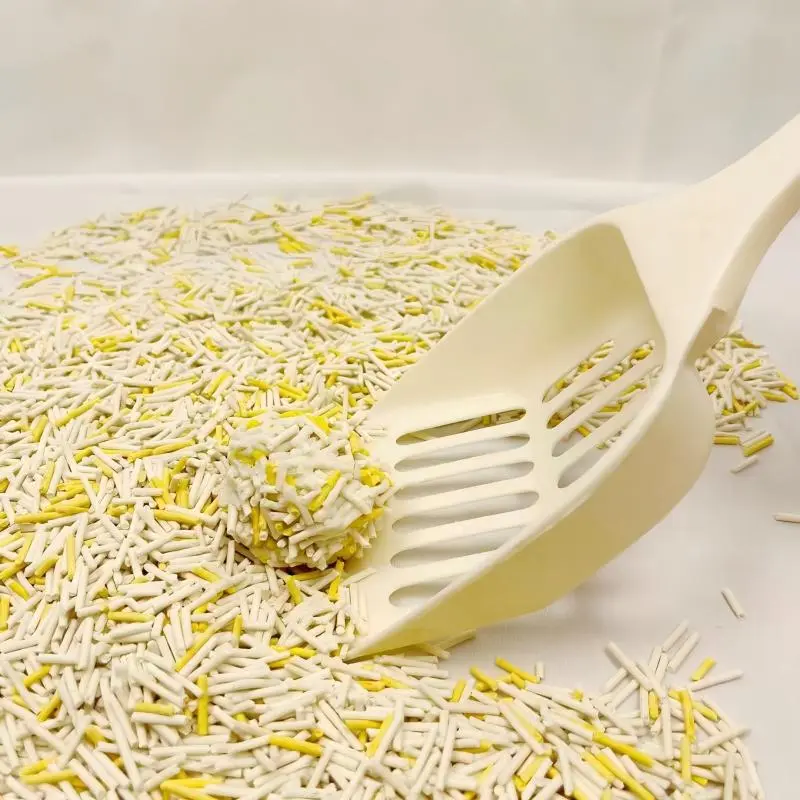
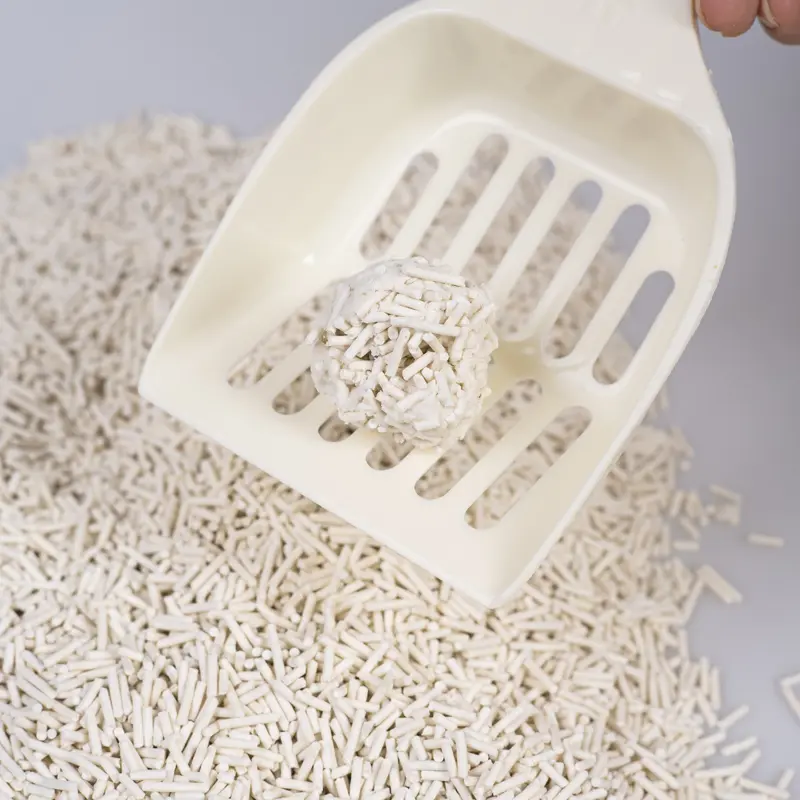
When exposed to cat urine, the pellets rapidly absorb moisture and form solid clumps that can be easily removed.
Why Is Tofu Cat Litter Becoming Popular?
Several factors have contributed to the rapid growth of tofu cat litter worldwide.
Environmental Awareness
Consumers increasingly seek sustainable pet products.
Traditional clay litter requires mining operations that can negatively impact the environment.
Tofu cat litter uses renewable agricultural byproducts that would otherwise become waste.
Health Concerns
Many cat owners are concerned about dust exposure from clay litter.
Tofu litter produces significantly less airborne dust, creating a cleaner environment for both cats and humans.
Convenience
Many tofu litters can be flushed in small quantities, simplifying waste disposal.
Superior Odor Control
Advanced formulas effectively neutralize ammonia and unpleasant odors.
What Materials Are Used to Manufacture Tofu Cat Litter?
The exact formula varies among manufacturers, but most high-quality tofu cat litters contain several key ingredients.
Soybean Fiber
Soybean fiber is the primary raw material.
Functions:
Absorption
Clumping
Pellet structure
Biodegradability
Typical content:
60%-80%
Corn Starch
Corn starch acts as a natural binder.
Functions:
Improves pellet strength
Enhances clumping performance
Reduces breakage during transportation
Typical content:
10%-25%
Guar Gum
Guar gum improves cohesion.
Functions:
Faster clumping
Stronger litter balls
Better moisture retention
Typical content:
1%-5%
Food-Grade Additives
Some formulations include:
Baking soda
Activated carbon
Green tea extract
Zeolite
Natural deodorizing agents
These ingredients improve odor control.
Natural Fragrances
Optional fragrances include:
Green tea
Lavender
Peach
Coffee
Charcoal
Milk
Original unscented
387212672.webp "TOFU-CAT-LITTER-57(1)387212672.webp")
Typical Specifications of Premium Tofu Cat Litter
| Parameter | Specification |
|---|---|
| Raw Material | Soybean Fiber |
| Diameter | 2-4 mm |
| Length | 10-20 mm |
| Moisture Content | ≤8% |
| Water Absorption | ≥300% |
| Dust Content | ≤0.5% |
| Clumping Time | 2-5 Seconds |
| Odor Control | Excellent |
| Flushability | Yes |
| Biodegradability | 100% |
How Is Tofu Cat Litter Manufactured?
The production process significantly affects product quality.
Step 1: Raw Material Collection
Soybean fiber is collected from tofu and soy milk processing facilities.
High-quality manufacturers select:
Fresh soybean residue
Low-moisture materials
Contaminant-free fibers
Step 2: Drying
The soybean fiber undergoes industrial drying.
Objectives:
Reduce moisture
Improve shelf life
Prevent mold growth
Step 3: Grinding
The dried material is ground into a uniform powder.
Benefits:
Better mixing
Improved pellet consistency
Step 4: Formula Mixing
The soybean powder is blended with:
Corn starch
Guar gum
Deodorizing agents
Functional additives
Step 5: Extrusion
The mixture enters an extrusion machine.
The machine forms cylindrical pellets under pressure.
Step 6: Drying and Cooling
Fresh pellets contain residual moisture.
Industrial dryers reduce moisture levels to specification requirements.
Step 7: Screening
Broken pellets and dust are removed.
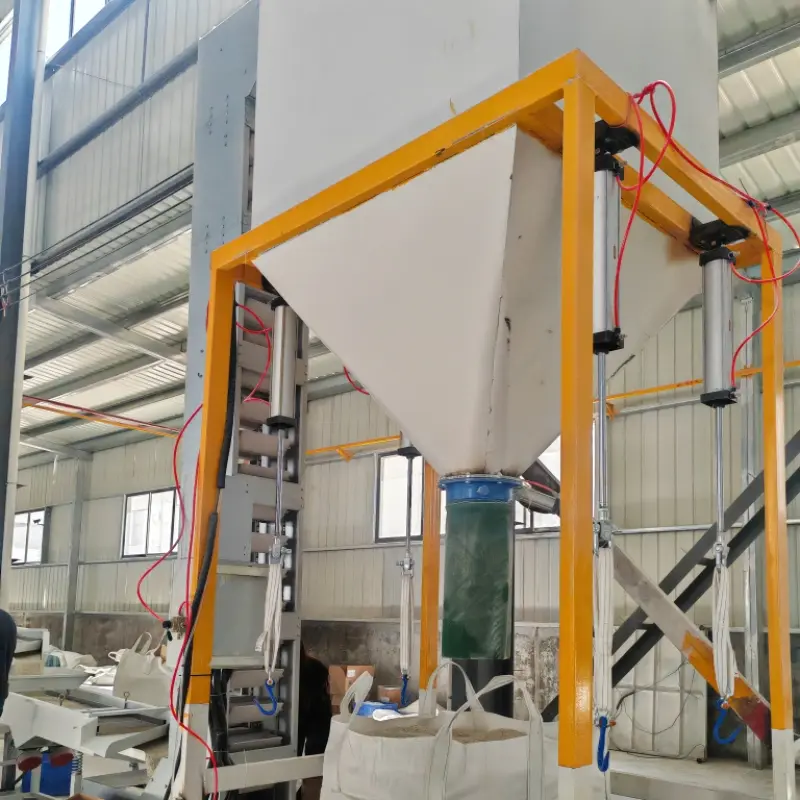
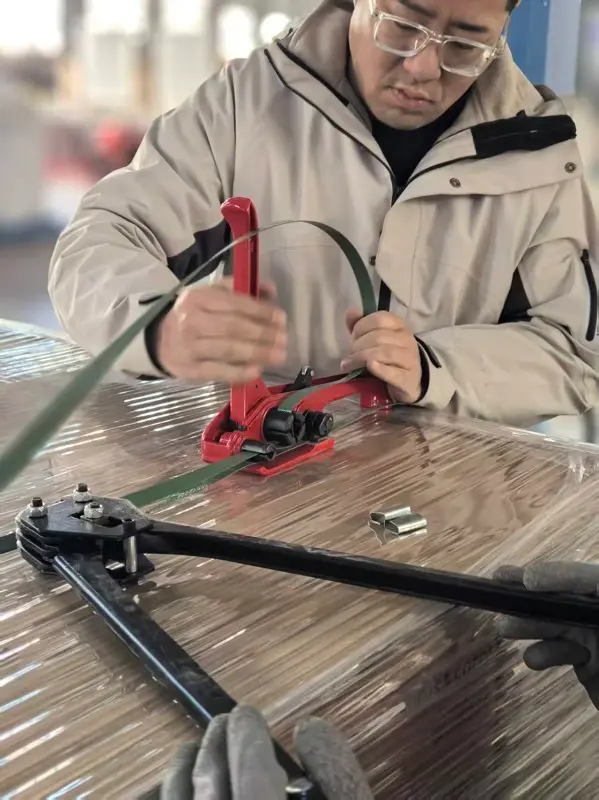
Step 8: Packaging
Finished products are packed into:
2.5 kg bags
5 kg bags
6 L bags
10 L bags
Customized private-label packaging
How Does Tofu Cat Litter Work?
The performance of tofu litter relies on its highly porous plant-fiber structure.
Absorption
Soy fibers quickly absorb liquid.
Urine penetrates deep into the pellet structure.
Clumping
Moisture activates starch and guar gum binders.
The litter forms solid clumps within seconds.
Odor Control
Ammonia molecules become trapped inside the clump.
Additional deodorizing ingredients further reduce odors.
Easy Removal
The solid clumps remain intact during scooping.
Clean litter remains in the box.
Pros of Tofu Cat Litter
Environmentally Friendly
Made from renewable agricultural byproducts.
Reduces landfill waste.
Biodegradable
Naturally decomposes over time.
Flushable
Most tofu litters can be flushed in small amounts.
Always follow local plumbing regulations.
Low Dust
Produces significantly less dust than clay litter.
Ideal for:
Cats with respiratory sensitivity
Multi-cat households
Apartment living
Lightweight
Much easier to carry than bentonite litter.
Excellent Clumping
Forms firm clumps quickly.
Strong Odor Control
Effectively neutralizes ammonia odors.
Safe for Kittens
Natural ingredients reduce health risks.
Easy Cleaning
Clumps remove easily without breaking apart.
Cons of Tofu Cat Litter
Despite its many advantages, tofu litter also has limitations.
Higher Price
Usually costs more than traditional clay litter.
Sensitive to Humidity
Improper storage may cause softening.
Some Cats Need Adjustment
Cats accustomed to clay litter may require a transition period.
Potential Mold Risk
Poor-quality products with excessive moisture may develop mold.
Flushability Limitations
Not all plumbing systems are suitable for flushing litter.
Is Tofu Cat Litter Safe for Cats?
One of the most common questions is whether tofu cat litter is safe.
The answer is generally yes.
Non-Toxic Ingredients
Most premium tofu litters use:
Food-grade soybean fiber
Natural starches
Safe binders
Low Dust Levels
Lower dust means reduced respiratory irritation.
Gentle on Paws
Soft pellets are comfortable for cats.
Reduced Chemical Exposure
Unlike some clay litters, tofu litter contains minimal synthetic additives.
Safe for Kittens
Accidental ingestion is usually less concerning than ingesting clay-based products.
However, owners should always monitor young kittens and prevent excessive consumption.
How to Use Tofu Cat Litter
Using tofu cat litter is simple.
Step 1: Clean the Litter Box
Remove old litter and sanitize the box.
Step 2: Add Fresh Litter
Fill the box with:
5-7 cm (2-3 inches) of litter.
Step 3: Daily Scooping
Remove clumps and solid waste daily.
Step 4: Refill as Needed
Add fresh litter to maintain depth.
Step 5: Complete Replacement
Replace all litter every 2-4 weeks depending on usage.
Transitioning from Clay Litter to Tofu Cat Litter
Many cats prefer consistency.
Gradual transition is recommended.
Week 1
75% old litter
25% tofu litter
Week 2
50% old litter
50% tofu litter
Week 3
25% old litter
75% tofu litter
Week 4
100% tofu litter
This process helps cats adapt comfortably.
Application Scenarios
Single-Cat Households
Provides excellent cleanliness and convenience.
Multi-Cat Homes
Strong clumping and odor control support multiple cats.
Apartments
Low dust and odor make it ideal for confined spaces.
Senior Cats
Soft pellets are comfortable on aging paws.
Kittens
Natural ingredients provide additional peace of mind.
Eco-Conscious Consumers
One of the most sustainable litter choices available.
Competitive Analysis: Tofu Cat Litter vs Other Cat Litters
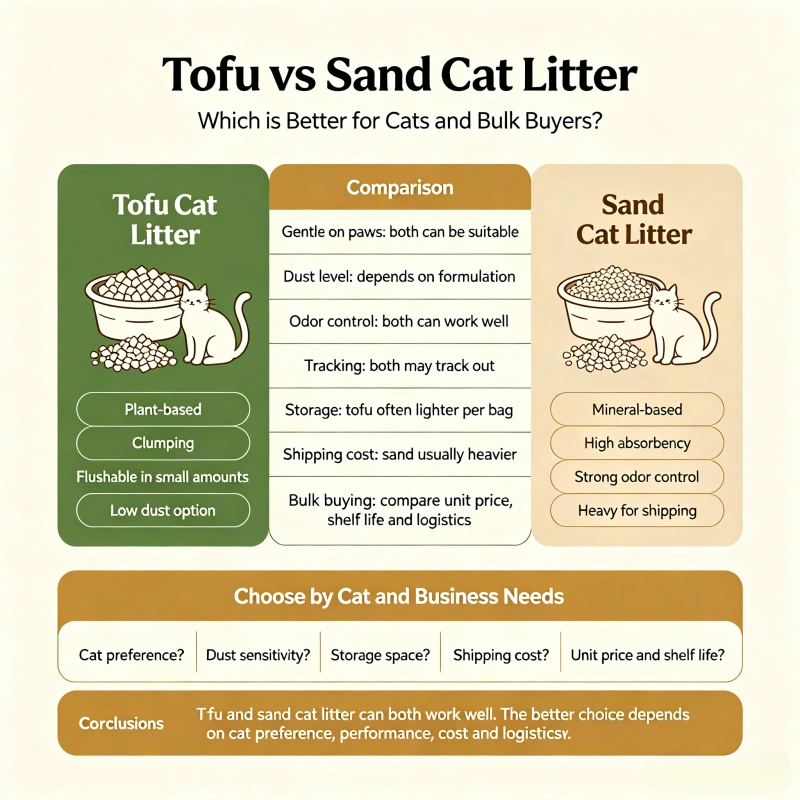
Tofu Cat Litter vs Bentonite Clay Litter
| Feature | Tofu | Bentonite |
| Dust | Very Low | High |
| Weight | Light | Heavy |
| Flushable | Yes | No |
| Eco-Friendly | Excellent | Poor |
| Clumping | Excellent | Excellent |
| Price | Higher | Lower |
Winner: Tofu Cat Litter.
Tofu Cat Litter vs Crystal Cat Litter
| Feature | Tofu | Crystal |
| Clumping | Yes | Usually No |
| Dust | Low | Moderate |
| Flushable | Yes | No |
| Comfort | Higher | Moderate |
| Sustainability | Better | Lower |
Winner: Tofu Cat Litter.
Tofu Cat Litter vs Pine Cat Litter
| Feature | Tofu | Pine |
| Clumping | Excellent | Limited |
| Odor Control | Excellent | Good |
| Dust | Very Low | Low |
| Tracking | Low | Moderate |
Winner: Tofu Cat Litter.
Tofu Cat Litter vs Paper Cat Litter
| Feature | Tofu | Paper |
| Clumping | Excellent | Weak |
| Absorption | Higher | Moderate |
| Odor Control | Better | Moderate |
| Cost | Slightly Higher | Moderate |
Winner: Tofu Cat Litter.
What Should Buyers Consider Before Purchasing Tofu Cat Litter?
When sourcing tofu cat litter, ask suppliers:
What Is the Soybean Fiber Content?
Higher soybean content usually indicates better quality.
What Is the Dust Level?
Premium products should have less than 0.5% dust.
What Is the Water Absorption Rate?
Higher absorption improves performance.
Is It Truly Flushable?
Verify testing and certifications.
What Odor-Control Additives Are Used?
Common options include:
Activated carbon
Green tea
Baking soda
Is OEM or Private Label Available?
Important for distributors and retailers.
What Packaging Options Are Offered?
Look for flexible packaging solutions.
What Certifications Are Available?
Common certifications include:
ISO
SGS
MSDS
REACH
Future Trends of Tofu Cat Litter
The tofu cat litter market continues expanding rapidly.
Emerging developments include:
Health-monitoring litter
pH detection litter
Antibacterial formulas
Dust-free premium grades
Mixed tofu and bentonite formulas
Sustainable packaging solutions
As consumers increasingly prioritize sustainability and pet health, tofu cat litter is expected to become one of the dominant litter categories worldwide.
Conclusion
Tofu cat litter is an innovative, eco-friendly, and cat-safe alternative to traditional clay-based litter. Manufactured primarily from soybean fiber, starch, and natural binders, it offers outstanding clumping performance, excellent odor control, low dust generation, biodegradability, and convenient disposal options. While it may cost more than conventional bentonite litter, its environmental benefits, ease of use, and health advantages make it an attractive option for modern cat owners.
Whether you are a pet owner seeking a cleaner litter solution or a distributor looking for a high-growth product category, tofu cat litter represents one of the most promising innovations in the global pet care market.
387.webp)