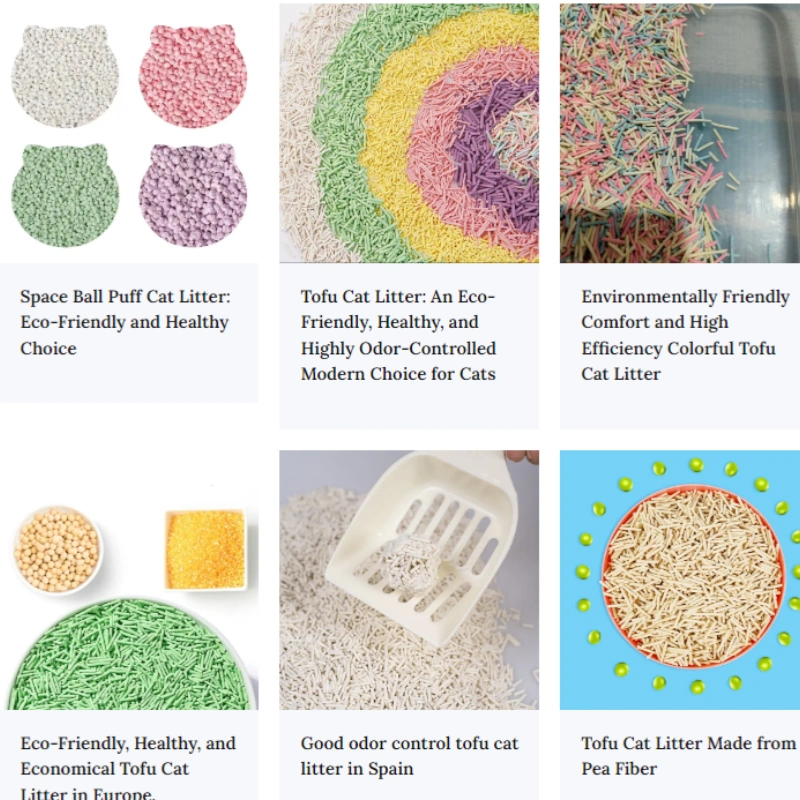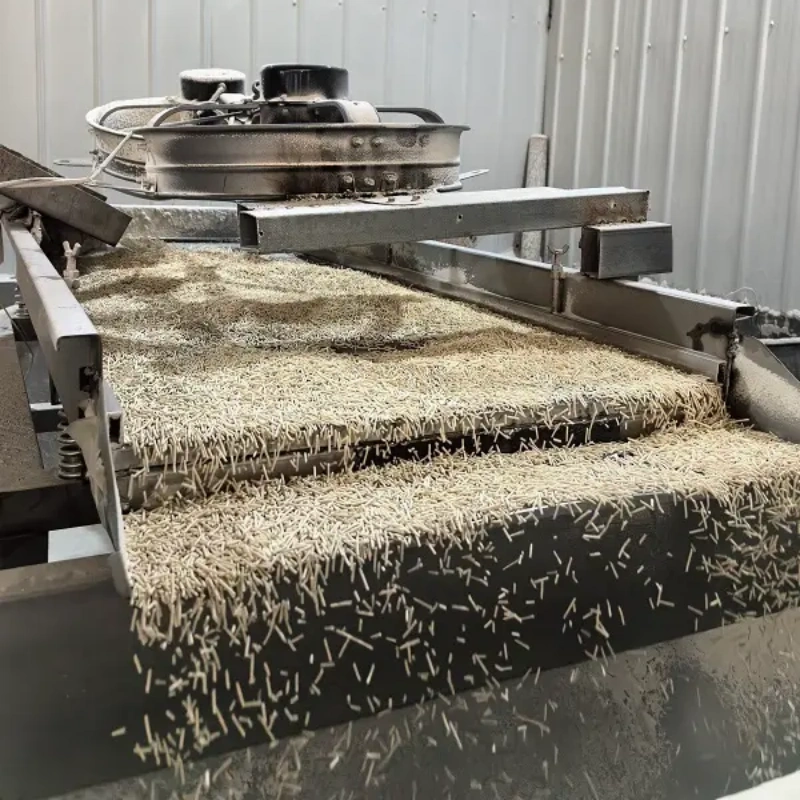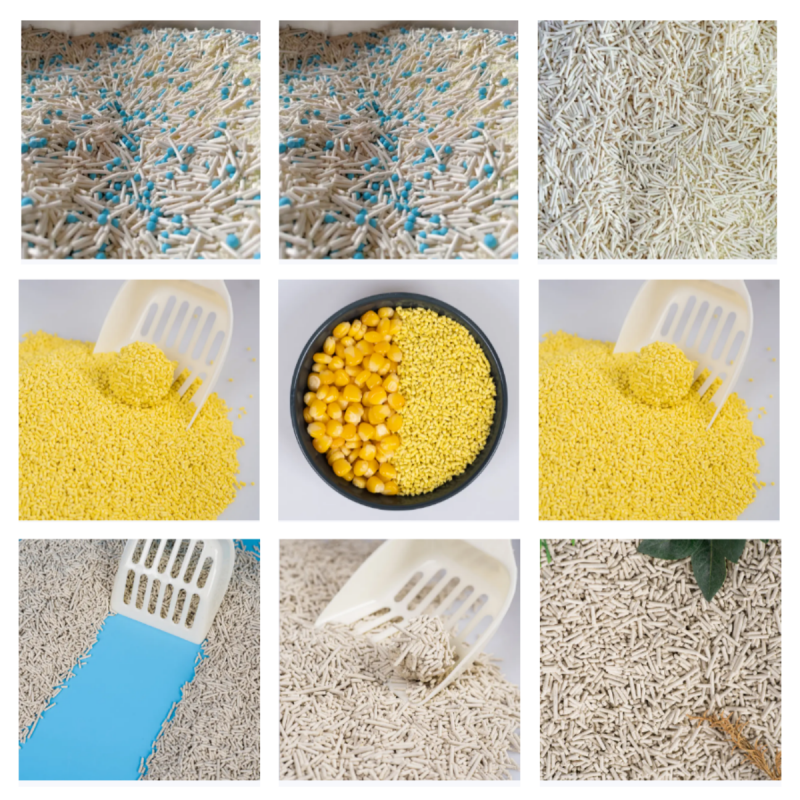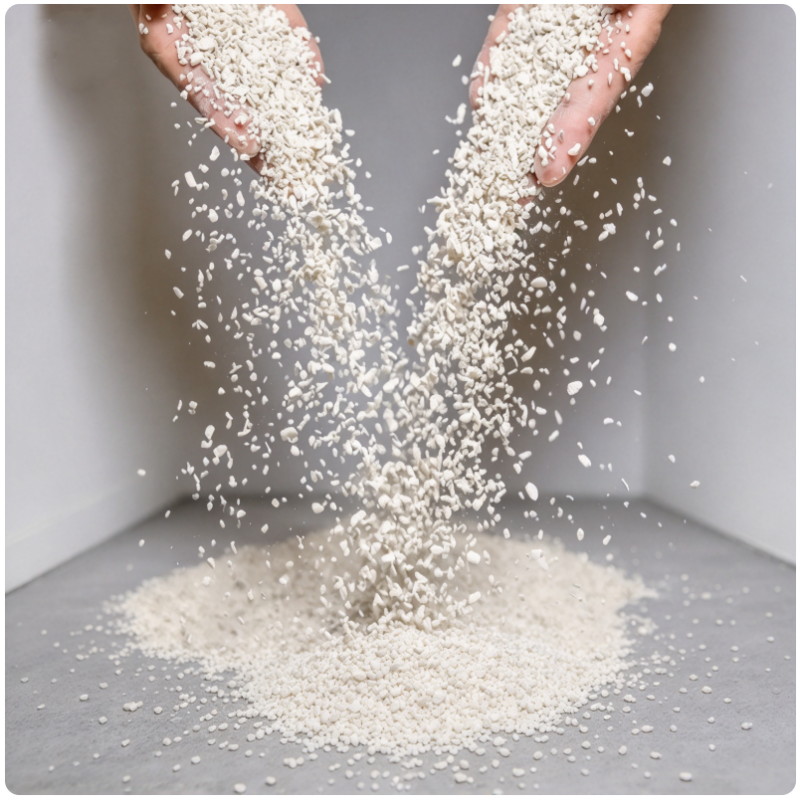
Lightweight cat litter is made from different materials depending on the product formula. Common ingredients include tofu fiber, soybean by-products, corn starch, wood fiber, and other plant-based materials. Some lightweight cat litters are mineral-based and combine clay with lower-density materials such as perlite to reduce overall weight.
Unlike traditional cat litter, which often relies on dense mineral materials, lightweight cat litter is designed to make handling, pouring, storage, and transportation more convenient. However, its exact composition and performance vary by product. Understanding the ingredients can help cat owners choose the right litter and help pet brands develop products that meet their customers' needs.
In this guide, we explain what lightweight cat litter is made of, how its ingredients work, how plant-based and mineral-based options compare, and what to consider when choosing a lightweight cat litter manufacturer.
What Is Lightweight Cat Litter Made Of?
Lightweight cat litter is not a single type of material. It is a product category that includes different formulations designed to reduce weight while providing the absorption, clumping, and odor-control performance required for everyday litter box use.
The main ingredients generally fall into two categories: plant-based materials and mineral-based materials.
Plant-Based Materials
Plant-based lightweight cat litter is made from renewable plant-derived ingredients. Depending on the formula, these may include:
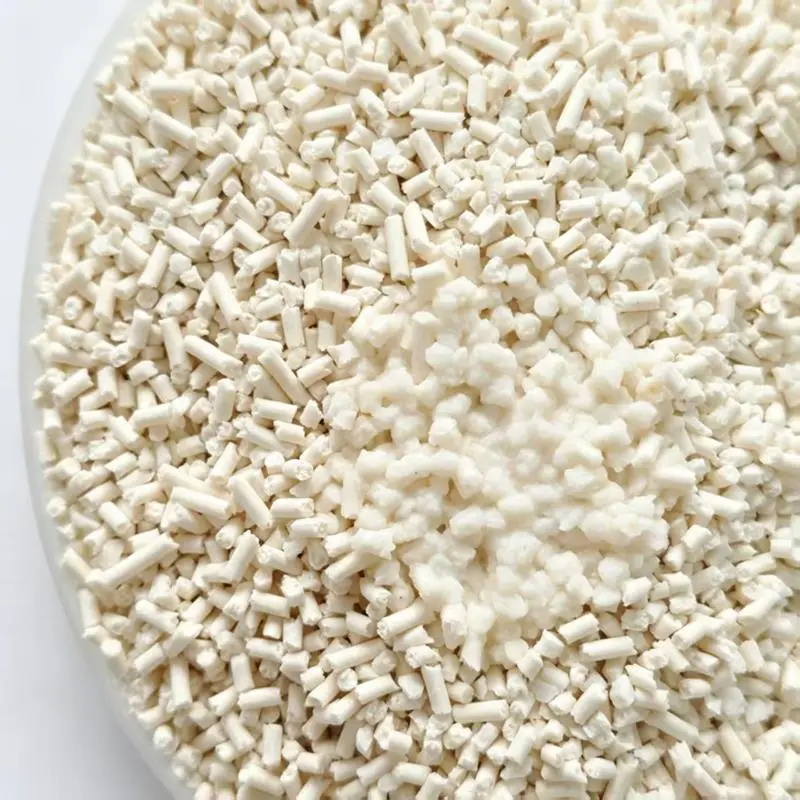
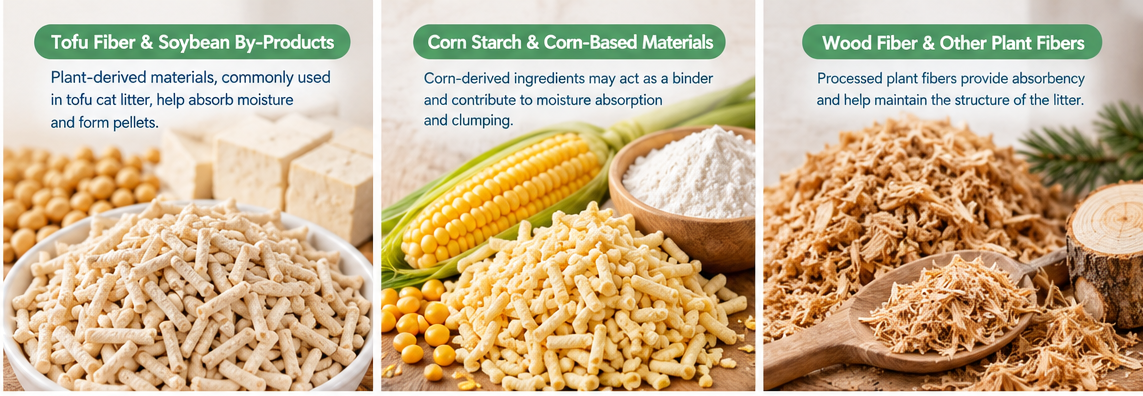
Tofu fiber and soybean by-products: Plant-derived materials commonly used in tofu cat litter to help absorb moisture and form pellets.
Corn starch: A plant-based ingredient that may act as a binder or support pellet formation.
Corn-based materials: Ingredients used in certain plant-based litter formulations for moisture absorption and clumping.
Wood fiber: Processed plant material used in some absorbent litter products.
Other plant fibers: Depending on the formulation, additional plant-derived materials may contribute to the litter's structure and functional performance.
Plant-based cat litter is popular among consumers looking for alternatives to conventional mineral litter. However, the term does not guarantee that a product is entirely plant-based, biodegradable, dust-free, or flushable. These characteristics depend on the complete formulation and the product's tested properties.
Plant-based cat litter
Lightweight Clay and Mineral Materials
Some lightweight cat litters are made from mineral-based ingredients rather than plant fibers.
Bentonite clay is widely used in conventional clumping cat litter because it absorbs moisture and forms clumps. Certain lightweight mineral formulas combine clay with lower-density materials, such as perlite, to reduce the product's overall weight.
The exact ingredients and proportions vary by manufacturer. Adding a lightweight material does not automatically guarantee better absorption, stronger clumping, or lower dust levels. These properties depend on the complete formula and manufacturing process.
Other Ingredients Used in Cat Litter Formulas
In addition to the main absorbent materials, some cat litter products contain functional additives to improve specific characteristics.
Common examples include:
Binders: Help particles maintain their shape or support clump formation.
Odor-control ingredients: May include activated carbon, zeolite, or other materials selected to help manage unpleasant odors.
Fragrances: Used in some products to provide a particular scent.
Colorants: Used in certain formulations to achieve a specific appearance.
Not every product contains these ingredients. For example, unscented cat litter does not require added fragrance, and some formulas rely primarily on their base material for moisture and odor management.
For pet brands developing their own products, ingredient selection should reflect the target market, intended performance, manufacturing requirements, and relevant product safety standards.
What Are the Main Ingredients in Lightweight Cat Litter?
Although lightweight cat litter products may look similar, their raw materials can differ considerably. Each material has its own characteristics, and the final product's performance depends on how the ingredients work together.
Tofu Fiber and Soybean By-Products
Tofu cat litter is commonly produced using soybean-derived materials, including suitable by-products from tofu manufacturing. Depending on the formulation, additional plant fibers and starch-based binders may be used to help create uniform pellets.
These materials are processed, formed into granules or pellets, and dried to achieve the desired product characteristics.
Tofu cat litter is often selected for its plant-based composition and convenient handling. Its absorption rate, clumping strength, pellet durability, and dust performance depend on the raw materials and production process.
For manufacturers, controlling ingredient quality, moisture content, pellet size, and drying conditions is important for producing consistent batches.
Corn Starch and Corn-Based Materials
Corn-derived ingredients are used in some plant-based cat litter formulations. Corn starch may serve as a binder, helping particles maintain their shape or supporting the formation of cohesive clumps.
Other corn-based materials may contribute to the absorbent structure of a litter product, depending on how they are processed and combined with other ingredients.
It is important to distinguish corn starch from a complete corn-based litter formula. Starch is often one component of a formulation rather than the only raw material.
When evaluating corn-based cat litter, buyers should consider moisture absorption, pellet durability, clumping performance, dust levels, and storage stability rather than relying on the ingredient name alone.
Wood Fiber and Other Plant Fibers
Wood fiber and other processed plant fibers can be used in absorbent litter products. Their properties depend on the type of plant material, particle structure, processing method, and moisture content.
Some plant-fiber products are designed for absorption without forming firm clumps, while others use additional ingredients to support clumping.
Plant-derived ingredients may offer environmental advantages in certain applications, but biodegradability and disposal suitability depend on the full formulation and the conditions under which the product is processed or discarded.
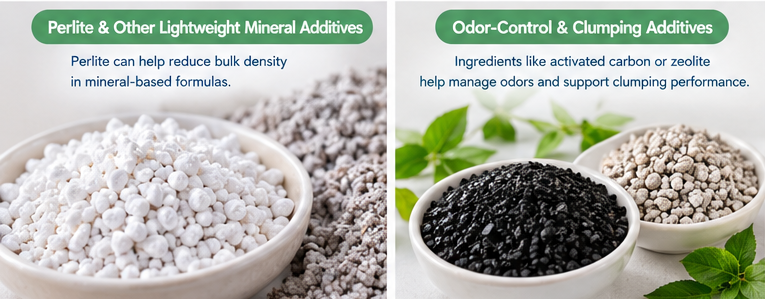
Perlite and Other Lightweight Mineral Additives
Perlite is a lightweight mineral material used in various industrial applications. In some cat litter formulations, it can help reduce bulk density when incorporated into a suitable mineral-based mixture.
This is different from using plant fibers as the primary material. Plant-based lightweight litter relies on plant-derived ingredients, while lightweight mineral litter may use a combination of clay and lower-density mineral components.
For consumers and commercial buyers, the distinction matters because material composition influences handling, moisture absorption, disposal options, and product positioning.
Odor-Control and Clumping Additives
Odor control and clumping are important performance considerations for lightweight cat litter.
Some products use additives such as activated carbon or zeolite to support odor management. Other products rely on the natural characteristics of the base material and the way moisture is absorbed and contained.
Clumping performance is also formulation-dependent. A product may use starch-based binders or naturally clumping mineral materials to help form clumps that can be removed during litter box cleaning.
When comparing products, look for clear ingredient information and relevant performance testing. Do not assume that every lightweight litter contains the same additives or offers the same results.
How Does Lightweight Cat Litter Work?
Lightweight cat litter works by combining a suitable base material with a particle structure and formulation designed for litter box use. Its performance depends on more than weight alone.
Absorption and Moisture Control
The primary function of cat litter is to manage moisture. Depending on the material, liquid may be absorbed into the particles, retained within their structure, or distributed across the litter bed.
Plant fibers and other porous materials can absorb moisture, while bentonite clay absorbs liquid and swells. Different materials behave differently, so absorption performance should be evaluated for the specific product.
Manufacturers can assess absorption through controlled testing to determine how much liquid a product takes up under defined conditions.
Clumping Performance
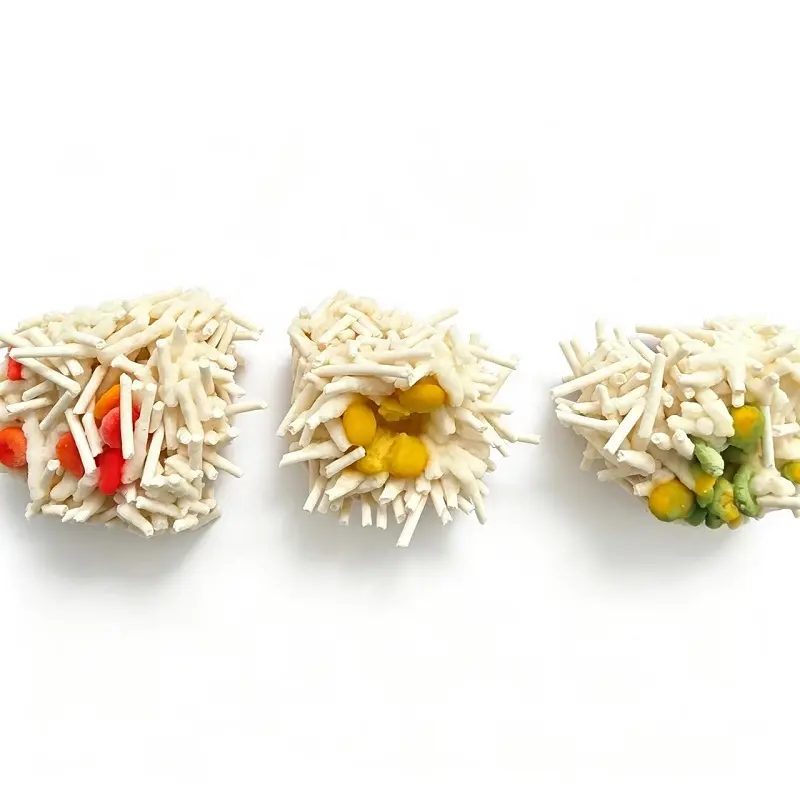
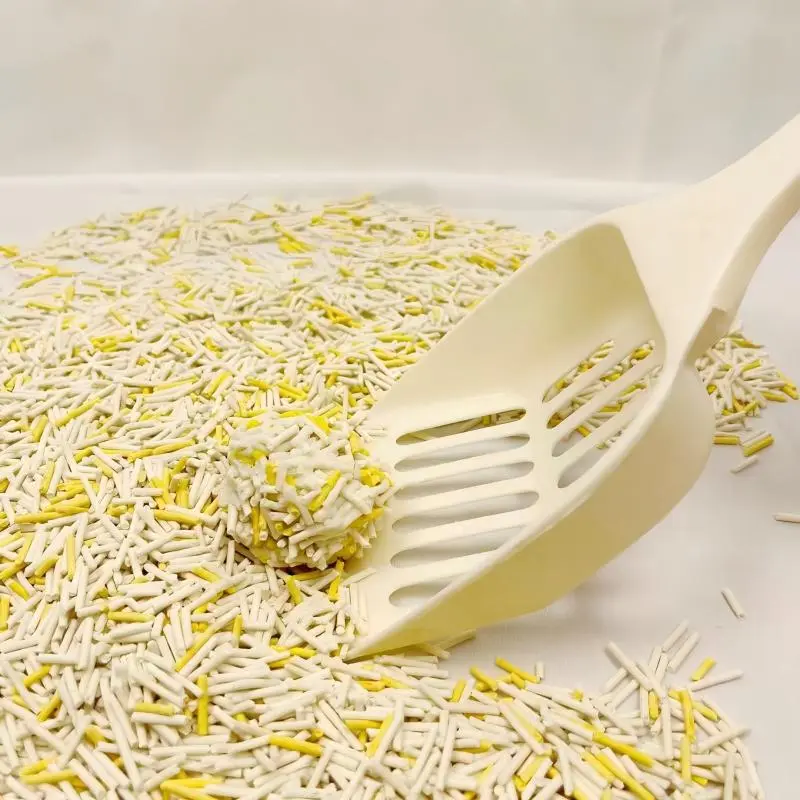
Clumping litter forms cohesive masses when it comes into contact with liquid. These clumps can then be removed, allowing the remaining litter to stay in the box.
Bentonite clay is widely used for its clumping characteristics. Some tofu and other plant-based litters use starch-based binders or other formulation techniques to achieve similar functionality.
Clump strength, formation speed, and resistance to breaking vary between products. A lightweight formula should therefore be evaluated for its cleaning performance rather than judged by weight alone.
Odor Control and Dust Management
Odor control can depend on moisture management, the base material, ventilation, cleaning frequency, and the use of additional odor-control ingredients.
Dust levels depend on raw material characteristics, particle size, drying, screening, handling, and packaging. Lightweight cat litter is not automatically dust-free, and a plant-based product is not necessarily lower in dust than every mineral-based alternative.
For both consumers and commercial buyers, practical performance testing is more useful than broad claims about a material category.
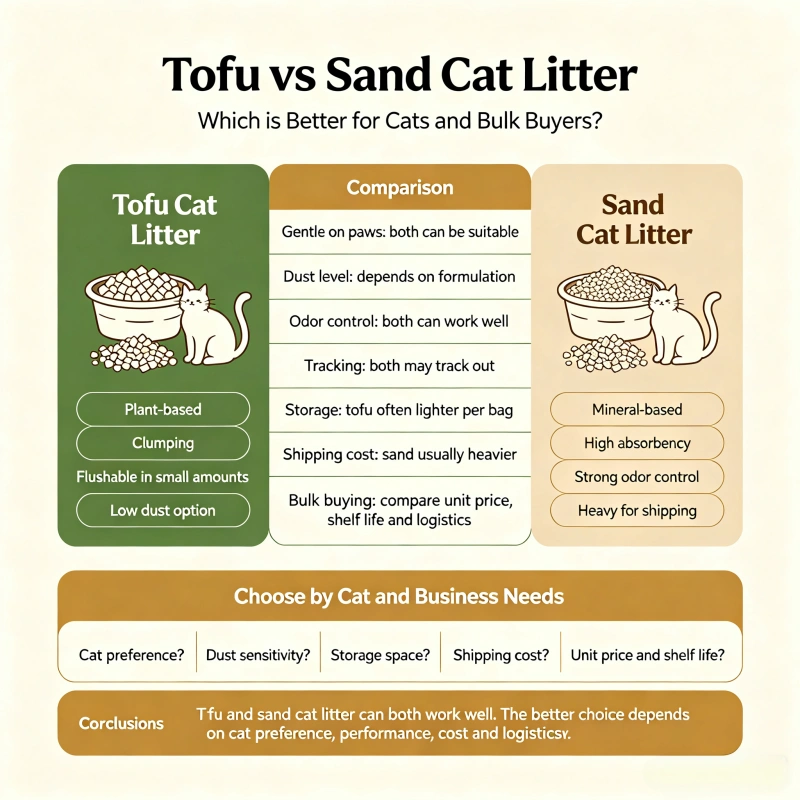
Lightweight Cat Litter vs. Regular Cat Litter
The main difference between lightweight cat litter and regular cat litter is the weight of the product in relation to its volume or intended use. However, the comparison also involves absorption, clumping, dust, odor control, packaging, and overall cost.
| Comparison factor | Lightweight cat litter | Conventional cat litter |
|---|---|---|
| Common materials | Plant fibers, soybean-derived ingredients, corn-based materials, or lightweight mineral blends | Often bentonite clay or other mineral materials |
| Handling | Generally designed to be easier to lift and pour | Can be heavier, particularly in dense mineral formulations |
| Absorption | Depends on the material and formula | Depends on the material and formula |
| Clumping | May use plant-based binders or other clumping mechanisms | Bentonite products commonly form clumps through clay swelling |
| Dust | Varies by formulation and processing | Varies by formulation and processing |
| Odor control | Depends on moisture management and optional additives | Depends on moisture management and optional additives |
| Environmental profile | Some plant-based formulas use renewable materials and may be biodegradable under suitable conditions | Mineral-based products have different sourcing and disposal considerations |
| Storage and shipping | Lower product weight may improve handling, but package dimensions also matter | Product weight and packaging volume affect handling and shipping costs |
Is Lightweight Cat Litter Better Than Regular Cat Litter?
Not necessarily. Lightweight cat litter can be a practical choice for people who prefer easier handling, but the best product depends on individual needs.
Cat owners may prioritize clumping strength, odor control, dust levels, tracking, and ease of cleaning. Retailers and distributors may also consider packaging, shelf appeal, shipping costs, and customer preferences.
For commercial buyers, comparing cost per kilogram alone may not provide a complete picture. Product consumption, package size, shipping volume, and performance during use can all affect the overall value.
The best approach is to compare products using consistent criteria and, where possible, conduct practical testing before making a purchasing decision.
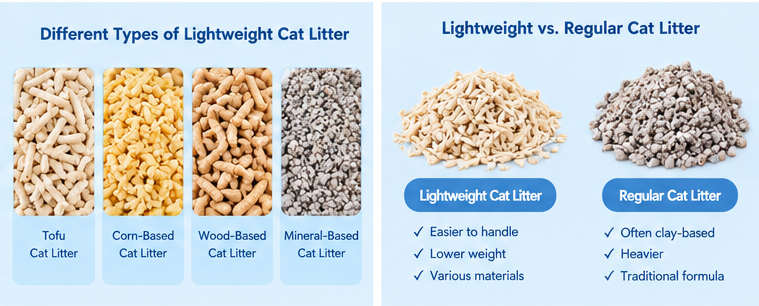
Lightweight cat litter and regular cat litter
Is Lightweight Cat Litter Better for the Environment?
The environmental impact of lightweight cat litter depends on the raw materials, manufacturing process, packaging, transportation, and disposal method.
Biodegradability Depends on the Ingredients
Some plant-based cat litters contain materials that can biodegrade under suitable conditions. However, biodegradability cannot be assumed simply because a product is lightweight or marketed as natural.
Mixed-material formulations, mineral additives, binders, fragrances, and other ingredients may affect the product's overall environmental profile.
If biodegradability is an important selling point, manufacturers should evaluate the complete formulation and use appropriate evidence to support any environmental claims.
Packaging and Transportation Considerations
Lightweight products may be easier to handle and may reduce the mass of litter transported for a given volume or functional application. However, actual transportation benefits depend on packaging dimensions, product density, pallet configuration, vehicle capacity, and the quantity shipped.
For importers and distributors, both product weight and packaging volume should be considered when estimating logistics costs.
Packaging material is another factor. Recyclability and environmental impact depend on the packaging composition and the waste-management facilities available in the destination market.
Is Lightweight Cat Litter Flushable?
Not all lightweight cat litter is flushable. Even plant-based or biodegradable materials may be unsuitable for flushing because of their absorption characteristics, clumping behavior, or effects on plumbing and wastewater systems.
Consumers should follow the product label and local wastewater guidance. Manufacturers should provide clear disposal instructions based on the actual product formulation and relevant testing.
How to Choose the Right Lightweight Cat Litter
Choosing the right lightweight cat litter depends on how the product will be used and which characteristics matter most.
For Everyday Cat Owners
When choosing lightweight cat litter for home use, consider the following factors:
Material: Decide whether you prefer plant-based ingredients or a mineral-based formula.
Absorption: Check how effectively the product manages moisture under normal use.
Clumping: If you use clumping litter, consider how easily clumps form and whether they remain intact during removal.
Odor control: Review the product's odor-control claims and consider whether you prefer scented or unscented litter.
Dust and tracking: Look for reliable product information and practical performance feedback.
Disposal: Follow the manufacturer's instructions and local waste-management requirements.
A suitable litter should meet your cat's needs while making routine cleaning manageable.
For Retailers, Importers, and Pet Brands
For businesses sourcing lightweight cat litter, product selection involves additional considerations beyond consumer-facing performance.
First, identify the target market and intended positioning. A plant-based formula may suit a brand focused on plant-derived ingredients, while other customers may prefer a particular clumping mechanism, particle size, or price point.
Next, evaluate the manufacturing partner's ability to deliver consistent products at the required scale. Raw material availability, production capacity, quality control, packaging options, and export coordination all contribute to supply reliability.
Finally, request samples and evaluate the product against your specifications before committing to a large order. This helps ensure that the selected formula meets the expectations of your customers and your distribution channel.
Choosing a Lightweight Cat Litter Manufacturer
Selecting a suitable cat litter manufacturer is an important step for brands, wholesalers, importers, and retailers developing their own product lines.
A reliable manufacturing partner should be able to explain its material options, product specifications, quality management procedures, production capacity, and customization capabilities.
Material Selection and Formula Customization
Different markets may have different preferences for ingredients, particle sizes, fragrances, packaging formats, and product positioning.
A manufacturer with experience in plant-based cat litter can help buyers evaluate options such as tofu cat litter, corn-based cat litter, and other plant-derived formulations. Depending on the manufacturer's capabilities, customization may include material selection, pellet dimensions, fragrance, color, and private-label packaging.
Not every combination is technically suitable for every formula. Buyers should confirm feasibility, product performance, and applicable regulatory requirements before finalizing specifications.
Production Capacity and Quality Control
Production capacity matters when a business needs to maintain consistent supply across multiple orders or sales channels.
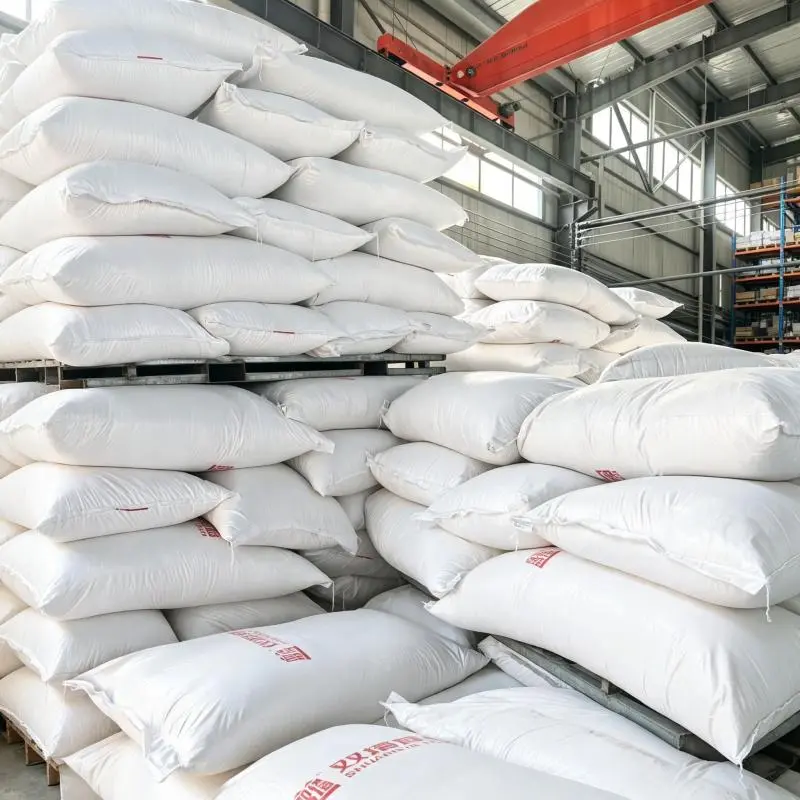
Established in 2020, Shandong Gelin Town Pet Products Co., Ltd. is a professional cat litter manufacturer specializing in plant-based cat litter research and production. Our manufacturing facility covers approximately 16,000 square meters and has an annual production capacity of 7,000 tons.
Our factory is equipped with automated production equipment, standardized workshops, and a professional R&D team. These resources support product development and bulk manufacturing for customers seeking a dependable supply of cat litter products.
Our quality credentials include BSCI, ISO 9001, SGS, and CTI-related certifications or assessments, as applicable to the relevant scope. Buyers can request the applicable documentation to verify certification details, coverage, and validity.
OEM/ODM and Private Label Cat Litter Services
For businesses building their own pet brands, OEM/ODM services can provide a practical route to developing and sourcing customized cat litter products.
Shandong Gelin Town Pet Products Co., Ltd. offers wholesale supply and OEM/ODM services for customers seeking plant-based cat litter, tofu cat litter, corn-based cat litter, and other available product options.
Depending on product feasibility and confirmed specifications, customization may cover:
Raw material and formula options
Pellet size and product appearance
Fragrance or unscented formulations
Packaging specifications and private labeling
Product testing and supporting documentation
Bulk production and supply coordination
We support customers selling through online marketplaces, including Amazon and eBay, as well as businesses operating through offline retail and distribution channels.
From raw material selection to packaged products, our goal is to help pet brands and distributors develop suitable cat litter products while coordinating their manufacturing and supply requirements.
If you are looking for a plant-based cat litter manufacturer or a tofu cat litter processing factory, contact our team to discuss your product specifications, target market, packaging requirements, and expected order volume.
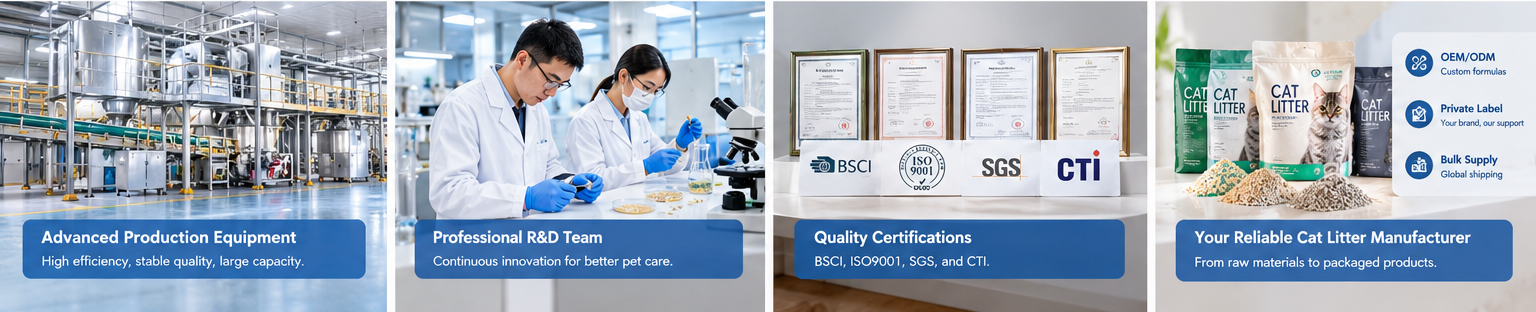
Advantages of Gelin Town Pet
Frequently Asked Questions About Lightweight Cat Litter
What Is Lightweight Cat Litter Made Of?
Lightweight cat litter may be made from tofu fiber, soybean by-products, corn starch, wood fiber, other plant-based ingredients, or mineral-based blends containing materials such as clay and perlite. The exact composition depends on the product formula.
Is Lightweight Cat Litter Made of Clay?
Some lightweight cat litters are clay-based and may contain lower-density additives to reduce overall weight. Others are primarily plant-based and use ingredients such as tofu fiber, corn-derived materials, or wood fiber.
Is Lightweight Cat Litter Always Plant-Based?
No. Lightweight cat litter can be plant-based or mineral-based. The term describes the product's weight characteristics, not a specific raw material.
Is Lightweight Cat Litter Safe for Cats?
Safety depends on the formulation, product quality, dust characteristics, and intended use. Choose products designed for cats, follow the manufacturer's instructions, and consider your cat's individual needs. If your cat develops respiratory or other concerning symptoms after using a litter product, discontinue use and consult a veterinarian.
Does Lightweight Cat Litter Produce Less Dust?
Not necessarily. Dust levels depend on raw materials, particle size, processing, screening, and handling. Check product-specific information or testing rather than assuming that every lightweight formula produces less dust.
Is Tofu Cat Litter a Type of Lightweight Cat Litter?
Tofu cat litter is often a plant-based option that is relatively easy to handle, but its exact weight depends on its ingredients, moisture content, and pellet structure. Compare product specifications rather than assuming all tofu cat litter has the same density.
Can Lightweight Cat Litter Be Flushed?
Not all lightweight cat litter is flushable. Follow the product label and local wastewater guidance, and do not assume that a plant-based or biodegradable product is suitable for flushing.
Can I Order Private Label Lightweight Cat Litter?
Many cat litter manufacturers offer private-label or OEM/ODM services, although available materials, packaging options, minimum order quantities, and production schedules vary. Contact the manufacturer to confirm the specifications and requirements for your intended product.
Final Thoughts
Lightweight cat litter can be made from plant-based materials such as tofu fiber, soybean by-products, corn starch, and wood fiber, or from mineral-based formulations that use lower-density components. The best choice depends on the product's intended use, absorption, clumping performance, odor control, dust levels, environmental considerations, and overall cost.
For cat owners, understanding the ingredients makes it easier to compare products and select a suitable litter. For retailers, wholesalers, and pet brands, understanding the raw materials and manufacturing process helps support better sourcing and product-development decisions.
Shandong Gelin Town Pet Products Co., Ltd. specializes in plant-based cat litter manufacturing, with approximately 16,000 square meters of production space, an annual capacity of 7,000 tons, and OEM/ODM services for business customers.
Whether you are developing a tofu cat litter product, sourcing corn-based cat litter, or looking for a manufacturing partner for your own pet brand, our team can help you explore available materials, customization options, and bulk supply solutions.