When comparing tofu vs sand cat litter, buyers are usually looking for answers to several practical questions: Which material absorbs urine better? Which one controls odor? Is tofu litter safer for cats? Which option produces less dust, costs less, and is easier to dispose of?
The answer depends on the type of sand litter being compared. Traditional mineral sand or clay-based litter is widely used because it is affordable, familiar, and available in many markets. Tofu cat litter is a plant-based alternative made mainly from soybean fiber or other vegetable materials. It is designed to provide fast absorption, easy clumping, lower weight, and more flexible disposal options.
For households and pet product buyers, the most important difference is simple: sand litter focuses on familiarity and low purchase cost, while tofu litter focuses on lightweight handling, plant-based materials, and convenient daily cleaning.
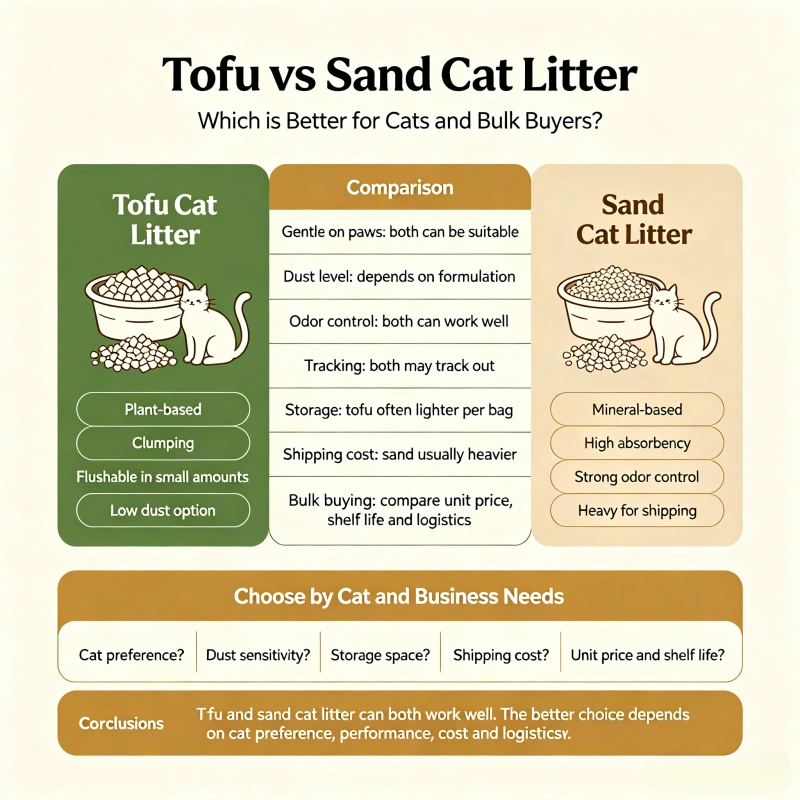
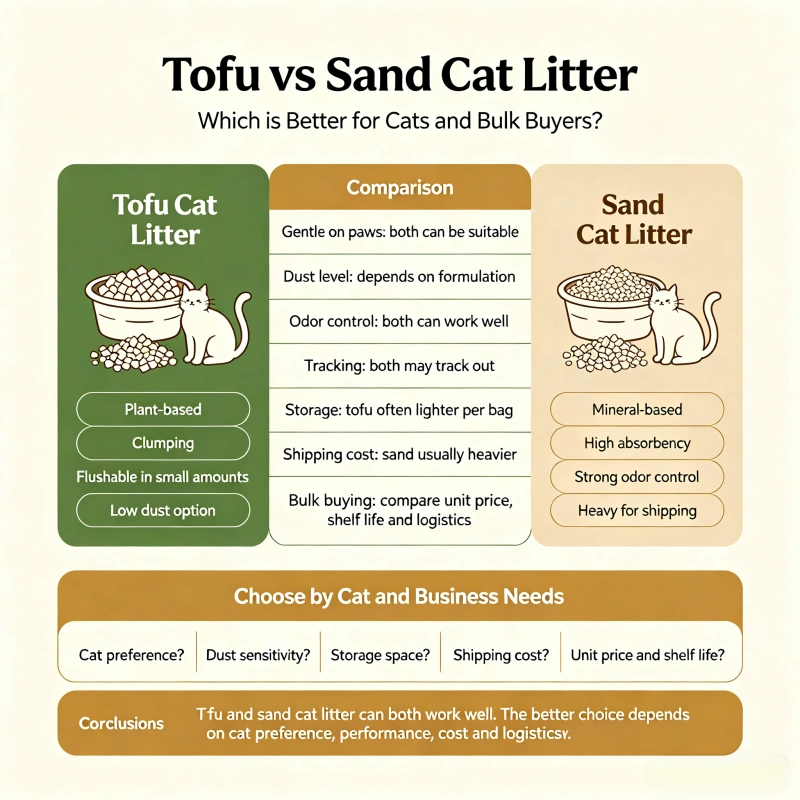
Tofu vs Sand Cat Litter: Quick Comparison
| Feature | Tofu Cat Litter | Sand or Mineral Cat Litter |
|---|---|---|
| Main material | Soybean fiber, plant fiber, starch, natural binders | Mineral sand, clay, or other mineral materials |
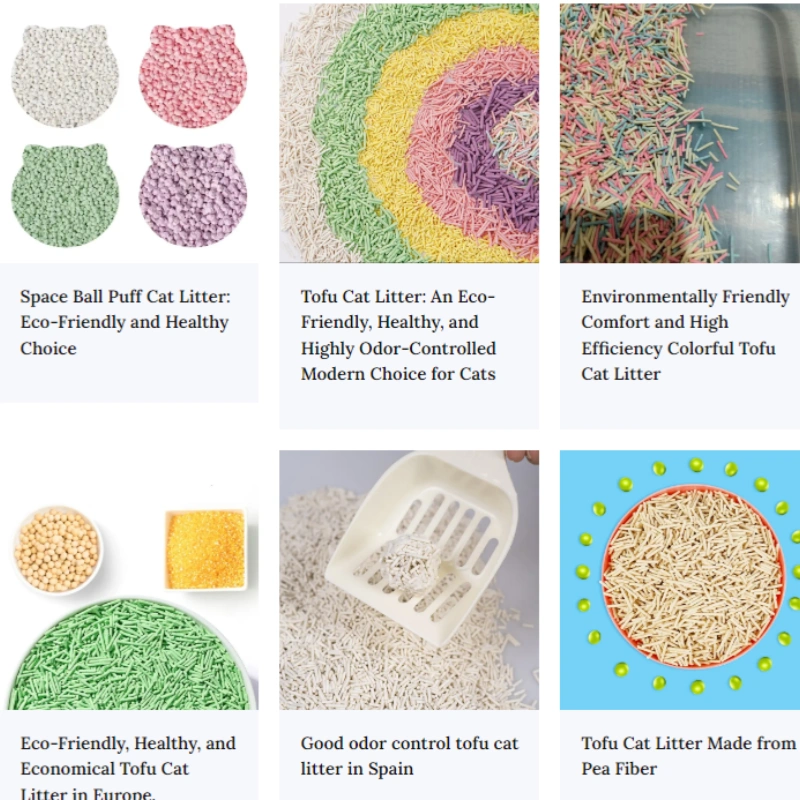
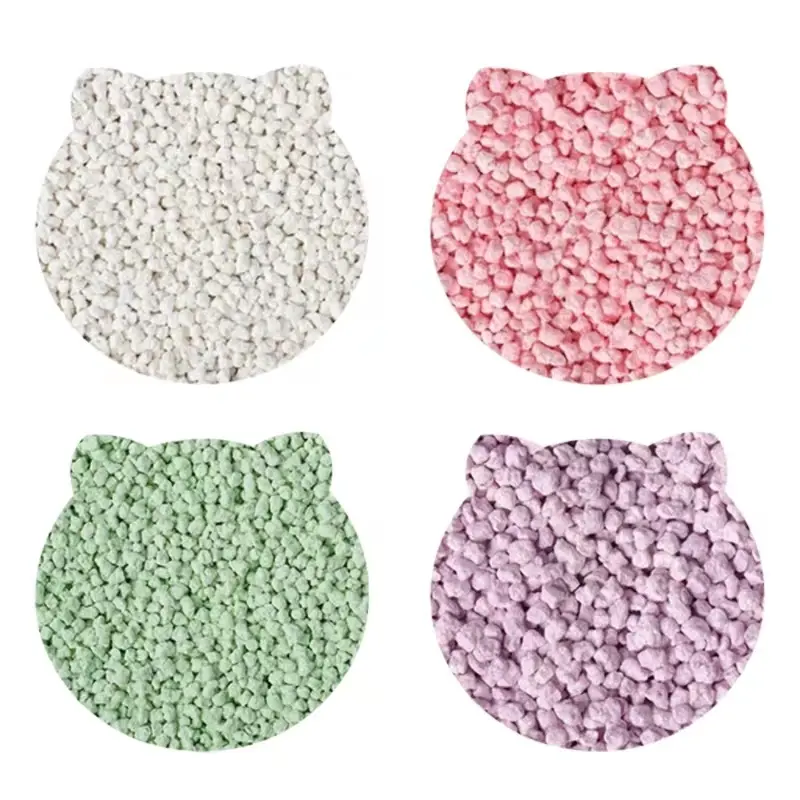
| Texture | Small pellets or granules | Fine sand, granules, or crystals |
| Absorption | Fast absorption through porous plant fibers | Absorption depends on mineral type and formulation |
| Clumping | Usually forms visible, scoopable clumps | Clumping performance depends on whether bentonite is included |
| Dust | Usually low-dust when properly processed | Fine mineral particles may create more dust |
| Weight | Lightweight | Usually heavier |
| Tracking | Pellet size affects tracking | Fine particles may track more easily |
| Odor control | Depends on absorption, clumping, and additives | Depends on mineral structure and odor-control formula |
| Biodegradability | Many formulas are biodegradable | Mineral litter generally does not biodegrade quickly |
| Disposal | Some formulas may be flushable; check instructions | Usually disposed of as solid waste |
| Storage | Must be protected from moisture | Generally easier to store |
| Purchase cost | Often higher per kilogram | Usually lower per kilogram |
The table provides a general comparison. Actual performance varies according to the formula, pellet size, additives, processing quality, and testing method.
What Is Tofu Cat Litter?
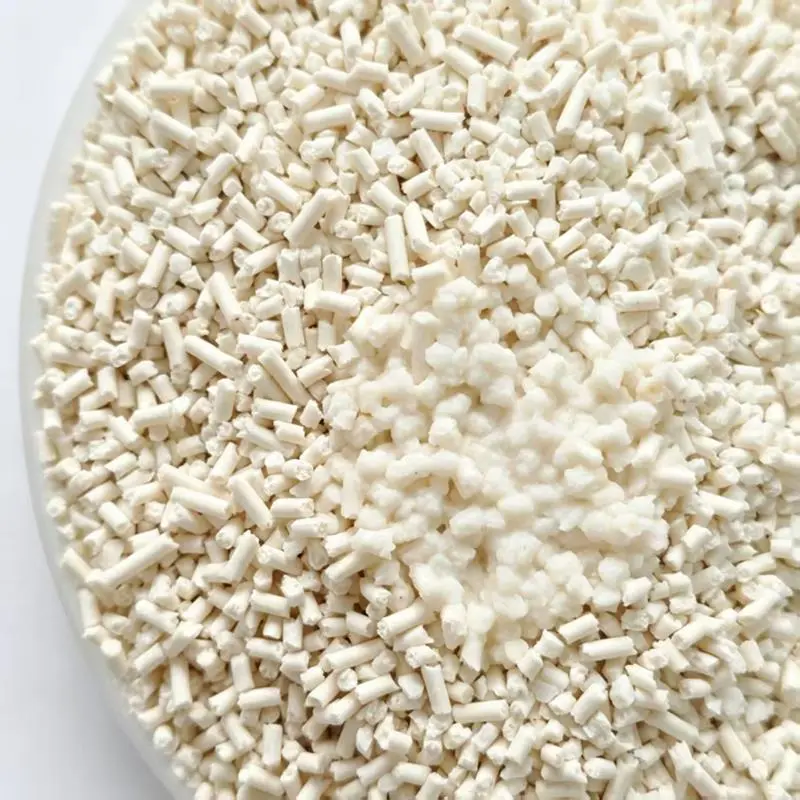
Tofu cat litter is a plant-based litter usually made from soybean residue, also called okara, which is the fibrous by-product left after producing soy milk or tofu. Manufacturers dry, process, and shape the fiber into pellets or granules.
A typical tofu formula may contain:
Soybean fiber or pea fiber
Corn or rice starch
Natural clumping binders
Activated carbon
Plant-based odor-control ingredients
Fragrance, depending on the product
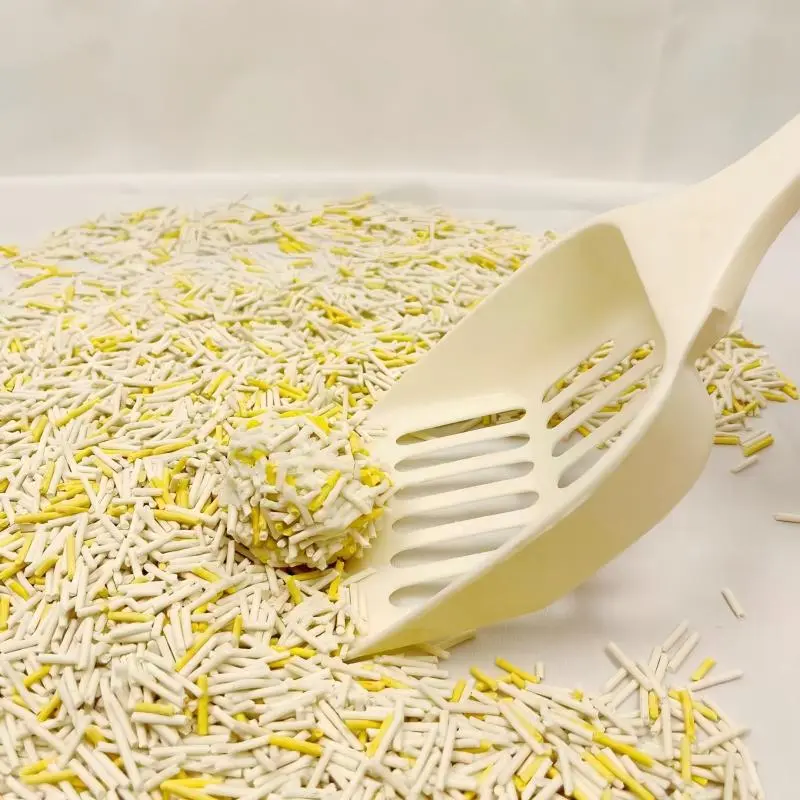
The porous structure of plant fiber allows tofu litter to absorb liquid quickly. When moisture reaches the pellets, the fiber swells and the binder helps form a clump. This makes it easier to remove urine without replacing all the litter in the box.
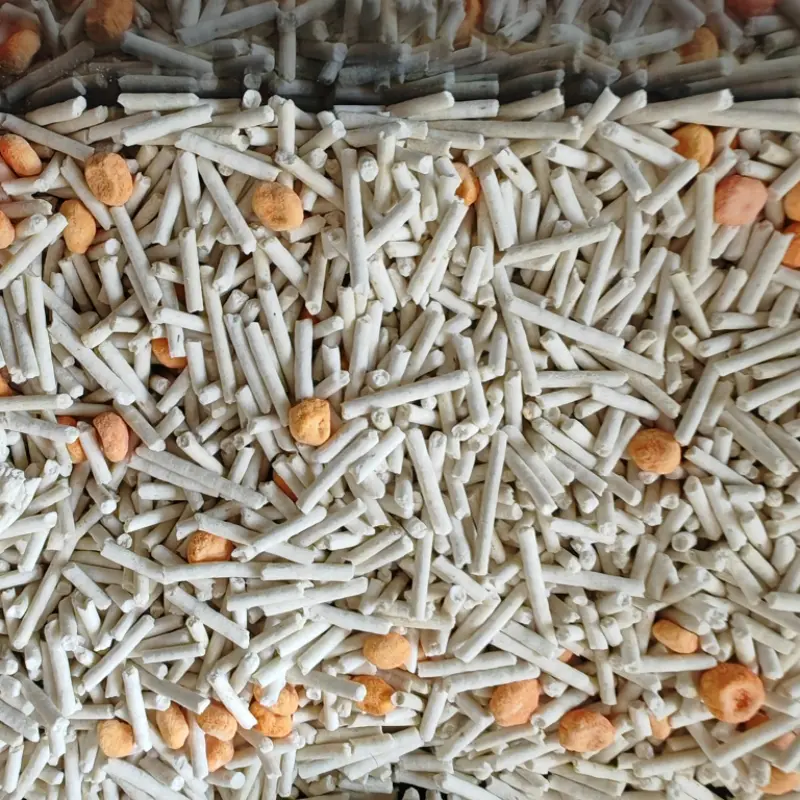
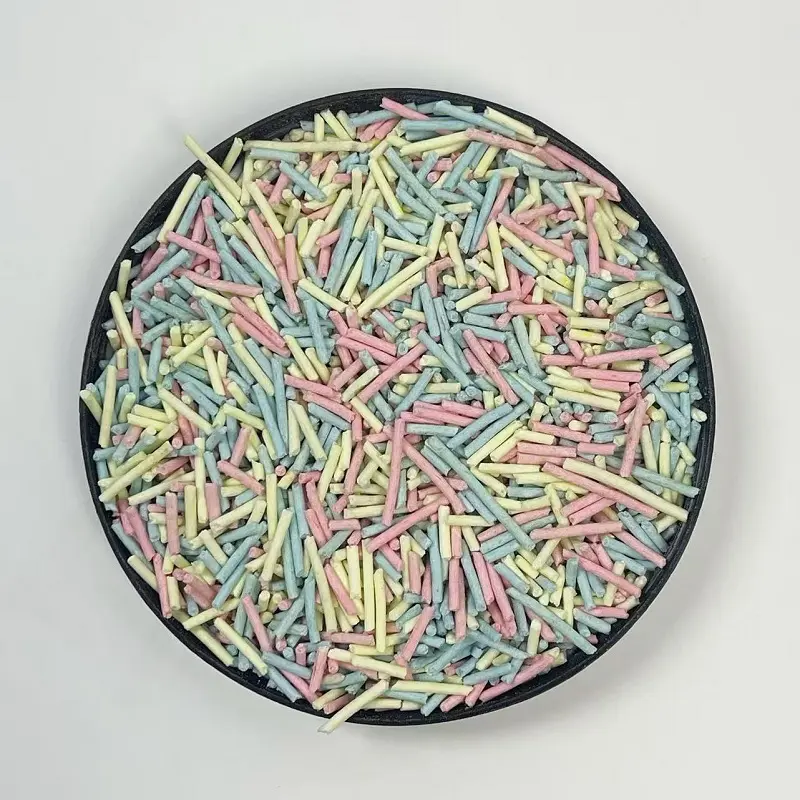
Some tofu products use fine pellets around 1.5–2 mm in diameter, while other products use larger pellets for reduced tracking or different cat preferences. Pellet size is not a universal standard, so buyers should request a sample before placing a bulk order.
What Is Sand Cat Litter?
“Sand cat litter” can refer to several different products. In many markets, the term describes fine mineral litter or clay-based litter that resembles natural sand. Some products are made from bentonite clay, while others use non-clumping mineral materials or silica crystals.
Traditional mineral litter is popular because:
It is widely available.
Cats are often familiar with its sand-like texture.
It is usually inexpensive per kilogram.
Clumping clay can form firm urine clumps.
It can be stored for long periods in normal dry conditions.
However, fine mineral litter can be heavier to transport and may produce more airborne dust, especially when the particles are very small or the product breaks down during use.
For this reason, “sand litter” should not be treated as one standardized category. A fine, low-dust mineral product may perform differently from ordinary bentonite litter.
Absorption and Clumping Performance
Tofu litter
Tofu litter absorbs liquid through its porous plant-fiber structure. When the formula contains an effective starch or natural binder, the wet area can form a visible clump that is easy to scoop.
In practical use, the most important factors are:
Absorption speed
Clump formation time
Clump strength
Clump size
Whether wet litter sticks to the bottom of the box
How much clean litter is removed together with the clump
A well-formulated tofu product may begin absorbing urine within a few seconds. Some commercial products report absorption rates above 300% of their dry weight, but the exact result depends on the testing method and formula.
Sand or mineral litter
Bentonite-based sand litter is known for strong clumping. Sodium bentonite expands when it contacts liquid and can form compact clumps. This is useful for daily scooping, especially in multi-cat households.
However, strong clumping does not automatically mean lower consumption. If wet litter spreads across the bottom of the box, the user may need to remove a large amount of surrounding material.
Practical buying advice
For a fair comparison, test both products using the same conditions:
Use the same litter depth.
Apply the same amount of liquid.
Measure absorption time.
Check the clump after 5 minutes.
Lift the clump with a scoop.
Observe whether it breaks apart.
Check whether the bottom of the box remains wet.
Record how much clean litter is removed.
This method is more useful than comparing marketing claims alone.
Dust: Tofu vs Sand Litter
Dust is one of the most important differences for many cat owners.
Tofu litter is usually produced in pellet form. The pellets are larger than fine mineral particles, so a well-processed product may create less airborne dust during pouring and scooping. However, tofu litter can still produce powder if the pellets are weak, over-dried, or damaged during transportation.
Sand or mineral litter may contain very fine particles. Dust levels depend on:
Particle size
Mining and processing method
Screening quality
Moisture content
Packaging and transportation
The amount of broken material in the bag
A low-dust mineral litter can perform better than a poorly processed tofu product. Therefore, buyers should ask suppliers for a dust-rate test or conduct a simple pouring test before purchasing in bulk.
For sensitive households, unscented and low-dust formulas are generally easier to evaluate because they reduce the number of potential irritants.
Odor Control
Neither tofu nor sand litter controls odor simply because of its material name. Odor control depends on how quickly urine is absorbed, how well the litter forms clumps, and whether the formula includes additional odor-control ingredients.
Tofu litter odor control
Tofu litter can help control odor by absorbing urine into the pellets and separating wet clumps from the remaining dry litter. Some formulas also contain activated carbon, plant extracts, or other odor-control materials.
Daily scooping is still necessary. If wet clumps remain in the box for too long, odor can develop even when the litter is marketed as “natural” or “odor controlling.”
Sand litter odor control
Mineral litter can also provide effective odor control, especially when it absorbs liquid quickly and forms tight clumps. Some formulas contain activated carbon, fragrance, or mineral additives.
However, fragrance should not be confused with odor removal. A strongly scented litter may cover odor temporarily without improving urine absorption.
Experience-based recommendation
For a multi-cat household or retail product line, test odor performance after:
6 hours
12 hours
24 hours
One full day of normal scooping
Use the same number of cats, litter box size, ventilation, and litter depth for both products. Odor results from a small laboratory test may not represent real household conditions.
Tracking and Texture
Cats often prefer a texture that feels similar to natural sand. This is one reason mineral litter remains widely accepted.
Fine sand-like litter usually feels familiar under a cat’s paws, but the same fine particles may stick to paws and spread around the house.
Tofu litter has a different texture. Depending on pellet size, it may feel like:
Small wooden pellets
Short plant-fiber sticks
Fine granules
Soft, irregular particles
Fine tofu pellets may be easier for cats to accept during the transition. Larger pellets may reduce tracking but can feel unfamiliar to some cats.
A gradual transition is recommended:
Keep the original litter in the box.
Add approximately 20% tofu litter.
Increase the tofu portion every few days.
Observe whether the cat continues using the box.
Slow down the transition if the cat avoids the litter box.
Cats can be sensitive to changes in smell, texture, and litter depth. A product that performs well technically may still fail if the cat refuses to use it.
Weight and Transportation Cost
Tofu litter is generally lighter than mineral sand or clay litter. This creates several advantages for households and B2B buyers:
Easier handling
Lower lifting weight
Lower warehouse labor requirements
Easier parcel shipping
More convenient packaging for online sales
Mineral litter is denser, so a bag of the same volume may weigh considerably more. This can affect international freight, warehouse storage, and last-mile delivery costs.
For importers, the correct comparison should not be based only on price per kilogram. Calculate the complete landed cost:
Landed cost = Product price + Packaging + Inland transport + Ocean freight + Customs charges + Warehouse handling
A tofu product may have a higher factory price per kilogram but a lower handling burden. The final result depends on the packaging size, container loading plan, freight rate, and retail positioning.
Environmental Considerations
Tofu litter is usually made from plant-based materials, and many formulas use soybean residue or other agricultural by-products. This can reduce dependence on newly mined mineral materials.
Many tofu products are biodegradable under suitable conditions. However, biodegradable does not automatically mean compostable in every environment, and it does not mean every tofu litter can be flushed.
Sand and mineral litter is generally not biodegradable in the same way as plant-based litter. Mineral extraction, processing, drying, packaging, and landfill disposal all contribute to its environmental impact.
For a responsible product claim, buyers should request:
Raw material information
Biodegradability test results
Ingredient list
Additive information
Packaging material details
Disposal instructions
Flushability testing, if applicable
Can tofu cat litter be flushed?
Some tofu formulas are designed to break down in water, but not all tofu litter is flushable. Products containing bentonite, large clumps, synthetic binders, or other additives may have different disposal instructions.
Before recommending flushing, check:
The manufacturer’s instructions.
Local wastewater regulations.
Plumbing conditions.
Septic-system requirements.
The amount being disposed of at one time.
Even when a product is labeled flushable, small amounts are generally more appropriate than flushing large quantities at once.
Cost Comparison
Sand or mineral litter usually has a lower purchase price per kilogram. This is one of its strongest advantages for price-sensitive consumers and high-volume retailers.
Tofu litter often costs more because of:
Raw material processing
Pellet shaping
Special packaging
Product development
Odor-control additives
Smaller retail pack sizes
Imported or premium positioning
However, cost per kilogram is not the only useful measurement. Buyers should also calculate cost per usable day.
For example:
| Cost Factor | Tofu Litter | Sand Litter |
|---|---|---|
| Purchase price per kg | Often higher | Often lower |
| Bag weight | Usually lighter | Usually heavier |
| Transportation burden | Lower per bag | Higher per bag |
| Clump removal | Usually easy with visible pellets | Depends on mineral type |
| Replacement frequency | Depends on formula and household | Depends on formula and household |
| Retail positioning | Natural or premium | Mass-market or value-oriented |
A practical formula is:
Monthly litter cost = Bags used per month × Price per bag
For B2B buyers, a more complete formula is:
Monthly gross margin = Retail revenue − Product cost − Freight − Packaging − Marketplace or distribution fees
This allows buyers to compare a low-cost mineral product with a higher-priced tofu product based on actual profitability.
Which Is Better for Multi-Cat Households?
Multi-cat households need strong odor management, fast clump removal, and stable supply.
Tofu litter can be a good option when:
The formula absorbs quickly.
Clumps remain intact.
The litter is scooped at least once daily.
The box is large enough.
The product has suitable odor-control performance.
The household accepts the pellet texture.
Sand or bentonite litter may be preferred when:
The cats strongly prefer a fine sand texture.
The owner needs a lower initial purchase price.
The household is already using a familiar mineral formula.
Strong clumping is the main priority.
For either material, one litter box per cat plus one additional box is a useful household planning guideline. Litter depth, ventilation, and cleaning frequency also influence odor and acceptance.
Which Material Is Better for B2B Buyers?
The best choice depends on the target market and sales channel.
Choose tofu litter when your buyers value:
Plant-based ingredients
Low-dust positioning
Lightweight packaging
Natural product claims
Biodegradable materials
Private-label customization
Premium or environmentally focused branding
Online sales and parcel delivery
Choose sand or mineral litter when your buyers value:
Low purchase price
Familiar sand-like texture
Wide market acceptance
Strong clumping
Long shelf storage
Mass-market distribution
High-volume price competition
For importers and private-label brands, tofu litter also provides more opportunities for product differentiation. Manufacturers may customize:
Pellet diameter
Pellet length
Color
Fragrance
Odor-control ingredients
Packaging size
Bag design
Product positioning
Testing documentation
A buyer developing a new cat litter brand should request samples of both fine and larger tofu pellets. The best-selling format in one market may not be the best format in another.
How to Test Tofu and Sand Litter Before a Bulk Order
A professional procurement test should include more than appearance.
1. Absorption test
Measure how quickly the litter absorbs a fixed amount of liquid.
2. Clumping test
Check whether the clump can be removed without breaking apart.
3. Dust test
Pour the same quantity from the same height and observe visible airborne dust.
4. Tracking test
Place a litter mat outside the box and measure how much litter is carried out after several days.
5. Odor test
Use the same box size, litter depth, and cleaning schedule.
6. Moisture test
Store samples in a humid environment to check whether the pellets soften or lose strength.
7. Packaging test
Inspect the bags after stacking, palletizing, and transportation simulation.
8. Cat acceptance test
Allow cats to choose between the two materials without forcing the change.
A supplier that can provide a clear specification sheet, sample, test report, and packaging proposal is easier to evaluate than a supplier that only provides a low quotation.
Frequently Asked Questions
Is tofu cat litter better than sand cat litter?
Tofu litter may be better for buyers who prioritize plant-based materials, low weight, and convenient clumping. Sand litter may be better for buyers who prioritize low cost and a familiar fine texture.
Does tofu litter control odor better than sand?
Not automatically. Odor control depends on absorption speed, clump removal, ventilation, and the formula’s odor-control ingredients.
Is tofu litter less dusty?
Many tofu products are designed to be low-dust, but performance depends on pellet strength and processing quality. A dust test is more reliable than a general material claim.
Is tofu litter more expensive?
Usually, tofu litter has a higher price per kilogram. However, the total cost may change after considering transportation, packaging, consumption, and retail positioning.
Can cats switch directly from sand to tofu litter?
Some cats switch immediately, but others need a gradual transition. Mixing a small amount of tofu litter into the existing litter can help the cat adapt.
Is all tofu cat litter flushable?
No. Flushability depends on the complete formula and local plumbing conditions. Always follow the product instructions.
Which litter is better for online retail?
Tofu litter may be attractive for online retail because it is lightweight, differentiated, and suitable for natural or premium product positioning. Packaging and shipping costs must still be calculated carefully.
What should importers ask a tofu cat litter factory?
Importers should ask about raw materials, pellet size, absorption, clumping strength, dust level, odor-control ingredients, packaging options, MOQ, lead time, testing reports, and private-label support.
Final Buying Advice
Tofu vs sand cat litter is not simply a question of which material is universally better. Sand litter offers familiarity, low purchase cost, and a texture many cats already accept. Tofu litter offers plant-based positioning, lighter handling, visible clumping, and potential advantages in dust and disposal.
For individual cat owners, the final decision should be based on the cat’s acceptance, household cleaning routine, odor requirements, and budget.
For importers, wholesalers, and private-label brands, the better approach is to compare complete product specifications and landed costs. Request samples, test absorption and clumping, review packaging performance, and confirm disposal claims before placing a large order.
A reliable tofu cat litter manufacturer should be able to provide consistent pellet quality, customized packaging, product specifications, testing support, and stable production for repeat orders.
387.webp)