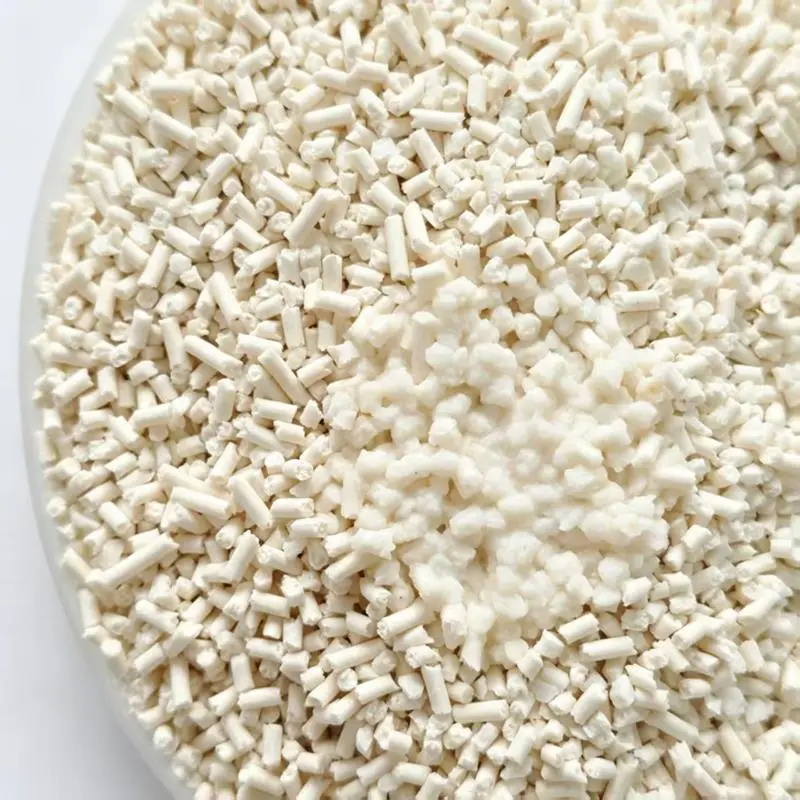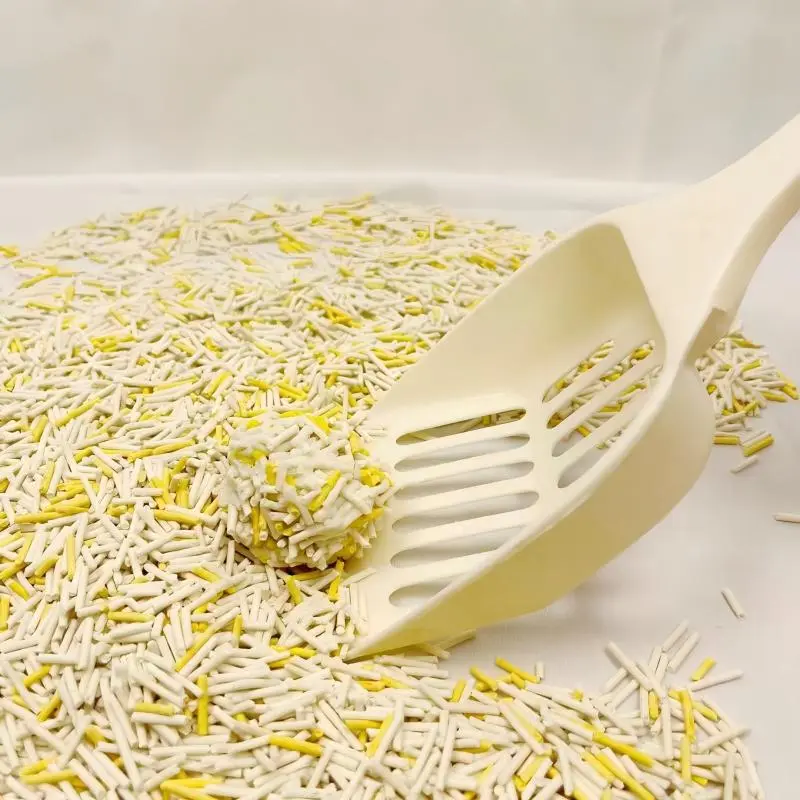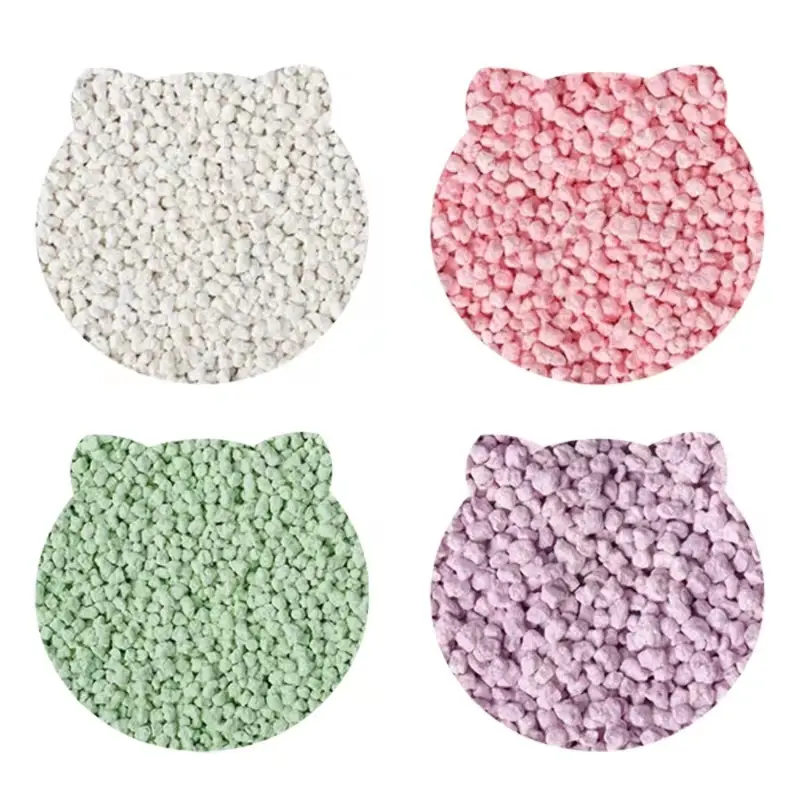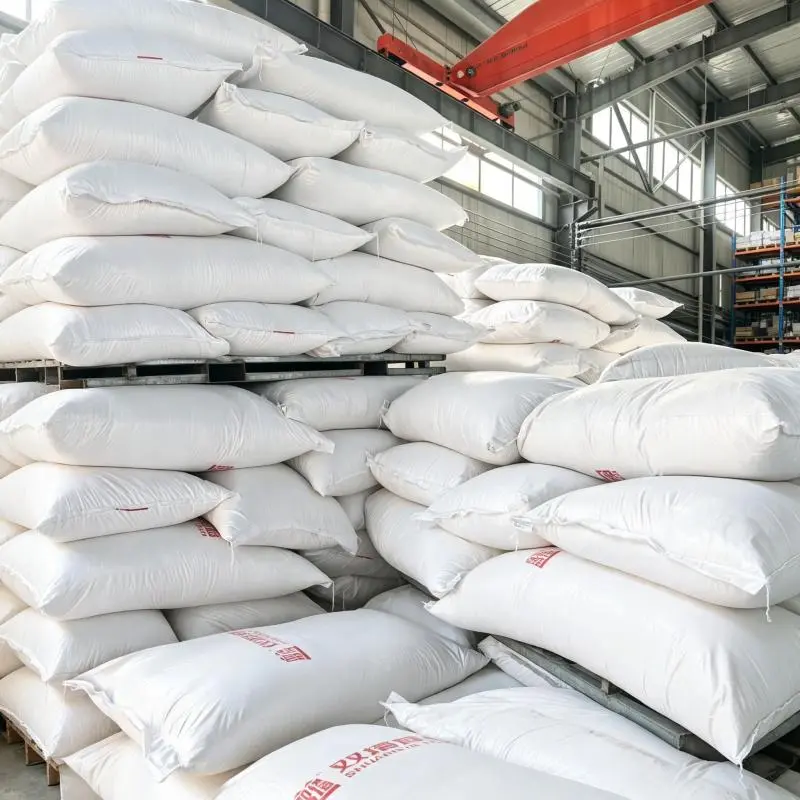
Shuangta pea fiber is a plant-derived raw material that can be used in tofu cat litter formulations to help build the physical structure of pellets and support the development of absorbent, scoopable products. For cat litter manufacturers, its value depends on more than its botanical origin. Particle size, moisture content, raw material consistency, and compatibility with starches, binders, and the production process all influence the performance of the finished litter.
For pet brands, importers, and OEM buyers, understanding how pea fiber works can help with supplier evaluation, product development, and quality control. The key question is not simply whether a manufacturer uses Shuangta pea fiber, but whether the selected raw material and production process consistently deliver the required pellet structure, absorption, clumping, and handling characteristics.
At Gelin Town Pet, we approach pea fiber as one component of a complete formulation system. We evaluate its suitability alongside other ingredients and production parameters to develop tofu cat litter products for different market requirements.
What Is Shuangta Pea Fiber?
Shuangta refers to Yantai Shuangta Food Co., Ltd., a Chinese agricultural food-processing company based in Zhaoyuan, Shandong Province. Its official website identifies pea fiber, pea starch, and pea protein among its product categories. The company states that it was established in 1992 and became publicly listed on the Shenzhen Stock Exchange in 2010.
Pea fiber is obtained through pea processing. Its physical properties depend on the raw material and processing methods, including the separation, drying, and size-reduction processes used to produce the final ingredient.
For tofu cat litter manufacturing, relevant properties may include:
Moisture content
Particle size and size distribution
Fiber structure and consistency
Color and appearance
Bulk density
Water absorption behavior
Foreign material and impurity levels
These properties should be confirmed through a current technical data sheet and batch-specific documentation. A supplier's company history or food-industry certifications do not automatically prove that every grade of pea fiber is suitable for cat litter production.
It is also important to distinguish between pea fiber as a raw material and tofu cat litter as a finished product. The properties of the raw fiber influence formulation development, but the final pellet's performance depends on the complete ingredient system and the manufacturing process.
Why Is Pea Fiber Used in Tofu Cat Litter?
Pea fiber can contribute to the structure and physical behavior of plant-based cat litter. Its role is closely connected to the other ingredients in the formulation.
A tofu cat litter recipe commonly combines plant-derived fiber, starch, a binder, and water. The exact ingredient ratios depend on the target product, manufacturing equipment, and required performance.
1. It provides a plant-derived structural component
Pea fiber contributes plant-based material to the pellet structure. During mixing and pellet formation, the fiber interacts with the starches, binders, moisture, and mechanical processing conditions.
The objective is to create pellets that have suitable dimensions, handling strength, and behavior when exposed to liquid.
The fiber should not be treated simply as an inexpensive filler. Its particle characteristics and consistency may influence how the mixture behaves during production.
However, more pea fiber does not automatically mean better cat litter. A formulation must balance fiber content with binding capacity, pellet formation, drying behavior, and the intended product specifications.
2. It works with starch and guar gum
Pea fiber, corn starch, and guar gum serve different but complementary functions in many tofu cat litter formulations.
| Ingredient | Main formulation role | What manufacturers should evaluate |
|---|---|---|
| Pea fiber | Provides plant-derived fiber and contributes to pellet structure | Moisture, particle size, consistency, and interaction with other ingredients |
| Corn starch | Can contribute binding and pellet cohesion when processed under suitable conditions | Gelatinization behavior, mixing uniformity, and formulation compatibility |
| Guar gum | Functions as a thickening and binding agent in the formulation | Dispersion, hydration, dosage consistency, and its effect on clumping |
| Water | Supports mixing and processing and affects the moisture profile | Dosage accuracy, uniform distribution, and drying requirements |
| Optional additives | May be used for particular product characteristics, depending on the formula | Compatibility, stability, labeling, and supporting test results |
The functions in the table are formulation-level descriptions, not guarantees about any specific ingredient grade. The actual behavior should be established through trials using the selected raw materials.
One useful development principle is to evaluate the complete formula rather than optimizing a single ingredient in isolation. Increasing fiber content, for example, may change moisture demand, extrusion behavior, pellet strength, or the amount of binder required.
3. It can support the development of clumping litter
In a finished tofu cat litter pellet, the fiber structure and binding system influence how the material responds to liquid.
The intended result is a pellet that handles normally during storage and use, absorbs moisture under the specified test conditions, and forms a clump that can be removed without excessive crumbling.
Clumping performance depends on several interacting factors:
Fiber properties and ingredient ratios
Starch and binder characteristics
Water addition and mixing uniformity
Extrusion and pellet-forming conditions
Drying profile and final moisture content
Pellet dimensions and fines content
For this reason, the presence of Shuangta pea fiber cannot by itself substantiate claims such as “instant clumping,” “maximum absorption,” or “stronger clumps.” Those claims should be evaluated on the finished product.
How Shuangta Pea Fiber Influences Tofu Cat Litter Manufacturing
Raw materials that look similar may behave differently during processing. A change in fiber moisture, particle size, or physical structure can affect the amount of water needed and the consistency of the pellet-forming mixture.
For manufacturers, the practical goal is to define acceptable raw material specifications and validate the process against those specifications.
1. Raw material preparation
Before production, pea fiber should be checked against the purchasing specification.
For example, if an incoming batch has a different moisture content from the approved reference batch, the production team may need to review the water addition rate. Otherwise, the mixture may become too wet or too dry for the established process.
Particle size also matters. Differences in particle distribution can affect mixing and the uniformity of the material entering the forming equipment.
2. Mixing and hydration
Pea fiber must be distributed consistently with the other ingredients. Inadequate mixing can create differences in local composition, which may later appear as variations in pellet dimensions or clumping behavior.
The amount and distribution of water should be controlled according to the validated formulation. More water is not always better: excessive moisture may increase drying demand, while insufficient moisture may interfere with the required forming process.
3. Extrusion and pellet formation
During extrusion, the mixed material is forced through a die and cut into the required pellet length. The fiber system, starch, binder, moisture, and processing conditions all influence whether the material can form consistent pellets.
If pellets break too easily, manufacturers should investigate the entire process rather than automatically increase the binder dosage.
Potential causes may include inconsistent raw materials, unsuitable moisture, inadequate mixing, inappropriate processing conditions, or an unsuitable formulation.
4. Drying and screening
Drying removes moisture from the newly formed pellets. The drying profile needs to be appropriate for the formula and equipment; excessive drying or inadequate drying may affect the finished product's characteristics.
Screening removes oversized pieces and fines. An effective screening step helps control the particle distribution and the quantity of loose material in the packaged product.
The appropriate operating parameters should be established through process trials and routine quality checks rather than copied from another factory's formulation.
Which Quality Indicators Matter When Purchasing Shuangta Pea Fiber?
For procurement teams, a product name is not enough to define a raw material. Buyers should establish a written specification that makes each delivery comparable with the approved sample.
The following table provides a practical incoming-inspection framework.
| Raw material indicator | Why it matters | Recommended verification |
|---|---|---|
| Moisture content | Can affect water addition, mixing, storage, and processing consistency | Use an agreed moisture test method and record each batch result |
| Particle size | May affect mixing, dispersion, and extrusion behavior | Request the supplier's particle-size specification and verify samples |
| Appearance and color | Unexpected changes may indicate a raw material or process variation | Compare with an approved reference sample under consistent lighting |
| Bulk density | Can affect storage, weighing, and material handling | Measure using a defined method where relevant |
| Impurities | Unwanted foreign materials can affect product quality | Inspect samples and review the supplier's material controls |
| Traceability | Supports investigation of batch variation | Record supplier, batch number, receipt date, and related documents |
| Technical documentation | Defines agreed properties and test methods | Review the current technical data sheet and batch certificate of analysis |
Not every indicator needs the same acceptance limit for every formulation. The purchasing specification should identify which tests are required, the method used, and the range accepted by the manufacturer.
For example, a statement such as “low moisture” is not sufficiently precise for production control. The specification should define a numerical limit and a measurement method appropriate to the material.
Likewise, color should not be used as a substitute for functional testing. A visually consistent batch may still behave differently during hydration or extrusion.
How Do You Test the Effect of Pea Fiber on Finished Cat Litter?
The most useful way to evaluate a raw material is to connect its measured properties to the performance of the finished product.
A controlled trial can help determine whether a change in pea fiber grade or batch has a meaningful effect on tofu cat litter.
The following is a proposed development and quality-control procedure, not a report of completed testing on Shuangta pea fiber or a specific Gelin Town Pet formula.
Step 1: Establish a reference formula
Select an approved formulation and record the raw materials, their batch numbers, ingredient weights, water addition, and relevant production settings.
Produce a reference sample using the established procedure. This provides a baseline for evaluating subsequent trials.
Step 2: Change one variable at a time
If the purpose is to evaluate a different pea fiber batch, keep the other ingredients and process settings as consistent as practical.
If the formulation is also changed, it becomes harder to determine whether the observed difference comes from the fiber or from the new formula.
For formulation development, a structured trial matrix can be used to compare selected fiber levels or ingredient combinations. The chosen ranges should come from product-development objectives and technical feasibility, not from an assumed universal optimum.
Step 3: Measure raw material and process conditions
Record the incoming pea fiber's moisture and particle-size characteristics, along with water addition and relevant processing conditions.
This helps connect the raw material's condition to the behavior of the mixture and the final pellets.
Step 4: Test the finished litter
At minimum, consider the following indicators.
| Finished-product test | What it reveals |
|---|---|
| Pellet diameter and length | Whether the product meets the dimensional specification |
| Moisture content | Whether drying achieved the agreed product condition |
| Fines or dust content | How much small loose material is present under the defined method |
| Bulk density | Helps characterize product volume and handling |
| Liquid absorption | Measures performance under a specified liquid challenge |
| Clump integrity | Indicates whether used material forms a cohesive, removable clump |
| Tray residue | Helps assess whether wet material remains attached after removal |
| Packaging integrity | Checks whether the product is protected during storage and transport |
Step 5: Compare results with the acceptance criteria
Compare each sample with the approved reference and the documented product specification.
Do not claim that pea fiber improves a particular performance indicator unless the comparison supports that conclusion. If there is no meaningful difference in clump strength, for example, the data should not be used to claim stronger clumping simply because a different fiber source was introduced.
Repeat trials where needed and investigate unexplained variation before approving a new raw material or formulation.
What Do Published Tofu Cat Litter Specifications Tell Us?
Public supplier specifications show that finished tofu cat litter is available in multiple pellet dimensions and performance grades. For example, one manufacturer's product listing offers diameters of 1.5 mm, 2.0 mm, and 3.0 mm, with a stated moisture limit of no more than 10% and a water absorption specification of at least 300%.
These figures are an example of one supplier's finished-product specifications. They are not specifications for Shuangta pea fiber, and they should not be treated as universal standards for all tofu cat litter.
The distinction is important because raw material and finished product are measured differently. A fiber supplier's moisture or particle-size specification does not replace testing the final litter's moisture, pellet consistency, absorption, and clumping performance.
For buyers, a useful comparison therefore requires both raw material documentation and finished-product test results.
Why Raw Material Consistency Matters for OEM and Private-Label Cat Litter
For a cat litter manufacturer, the commercial risk is not limited to whether a sample performs well once. Buyers need the same core characteristics to be maintained across repeat orders.
Variations in pea fiber may affect:
The amount of water needed during mixing
Material flow and pellet formation
Pellet strength and dimensions
Drying behavior and finished moisture
Fines content after screening
Absorption and clump integrity
Not every variation will necessarily cause a finished-product problem. The purpose of quality control is to identify which raw material characteristics are critical to the specific formula and monitor them consistently.
For importers and distributors, this means that a complete supplier evaluation should cover more than the sample bag. It should include the approved formula, technical specifications, batch records, inspection criteria, and a process for handling out-of-specification material.
Gelin Town Pet: Tofu Cat Litter Manufacturing and Formulation Development
At Gelin Town Pet, we develop and manufacture plant-based cat litter for international B2B customers. Our product range includes traditional cylindrical tofu cat litter, small-pellet tofu cat litter, crushed tofu cat litter, puffed tofu cat litter, and blended formulations such as tofu-cassava products.
Different markets and customers require different product characteristics. One buyer may prioritize pellet diameter and length, while another may focus on clump integrity, dust, fragrance, packaging, or retail positioning.
For products formulated with Shuangta pea fiber, we evaluate this raw material as part of the complete ingredient and processing system. Our product-development approach considers how pea fiber works with starch, guar gum, water, extrusion, drying, and screening rather than relying on a single ingredient to determine the final result.
Our approach to raw material and product quality
Raw material review: We assess incoming materials against the agreed specifications and review relevant supplier documentation.
Formulation development: We select the ingredient combination according to the intended product characteristics and manufacturing feasibility.
Process control: We monitor the production conditions that may influence pellet formation, drying, screening, and batch consistency.
Finished-product evaluation: We use established product specifications and appropriate tests to assess pellet dimensions, moisture, absorption, clumping, fines, and packaging.
The inspection plan and acceptance criteria should be matched to the specific product and customer requirements. We do not treat a raw material supplier's reputation as a replacement for finished-product testing.
OEM and ODM private-label services
For customers developing their own cat litter brands, our OEM/ODM discussions can cover:
Product type and formulation objectives
Pellet diameter, length, and shape
Fragrance and other permitted formulation options
Packaging size and design
Finished-product specifications and quality checks
Product sampling and evaluation before bulk production
The final specification depends on the intended market and the agreed development plan. Buyers should confirm the available options, sample requirements, minimum order quantity, production schedule, and supporting documentation before placing a bulk order.
Whether you are reviewing pea fiber for a new tofu cat litter formula or seeking a manufacturing partner for an established product, a clear technical specification is the best starting point for consistent production.
Frequently Asked Questions
What is Shuangta pea fiber used for in tofu cat litter?
Shuangta pea fiber can serve as a plant-derived structural ingredient in tofu cat litter formulations. It works with other ingredients and processing conditions to help produce pellets with the required physical characteristics. Its effect on absorption and clumping must be evaluated in the finished formula.
Does Shuangta pea fiber automatically improve clumping?
No. Clumping depends on the entire formulation and production process, including starch, binders, moisture, mixing, extrusion, and drying. A particular fiber may be suitable for a formula, but performance improvements should be established through controlled comparisons.
What quality indicators should manufacturers check when purchasing pea fiber?
Common checks include moisture content, particle-size distribution, appearance, relevant impurity limits, traceability, and supplier documentation. The exact acceptance criteria should be defined in the purchasing specification and validated for the manufacturer's formulation.
What is the difference between pea fiber and pea starch in tofu cat litter?
Pea fiber is a fiber-rich material obtained through pea processing, while pea starch is a starch ingredient with different functional properties. In a tofu cat litter formulation, fiber can contribute to the material structure, while starch may help with binding and pellet formation under suitable processing conditions. Their performance depends on their grade and combination with the other ingredients.
What pellet sizes are available for tofu cat litter?
Published supplier specifications commonly offer different diameters, including 1.5 mm, 2.0 mm, and 3.0 mm, with pellet length selected according to the product design. These are examples of available formats, not a universal standard. Buyers should specify the required dimensions and acceptable variation.
How can manufacturers determine whether a new pea fiber batch is suitable?
Compare it with the approved raw material specification, measure relevant properties such as moisture and particle size, and run a controlled production trial when needed. Then evaluate the finished pellets against the established quality criteria, including moisture, dimensions, absorption, clump integrity, and fines.
Does Shuangta's food-industry certification automatically certify tofu cat litter made with its pea fiber?
No. A supplier's certification applies to the relevant company, facility, product, or management system within its stated scope. It should not be assumed to certify a finished cat litter product. Buyers should review the actual certificates and their scope separately from the finished product's specifications and test results.
Can Gelin Town Pet develop private-label tofu cat litter using pea fiber?
Gelin Town Pet offers OEM/ODM product-development discussions for plant-based cat litter. The proposed formula, pellet dimensions, packaging, and quality requirements should be confirmed through sample evaluation and a written product specification before bulk production.
Conclusion: Pea Fiber Quality and Process Control Work Together
Shuangta pea fiber is a relevant plant-derived raw material for manufacturers developing tofu cat litter, but its value should be assessed through the performance of the complete formulation.
Consistent raw material specifications can make production easier to control. However, the final result still depends on how fiber interacts with starch, binders, moisture, extrusion, drying, and screening.
For manufacturers, the practical priorities are to define raw material acceptance criteria, control process conditions, and test finished litter using repeatable methods. For B2B buyers, requesting a technical data sheet, batch documentation, representative samples, and clear finished-product specifications is more useful than relying on a raw material name alone.
At Gelin Town Pet, we use this formulation-focused approach to support tofu cat litter development and private-label projects for international customers. The goal is not simply to select a well-known ingredient, but to deliver a finished product whose specifications and performance can be evaluated consistently.