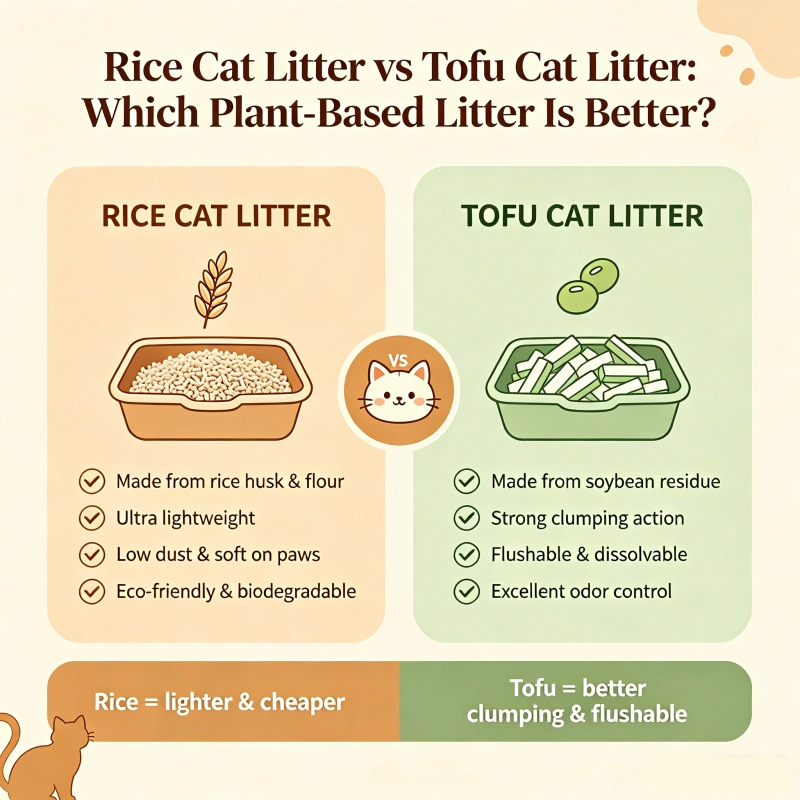
If you are looking for a plant-based alternative to traditional cat litter, you may have come across the term crushed tofu litter. But what exactly is it, and how is it different from regular tofu cat litter?
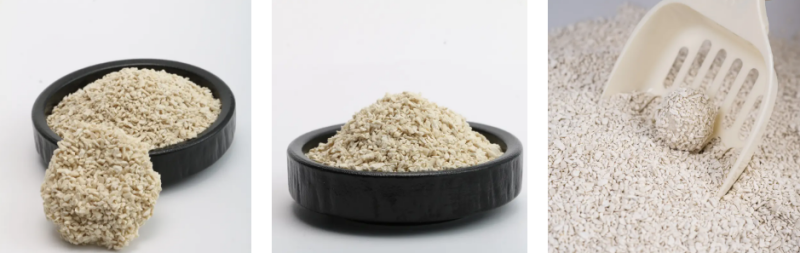
Crushed tofu litter is a type of plant-based cat litter made from processed plant-based materials, commonly associated with soybean processing, and formed into small, irregular, or crushed-style particles. Unlike the name may suggest, it does not mean that household tofu is simply crushed and placed in a litter box. Instead, tofu cat litter is manufactured using specially processed raw materials and formulated for properties such as liquid absorption, clumping, odor management, and convenient cleaning.
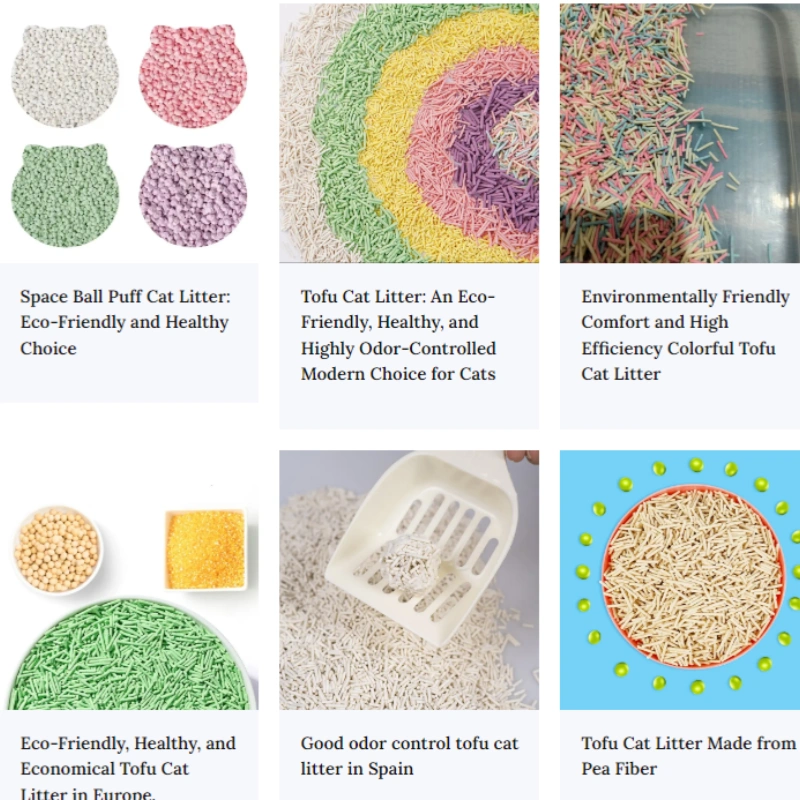
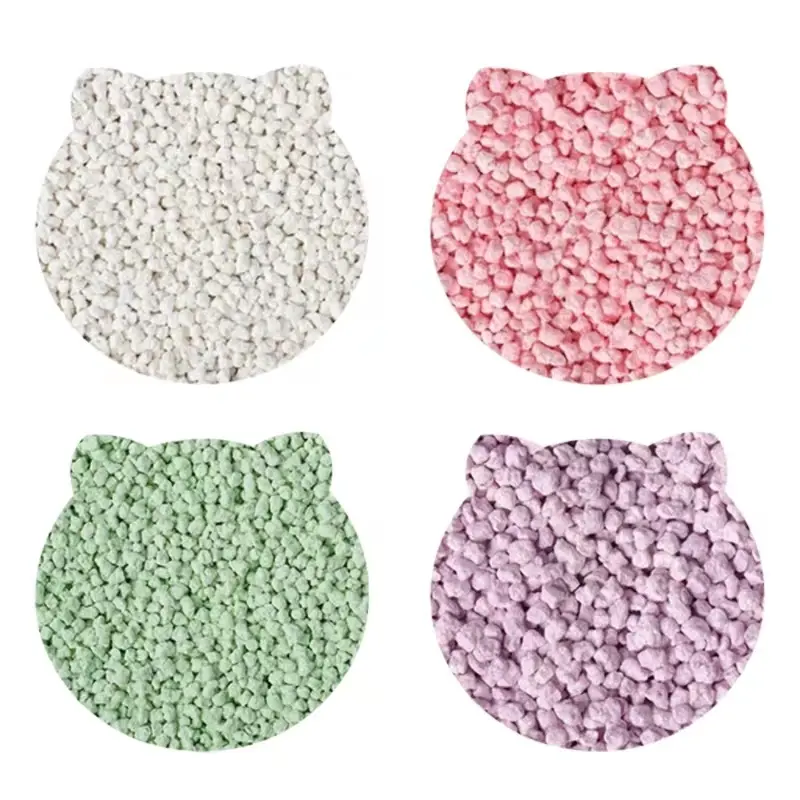
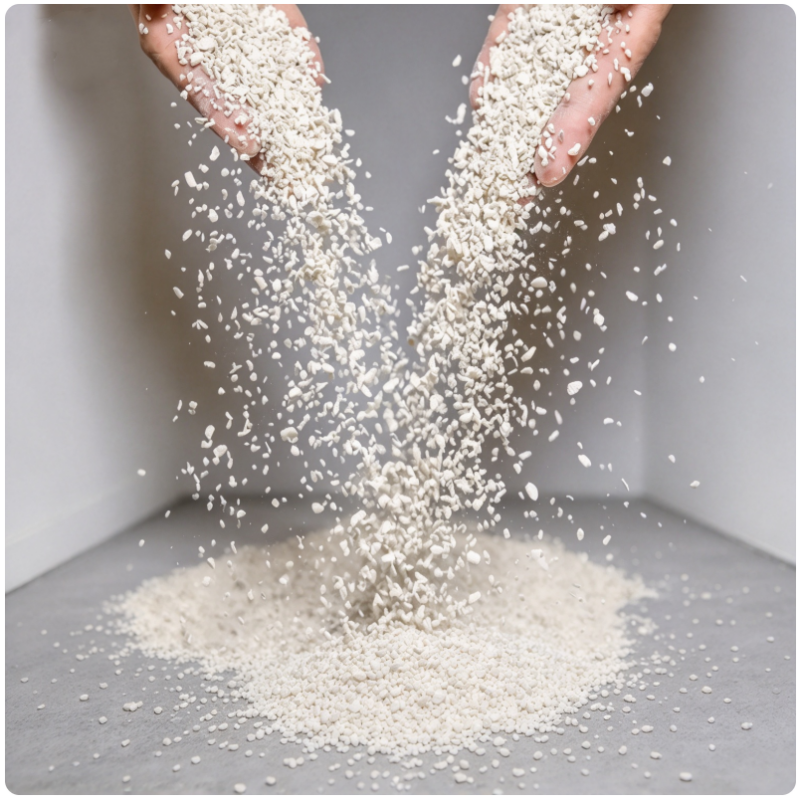
The term "crushed" generally describes the particle shape or texture of the finished litter. Depending on the manufacturer and formulation, crushed tofu litter may have smaller, irregular particles rather than the more uniform cylindrical pellets commonly associated with tofu cat litter.
For cat owners, understanding these differences can help when choosing a litter based on particle size, clumping performance, odor control, dust level, and disposal requirements. For pet brands, retailers, and distributors, understanding the product structure is also important when selecting a tofu cat litter manufacturer or developing a private-label product.
What Is Crushed Tofu Litter?
Crushed tofu litter is a plant-based cat litter product processed into small, irregular, or crushed-looking particles.
It belongs to the broader category of tofu-based or soybean-associated plant-based cat litter. The exact formulation varies between manufacturers. Depending on the product, the formula may contain processed soybean-related materials, plant fibers, starches, binders, and other ingredients selected to achieve specific performance characteristics.
The word "crushed" generally refers to the physical form of the litter rather than a completely separate category of cat litter.
In other words:
Crushed tofu litter is best understood as a tofu-based cat litter with a crushed or irregular particle format.
This distinction is important because there is no single universal formula for all tofu cat litter products. Particle size, raw materials, binders, additives, drying methods, and processing conditions can all affect the final characteristics of the litter.
Why Is It Called Crushed Tofu Litter?
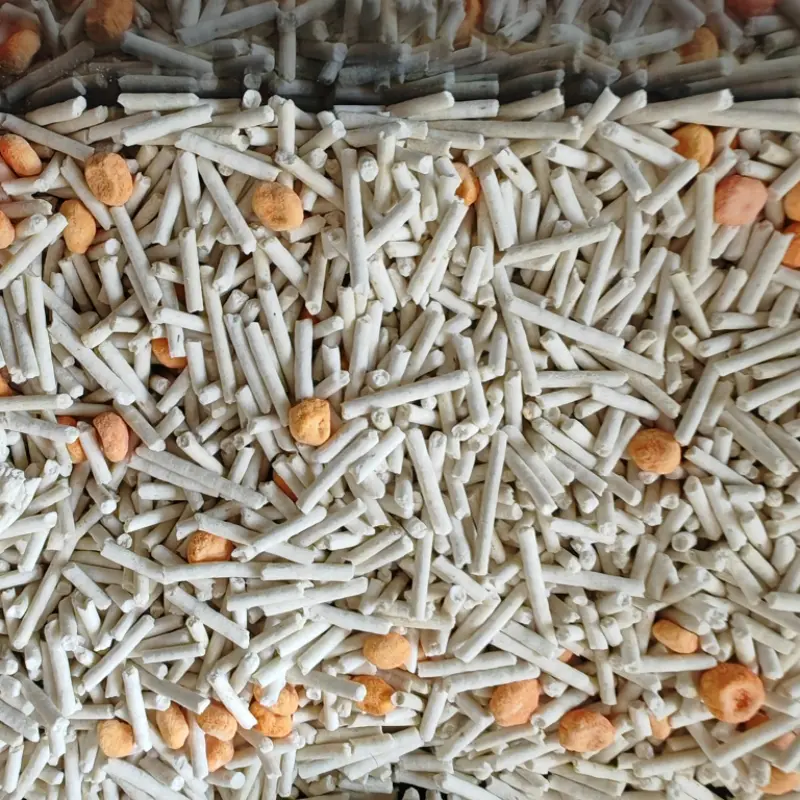
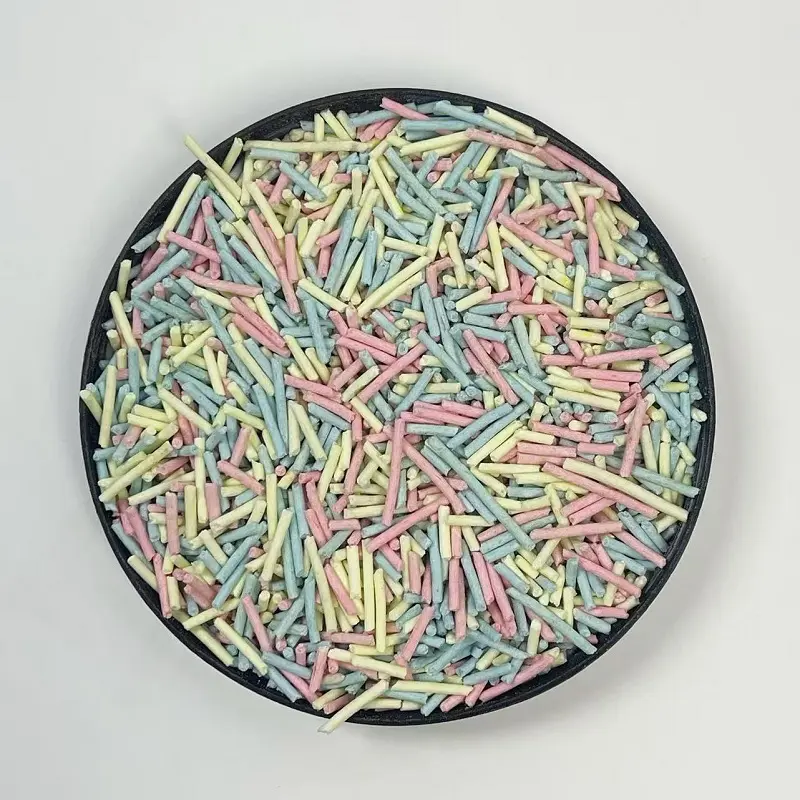
Traditional tofu cat litter is often manufactured into relatively uniform pellets. Crushed tofu litter, by comparison, may have a more irregular, granular, or broken-particle appearance.
The particle structure can influence how the litter feels under a cat's paws, how quickly liquid moves through the litter, how clumps form, and how easily waste can be scooped.
However, particle shape alone does not determine product quality. The formulation and manufacturing process are also important.
Is Crushed Tofu Litter Made From Real Tofu?
Not in the sense of taking ready-to-eat tofu from a kitchen and crushing it.
Tofu cat litter is manufactured from processed plant-based raw materials associated with soybean processing and other formulation ingredients. These materials are processed, mixed, shaped, dried, screened, and packaged specifically for use as cat litter.
This allows manufacturers to control important product characteristics such as particle size, moisture content, absorption, clumping behavior, and dust level.
What Is Crushed Tofu Litter Made From?
The exact ingredients vary according to the product formulation and manufacturer.
Common formulation components may include:
Processed soybean-related plant materials
Plant fibers
Starch-based ingredients
Natural or formulated binders
Deodorizing ingredients
Other functional additives
The purpose of combining these materials is to create a litter that can absorb liquid, form manageable clumps, help control odors, and provide a practical experience for both cats and their owners.
Soybean-Based Ingredients
Soybean-associated materials are one of the defining elements of tofu cat litter. Manufacturers can process plant-based materials into a form suitable for granulation and drying.
The quality and preparation of the raw materials can influence the consistency of the finished litter.
Plant Fibers and Binders
Plant fibers can contribute to the physical structure and absorption characteristics of the litter.
Binders may also be used to help particles maintain their shape and form clumps when exposed to liquid. The type and amount of binder can affect clumping strength, particle stability, and other performance characteristics.
Optional Deodorizing Ingredients
Some tofu litter formulations include ingredients designed to help manage unpleasant odors.
The actual odor-control performance depends on the complete formulation, absorption characteristics, moisture management, deodorizing ingredients, and litter-box cleaning routine.
How Is Crushed Tofu Litter Made?
Although manufacturing processes differ between factories and formulations, producing plant-based tofu cat litter generally involves several stages.
1. Raw Material Preparation
Selected plant-based raw materials are prepared according to the product formulation.
Raw material consistency is important because variations can affect particle structure, moisture, absorption, and final product performance.
2. Mixing and Processing
The raw materials are combined according to a controlled formulation.
Manufacturers may adjust the proportions of plant materials, fibers, starches, binders, and other ingredients to achieve the desired product specifications.
3. Granulation or Crushing
The processed mixture is formed into the desired particle structure.
For crushed-style tofu litter, the manufacturing process is designed to produce smaller or irregular particles rather than relying exclusively on uniform cylindrical pellets.
Particle size can be controlled according to the intended product specification.
4. Drying
Moisture is reduced through controlled drying.
Proper drying is important for product stability, storage, packaging, and performance. Excessive moisture can affect the physical characteristics and shelf stability of the litter.
5. Screening
The dried material can be screened to separate particles according to size.
Screening helps manufacturers maintain more consistent particle specifications and remove excessive fines or oversized material.
6. Quality Inspection
Finished products can be inspected according to established quality requirements.
Depending on the product and market, manufacturers may evaluate characteristics such as particle size, moisture, appearance, packaging integrity, absorption, clumping performance, and other specifications.
7. Packaging
The finished litter is packed into retail or bulk packaging.
For pet brands, packaging can also be customized for private-label and OEM/ODM projects.
What Are the Benefits of Crushed Tofu Litter?
Crushed tofu litter is part of the growing plant-based cat litter market. Its potential benefits depend on the specific formula and manufacturing process.
Plant-Based Material
One of the main reasons consumers choose tofu litter is its plant-based positioning.
Compared with mineral-based litter, tofu litter uses plant-derived raw materials and can be developed as an alternative for consumers looking for different material options.
Liquid Absorption
Tofu-based litter is designed to absorb moisture from urine.
The absorption performance depends on the formulation, particle structure, raw materials, and processing conditions.
Good absorption can help keep the surface of the litter box relatively dry and make routine cleaning more manageable.
Clumping Performance
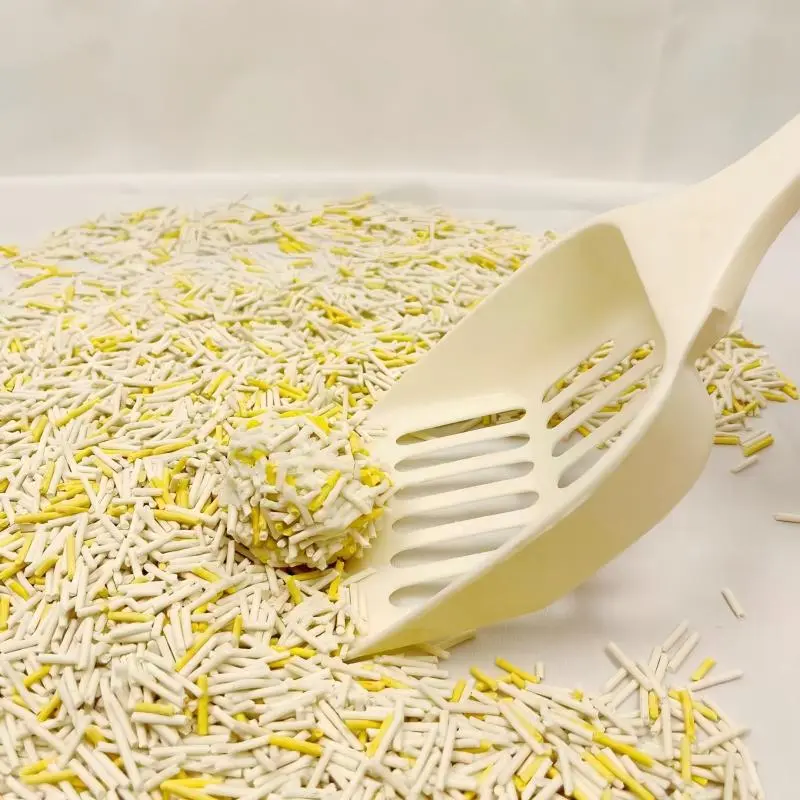
Many tofu cat litter products are designed to form clumps when they come into contact with liquid.
A well-formed clump can make it easier to remove used litter without replacing the entire litter box.
However, clumping strength varies between products. Particle size, binders, moisture content, and formulation all influence the final result.
Odor Control
Odor control is another important consideration when choosing cat litter.
Tofu litter can be formulated with absorption and deodorizing characteristics that help manage unpleasant smells. However, no cat litter should be expected to eliminate odors completely under all conditions.
Regular removal of urine and feces, proper ventilation, sufficient litter-box depth, and routine box cleaning remain important.
Lightweight Handling
Plant-based litter products can be formulated to provide a relatively lightweight alternative to some traditional mineral litter products.
Lower package weight can be useful for consumers who need to carry or store cat litter frequently and for retailers handling products through distribution channels.
Potential Environmental Advantages
Many tofu-based cat litters are positioned as plant-based alternatives and may contain biodegradable materials.
However, biodegradability depends on the specific formulation. Consumers should check the manufacturer's product specifications rather than assuming that every product containing "tofu" is identical.
Disposal instructions should also be followed carefully.
Is Crushed Tofu Litter Safe for Cats?
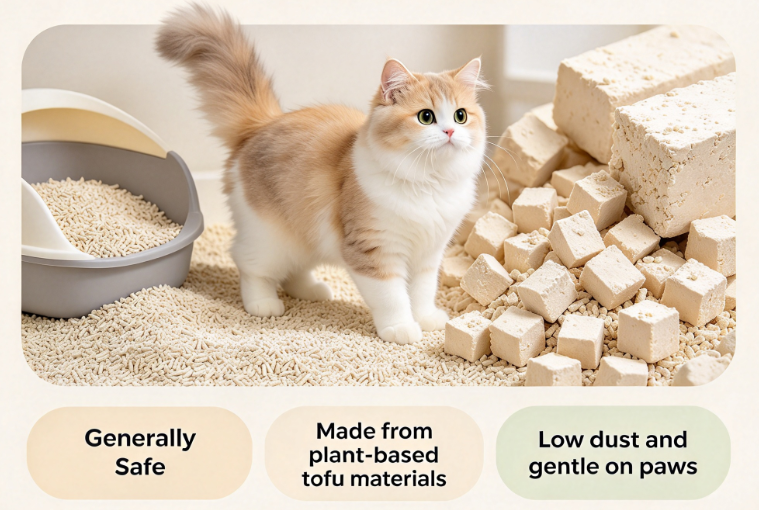
Tofu-based cat litter is developed as a cat-litter product using plant-based raw materials, but safety depends on the actual formulation and manufacturing controls.
When evaluating a tofu litter product, cat owners may want to consider:
Raw material quality
Ingredient selection
Dust management
Fragrance and additives
Manufacturing quality controls
Product testing
Storage conditions
Manufacturer instructions
Cats can also have individual preferences regarding litter texture, fragrance, and particle size.
When introducing a new litter, a gradual transition can help some cats adjust more easily.
For kittens, senior cats, or cats with specific sensitivities, owners should pay particular attention to product labeling and recommendations from their veterinarian.
Does Crushed Tofu Litter Clump?
Many crushed tofu litter products are designed to clump after absorbing liquid.
The strength and speed of clumping can vary considerably between products.
Factors that can affect clumping include:
Particle size
Raw material composition
Binder type
Binder concentration
Moisture content
Processing conditions
Litter depth
Strong, stable clumps can make daily scooping easier because the used material can be removed while leaving more clean litter in the box.
For this reason, clumping performance is an important specification when comparing tofu cat litter products.
Does Crushed Tofu Litter Control Odor?
Crushed tofu litter can be formulated to provide odor-control properties, but performance depends on the specific product.
Several factors can influence odor management:
How quickly the litter absorbs liquid
How effectively moisture is contained
The formulation of the litter
Deodorizing ingredients
Litter-box ventilation
How frequently the litter is scooped
How often the litter box is completely cleaned
A litter with good absorption can help reduce the amount of free moisture remaining in the litter box, while appropriate deodorizing ingredients may provide additional odor management.
However, litter-box hygiene remains essential regardless of litter type.
Is Crushed Tofu Litter Flushable?
Some tofu cat litter products are marketed as flushable because of their plant-based composition and particle characteristics.
However, flushability should not be assumed for every tofu cat litter product.
Whether a particular litter can be flushed depends on factors such as:
Product formulation
Particle size
Clumping characteristics
Plumbing system
Local wastewater requirements
Municipal regulations
Manufacturer instructions
Even when a product is marketed as flushable, cat owners should check the packaging instructions and local wastewater guidance before disposing of litter through a toilet.
Cat feces can also present separate sanitation considerations, so local disposal recommendations should be followed.
Crushed Tofu Litter vs. Traditional Tofu Litter
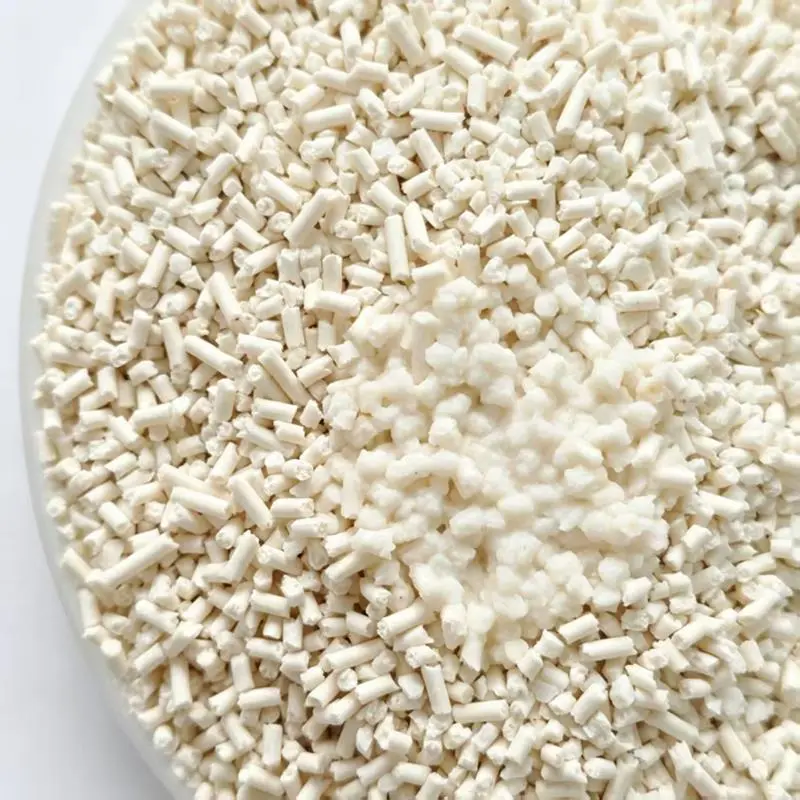
The main difference between crushed tofu litter and traditional pellet-style tofu litter is often the physical form of the particles.
| Feature | Crushed Tofu Litter | Pellet-Style Tofu Litter |
|---|---|---|
| Particle shape | Irregular or crushed | More uniform pellets |
| Particle size | Often smaller or granular | Usually larger and more structured |
| Material | Plant-based tofu formulation | Plant-based tofu formulation |
| Clumping | Depends on formulation | Depends on formulation |
| Odor control | Depends on formulation | Depends on formulation |
| Dust level | Depends on processing | Depends on processing |
| Cleaning | Designed for scooping | Designed for scooping |
Neither particle format should automatically be considered superior in every situation.
Some cats may prefer a particular texture, while some owners may prefer a specific particle size because of their cleaning habits or litter-box setup.
For manufacturers and pet brands, particle structure can be customized depending on the target market and product positioning.
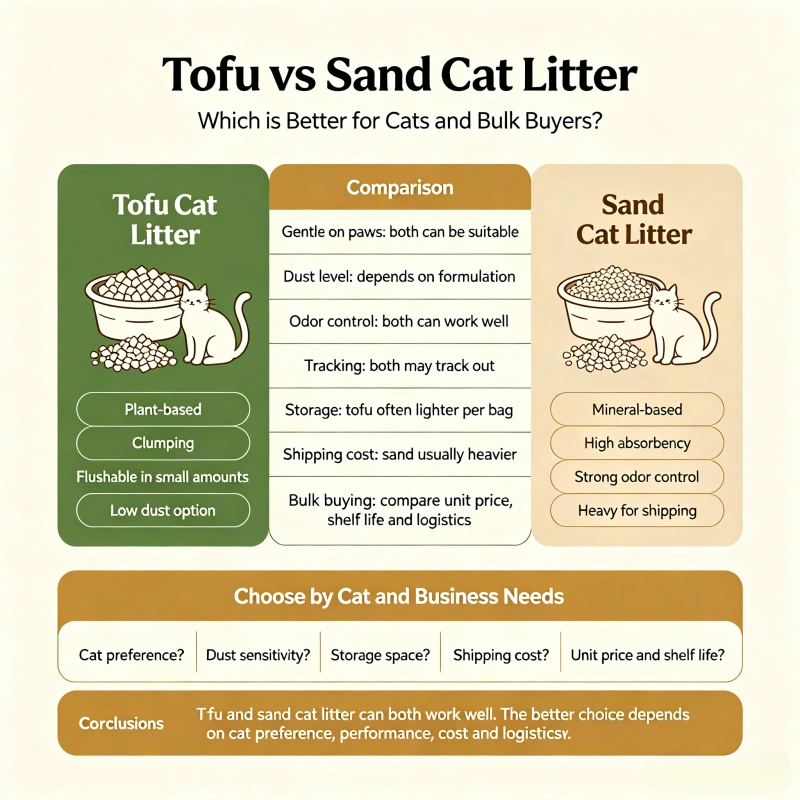
Crushed Tofu Litter vs. Clay Cat Litter
Tofu litter and clay litter use different material bases and can offer different product characteristics.
| Feature | Tofu-Based Litter | Clay-Based Litter |
|---|---|---|
| Primary material | Plant-based materials | Mineral materials |
| Product positioning | Plant-based alternative | Traditional mineral litter |
| Clumping | Common in many products | Common in many products |
| Weight | Can be formulated as lightweight | Often relatively dense |
| Dust | Depends on formulation and processing | Depends on clay type and processing |
| Odor control | Depends on formulation | Depends on formulation |
| Disposal | Product-specific | Product-specific |
| Biodegradability | Depends on ingredients | Generally differs from plant-based materials |
The right choice depends on the cat, owner's preferences, product formulation, and intended disposal method.
Rather than choosing based only on the material name, consumers should consider the complete product specifications.
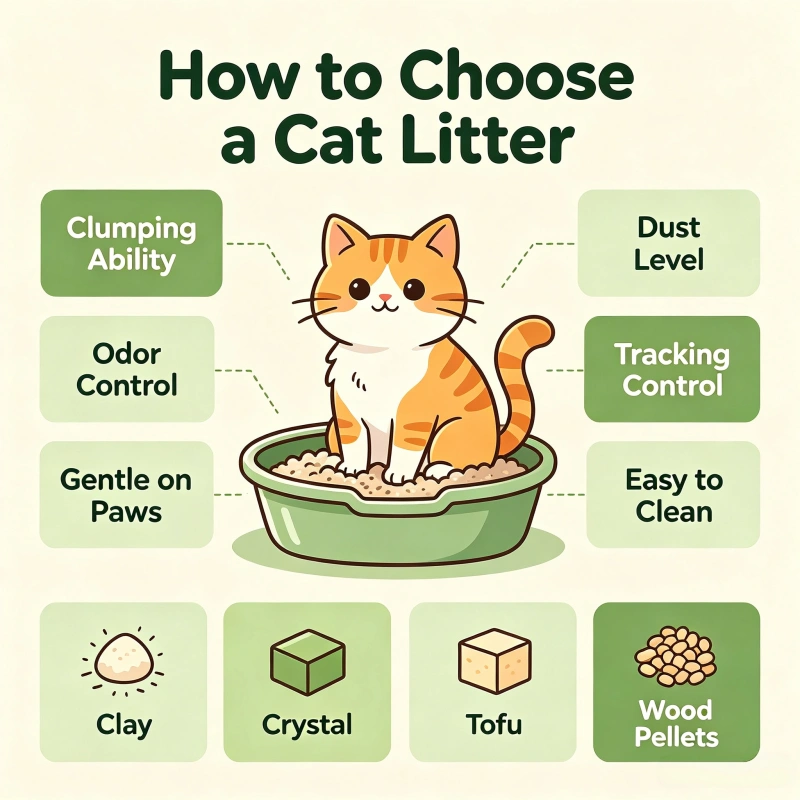
How to Choose Crushed Tofu Litter
If you are considering crushed tofu litter for your cat, several product characteristics are worth checking.
1. Particle Size
Particle size can affect texture, tracking, absorption, and cleaning.
Choose a particle format that is appropriate for your cat and litter-box setup.
2. Clumping Strength
If easy scooping is important, look for a product with consistent clumping performance.
3. Dust Level
Dust can be affected by raw materials, particle structure, screening, transportation, and packaging.
Manufacturers with appropriate processing and screening systems can work toward consistent particle quality and dust control.
4. Odor Control
Check whether the product uses a specific deodorizing formulation and consider whether you prefer scented or unscented litter.
5. Fragrance
Some cats and owners prefer unscented products, while others may prefer a lightly scented formulation.
For private-label products, fragrance can often be developed according to the target market and product positioning.
6. Packaging
Packaging should protect the litter from moisture during storage and transportation.
For brands, package size, material, design, printing, and labeling can also be customized.
7. Testing and Quality Standards
When purchasing from a manufacturer, ask about quality-control procedures, testing, certifications, and product specifications.
These factors can be particularly important for distributors, retailers, and pet brands sourcing products internationally.
Can Crushed Tofu Litter Be Customized?
Yes. Depending on the manufacturer's capabilities, tofu cat litter can be developed and customized for different markets and brand requirements.
Customization may include:
Particle Size
Manufacturers can develop different particle sizes and structures according to the target product specification.
Formula
The formulation can potentially be adjusted for characteristics such as absorption, clumping, odor management, and plant-based positioning.
Fragrance
Brands may request scented or unscented formulas, as well as specific fragrance profiles.
Color
Color can be customized according to the brand's product concept and market requirements, subject to formulation and production considerations.
Packaging
Packaging can be developed for different retail channels, package sizes, and brand identities.
Private Label
Private-label manufacturing allows a pet brand to sell tofu cat litter under its own brand name and packaging.
OEM and ODM
OEM and ODM services can support brands that already have product specifications or need assistance developing a customized tofu cat litter product.
This can be particularly useful for Amazon and e-commerce sellers, distributors, pet retailers, and established pet-care brands.
Looking for a Crushed Tofu Litter Manufacturer?
For pet brands, retailers, distributors, and wholesalers, choosing the right manufacturer is an important part of developing a successful cat litter product.
Established in 2020, Shandong Gelin Town Pet Products Co., Ltd. is a professional cat litter manufacturer specializing in plant-based cat litter.
Our production facility covers approximately 16,000 square meters, with an annual production capacity of approximately 7,000 tons. The factory is equipped with automated production equipment, standardized workshops, and a professional R&D team.
Our product range includes:
Plant-based cat litter
Tofu cat litter
Corn-based cat litter
Health-monitoring cat litter
Natural mineral cat litter
Customized cat litter products
For wholesale customers and pet brands, we provide OEM and ODM services covering different product requirements.
Customization options can include:
Particle size
Material and formulation
Color
Fragrance
Packaging
Private labeling
Product specifications
Testing requirements
Our quality and management systems are supported by certifications and assessments including BSCI, ISO9001, SGS, and CTI.
With experience serving customers across Europe, America, Australia, and Asia, our factory can support both online retailers and offline pet brands with a supply chain solution from raw material processing to finished and packaged cat litter products.
If you are developing a new tofu cat litter brand, sourcing bulk tofu litter, or looking for an OEM/ODM manufacturing partner, a direct discussion with us can help determine the appropriate formulation, particle structure, packaging, production volume, and testing requirements for your market.
Frequently Asked Questions
What is crushed tofu litter?
Crushed tofu litter is a plant-based cat litter made from processed tofu-related plant materials and formulated into small, irregular, or crushed-style particles. It is a particle format within the broader category of tofu-based cat litter.
Is crushed tofu litter made from real tofu?
No. Tofu cat litter does not simply consist of crushed food-grade tofu. It is manufactured from processed plant-based raw materials associated with soybean processing and other ingredients selected for cat-litter applications.
Is crushed tofu litter biodegradable?
Many tofu-based cat litters contain plant-based materials that can be biodegradable, but the exact biodegradability depends on the formulation. Always check the specific product specifications and disposal instructions.
Is tofu litter flushable?
Some tofu cat litters are marketed as flushable, but not every tofu litter product is suitable for flushing. Product formulation, particle characteristics, plumbing systems, and local wastewater requirements should all be considered. Follow the manufacturer's instructions and local regulations.
Does crushed tofu litter clump?
Many crushed tofu litter products are designed to clump when they absorb liquid. However, clumping speed and strength vary according to formulation, particle size, binders, moisture content, and manufacturing conditions.
Does crushed tofu litter control odor?
Tofu cat litter can be formulated for odor management through absorption and deodorizing ingredients. Actual performance varies by product and also depends on regular litter-box cleaning.
Is tofu litter safe for cats?
Tofu cat litter is designed as a plant-based cat-litter option, but safety depends on the specific raw materials, additives, manufacturing controls, and product quality. Cat owners should follow product instructions and consider individual sensitivities.
What is the difference between crushed tofu litter and pellet tofu litter?
The primary difference is particle structure. Crushed tofu litter generally has smaller or more irregular particles, while pellet tofu litter typically has more uniform cylindrical particles. Other characteristics depend on the individual formulation.
Can I buy tofu cat litter wholesale?
Yes. Tofu cat litter is available through manufacturers and suppliers for wholesale and bulk purchasing. When sourcing for a business, consider production capacity, MOQ, formulation options, packaging, testing, certifications, and lead times.
Can tofu cat litter be customized?
Yes. Depending on the manufacturer, tofu cat litter can be customized in areas such as particle size, formulation, fragrance, color, packaging, private labeling, and other product specifications. OEM and ODM services can also support customized product development.
Final Thoughts
Crushed tofu litter is essentially a plant-based tofu cat litter product characterized by its smaller, irregular, or crushed-style particle format. Its performance depends not only on the particle shape but also on the raw materials, formulation, binders, processing technology, drying, screening, and quality control used during manufacturing.
For cat owners, the most important factors to consider include clumping, absorption, odor control, dust, particle size, disposal instructions, and individual cat preferences.
For pet brands, retailers, and distributors, the choice goes beyond the finished litter itself. Manufacturing capacity, product customization, quality management, testing, packaging, and OEM/ODM capabilities can all influence the suitability of a supplier.
As interest in plant-based cat litter continues to grow, understanding the material, manufacturing process, and product specifications can help both consumers and businesses make more informed choices.
387.webp)