Choosing tofu cat litter involves more than comparing bag prices or looking for phrases such as “natural,” “highly absorbent,” and “low dust.” The right product should match your cat's preferences, perform consistently during daily cleaning, and meet your requirements for storage, packaging, and disposal.
For importers, distributors, retailers, and private-label brands, the decision is more technical. Pellet diameter, moisture content, bulk density, absorption, clumping strength, dust, and packaging integrity can all influence product quality and customer satisfaction. If the litter will be used in an automatic litter box, compatibility must also be evaluated against the machine's specific requirements.
This tofu cat litter buying guide explains how to compare specifications, conduct practical performance tests, evaluate automatic litter box compatibility, and develop an OEM/ODM product that suits your target market.
What Is Tofu Cat Litter?
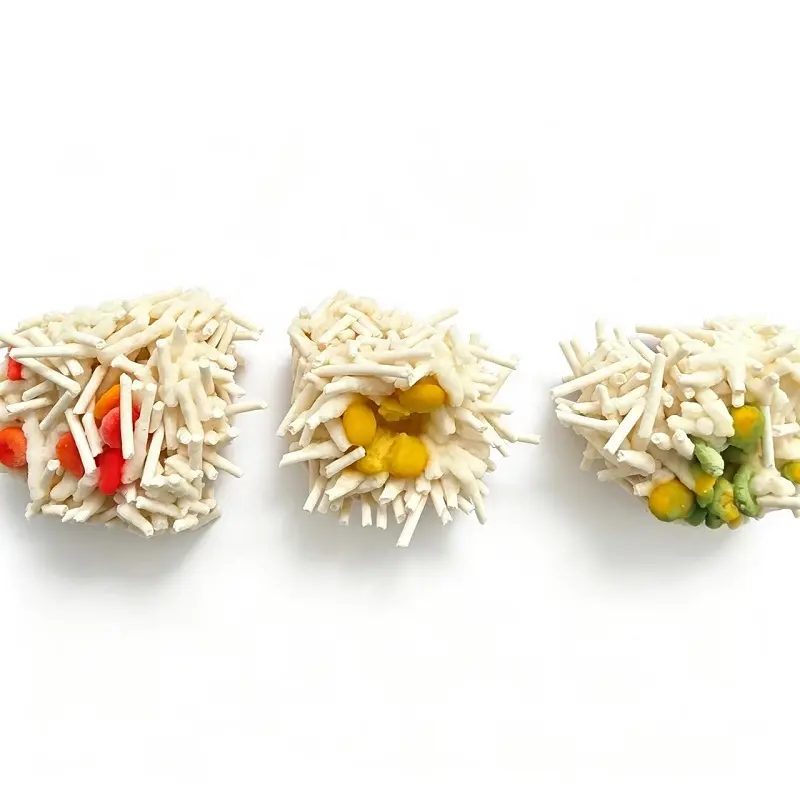
Tofu cat litter is a plant-based cat litter commonly made using pea fiber, soybean-derived materials, corn starch, and binders. Depending on the manufacturer, the formula may include other plant fibers or functional ingredients to achieve the required pellet structure and performance.
The name “tofu cat litter” does not necessarily mean the finished product is made entirely from leftover tofu residue. Different manufacturers use different raw materials and production processes, so buyers should check the ingredient declaration rather than rely on the product category alone.
Tofu cat litter is commonly available in several formats:
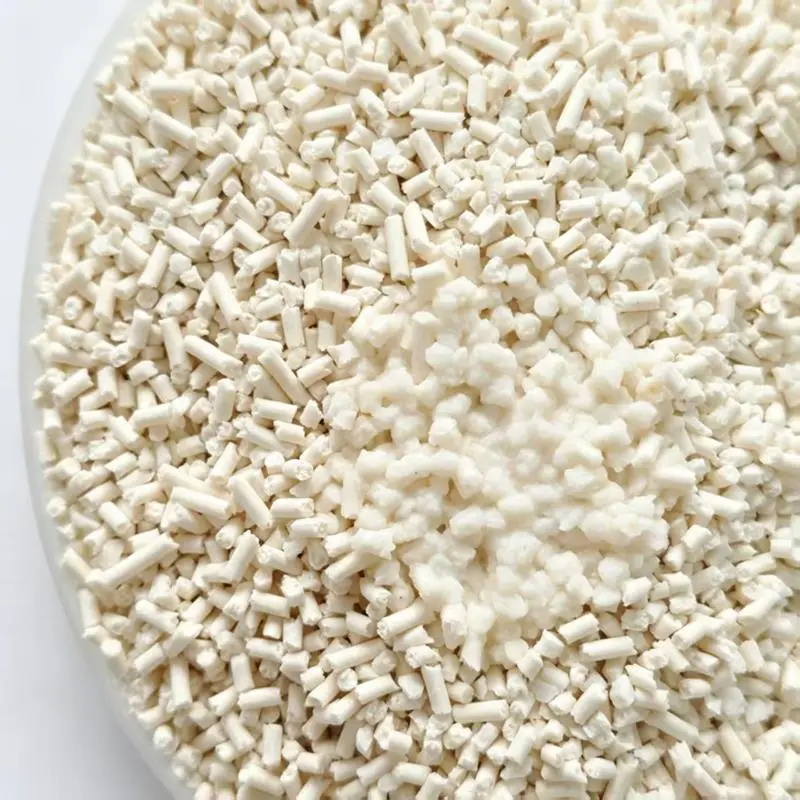
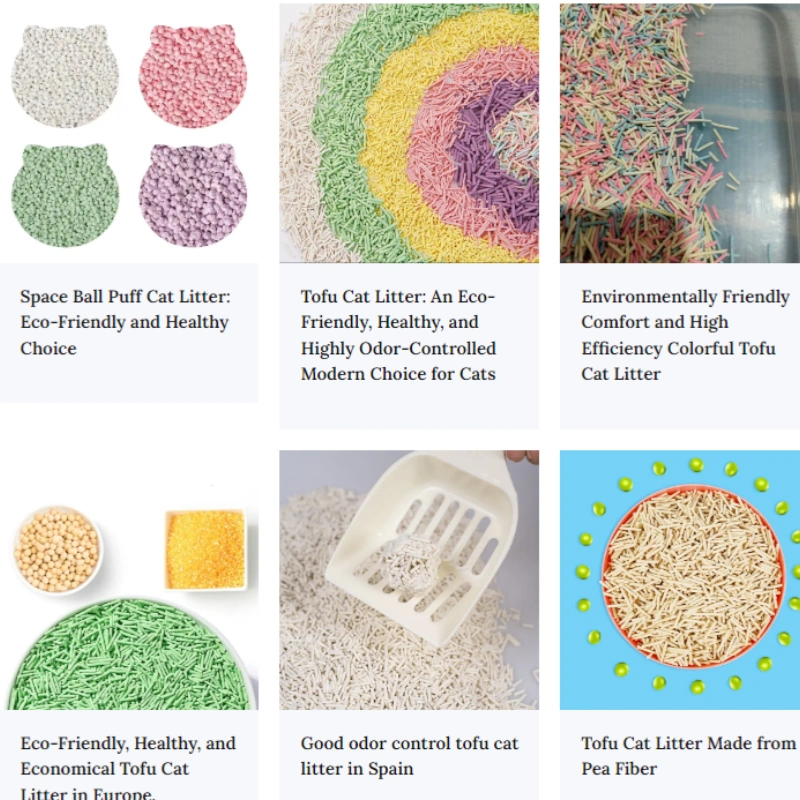
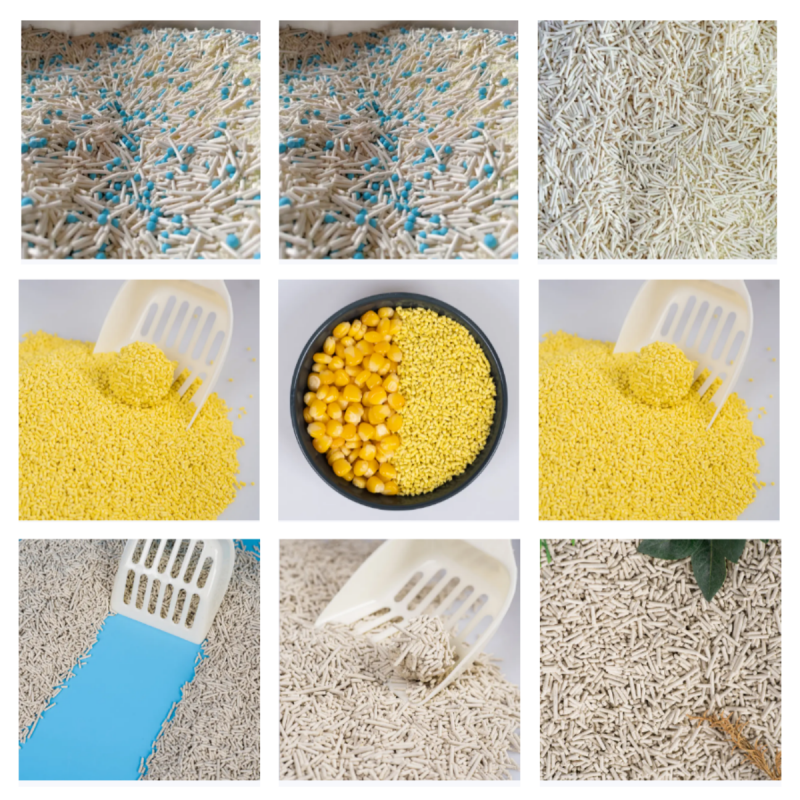
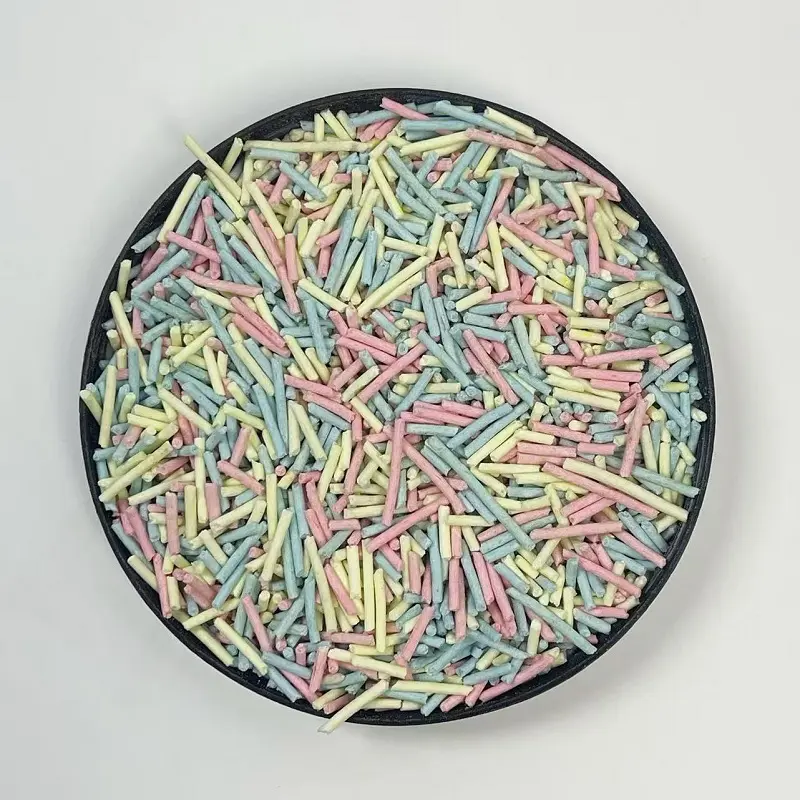
Standard cylindrical pellets: Traditional stick-shaped granules designed for daily absorption and scooping.
Fine or small-diameter pellets: Smaller granules that offer a different texture under a cat's paws.
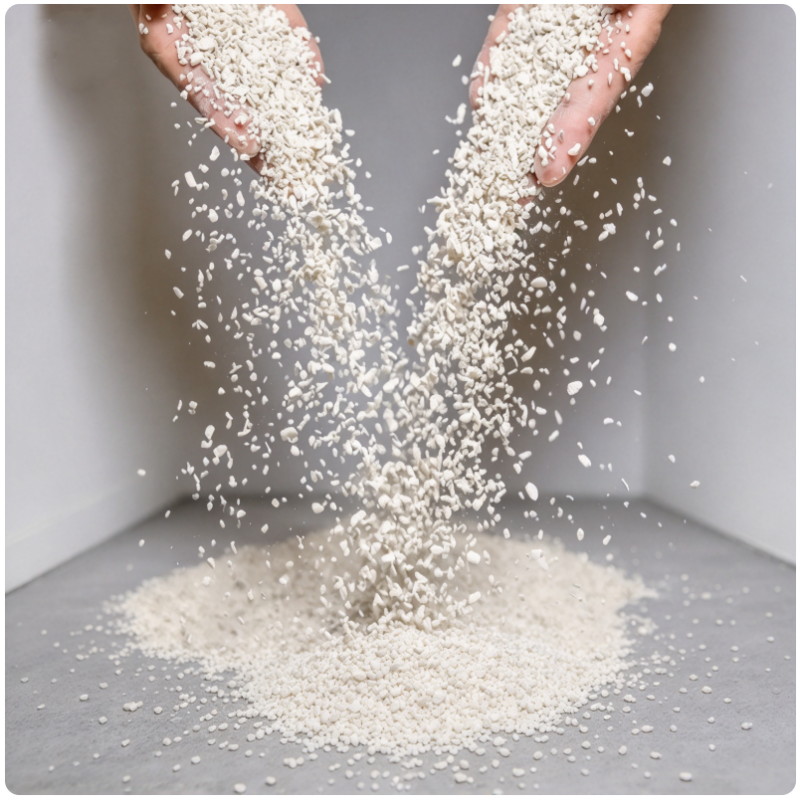
Crushed tofu litter: Broken or irregular particles that may offer a texture closer to granular litter.
Puffed or expanded tofu litter: Lightweight particles formed through a different processing approach.
Blended plant-based litter: Formulations combining tofu material with other plant-derived ingredients.
Each format can perform differently. Pellet shape alone does not prove superior absorption, faster clumping, lower dust, or automatic litter box compatibility.
Tofu Cat Litter Specifications: What Should Buyers Check?
Product specifications help buyers determine whether a litter suits their intended application. However, no single specification can predict the complete performance of the finished product.
The following table outlines the key parameters to review before purchasing.
| Specification | What it tells you | Why it matters |
|---|---|---|
| Ingredients | The materials used in the formula | Helps assess material sourcing and formulation consistency |
| Pellet diameter | The approximate width of each pellet | Influences texture and may affect separation in some automatic boxes |
| Pellet length | The length of cylindrical pellets | Affects handling, particle separation, and product consistency |
| Moisture content | The proportion of moisture in the finished product | Helps characterize storage condition and production consistency |
| Bulk density | The mass of litter per unit of volume | Affects shipping, storage, handling, and some automatic-box systems |
| Water absorption | How much liquid the sample absorbs under a defined method | Helps compare moisture-handling performance |
| Clumping strength | How well used litter holds together | Influences scooping and residue |
| Dust or fines content | The amount of fine or loose material | Helps evaluate handling cleanliness and product consistency |
| Fragrance | Whether the formula contains added scent | Affects customer preference and product positioning |
| Packaging | Bag material, net weight, volume, and sealing | Protects the product during transport and storage |
What pellet size is best for tofu cat litter?
Common commercial specifications include pellet diameters such as 1.5 mm, 2 mm, and 3 mm. Other products use larger diameters or customized sizes.
These dimensions are examples from supplier listings, not a universal industry standard. Buyers should specify both diameter and length because two products with the same diameter may still have different pellet structures.
Smaller granules may appeal to cats that prefer a finer texture. Longer or larger pellets may behave differently when scooped or processed by an automatic sifting system. Neither format is automatically superior for every household.
For OEM projects, define the target particle dimensions and acceptable production variation in writing. Request a sample and verify it against the agreed specification before approving mass production.
What is an acceptable moisture content?
Moisture content is an important quality-control parameter because it can affect product weight, storage behavior, and the consistency of subsequent measurements.
Publicly available tofu cat litter specifications illustrate the variation between products. One supplier data sheet specifies moisture at no more than 12%, while another product listing uses a limit of no more than 10%.
These are examples of supplier specifications, not universal quality grades. The appropriate limit should be agreed with the manufacturer and validated for the particular formulation, packaging, and intended storage conditions.
A buyer should confirm the test method, sampling procedure, and acceptance limit rather than treating a lower number as automatically better.
How should you compare water absorption rates?
Absorption percentages are only comparable when the test methods are sufficiently similar.
A common way to calculate absorption on a weight basis is:
Water absorption (%) = (Mass of absorbed liquid ÷ Initial dry sample mass) × 100
For example, if a 10 g dry sample absorbs 30 g of liquid under the defined test conditions, its calculated absorption is 300%.
This example explains the calculation; it is not a test result for a particular tofu cat litter product.
Before comparing supplier claims, check the sample weight, liquid type, exposure time, drainage method, temperature, and calculation procedure. One manufacturer's “350% absorption” result may not be directly comparable with another manufacturer's figure if the methods differ.
How to Evaluate Tofu Cat Litter Performance
Technical specifications are useful for shortlisting products, but a controlled product trial helps determine how the litter actually behaves.
For B2B buyers, a test protocol should be agreed before sample approval. For consumers, consistent household observations can help identify the most suitable product.
The procedures below are practical evaluation frameworks, not claims that a specific product has passed laboratory testing.
1. Water absorption test
The aim is to measure how much liquid the litter absorbs under controlled conditions.
Suggested procedure:
Weigh a dry sample using a scale with suitable precision.
Place it in a clean, level container and record the amount of litter used.
Apply a measured quantity of the test liquid.
Allow the sample to react for a defined period.
Follow a consistent drainage or separation method.
Measure the retained liquid or resulting mass according to the agreed protocol.
Repeat the test to check whether the results are consistent.
For commercial product development, the liquid, sample quantity, contact time, and measurement procedure should be documented. If salt water or a standardized synthetic urine solution is used, every compared product should be tested using the same conditions.
A simple water test can provide an initial comparison, but it does not establish complete odor-control performance or guarantee how the litter will behave in daily use.
2. Clumping strength test
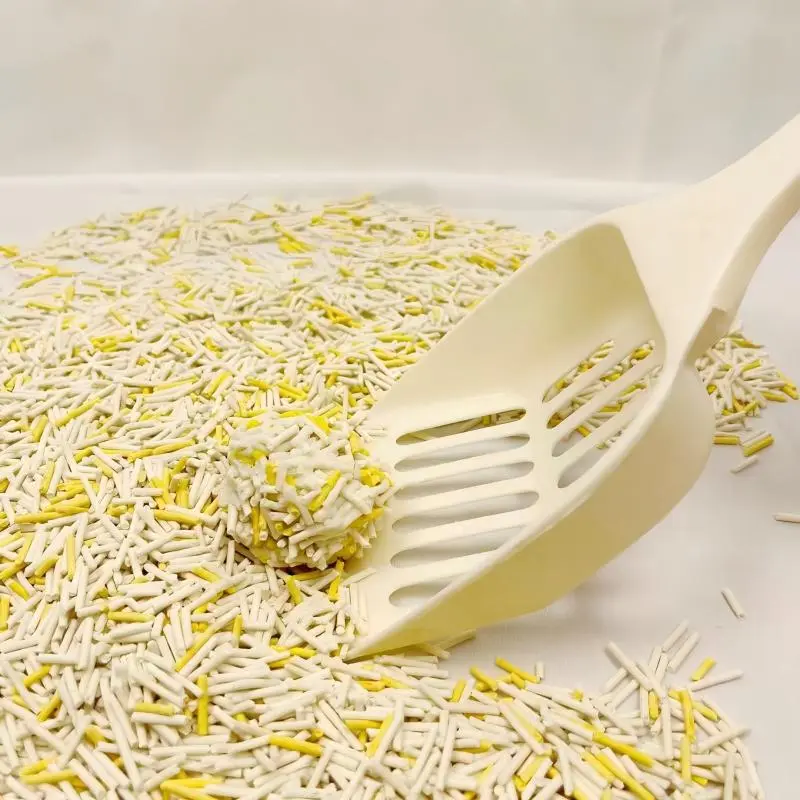
Clumping is one of the most important performance factors for scoopable tofu cat litter.
A good clump should hold together well enough to be removed without excessive crumbling. If it breaks apart, small wet fragments may remain in the tray and increase cleaning effort.
Suggested procedure:
Add the same measured quantity of litter to each test tray.
Apply an agreed volume of test liquid.
Wait for the same specified clumping period.
Lift the clump using the same scoop or test device.
Record whether it remains intact, breaks apart, or leaves residue.
Repeat the test on multiple samples.
For a more objective assessment, define a clump-retention method. For example, a test may measure the percentage of the recovered clump mass that remains together after a specified handling or sieving process. The test conditions and calculation must be the same for all samples.
Do not claim that one product has “stronger clumps” based on an informal comparison conducted under different conditions.
3. Dust and fines test
Dust can affect the cleanliness of the surrounding area and is an important product-quality consideration.
However, a visual check alone is not sufficient to substantiate quantitative claims such as “99% dust-free.”
A controlled evaluation should specify the sample mass, handling method, screening or measurement equipment, and calculation. For manufacturing quality control, record the fines content against an agreed specification and compare results between batches.
In a household trial, observe dust during pouring and routine cleaning, but describe the result as an observation rather than a laboratory measurement.
4. Odor-control test
Odor control depends on moisture absorption, clump removal, fragrance, cleaning frequency, and the compounds being measured.
A practical household assessment can record odor under consistent conditions, but it is not a substitute for a controlled laboratory test.
For a technical claim, the test protocol should define the odor challenge, environmental conditions, observation times, and measurement method. Where ammonia concentration is used as an indicator, buyers should remember that ammonia is only one contributor to litter-box odor.
For household use, scoop waste regularly and follow the product's replacement instructions. Do not leave waste in the tray longer than recommended just to test a product's limits.
5. Pellet durability and fines generation
Pellets may break during production, packaging, transport, or use. Excessive breakage can change the particle distribution and increase the amount of small loose material in the bag.
A suitable evaluation can include sample handling, a defined agitation or durability procedure, and a measurement of fines before and after testing.
For distributors, this is particularly relevant when comparing samples with products delivered after long-distance shipping. The test should reproduce realistic handling conditions as closely as practical.
A sample performance evaluation table
Use a consistent record sheet when testing different tofu cat litter samples.
| Test item | Result to record | Acceptance criteria |
|---|---|---|
| Pellet diameter | Measured range | Agreed product specification |
| Pellet length | Measured range | Agreed product specification |
| Moisture content | Test result and method | Agreed limit |
| Bulk density | Mass per unit volume | Agreed range |
| Absorption | Calculated result | Defined method and minimum requirement |
| Clump integrity | Retention or breakage result | Defined test and acceptance limit |
| Dust or fines | Measured percentage | Agreed method and maximum |
| Odor performance | Instrumental or controlled sensory result | Defined protocol |
| Packaging condition | Seal, damage, and leakage inspection | Agreed inspection criteria |
A sample should be approved only after its results meet the agreed requirements. If test results differ significantly from expectations, investigate the raw material, formulation, processing, and testing procedure before approving a production change.
Is Tofu Cat Litter Compatible With Automatic Litter Boxes?
Tofu cat litter can work in some automatic litter boxes, but compatibility depends on the litter formula and the machine's design.
Many automatic boxes use a sifting, rotating, or screening mechanism to separate waste from reusable litter. These systems typically need litter that clumps firmly enough to be removed while allowing unused particles to pass through the separator.
However, “automatic litter box compatible” should not be treated as a universal claim. Pellet diameter, pellet length, bulk density, clump formation, and sensor requirements can affect performance.
What matters for automatic litter box compatibility?
| Factor | Why it matters |
|---|---|
| Clumping speed | The machine may start cleaning before a clump has become firm enough |
| Clump integrity | Weak clumps may break during rotation or separation |
| Pellet diameter | The particles must behave appropriately with the machine's screen or separator |
| Pellet length and shape | Long or irregular pellets may separate differently from short granules |
| Bulk density | Lightweight litter may interact differently with some weight-sensitive sensors |
| Dust and residue | Fine material may accumulate and increase cleaning needs |
| Moisture and stickiness | Wet litter that sticks to the liner can interfere with cleaning |
| Cat acceptance | A cat must continue to use the box comfortably and normally |
Why lightweight litter needs special attention
Some automatic litter boxes use weight sensors to detect a cat or monitor operation. The original Litter-Robot 3 manual, for example, specifies clumping litter and notes that lightweight alternatives such as corn or wheat litter may require more weight to activate its cat sensor.
This is a model-specific instruction, not proof that all plant-based litter is incompatible with all automatic boxes. It demonstrates why buyers should consult the manual for the exact machine and validate the selected formula.
Do not overfill the litter chamber to compensate for a sensor issue. Follow the fill line and troubleshooting instructions provided by the machine manufacturer.
How to test tofu litter in an automatic box
Before commercializing a formula with an automatic-box compatibility claim, use the following evaluation process.
Step 1: Identify the exact machine model. Check its manual for permitted litter types, pellet restrictions, fill level, and maintenance requirements.
Step 2: Confirm pellet specifications. Measure the diameter and length of the actual product sample. Do not assume that two pellets with the same diameter behave identically.
Step 3: Test clumping outside the machine. Confirm that the clumps reach adequate strength within the proposed cycle delay.
Step 4: Run a supervised trial. Follow the machine manufacturer's instructions and monitor the cleaning cycle, separation, tray residue, waste removal, and sensor operation.
Step 5: Inspect after repeated cycles. Look for pellet breakage, excessive fines, material sticking to the liner, and incomplete separation.
Step 6: Document the result. Record the model tested, litter batch, fill level, clumping delay, and any operational issues.
Compatibility should only be claimed for the tested formula and supported machine models. Results from one machine should not automatically be extended to every self-cleaning litter box.
Tofu Cat Litter vs. Clay, Corn, and Silica Litter
The best litter depends on the cat's preferences, cleaning requirements, and the buyer's priorities.
| Comparison point | Tofu litter | Clumping clay litter | Corn litter | Silica crystal litter |
|---|---|---|---|---|
| Main material | Plant-derived ingredients, often pea or soybean fiber | Mineral clay, often bentonite | Corn-derived material | Silica gel |
| Clumping | Depends on the formula | Many products form firm clumps | Depends on the formula | Commonly non-clumping |
| Pellet or particle format | Often cylindrical pellets, crushed pieces, or other forms | Commonly granular | Granules or pellets, depending on product | Crystals or granules |
| Weight and handling | Varies with density and pellet structure | Can be relatively heavy | Varies with formulation | Varies with crystal size |
| Dust | Product-dependent | Product-dependent | Product-dependent | Product-dependent |
| Automatic-box suitability | Requires model-specific validation | Requires suitability under the machine's instructions | Requires model-specific validation | Depends on crystal size and the machine's separator |
| Environmental assessment | Depends on ingredients, production, packaging, and disposal | Includes mineral sourcing and disposal | Depends on ingredients and full lifecycle | Includes processing and disposal |
| Key purchase criterion | Pellet consistency, clumping, and handling | Clumping, dust, and value | Absorption and formula performance | Moisture handling and replacement routine |
No material category is automatically the best in every situation. A buyer should compare the complete formula under similar conditions rather than choosing solely by material name.
Tofu Cat Litter OEM/ODM: What Should B2B Buyers Know?
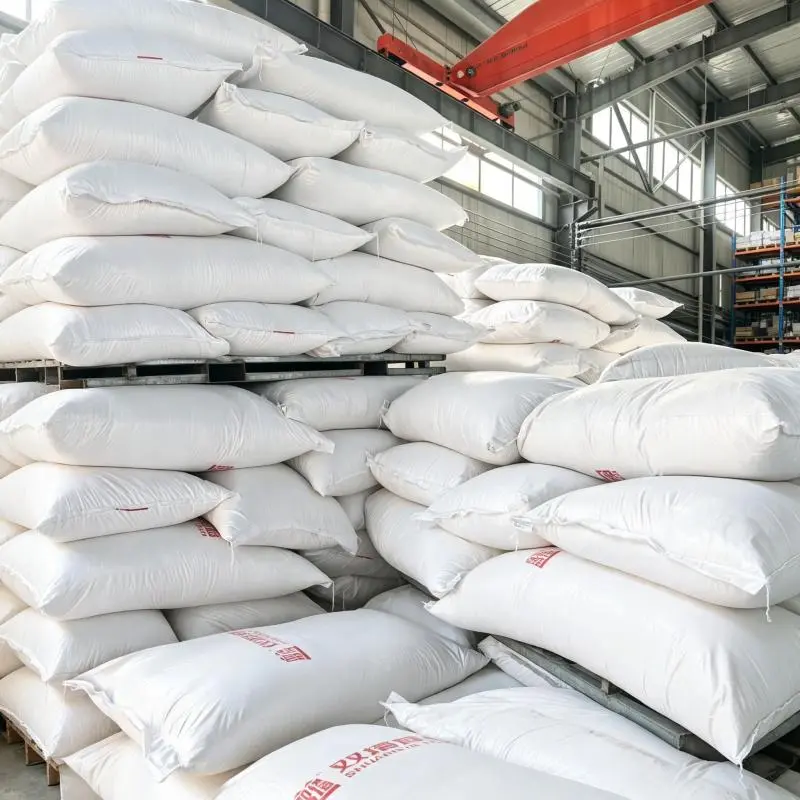
OEM and ODM services allow pet brands to develop tofu cat litter under their own brand names, with customized product specifications and packaging.
For importers, wholesalers, retailers, and e-commerce sellers, the key is to establish the product requirements before discussing packaging artwork or large production orders.
Gelin Town Pet manufactures plant-based cat litter and lists tofu cat litter, crushed-shape tofu litter, space-puffed tofu litter, and other product categories. Its published packaging information includes standard options such as 1.5 kg, 2 kg, 2.5 kg, 5 L, 6 L, 10 L, and 20 L, with customized formats available upon request.
1. Formula and pellet customization
Depending on the selected product and technical feasibility, an OEM project may involve:
Pellet diameter and length.
Standard cylindrical or crushed formats.
Selected plant-derived ingredients.
Unscented or agreed fragrance options.
Agreed absorption, clumping, moisture, and dust requirements.
The final options should be confirmed by reviewing sample performance and defining the intended product specification. A requested formula change may affect pellet structure, absorption, cost, production conditions, or the results of earlier tests.
2. Packaging and private-label development
Packaging should be selected according to the intended sales channel and distribution conditions.
Options may include PE or laminated bags, kraft-paper laminated structures, stand-up pouches, flat-bottom bags, and resealable formats, depending on the order and packaging design.
Before approving artwork, confirm:
Net weight or package volume.
Bag dimensions and sealing structure.
Moisture protection requirements.
Barcode and batch identification.
Language and product instructions.
Ingredient declaration.
Storage and disposal directions.
Outer carton and pallet configuration.
Packaging descriptions and environmental claims should match the actual structure and applicable market requirements.
3. Sample approval and quality control
A successful OEM project should begin with sample evaluation rather than relying solely on a brochure or product photograph.
The buyer and manufacturer should agree on the finished product's critical specifications, testing methods, acceptance ranges, and inspection responsibilities. The approved sample should be identifiable by its formula and batch information.
If a supplier changes a raw material, pellet size, binder, or production setting, the change should be assessed for its potential effect on the approved specification.
4. Supplier and factory assessment
When evaluating a tofu cat litter manufacturer, review its production capability, quality management, product range, supply terms, and documentation.
Gelin Town Pet states that it was established in 2020 and operates a production area of approximately 16,000 square meters, with an annual production capacity of around 7,000 tons. The company lists BSCI, ISO 9001, SGS, and CTI among its certifications or quality-related credentials.
Buyers should verify the scope and validity of any certificate relevant to their order. A factory-level certification or third-party service credential is not automatically a certification of every finished litter product.
5. Confirm commercial conditions
Before placing a bulk order, confirm the minimum order quantity, sample policy, production lead time, payment terms, shipment plan, and applicable quality documents in writing.
Do not assume that a standard package size or formula is available for every order quantity. Final specifications and commercial terms should be recorded in the sales contract or approved order documentation.
How to Calculate the Real Cost of Tofu Cat Litter
For consumers, cost per bag is only one part of the buying decision. Litter that requires frequent top-ups or produces weak clumps may consume more product over time.
For B2B buyers, a complete landed-cost model is essential.
Consumer cost calculation
Cost per day = Total litter cost ÷ Number of days the litter lasts
For example, a hypothetical bag priced at $20 that lasts 25 days has an average litter cost of $0.80 per day.
This is an illustration, not a usage estimate for a specific product. Actual consumption depends on the number of cats, tray dimensions, cleaning frequency, clumping performance, and product instructions.
B2B landed-cost calculation
Landed cost per saleable bag = Total landed shipment cost ÷ Number of saleable bags received
Include product cost, freight, insurance where applicable, customs and tax treatment, handling, warehousing, damaged goods, and packaging requirements.
Then compare the landed cost with the target wholesale price and retail price, allowing for channel margins, promotions, and operating expenses.
A lower factory quotation is not necessarily the best commercial choice if it is accompanied by inconsistent specifications, high breakage, unsuitable packaging, or additional quality-control costs.
Common Mistakes When Buying Tofu Cat Litter
Choosing by absorption percentage alone
A high absorption figure does not guarantee strong clumps, low dust, or easy cleaning. Compare multiple performance indicators.
Assuming all tofu litter is biodegradable or flushable
Plant-derived ingredients do not establish the disposal route for every finished product. Check the actual formula, supporting evidence, product instructions, and local wastewater or waste-management guidance.
Assuming tofu pellets work in every automatic litter box
Machine design, pellet size, clump strength, density, and sensor requirements vary. Confirm the model-specific requirements and test the exact formula.
Approving bulk production without sample verification
A sample should be tested against the agreed specification. Buyers should also establish what happens if a production batch fails the acceptance criteria.
Ignoring packaging and storage
Tofu litter may be affected by moisture exposure and handling. Packaging should provide appropriate protection during transport and storage, and unused product should be stored according to its instructions.
Frequently Asked Questions
What specifications should I request when buying tofu cat litter?
Start with the ingredient declaration, pellet diameter and length, moisture content, bulk density, absorption method, clumping test, dust or fines method, package dimensions, and batch documentation. The exact acceptance limits should be agreed with the supplier.
What absorption rate is good for tofu cat litter?
There is no meaningful universal answer without knowing the test method. Supplier listings publish different absorption figures, and different methods may produce results that cannot be directly compared. Ask for the sample conditions and calculation procedure as well as the reported percentage.
Can tofu cat litter be used in an automatic litter box?
Some formulas may work with some automatic litter boxes, but compatibility depends on the particular machine and the litter's clumping, particle size, density, and residue behavior. Consult the exact machine manual and test the selected formula before making a compatibility claim.
Does smaller pellet size always mean better performance?
No. Pellet size affects texture and separation, but absorption and clumping depend on the complete formulation and processing conditions. Choose a size based on cat acceptance, intended tray design, and test results.
How can an importer compare two tofu cat litter suppliers?
Request the same technical information from both suppliers, use comparable test methods, and compare representative samples. Also evaluate packaging, batch consistency, lead time, documentation, minimum order quantity, and landed cost.
What is the difference between OEM and ODM cat litter?
OEM generally refers to producing a product to the buyer's requirements under the buyer's brand. ODM generally involves developing or adapting a product solution using the manufacturer's capabilities. The exact division of responsibility should be agreed with the supplier.
How should I verify a supplier's certificates?
Check the certificate issuer, validity period, certificate holder, facility or product covered, and scope. Do not assume that a certification relating to a company or management system automatically proves the finished litter's performance or safety.
Can Gelin Town Pet customize tofu cat litter for my brand?
Gelin Town Pet lists tofu cat litter manufacturing, OEM/ODM, and customized packaging services. Buyers should confirm the required formula, pellet size, fragrance, package format, testing plan, minimum order, and commercial terms for their specific project.
Final Recommendation: Buy Against a Specification, Not a Marketing Claim
The best tofu cat litter is the product that consistently meets your requirements for absorption, clumping, dust, texture, packaging, and everyday use. For automatic litter box owners, compatibility must be checked against the exact machine model. For manufacturers and importers, the same product must also satisfy documented quality and commercial requirements.
Before committing to a bulk purchase, request a technical data sheet, representative samples, and the test methods behind the supplier's main performance claims. Agree on acceptance criteria before production, and compare suppliers under consistent conditions.
At Gelin Town Pet, we work with international B2B customers on tofu cat litter products, customized formats, and OEM/ODM packaging solutions. By defining the target product, testing samples, and agreeing on the final specifications early, buyers can make better-informed decisions and reduce the risk of inconsistent supply.