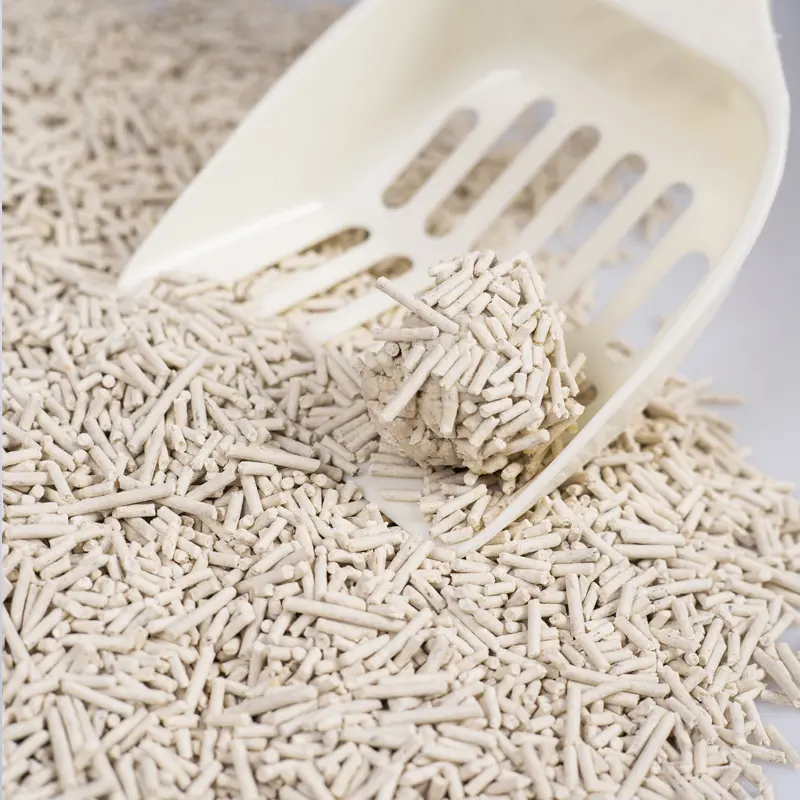
Knowing how to dispose of cat litter properly is an important part of responsible cat ownership. Every cat owner eventually has to deal with used litter, whether it is clumping clay litter, non-clumping litter, silica litter, tofu litter, corn litter, wood litter, or another plant-based product.
The right disposal method depends on several factors: the type of litter, whether it has been contaminated with urine or feces, the instructions provided by the manufacturer, and the waste-disposal rules in your local area.
For most cat owners, the simplest and most widely applicable method is to scoop the used litter into a securely closed bag and place it in the appropriate household waste stream. Flushing cat litter should not be treated as a universal disposal method, even when a product is marketed as biodegradable or plant-based. Some local authorities specifically advise against flushing cat litter because it can contribute to plumbing, sewage, or environmental problems.
This guide explains how to dispose of different types of cat litter, when flushing may or may not be appropriate, whether cat litter can be composted, and how to make litter disposal cleaner, safer, and more environmentally responsible.
What Is the Best Way to Dispose of Used Cat Litter?
For most households, the most practical approach is simple:
Scoop soiled litter from the litter box regularly.
Put the used litter and cat feces into a strong waste bag.
Seal the bag tightly to contain odors and moisture.
Place the sealed bag in the waste stream permitted by your local regulations.
Wash your hands thoroughly after handling used litter.
This method works with many common types of cat litter and does not require special equipment.
The key point is that the disposal method should be based on the used product, not simply on whether the litter is labeled “natural,” “biodegradable,” or “plant-based.” A biodegradable material does not automatically mean that it is suitable for flushing or home composting.
Local waste-management rules can also differ significantly. Some communities may accept certain types of pet waste in specific organics programs, while others require all used cat litter to be placed in general waste. Always check the rules where you live before changing your normal disposal routine.
Cat Litter Disposal at a Glance
| Cat litter type | General disposal option | Flush? | Compost? |
|---|---|---|---|
| Clumping clay | Sealed household waste | Generally no | No |
| Non-clumping clay | Sealed household waste | Generally no | No |
| Silica crystal | Sealed household waste | No | No |
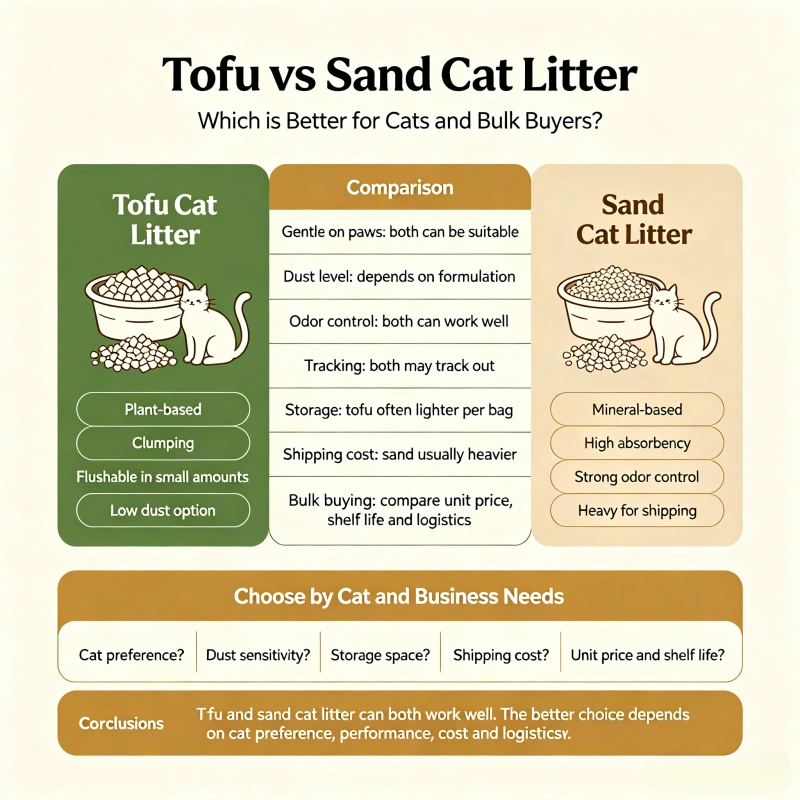
| Tofu/plant-based | Follow product and local rules | Only if explicitly approved | Only where accepted |
| Corn or wheat | Follow product and local rules | Only if explicitly approved | Only where accepted |
| Wood or bamboo | Follow product and local rules | Only if explicitly approved | Only where accepted |
| Specifically labeled flushable litter | Follow manufacturer and local wastewater rules | Possibly | Depends on product |
The table provides a general guide rather than a substitute for local regulations. Product instructions and local waste-management requirements should always take priority.
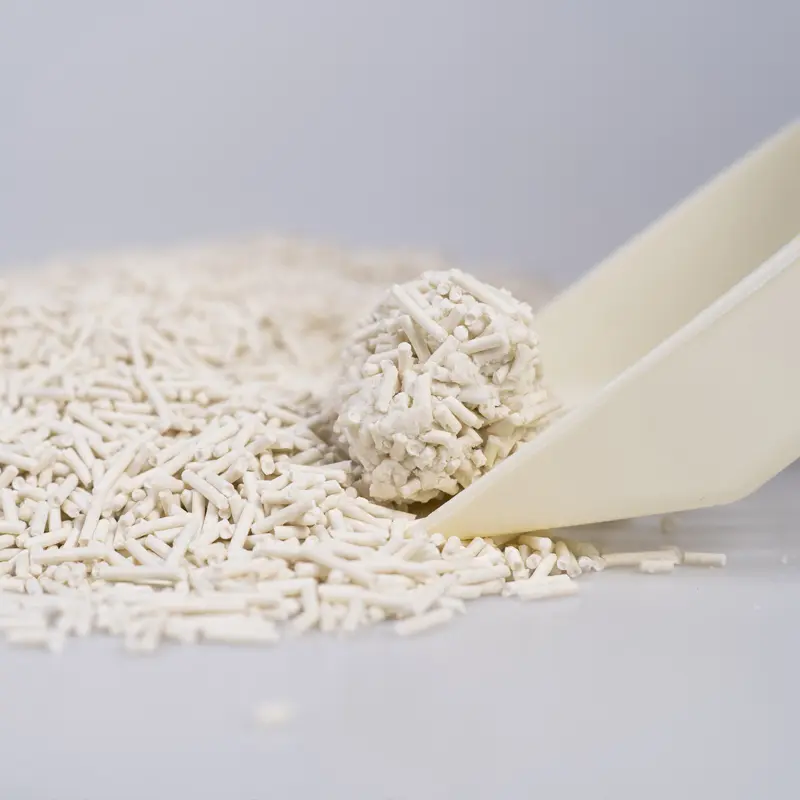
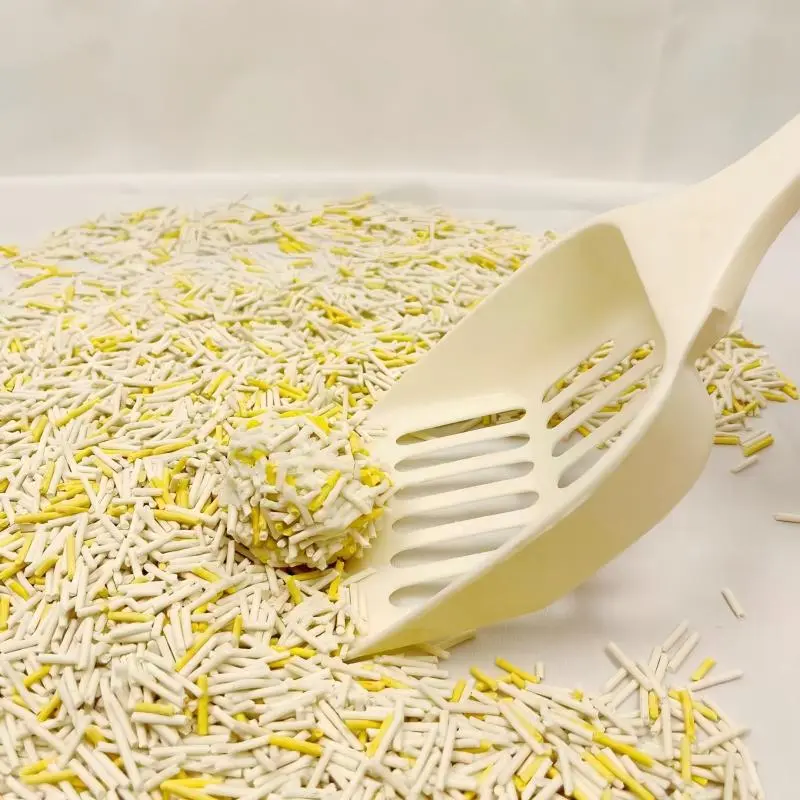
The clumping cat litter can clumps hard and easy to be disposed
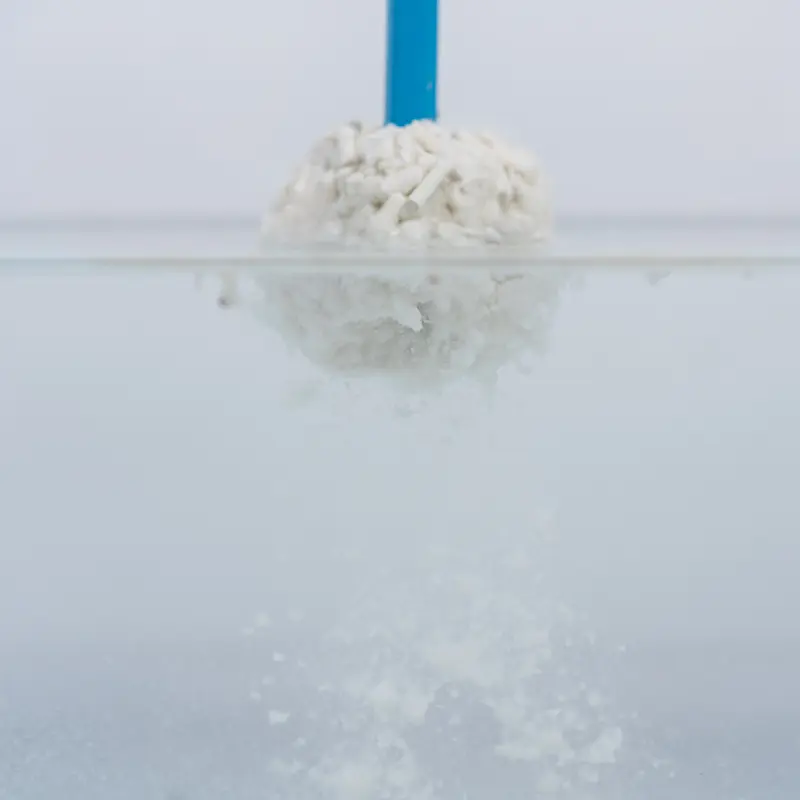
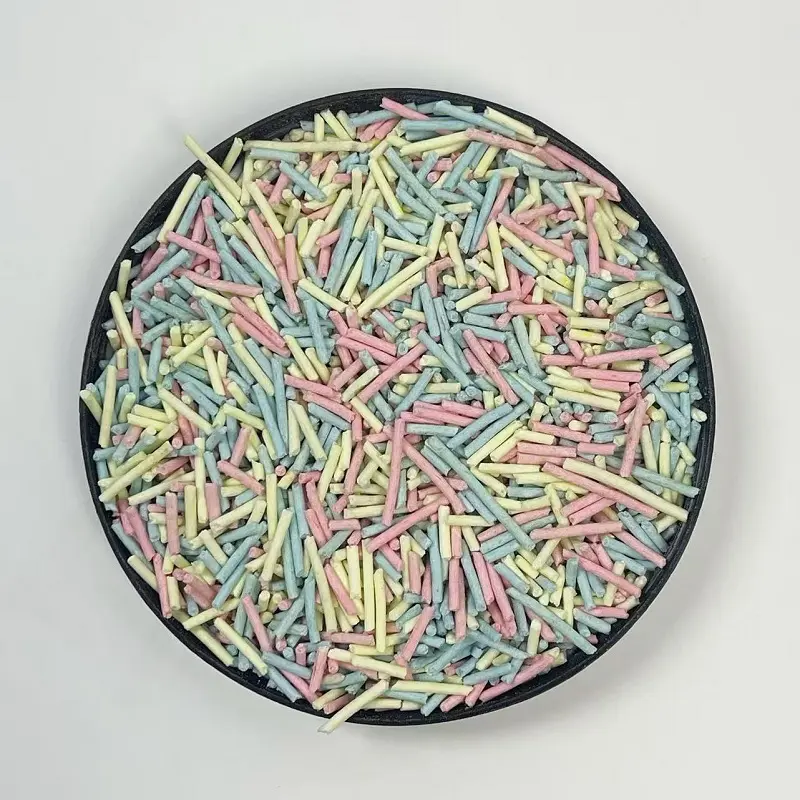
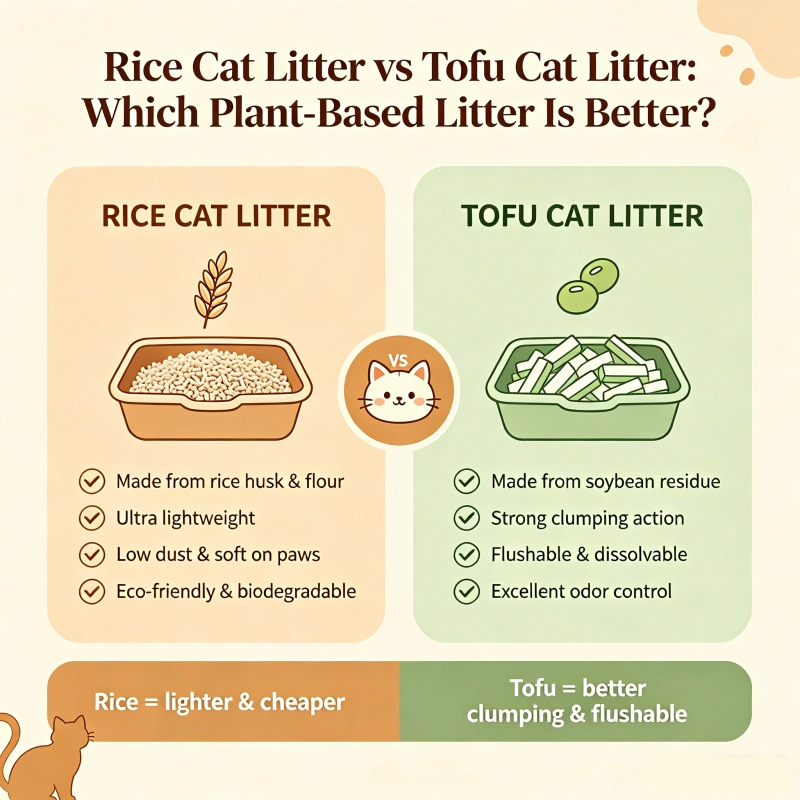
Usually the plant-based cat litter can be dissolved into water, so they are flushable or buried into your garden as fertilizer
How to Dispose of Cat Litter in the Trash
Putting used cat litter in the trash is one of the easiest disposal methods for cat owners.
Start by removing feces and heavily soiled litter from the box with a litter scoop. Place the waste directly into a small, durable bag. If odor or leakage is a concern, use a second bag or a dedicated sealed litter-waste container.
Tie the bag securely before placing it in your household garbage. Avoid leaving an open bag of used litter indoors because moisture and waste can quickly create unpleasant odors.
If your local authority has specific requirements for pet waste, follow those requirements rather than assuming that all household garbage can be handled in the same way.
A dedicated litter-waste system can also make daily cleanup more convenient. These systems are designed to temporarily contain scooped litter and reduce odors between garbage collections.
How to Dispose of Clumping Cat Litter
Clumping cat litter is designed to form solid clumps when it absorbs moisture. This makes daily cleaning relatively easy because urine-soaked litter can be separated from the clean litter.
To dispose of clumping cat litter:
Scoop urine clumps and feces from the box every day.
Place the waste in a dedicated bag or waste container.
Seal the bag carefully.
Put the sealed waste in the appropriate household waste stream.
Replace the litter that has been removed according to the product instructions.
Clay-based clumping litter should generally not be flushed down the toilet. Even when a small amount appears to break apart in water, that does not necessarily mean that it is suitable for household plumbing or sewage systems.
The same principle applies to large quantities of litter. A material that seems to disappear in water can still behave differently inside pipes, septic systems, or wastewater treatment facilities.
How to Dispose of Non-Clumping Cat Litter
Non-clumping cat litter absorbs moisture without forming the firm clumps associated with clumping litter. Because contaminated litter is mixed more evenly throughout the box, cleaning may involve removing soiled areas and periodically replacing larger portions of the litter.
For everyday disposal, scoop out feces and visibly contaminated litter and place them in a securely sealed waste bag. When the entire litter box needs to be emptied, follow the manufacturer's recommendations for replacing and disposing of the used litter.
Non-clumping litter should not automatically be flushed simply because it does not form hard clumps. Disposal depends on the material and the product's instructions, not only on whether the litter clumps.
Can You Flush Cat Litter Down the Toilet?
This is one of the most common questions about cat litter disposal, and the safest answer is: do not assume that cat litter is flushable.
Some products are specifically marketed as flushable, but “flushable” on a package should not be interpreted as a guarantee that flushing is appropriate everywhere.
For example, EPA guidance for septic systems lists cat litter among materials that should not be flushed. Other local authorities similarly recommend keeping cat litter out of toilets and putting it in the trash instead.
If a particular cat litter is labeled as flushable, check all of the following before considering this disposal method:
The product packaging or manufacturer's instructions.
Your local wastewater regulations.
Whether your home uses a municipal sewer or septic system.
Whether your local wastewater authority permits cat litter to be flushed.
If any of these sources advise against flushing, use the trash or another approved disposal method instead.
The safest general rule is simple: never flush cat litter unless the product is explicitly designed for flushing and local authorities allow it.
Can You Flush Different Types of Cat Litter?
| Cat litter | Should you flush it? | Why? |
|---|---|---|
| Clay clumping litter | No | Can create plumbing and wastewater problems |
| Clay non-clumping litter | No | Not designed for toilet disposal |
| Silica litter | No | Does not belong in household plumbing |
| Tofu litter | Check product and local rules | Plant-based does not automatically mean flushable |
| Corn litter | Check product and local rules | Biodegradable does not automatically mean flushable |
| Wheat litter | Check product and local rules | Depends on product design and local regulations |
| Wood litter | Check product and local rules | Material alone does not determine flushability |
| Certified/labeled flushable litter | Only if permitted locally | Product and wastewater requirements both matter |
This distinction is important because biodegradable, natural, plant-based, and flushable are not interchangeable terms.
Is Flushable Cat Litter Really Safe?
The word “flushable” describes a product characteristic, but it does not necessarily mean that the product is suitable for every plumbing or wastewater system.
Toilet and sewer systems are designed around particular materials and flow conditions. Septic systems have additional limitations because wastewater is treated on-site rather than being transported to a centralized treatment plant.
This is why local conditions matter.
Even if a litter breaks down in water, cat feces can present a separate concern. Pet waste may contain pathogens and parasites, and wastewater systems differ in how they handle these contaminants.
For this reason, cat owners should avoid treating “flushable,” “biodegradable,” and “plant-based” as interchangeable terms. They describe different characteristics and do not automatically lead to the same disposal method.
Can You Compost Cat Litter?
Composting is another disposal method that sounds environmentally attractive, especially when using natural or plant-based litter.
However, not all biodegradable cat litter is suitable for home composting.
Pet waste can contain pathogens, and many household composting systems do not reach or maintain the conditions necessary to safely process pet waste. EPA home-composting guidance does not recommend adding pet waste, including soiled cat litter, to a typical home compost pile.
Commercial composting programs can have different rules and processing conditions. Some local programs may accept specific types of cat litter, while others prohibit pet waste entirely.
Therefore, never put used cat litter into a compost bin simply because the litter is labeled “biodegradable.”
Check the rules of the specific composting facility first.
When Is Composting an Option?
| Situation | Composting recommendation |
|---|---|
| Ordinary backyard compost | Generally not recommended for used cat litter |
| Cat litter containing clay | Not suitable |
| Silica crystal litter | Not suitable |
| Plant-based litter | Check the specific composting program |
| Commercial composting facility | Possible only if explicitly accepted |
| Cat feces included | Follow facility-specific pet-waste rules |
The important distinction is between home composting and a commercial or municipal organics facility. A facility may have controlled processing conditions that are not available in a typical backyard compost pile.
Can Plant-Based Cat Litter Be Flushed?
Plant-based cat litter is increasingly popular because it can be made from renewable materials such as tofu, corn, wheat, wood, bamboo, or other plant fibers.
However, plant-based does not automatically mean flushable.
Different plant-based litters have different particle sizes, binders, absorbency characteristics, and breakdown behavior. Some products may be designed and tested for flushing, while others are intended to be disposed of with household waste.
This distinction is especially important for tofu and other highly absorbent litters. A litter may break down when exposed to water while still being unsuitable for your plumbing or local wastewater system.
Always follow the specific product instructions instead of relying on the raw material alone.
For environmentally conscious cat owners, plant-based litter can still be an attractive choice even when the used litter goes into the trash. Choosing renewable materials and using the litter efficiently can reduce the environmental footprint of the product without requiring risky disposal practices.
How Should You Dispose of Tofu Cat Litter?
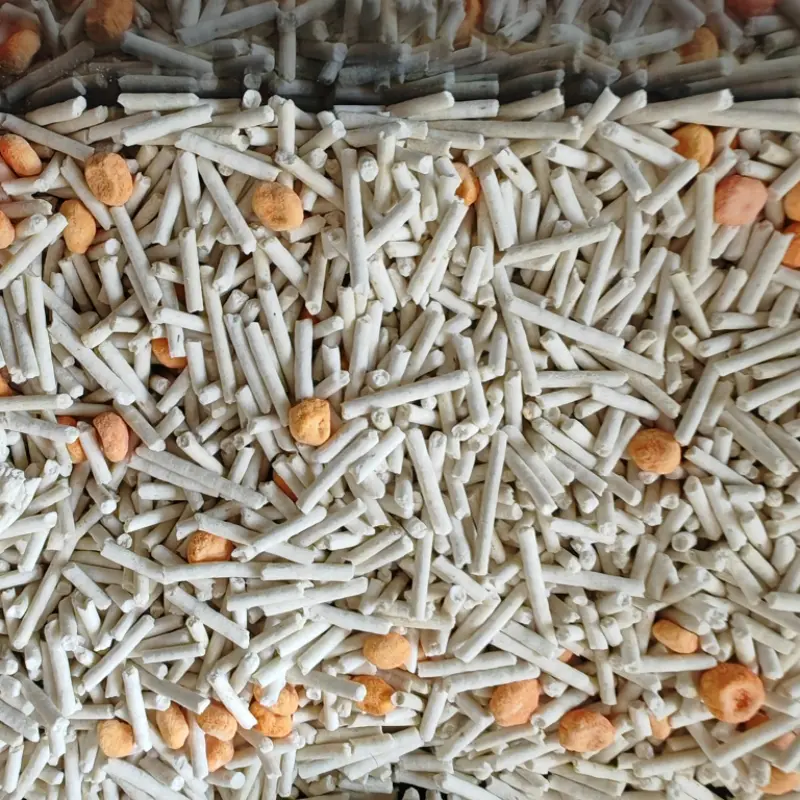
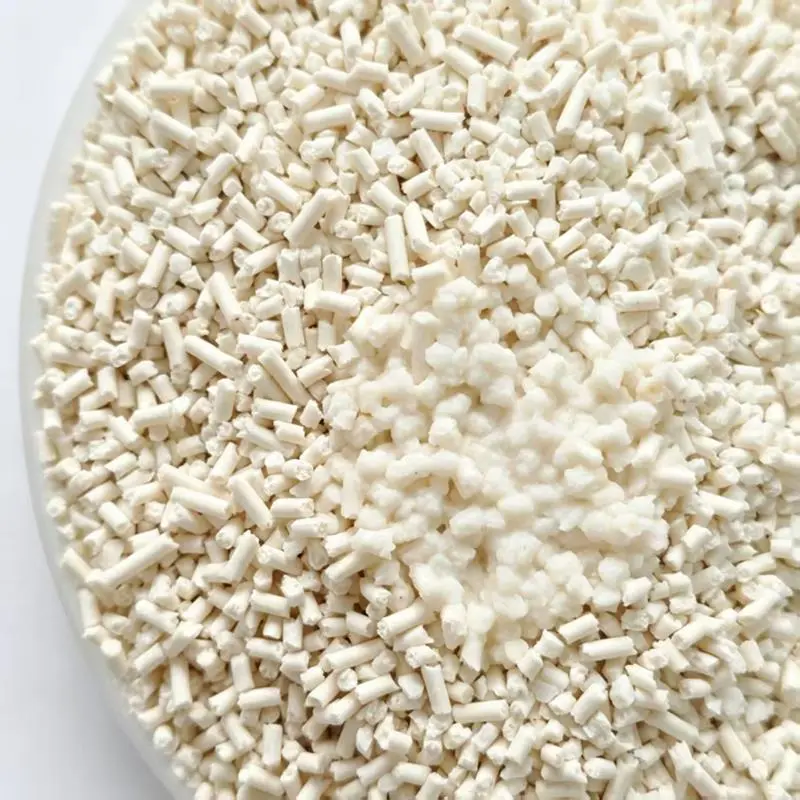
Tofu cat litter is usually made from plant-based fiber and is often designed to absorb moisture and form manageable clumps.
The most important step is to check the manufacturer's disposal instructions. If the product is not explicitly approved for flushing in your area, scoop the used litter into a sealed waste bag and dispose of it according to local regulations.
If a tofu litter is specifically labeled flushable, verify local wastewater rules before using the toilet. The product's material alone is not enough to determine whether flushing is appropriate.
Tofu litter can therefore be both a plant-based and practical choice without requiring toilet disposal.
How Should You Dispose of Corn, Wheat, Wood, or Bamboo Litter?
The same principle applies to other natural litters.
Corn, wheat, wood, and bamboo litters may be biodegradable or made from renewable resources, but their disposal requirements vary.
Before disposing of them, check:
Whether the product contains synthetic additives.
Whether it is explicitly labeled flushable.
Whether it is accepted by your local composting program.
Whether your local authority has special rules for pet waste.
Whether the manufacturer recommends trash disposal.
If there is no clear authorization for flushing or composting, sealed household waste is usually the more straightforward option.
How to Reduce Odor When Disposing of Cat Litter
Used litter can produce strong odors, particularly when it remains in an open container for several days.
A few simple habits can make disposal much easier.
First, scoop the litter box regularly instead of allowing waste to accumulate. Second, use a sturdy bag that will not easily tear when it contains wet litter. Third, tie the bag securely immediately after scooping.
For households with multiple cats, a dedicated sealed waste container can be especially useful. It allows small amounts of used litter to be collected throughout the day while limiting exposure to odors.
Keeping the litter box itself clean is equally important. Regularly removing waste reduces odor inside the home and can help maintain a more pleasant environment for both cats and people.
How to Dispose of Cat Feces Safely
Cat feces should be handled carefully because pet waste can contain microorganisms and parasites.
Use a litter scoop rather than handling feces directly. Place the waste in a secure bag and wash your hands thoroughly after cleaning the litter box.
Do not use cat waste as fertilizer for food-growing areas. Pet-waste management guidance commonly warns against placing cat feces in ordinary backyard compost because pathogens may survive under typical composting conditions.
Also avoid disposing of cat litter outdoors, in waterways, or in areas where runoff could carry contaminants into the environment.
What Is the Most Environmentally Friendly Way to Dispose of Cat Litter?
There is no single disposal method that is environmentally best for every cat owner.
The most responsible approach is to consider the entire lifecycle of the product:
Choose a litter that suits your cat and household.
Use only the amount needed to maintain an effective litter box.
Scoop regularly so that clean litter is not unnecessarily discarded.
Follow the manufacturer's disposal instructions.
Use local waste or composting programs only when they explicitly accept the material.
Never flush litter simply because it is biodegradable.
Keep pet waste out of natural waterways and unauthorized compost systems.
Plant-based litters can be appealing to environmentally conscious consumers because they can use renewable materials. However, environmental benefits should not be separated from responsible waste management.
A product made from renewable resources can still cause problems if it is disposed of incorrectly.
Comparing the Main Disposal Methods
| Disposal method | Convenience | Main concern | Best use |
|---|---|---|---|
| Household trash | High | Waste volume and odor | Most conventional used litter |
| Sealed litter-waste container | High | Requires replacement bags | Frequent daily scooping |
| Toilet flushing | Variable | Plumbing and wastewater risks | Only where product and local rules allow |
| Home composting | Low | Pet-waste pathogens | Generally not recommended |
| Approved commercial composting | Variable | Facility restrictions | Only where explicitly accepted |
For most households, sealed household waste is the most straightforward default option.
Common Cat Litter Disposal Mistakes to Avoid
Several mistakes are easy to make when cleaning a litter box.
Flushing ordinary cat litter: Cat litter that is not explicitly approved for flushing should not go into the toilet.
Assuming biodegradable means flushable: These terms describe different properties. Biodegradability does not automatically make a product suitable for plumbing.
Putting all cat litter into compost: Home composting and commercial composting facilities have different requirements. Always check the rules first.
Leaving used litter in an open bag: Open bags can create odors and increase the risk of leakage.
Ignoring local regulations: Waste-management rules vary by location. Local requirements should take priority over general advice.
Disposing of litter outdoors: Used cat litter should not be dumped in gardens, streets, drains, waterways, or other unauthorized locations.
A Simple Cat Litter Disposal Routine
For most households, an effective routine can be very simple.
Scoop the litter box regularly. Put the used litter and feces into a strong bag. Seal the bag tightly. Place it in the appropriate waste container. Wash your hands afterward.
When changing the entire litter box, check the product packaging before deciding whether the old litter can be composted or flushed.
If you are considering a plant-based litter because of its environmental profile, look beyond the material itself. Consider how the product performs, how much waste it produces, what its packaging says about disposal, and what your local waste system can actually process.
Quick Answers to Common Cat Litter Disposal Questions
| Question | Short answer |
|---|---|
| Can cat litter go in the trash? | Usually yes, if local rules permit it. |
| Can you flush cat litter? | Do not flush it unless the product and local rules explicitly allow it. |
| Is biodegradable litter flushable? | Not necessarily. |
| Can tofu litter be flushed? | Only if the specific product is approved and local rules permit it. |
| Can cat litter go in home compost? | Generally not recommended for ordinary backyard compost. |
| Can corn litter be composted? | Only where the relevant composting program explicitly accepts it. |
| Can clay litter be composted? | No. |
| Is silica litter compostable? | No. |
| What is the easiest disposal method? | Scoop, seal, and use the locally approved waste stream. |
| What should I do if I am unsure? | Follow the product label and check local waste regulations. |
Final Thoughts
Learning how to dispose of cat litter properly does not have to be complicated. For most cat owners, the safest and most practical routine is to scoop used litter regularly, seal it in a suitable bag, and dispose of it through the locally approved household waste system.
Clumping and non-clumping litter can generally be managed through the same basic process, although the cleaning routine differs. Plant-based litters such as tofu, corn, wheat, wood, and bamboo may offer renewable-material benefits, but they should not automatically be flushed or composted simply because they are biodegradable.
Flushable cat litter requires particular caution. Always check the product's instructions and your local wastewater rules before flushing. This is especially important if your home uses a septic system, where EPA guidance specifically advises against flushing cat litter.
The best disposal method is ultimately the one that balances product instructions, local regulations, household convenience, plumbing safety, and environmental responsibility.
When in doubt, choose the conservative option: contain the used litter securely and dispose of it according to your local waste-management requirements.
387.webp)