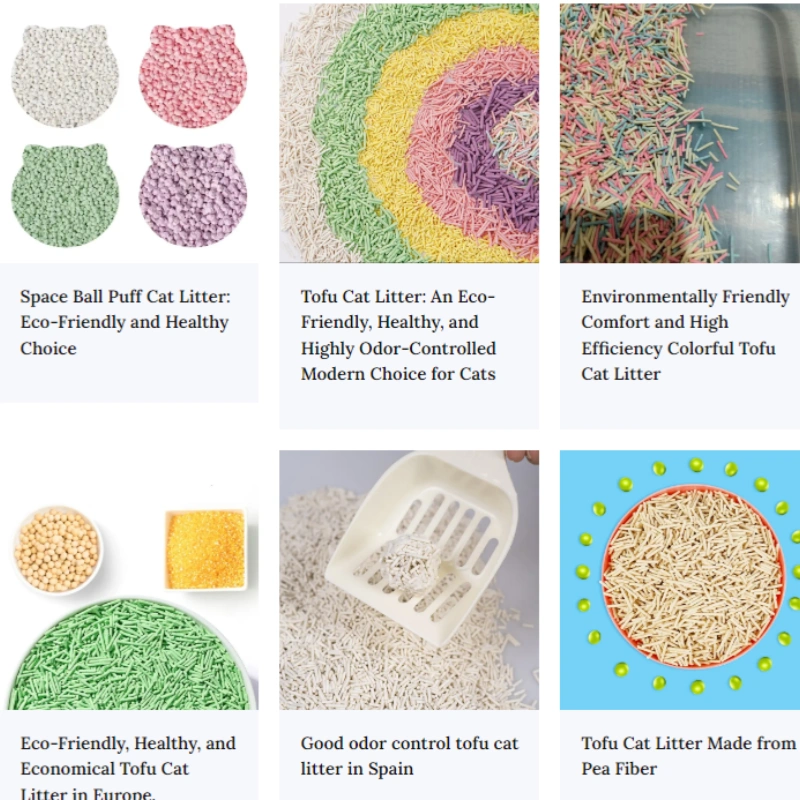
Choosing a cat litter can be surprisingly difficult. Walk into a pet store or search online and you will find clay, tofu, corn, wood, paper, silica gel and other types of cat litter, all claiming to offer better odor control, absorption or cleanliness.
So, how do you choose the right cat litter?
The best cat litter is not necessarily the most expensive or the most “natural” product. It should match your cat's preferences, your cleaning habits, the location of the litter box and the problems you want to solve.
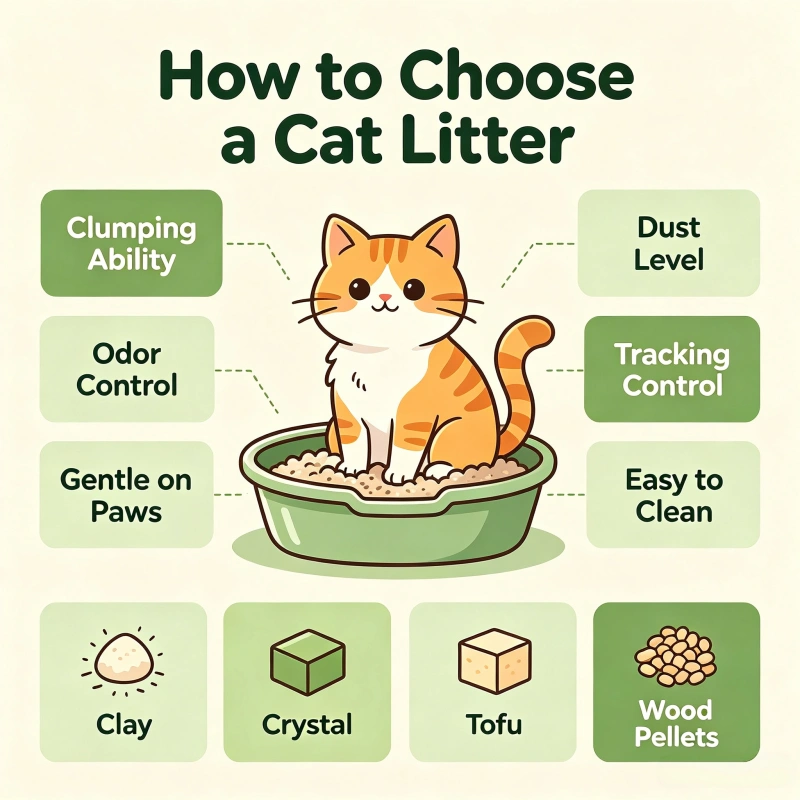
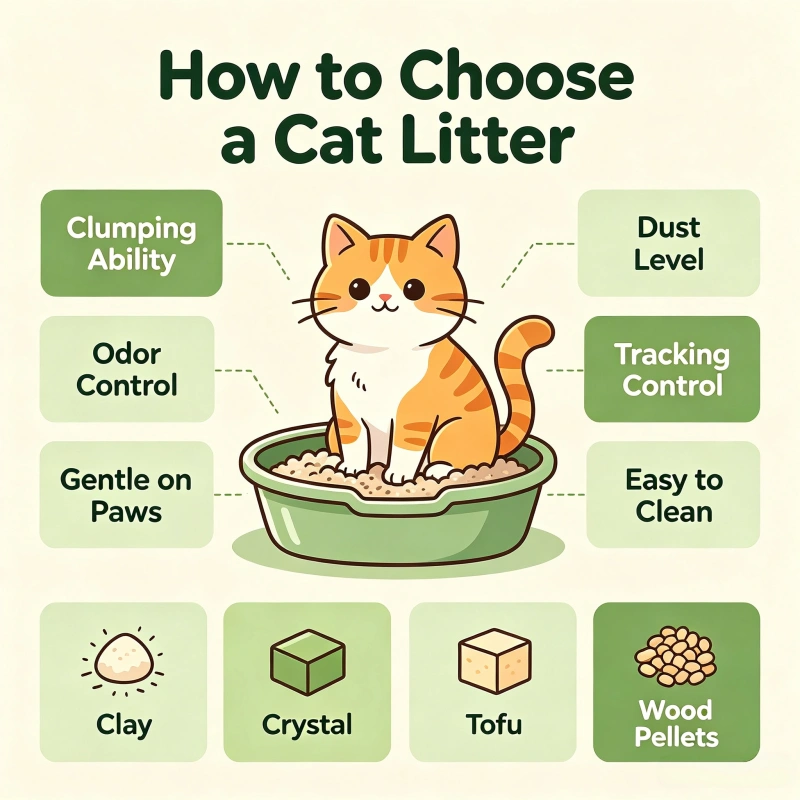
For most cat owners, the key factors are clumping, odor control, dust, absorption, tracking, texture, safety, price and cat acceptance.
This guide explains how to compare different types of cat litter and choose the right one for your home.
What Should You Consider When Choosing Cat Litter?
Before comparing brands, identify the characteristics that matter most to you.
A good cat litter should ideally:
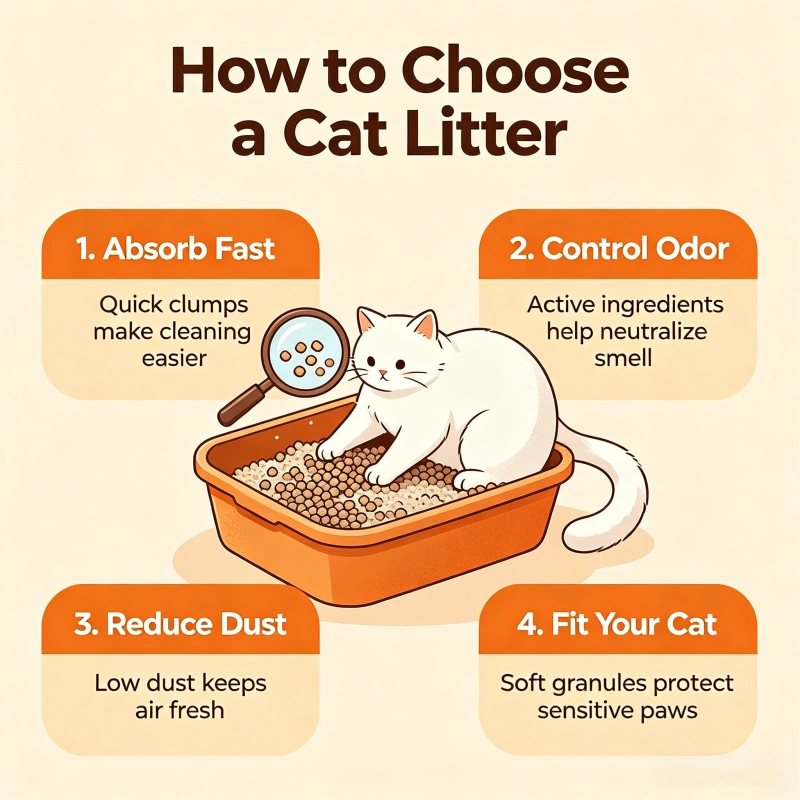
Absorb urine quickly
Control unpleasant odors
Produce minimal dust
Form stable clumps if it is a clumping litter
Be comfortable for your cat's paws
Minimize tracking
Be easy to scoop
Work with your litter box
Offer reasonable value for money
However, no litter is perfect in every category.
For example, very fine litter may feel comfortable under a cat's paws but can track more easily. Larger pellets may reduce tracking but may not be accepted by every cat.
The right choice is therefore a balance between cat preference and owner convenience.
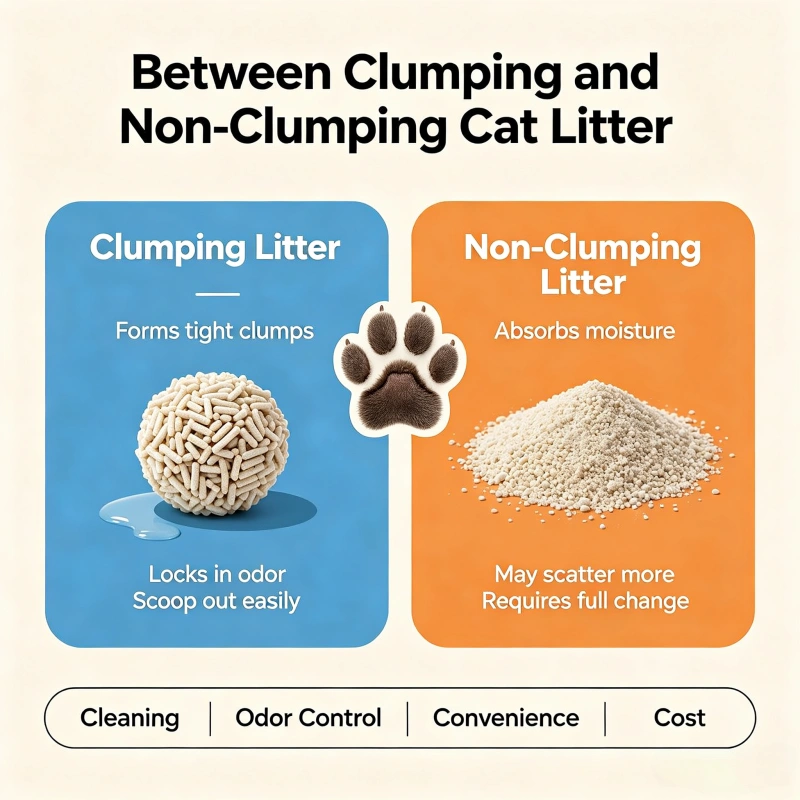
Step 1: Choose Between Clumping and Non-Clumping Cat Litter
One of the first decisions is whether you want clumping or non-clumping litter.
Clumping Cat Litter
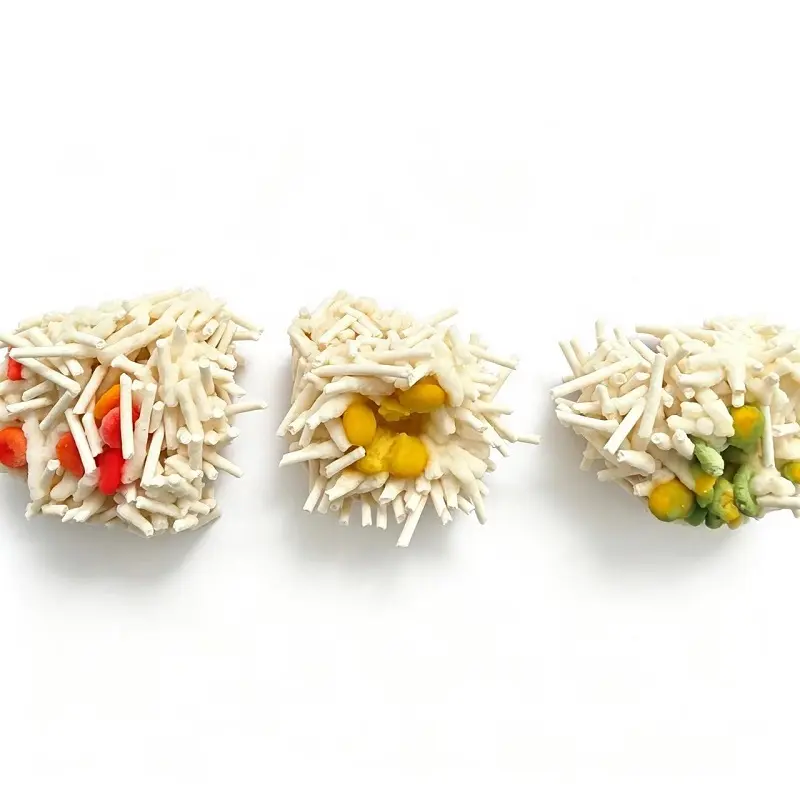
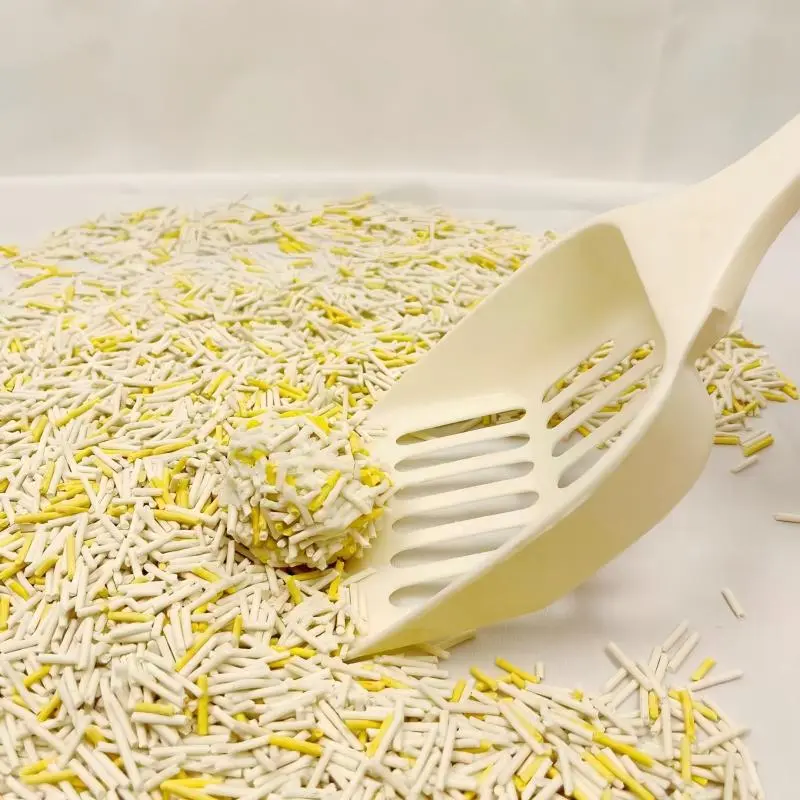
Clumping litter absorbs urine and forms a solid mass that can be removed with a scoop.
The biggest advantages are convenience and efficient cleaning.
You can remove:
Urine clumps
Feces
Contaminated litter
while leaving clean litter in the box.
Popular clumping materials include bentonite clay, tofu, corn and other plant-based formulations.
Clumping litter is particularly useful for indoor cats and multi-cat households because daily waste removal is simple.
Non-Clumping Cat Litter
Non-clumping litter absorbs moisture without forming a solid urine clump.
It can work well for owners who prefer a different litter texture or for particular litter-box setups. Some silica, paper and wood products are commonly sold as non-clumping options.
The main disadvantage is that contaminated litter can be more difficult to remove selectively.
Which Is Better?
If easy daily cleaning is your priority, clumping cat litter is usually the more convenient option.
If your cat prefers a non-clumping texture or you have another specific reason for using it, non-clumping litter can still be a practical choice.
Step 2: Consider Odor Control
Odor control is one of the most important reasons people search for a better cat litter.
A litter box can smell because of urine, feces and bacterial activity associated with waste. Good litter can help by absorbing moisture quickly and reducing the amount of waste exposed to the surrounding air.
Different products use different approaches.
Clay Cat Litter
Clumping clay can isolate urine inside a clump, allowing contaminated material to be removed regularly.
Tofu and Plant-Based Cat Litter
Tofu and other plant-based litters can provide absorption and clumping, while some formulas also use activated carbon or other odor-control ingredients.
Silica Gel
Silica litter absorbs moisture into its porous structure and can provide long-lasting moisture and odor management.
Important Tip
Do not choose a litter based only on the phrase “odor control.”
Look at how odor control is achieved.
A strong fragrance may hide an odor rather than solve the underlying moisture problem. For many households, rapid absorption, effective clumping and frequent scooping are more useful than heavy perfume.
Step 3: Check the Dust Level
Dust is another major consideration when choosing cat litter.
Fine particles can become airborne when you pour litter into the box, when your cat digs or when you scoop waste.
If dust is a concern, look for terms such as:
Low-dust cat litter
Dust-free cat litter
Low-dust tofu cat litter
Low-dust clay litter
But remember that “dust-free” should not automatically be taken as an absolute guarantee. Actual dust performance depends on the formulation, particle size and manufacturing process.
A good product should minimize fine particles without sacrificing absorption or clumping.
Step 4: Look at Absorption
High absorption means the litter can capture urine quickly and efficiently.
Poor absorption can lead to:
Wet litter at the bottom of the box
Stronger odors
More frequent litter replacement
Difficult cleaning
Sticky residue
For clumping litter, absorption should also happen quickly enough to create a stable clump.
When comparing products, consider both absorption speed and absorption capacity.
A litter that absorbs very quickly but produces weak clumps may still be frustrating to use.
Step 5: Think About Your Cat's Paw Preference
Cats can be surprisingly particular about texture.
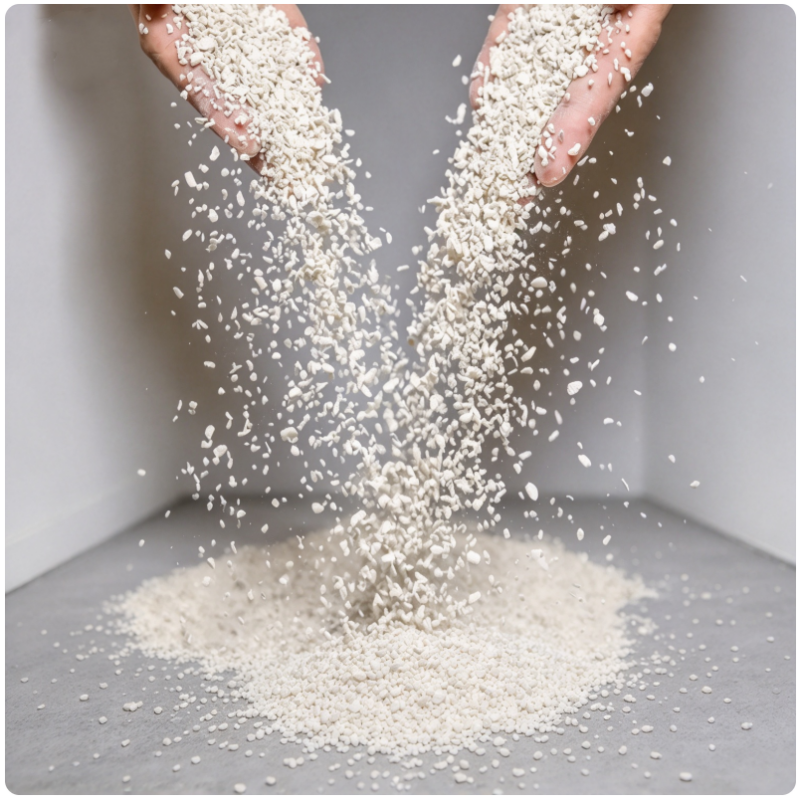
Some cats prefer fine, sand-like particles because they feel natural under their paws. Others accept larger pellets without any problem.
If your cat suddenly refuses to use the litter box after changing litter, texture may be one reason.
When introducing a new product, it is often better to transition gradually rather than replacing the old litter overnight.
You can mix increasing amounts of the new litter with the old product and observe your cat's response.
Fine vs. Large Granules
| Feature | Fine Granules | Large Pellets |
|---|---|---|
| Paw feel | More sand-like | More noticeable |
| Dust potential | Can be higher | Often lower |
| Tracking | Potentially higher | Often lower |
| Absorption | Fast contact | Depends on structure |
| Cat acceptance | Often good | Cat dependent |
There is no universally best particle size.
Your cat gets the final vote.
Step 6: Consider Tracking
Tracking occurs when litter sticks to your cat's paws and is carried away from the litter box.
You may find litter:
On the floor
On carpets
Near furniture
In hallways
Around sleeping areas
Particle size and shape have a major influence on tracking.
Very fine litter can be comfortable but may spread more easily. Larger pellets may reduce tracking but can behave differently when your cat digs.
A litter mat placed outside the box can also help capture particles.
If tracking is one of your biggest complaints, test the actual product rather than relying only on its marketing description.
Step 7: Choose the Right Litter Material
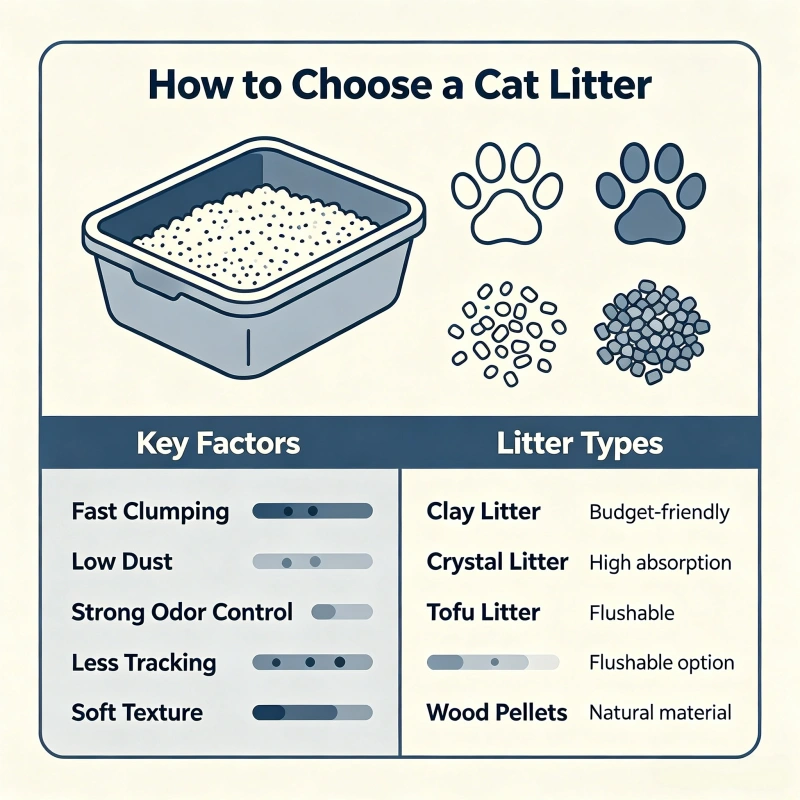
There are several major types of cat litter.
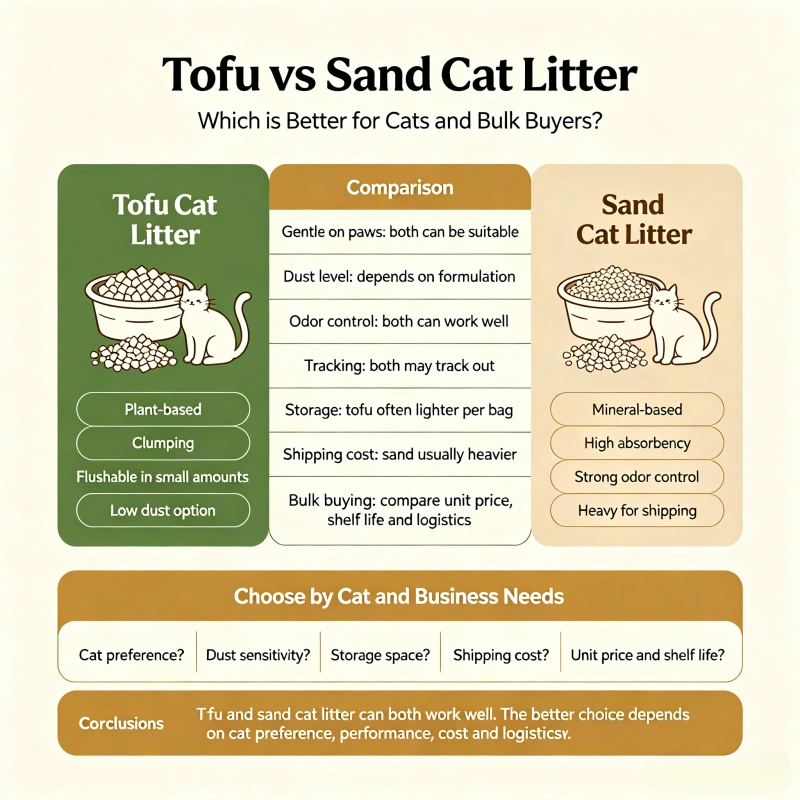
Bentonite Clay Cat Litter
Bentonite remains one of the most established choices.
Pros:
Excellent clumping
Familiar texture
Strong availability
Wide range of prices
Good odor-control options
Cons:
Can be dusty depending on the product
Heavier than many plant-based litters
Mineral-based rather than plant-based
Clay is a good choice if strong clumping and cost efficiency are your main priorities.
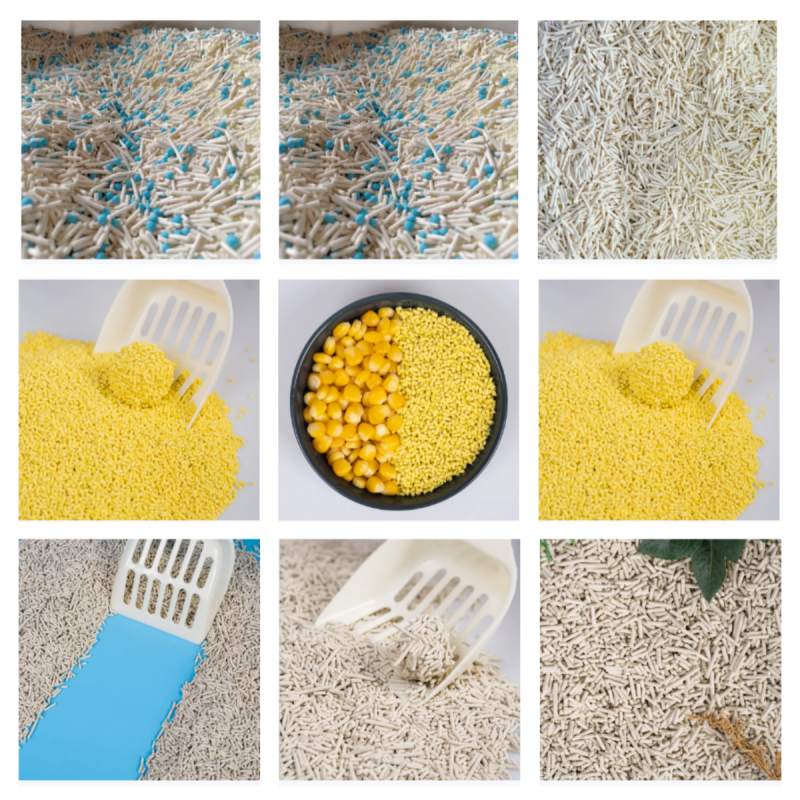
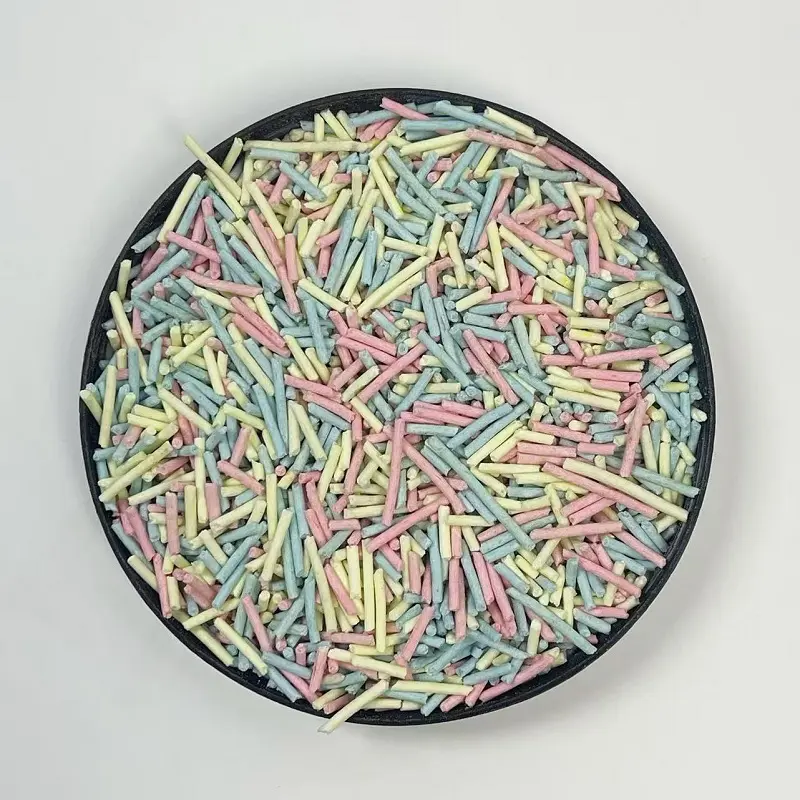
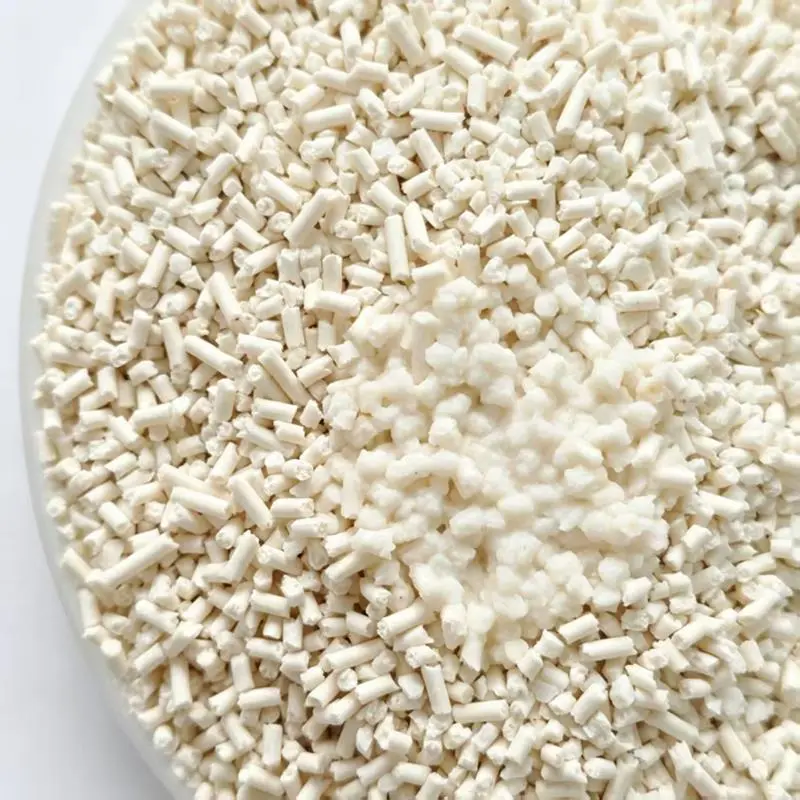
Tofu Cat Litter
Tofu cat litter is usually made from soybean fiber and other plant-based ingredients.
Pros:
Plant-based
Lightweight
Good absorption
Good clumping in many formulations
Low-dust options
Strong premium positioning
Cons:
Often more expensive than basic clay
Performance varies between manufacturers
Fine particles may still track
Tofu is particularly attractive if you want a combination of plant-based material, absorption, clumping and low dust.
Corn Cat Litter
Corn-based litter is another plant-based option.
Pros:
Plant-based
Lightweight
Good absorption
Clumping options available
Cons:
Performance varies by formulation
Some products can track
Odor control depends on the formula
Silica Gel Cat Litter
Silica gel is highly absorbent and is often designed for long-lasting use.
Pros:
Strong moisture absorption
Good odor control
Can last relatively long between complete changes
Usually low dust when properly manufactured
Cons:
Different texture from traditional litter
Not all cats prefer it
Generally non-clumping
Wood Cat Litter
Wood pellets and other wood-based products provide another plant-based alternative.
Pros:
Plant-derived
Larger pellets can reduce tracking
Different texture
Cons:
Clumping varies
Some cats may dislike the pellet size
Odor control depends on the formulation
Step 8: Consider the Number of Cats
The number of cats in your home should influence your choice.
One Cat
You have more flexibility because the litter box receives less waste.
A standard clumping litter may be sufficient.
Two or More Cats
For a multi-cat household, prioritize:
Fast absorption
Strong clumping
Odor control
Low dust
Easy scooping
Consistent performance
A litter that works well for one cat may become overwhelmed when several cats use the same box.
If multiple cats share one box, litter-box management becomes just as important as the litter itself.
Step 9: Think About Your Litter Box
Not every litter works equally well in every litter box.
For a traditional open litter box, most litter types can work.
For a covered litter box, odor control becomes more important because odors can become concentrated inside the enclosure.
For an automatic litter box, check:
Recommended particle size
Clumping speed
Clump hardness
Litter depth requirements
Manufacturer compatibility
Do not assume that every tofu, clay or corn litter will work with every automatic system.
Step 10: Consider Kittens and Sensitive Cats
Kittens may be more curious about litter and may investigate unfamiliar materials.
For kittens or cats that are sensitive to strong smells, an unscented, low-dust litter may be a sensible starting point.
Avoid choosing a product simply because it has a strong fragrance.
If your cat repeatedly eats litter, has unusual digestive symptoms, develops breathing problems or shows other concerning symptoms, discontinue the product and consult a veterinarian.
Step 11: Compare Price Correctly
The cheapest bag is not necessarily the cheapest litter.
Instead of comparing only the price per bag, consider:
Cost per day = total litter cost ÷ number of days the product lasts
For example, a more expensive clumping litter may last longer because only urine clumps and feces are removed.
A cheap litter that requires frequent complete replacement may ultimately cost more.
For B2B buyers, additional factors such as packaging, shipping weight, MOQ and private-label costs should also be included in the total product cost.
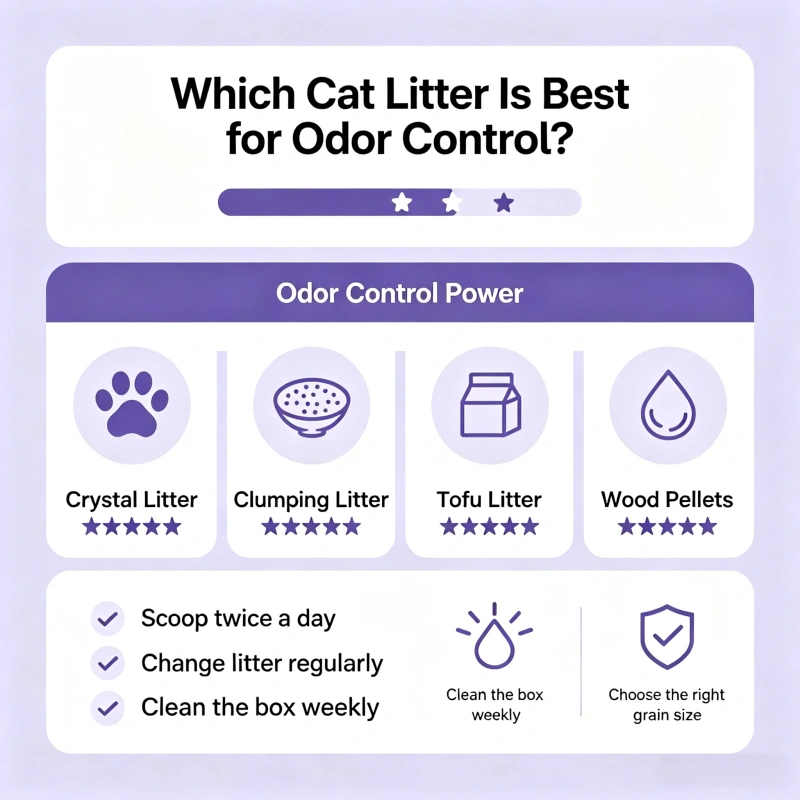
Which Cat Litter Is Best for Odor Control?
If odor control is your top priority, consider:
Fast urine absorption
Strong clumping
Activated carbon or other odor-control technology
Low moisture retention outside the clump
Regular scooping
For multi-cat households, odor-control performance becomes even more important.
However, even the best litter cannot compensate for an infrequently cleaned litter box.
Which Cat Litter Is Best for Low Dust?
If your priority is low dust, look for a product specifically manufactured and tested for low-dust performance.
Plant-based products such as tofu, corn and wood can offer low-dust formulations, while clay products can also be engineered to reduce dust.
The material itself does not guarantee the final dust level.
Manufacturing quality matters.
Which Cat Litter Is Best Overall?
There is no single winner for every household.
A practical comparison looks like this:
| Your Priority | Recommended Starting Point |
|---|---|
| Strong clumping | Bentonite or tofu |
| Plant-based material | Tofu, corn or wood |
| Low dust | High-quality low-dust formula |
| Lightweight handling | Tofu or other plant-based litter |
| Long moisture absorption | Silica |
| Easy daily scooping | Clumping litter |
| Multi-cat odor control | Strong clumping + odor-control formula |
| Low tracking | Larger or optimized granules |
| Automatic litter box | Machine-compatible clumping litter |
Use this table as a starting point rather than a strict rule.
How to Test a New Cat Litter
If you are unsure which litter your cat will accept, do not immediately replace the existing product throughout the house.
Instead:
Step 1: Introduce a Small Quantity
Put the new litter in one box or mix a small amount with the existing litter.
Step 2: Watch Your Cat
Check whether your cat uses the box normally.
Step 3: Observe the Litter Box
Evaluate:
Urine absorption
Clump strength
Odor
Dust
Tracking
Cleaning time
Step 4: Give It Several Days
A single use may not tell you enough.
Step 5: Choose Based on Real Performance
Your cat's behavior and your daily cleaning experience are more useful than marketing claims.
Common Mistakes When Choosing Cat Litter
Choosing Only by Price
The lowest purchase price does not always mean the lowest cost of use.
Choosing Only by “Natural”
Plant-based does not automatically mean better performance.
Ignoring Dust
A litter can have excellent odor control but still be unpleasant if it creates excessive dust.
Ignoring Cat Preference
A technically excellent litter is useless if your cat refuses to use it.
Changing Litter Too Quickly
Cats often prefer familiar textures and smells. Gradual transition can make adoption easier.
Trusting “Flushable” Without Checking Local Rules
Some plant-based litters are marketed as flushable, but local wastewater systems and disposal rules vary. Follow the product instructions and local guidance.
How to Choose Cat Litter for Your Specific Needs
If you are still unsure, start with your biggest problem.
If your main problem is odor: choose a litter with fast absorption, effective clumping and proven odor-control performance.
If your main problem is dust: choose a tested low-dust formulation.
If your main problem is tracking: try larger or specifically designed low-tracking granules.
If you want a plant-based product: consider tofu, corn, rice or wood-based litter.
If you want easy cleaning: choose a strong clumping litter.
If you have multiple cats: prioritize absorption, odor control and clump strength.
If you use an automatic litter box: follow the machine manufacturer's litter recommendations.
Final Answer: How to Choose a Cat Litter
The best way to choose a cat litter is to stop looking for one universal “best” product and instead identify the characteristics that matter most for your cat and household.
Start with these eight questions:
Does my cat prefer fine or larger particles?
Do I want clumping or non-clumping litter?
How important is odor control?
How much dust am I willing to tolerate?
Is tracking a major problem?
Do I prefer plant-based or mineral litter?
How many cats will use the litter?
Does the litter work with my litter box?
For many modern cat owners, a low-dust, high-absorption, clumping plant-based cat litter offers an attractive balance between performance and convenience. Tofu cat litter is one option worth considering because it can combine soybean-based materials with strong absorption, clumping and odor-control features.
But the final test is simple: your cat needs to like it, and you need to be happy cleaning it.
A litter box is a two-customer business. The cat makes the purchase decision; the human pays the invoice.
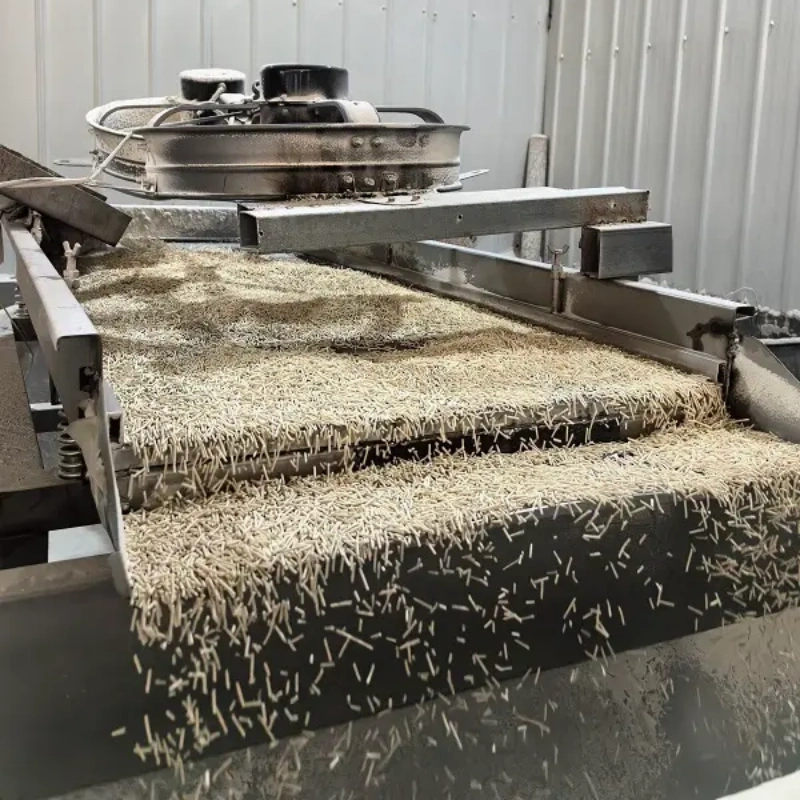
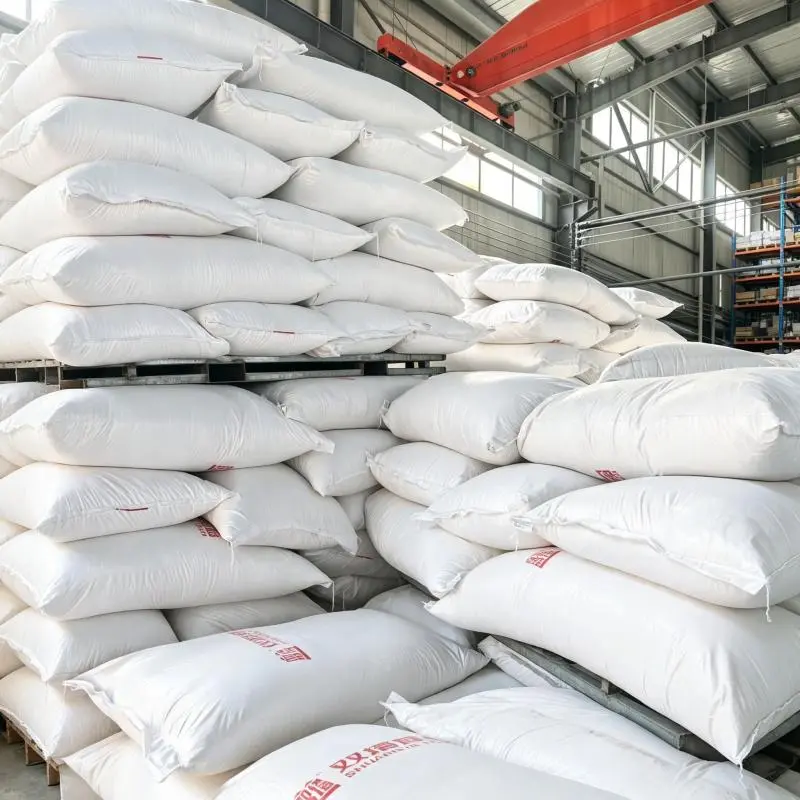
If you are a cat litter brand, partnering with a cat litter factory in China is the ideal choice. Gelin Town Cat Litter Factory specializes in OEM and custom cat litter production; we welcome you to contact us.
387.webp)