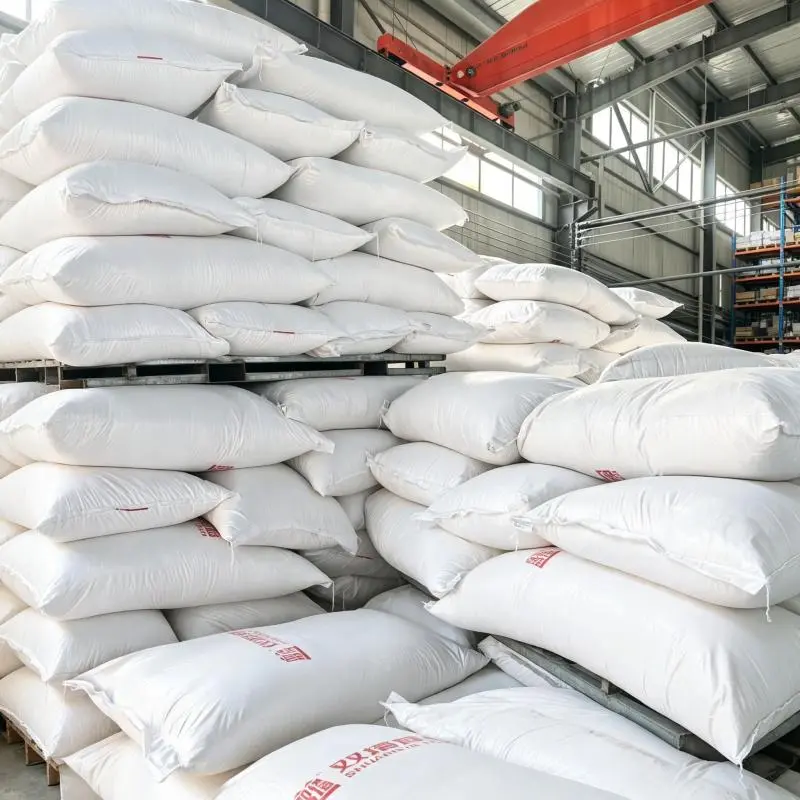
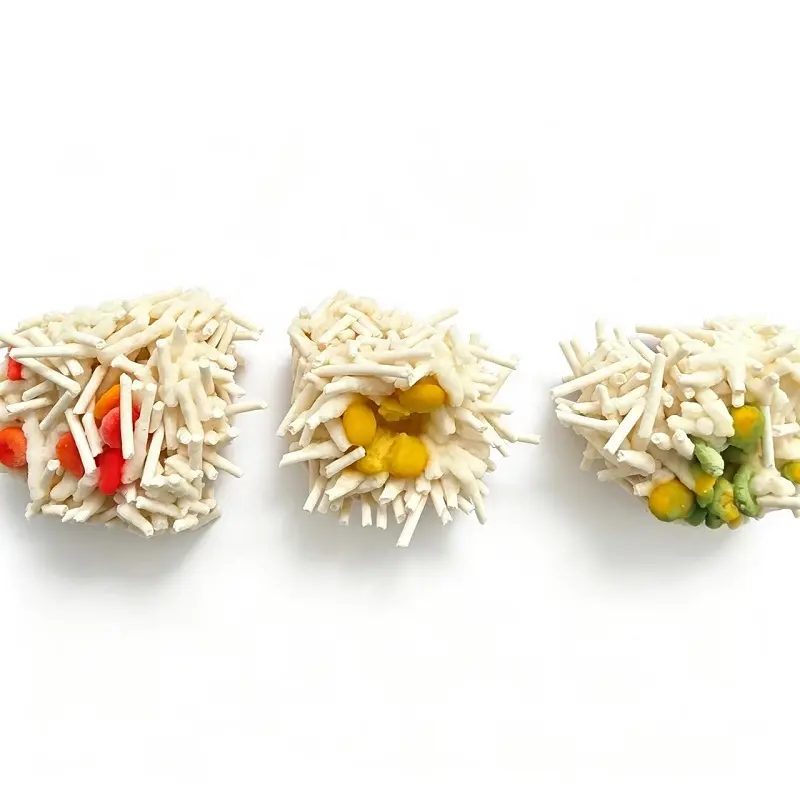
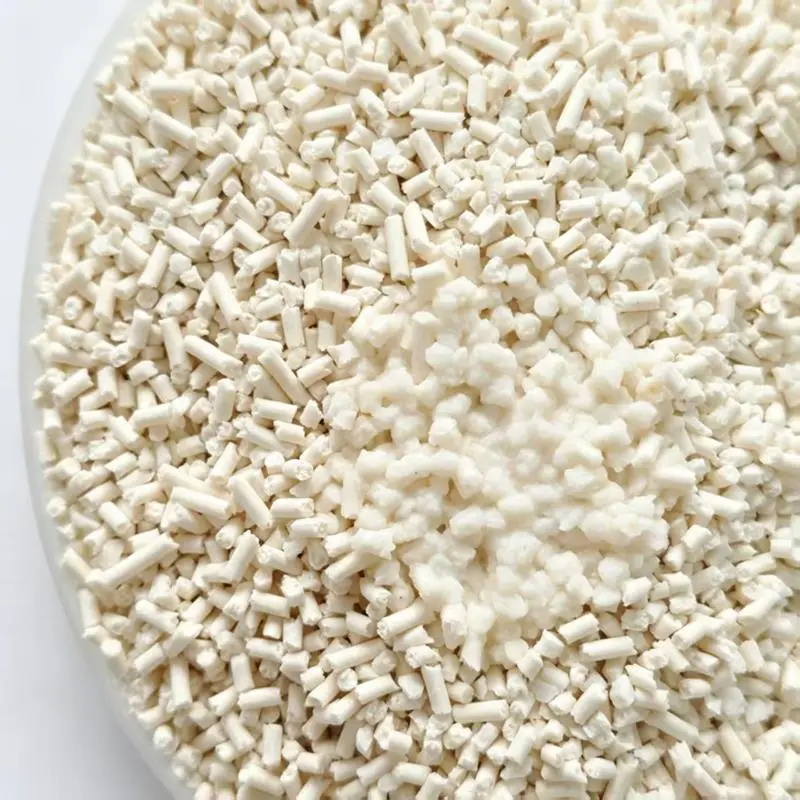
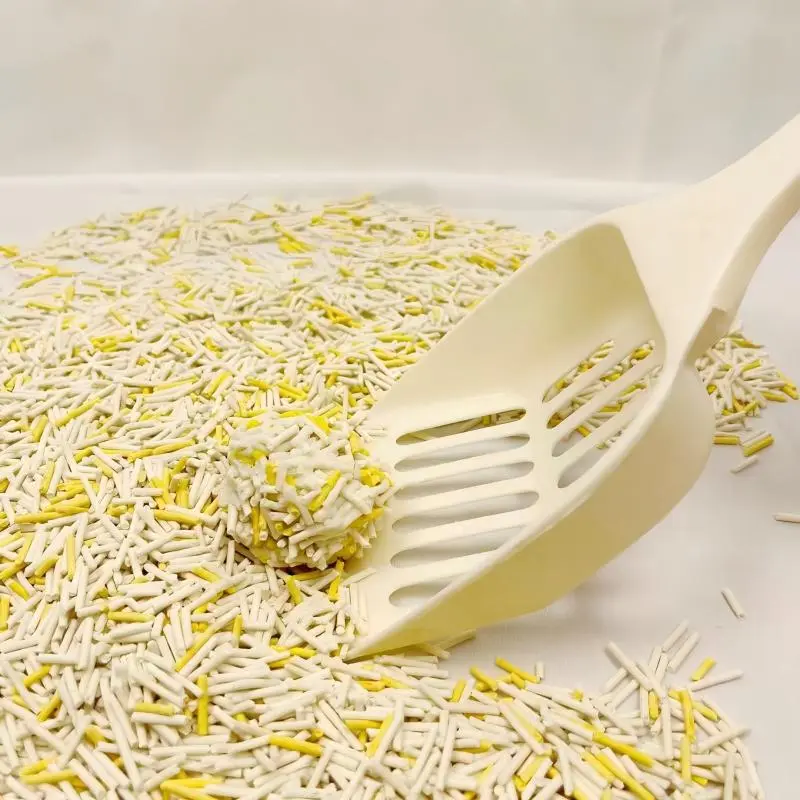
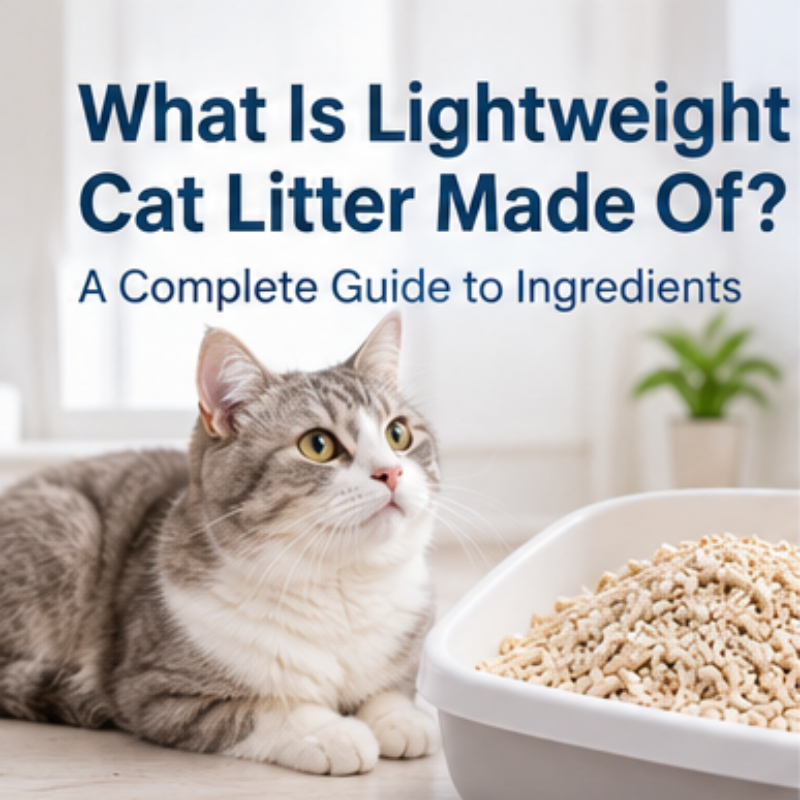
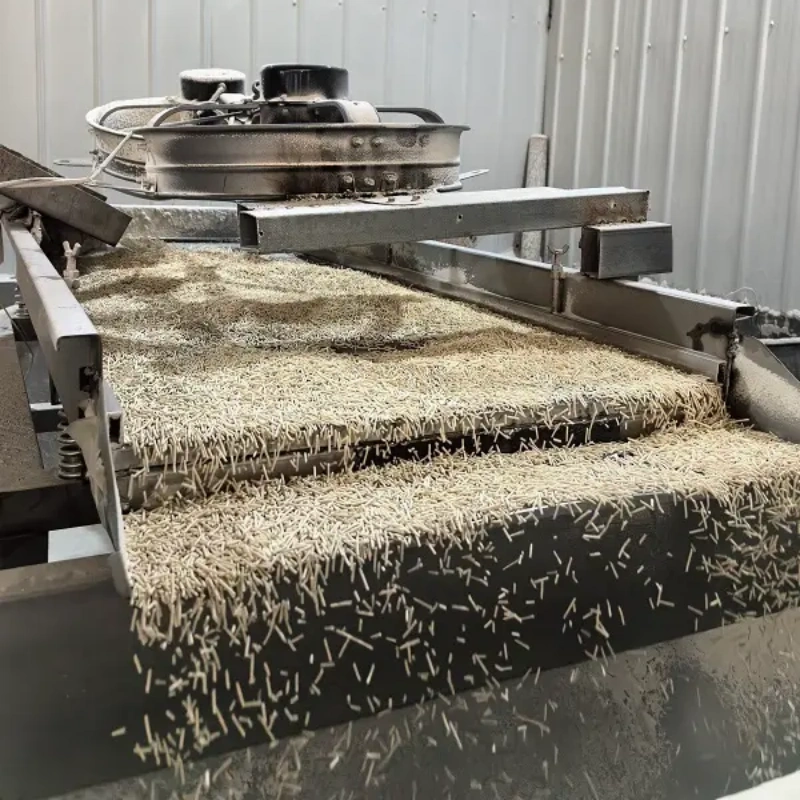
Tofu and bentonite cat litter combines two different materials to create a blended product with a balance of plant-based granules and mineral clay. The tofu component provides a lightweight plant-fiber structure, while bentonite contributes its characteristic swelling and clumping properties.
The idea is simple: combine the convenient handling of tofu litter with the firm clumping performance commonly associated with sodium bentonite.
However, mixing two materials does not automatically produce a better cat litter. The final performance depends on the blend ratio, particle size, raw material quality, moisture, screening, and manufacturing process. Too much bentonite may increase product weight and affect dust performance, while an unsuitable formula may produce weak or inconsistent clumps.
This guide explains what mixed tofu and bentonite cat litter is, how the two materials work together, what blend ratios manufacturers use, and how consumers and buyers can evaluate the finished product.
Table of Contents
What Is Tofu and Bentonite Cat Litter?
Why Combine Tofu Cat Litter with Bentonite?
How Does Mixed Tofu and Bentonite Cat Litter Work?
What Is the Best Tofu-to-Bentonite Ratio?
Advantages and Disadvantages of Mixed Cat Litter
Mixed Tofu and Bentonite vs. Pure Tofu and Bentonite Litter
How to Evaluate Mixed Cat Litter Quality
Can You Mix Tofu and Bentonite Cat Litter at Home?
Is Mixed Tofu and Bentonite Cat Litter Biodegradable or Flushable?
OEM and Private-Label Mixed Cat Litter
Why Consider Gelin Town Mixed Cat Litter?
Frequently Asked Questions
1. What Is Tofu and Bentonite Cat Litter?
Tofu and bentonite cat litter is a blended product made by combining plant-based tofu cat litter with bentonite clay.
Instead of relying on one material, the formula uses different ingredients to achieve a specific balance of absorption, clumping, texture, weight, and cost.
1.1 What Is Tofu Cat Litter?
Tofu cat litter is a plant-based litter commonly manufactured using ingredients such as:
Pea fiber.
Soybean fiber.
Corn starch.
Guar gum.
Other suitable plant-derived binders.
The materials are processed into pellets or granules.
Depending on the formula, tofu litter can provide liquid absorption, clumping, and convenient handling.
Explore our tofu cat litter product range to see different plant-fiber product formats.
1.2 What Is Bentonite Cat Litter?
Bentonite is a natural clay material commonly used in clumping cat litter.
Sodium bentonite is particularly valued for its swelling behavior when exposed to moisture. It absorbs liquid and forms clumps that can be removed with a scoop.
Its characteristics can include:
Strong swelling and clumping.
Mineral-based liquid absorption.
Different particle sizes.
Different levels of dust depending on raw material and processing.
Relatively high bulk density compared with many plant-fiber pellets.
For additional technical information, see our guide to how bentonite cat litter is made.
1.3 What Happens When These Materials Are Combined?
In a typical mixed formula, tofu granules provide the plant-based component, while bentonite particles are added to contribute mineral clumping characteristics.
The objective is to create a product that performs differently from either pure tofu litter or pure bentonite litter.
A properly developed mixture should be evaluated as a complete product. Its performance cannot be predicted simply by adding together the advertised advantages of the two raw materials.
2. Why Combine Tofu Cat Litter with Bentonite?
Each material has different characteristics.
A manufacturer may develop a mixed formula to target performance requirements that are difficult to achieve with a single material.
2.1 Improve Clumping Performance
One reason for adding bentonite is to modify clump formation.
Sodium bentonite swells when it contacts moisture and can help form firm mineral-based clumps.
In a mixed formula, the bentonite fraction may contribute to clump structure and make the used litter easier to scoop.
However, the final result depends on particle size, distribution, liquid exposure, and the proportion of each ingredient.
2.2 Adjust Product Weight and Handling
Bentonite has a relatively high bulk density compared with many tofu pellet products.
A tofu-rich blend may therefore have a different weight and handling profile from a pure bentonite product.
This can be relevant for:
Household carrying convenience.
Retail package size.
Warehouse storage.
Transportation costs.
Container loading.
The actual weight difference must be calculated using measured bulk density rather than inferred from ingredient names.
2.3 Create a Different Cost Structure
Tofu and bentonite have different raw material and processing costs.
A manufacturer may use a blend to develop a product positioned between premium plant-based litter and conventional mineral litter.
For distributors and retailers, this may create another price segment within the product portfolio.
However, a lower raw material cost does not automatically mean a better retail margin. The final cost also depends on production efficiency, packaging, shipping, and product waste during use.
2.4 Customize Texture and Product Appearance
A mixed formula can combine different particle shapes.
For example, manufacturers may combine cylindrical tofu pellets with smaller bentonite particles or granules.
This creates a different texture and appearance from a single-material product.
The particle structure should be selected according to the intended retail positioning and tested for tracking, scooping, and cat acceptance.
3. How Does Mixed Tofu and Bentonite Cat Litter Work?
The performance of a mixed product comes from the interaction between its ingredients.
3.1 Liquid Absorption
The tofu component provides a plant-fiber structure that absorbs moisture.
Bentonite particles also interact with liquid, swelling and holding moisture within the mineral structure.
Both components contribute to liquid handling, but the final absorption capacity depends on the complete formulation.
A higher bentonite percentage does not automatically produce a higher overall absorption rate.
3.2 Clump Formation
When urine contacts mixed litter, several processes take place:
Liquid comes into contact with the granules.
The plant-fiber component absorbs some of the moisture.
Bentonite particles hydrate and swell.
The wetted particles bind together.
A clump forms and can be removed.
The objective is to form a stable mass without excessive residue sticking to the bottom of the litter box.
3.3 Odor Management
Odor control is influenced by how effectively the product absorbs urine and allows contaminated litter to be removed.
The tofu component and bentonite component may contribute differently to moisture management, but neither should be described as a universal odor neutralizer.
Additional ingredients, such as activated carbon or selected deodorizing materials, may be evaluated in specific formulations.
Daily scooping remains essential, even when using an odor-control product.
For more practical information, see our guide to the best cat litter for odor control.
3.4 Particle Distribution and Blend Stability
An important manufacturing challenge is maintaining a consistent distribution of tofu and bentonite particles.
Because the materials may differ in size, shape, and density, they can separate during handling or transportation if the blend is not properly designed.
Manufacturers should evaluate samples taken from different sections of a finished bag, not just one sample collected from the top.
This helps verify whether the formula remains consistent throughout the package.
4. What Is the Best Tofu-to-Bentonite Ratio?
There is no universal blend ratio that works best for every mixed cat litter formula.
Different manufacturers publish different ratios according to their product design and target market.
Commercial examples include:
| Published Blend | Tofu Component | Bentonite Component |
|---|---|---|
| Tailglee product formula | 70% | 30% |
| Sinchem product example | 68% | 32% |
| Sinchem formula with deodorizing granules | 70% | 28% |
| Other customized manufacturer formulas | Variable | Variable |
These are examples of manufacturer-published formulations, not an industry standard or proof that one ratio performs better than another.
4.1 Tofu-Rich Formulas
A tofu-rich formula contains a higher proportion of plant-based granules.
Potential product positioning includes:
Greater plant-derived content.
A different texture from pure mineral litter.
Different bulk density.
A lower bentonite fraction.
However, the resulting clump strength, dust, and moisture performance still need to be tested.
4.2 Balanced Formulas
A more balanced blend can be developed when the brand wants to adjust the contribution of both materials.
This may be useful when the product needs to balance:
Clumping performance.
Handling weight.
Cost.
Particle texture.
Dust characteristics.
4.3 Bentonite-Rich Formulas
A bentonite-rich formulation places greater emphasis on the mineral component.
It may be considered when firm mineral clumping is a priority.
However, increasing the mineral fraction can also change product weight, dust characteristics, and the proportion of plant-derived ingredients.
4.4 How Manufacturers Should Determine the Ratio
Instead of choosing a ratio from a competitor's packaging, manufacturers should run formulation trials.
For example, a product-development program could compare:
80% tofu and 20% bentonite.
70% tofu and 30% bentonite.
60% tofu and 40% bentonite.
These are proposed trial points, not universal recommendations or specifications for every Gelin Town product.
The comparison should use the same raw materials and testing methods.
Important: Blend ratios should be defined on a clear basis, preferably dry weight percentage for manufacturing specifications. A 70:30 ratio by volume is not necessarily equivalent to 70:30 by weight because tofu granules and bentonite have different bulk densities.
5. Advantages and Disadvantages of Mixed Cat Litter
Tofu and bentonite mixed cat litter can be a practical option for households and brands seeking a different balance of product characteristics.
However, buyers should also understand its limitations.
5.1 Advantages
1. Adjustable Clumping Performance
Bentonite can contribute to clump formation and structure. This may help improve scooping performance in some mixed formulations.
2. Different Weight and Texture Options
The tofu proportion changes the physical profile of the product compared with pure bentonite.
3. Flexible Product Development
Manufacturers can adjust the blend ratio, pellet dimensions, fragrance, and other selected formulation components.
4. More Product Choices for Retailers
A mixed formula creates an additional product category between pure plant-based and conventional mineral litter.
5. Potential Cost Flexibility
Depending on the raw material prices and blend design, manufacturers may create products targeting different retail price points.
5.2 Disadvantages
1. It Is Not a Pure Plant-Based Product
The presence of bentonite means the finished formula contains a mineral component.
A tofu-bentonite blend should not be marketed as 100% plant-based.
2. It Is Not Fully Biodegradable
The plant-based component may have different degradation characteristics from the clay component.
The presence of tofu granules does not make the entire mixed product biodegradable.
3. It Should Not Be Flushed
Bentonite can swell when exposed to water. A tofu-bentonite mixture should not be flushed into toilets or wastewater systems.
4. Dust Performance Is Formula-Dependent
Adding tofu does not automatically eliminate bentonite dust.
Particle size, clay quality, screening, handling, and transportation all affect the final dust result.
5. It May Be Heavier Than Pure Tofu Litter
The mineral fraction can increase package weight and affect logistics.
6. More Complex Formulation and Quality Control
Two raw material systems must be controlled together. An inconsistent blend ratio can cause variations in product appearance and performance.
6. Mixed Tofu and Bentonite vs. Pure Tofu and Bentonite Litter
The best choice depends on which performance characteristics matter most.
| Comparison Factor | Pure Tofu Litter | Pure Bentonite Litter | Tofu + Bentonite Mixed Litter |
|---|---|---|---|
| Main material | Plant fibers and starches | Mineral clay | Plant fibers plus mineral clay |
| Clumping | Formula-dependent | Often strong in sodium bentonite formulas | Depends on blend ratio and formulation |
| Weight | Often lighter | Generally heavier | Depends on mineral proportion |
| Dust | Depends on processing | Depends on clay grade and screening | Depends on both materials and processing |
| Odor management | Absorption and waste removal | Mineral absorption and clumping | Depends on complete formula |
| Plant-based content | Yes, depending on formula | No | Partial |
| Biodegradability | Depends on finished formula | No | Not fully biodegradable |
| Flushability | Do not assume it is allowed | No | No |
| OEM customization | Available | Available | Available |
| Product positioning | Plant-based | Traditional mineral | Hybrid performance |
The main difference is not that one material is always better. It is that each product category has a different balance of raw materials and performance.
For a broader explanation of material combinations, see our guide to what mixed cat litter is.
7. How to Evaluate Mixed Cat Litter Quality
A mixed cat litter product should be evaluated as a finished formulation.
It is not enough to inspect the tofu granules and bentonite particles separately.
The following tests can help buyers compare products and establish repeat-order standards.
7.1 Moisture Content
Moisture content affects storage stability, product weight, and material handling.
The manufacturer should define an acceptable range and provide the test method.
A moisture result should identify the tested product and production batch.
7.2 Water Absorption
Water absorption can be calculated using a defined sample weight, test liquid, contact time, and drainage procedure.
A simplified formula is:
Water absorption (%) = Retained liquid mass ÷ Initial dry sample mass × 100
For example, if a 10 g sample retains 20 g of liquid under the agreed test procedure, the calculated absorption rate is 200%.
This is an illustrative calculation, not a performance guarantee for every mixed litter formula.
7.3 Clumping Time and Clump Strength
Clumping time measures how quickly a removable clump forms.
Clump strength indicates whether the mass remains intact during scooping and handling.
A practical test should use:
The same amount of litter.
Identical test trays.
A measured liquid volume.
A fixed contact time.
The same scoop or removal procedure.
A defined clump-integrity assessment.
Both immediate clump strength and longer-term structural stability may be relevant.
7.4 Dust Content and Dusting Rate
These two measurements should not be confused.
Dust content refers to the fine particles present in a sample under a specified test method.
Dusting rate relates to the fine particles released during handling or use.
A product can have a low measured fine-particle content but still release dust when poured if the particles are fragile.
Ask the manufacturer for the sample mass, screening method, dust-collection procedure, and calculation method.
7.5 Ammonia and Odor-Control Testing
If the product is marketed for ammonia absorption or odor control, the claim should have supporting evidence.
A controlled test should identify:
Sample quantity.
Test chamber or container.
Odor challenge.
Temperature and humidity.
Measurement equipment.
Observation period.
Control sample.
Number of repeated tests.
A general statement such as "strong odor control" is less useful than a clearly documented test result.
7.6 Bottom Adhesion and Scooping Performance
A product may form a strong clump but still stick to the bottom of the litter tray.
This can make cleaning difficult and increase unnecessary litter loss.
Test the product in the same tray material and using the same liquid application procedure.
7.7 Blend Uniformity
This is particularly important for mixed litter.
Take samples from:
The top of the bag.
The middle.
The bottom.
Compare the tofu and bentonite proportions, granule appearance, and particle distribution.
This helps identify separation that may occur during transportation or storage.
Gelin Town's Published Mixed Cat Litter Specifications
Gelin Town's published mixed cat litter specification page lists the following reference targets for its product:
| Quality Item | Published Reference |
|---|---|
| Moisture | ≤11% |
| Water absorption | ≥200% |
| Clumping time | ≤10 seconds |
| Clump weight | ≤60 g |
| Dust content | ≤0.5% |
| Dusting rate | ≤0.8% |
| Ammonia absorption rate | ≥80% |
These are manufacturer-published specifications, not independent laboratory scores. Buyers should request the applicable test methods, sample identification, and current batch records before using the figures as contractual acceptance limits.
For further technical details, review our clumping tofu and bentonite mixed cat litter product information.
8. Can You Mix Tofu and Bentonite Cat Litter at Home?
Yes, owners can experiment with combining two commercially available litters, but doing so does not guarantee the same consistency as a professionally formulated product.
There are several considerations.
8.1 Different Particle Sizes May Separate
If the tofu pellets are much larger than the bentonite granules, the materials may distribute unevenly during pouring, digging, or scooping.
This can change the product experience across different areas of the litter box.
8.2 Clumping May Be Unpredictable
Different brands may use different raw materials, particle sizes, and binders.
When combined, the materials may not form the same type of clump as the original products.
8.3 Cats May Prefer One Texture
Some cats are sensitive to changes in litter texture or scent.
A sudden switch to a mixed material may cause avoidance.
If you want to test a blend at home:
Use two products intended for cat litter.
Start with a small test amount.
Offer a separate tray rather than immediately replacing the entire litter box.
Observe whether your cat uses the new mixture comfortably.
Stop the transition if your cat shows persistent avoidance.
For a broader discussion of household mixing, see our guide to whether you can mix different cat litter types.
For long-term supply or consistent product performance, a manufacturer-developed blend with a documented specification is generally more repeatable than mixing different retail products at home.
9. Is Mixed Tofu and Bentonite Cat Litter Biodegradable or Flushable?
This is an important product-selection and marketing issue.
9.1 Mixed Cat Litter Is Not Fully Biodegradable
Tofu granules may contain plant-derived ingredients.
Bentonite is a mineral clay.
Once the two are combined, the whole product should not automatically be described as fully biodegradable.
The biodegradability of the plant-derived portion does not establish the biodegradability of the complete mixed product.
9.2 Mixed Tofu and Bentonite Litter Should Not Be Flushed
Even if the tofu component can disperse in water, the bentonite component can swell and contribute to plumbing or wastewater problems.
The US Environmental Protection Agency advises against flushing cat litter into septic systems.
Follow local wastewater instructions and dispose of used mixed litter according to local solid-waste requirements.
9.3 How Should Manufacturers Describe the Product?
Recommended product descriptions include:
Tofu and bentonite blended cat litter.
Plant-fiber and mineral mixed cat litter.
Clumping mixed cat litter.
Adjustable tofu-to-bentonite formulation.
Avoid unsupported descriptions such as:
100% biodegradable.
Fully plant-based.
Completely flushable.
Zero environmental impact.
Safe for every cat.
Accurate ingredient disclosure and product-specific performance evidence are more useful than broad marketing claims.
10. OEM and Private-Label Tofu and Bentonite Mixed Cat Litter
For pet brands, wholesalers, distributors, and retailers, mixed cat litter offers an opportunity to develop a product between pure tofu and traditional mineral clay.
A customized product should be based on a clear product brief and an approved sample.
10.1 Define the Blend Ratio
Tell the manufacturer your preferred tofu-to-bentonite ratio or target product performance.
If you do not have a fixed ratio, ask the supplier to develop several trial formulations.
Specify whether the ratio is calculated by weight or volume.
For manufacturing control, dry-weight percentage is generally easier to document and reproduce.
10.2 Choose the Particle Structure
Possible product designs include:
Cylindrical tofu pellets with bentonite granules.
Fine tofu particles with selected bentonite grades.
Different tofu pellet diameters.
Customized particle distribution.
Selected fragrance or deodorizing options.
The manufacturer should confirm how the blend is produced and whether particle separation may occur during transportation.
10.3 Confirm Performance Requirements
Before approving the sample, agree on:
Moisture.
Absorption.
Clumping time.
Clump integrity.
Dust content.
Dusting rate.
Ammonia absorption where claimed.
Particle distribution.
Package weight and volume.
10.4 Confirm Packaging and MOQ
Gelin Town's published mixed cat litter product listing provides the following information:
| Item | Published Information |
|---|---|
| Product materials | Tofu and bentonite clay |
| Color | Customizable |
| OEM | Available |
| Packaging | 6 L / 2.5 kg, 7 L / 2.8 kg, 10 L / 4.5 kg, or customized |
| Published MOQ | 1 × 20-foot FCL |
| Origin | China |
This MOQ refers to the specific published product listing. Confirm the exact quantity and package configuration for each project.
See our tofu and bentonite mixed cat litter product page for additional details.
10.5 Establish a Golden Sample and Written Specification
Before mass production, retain an approved reference sample.
The specification should record:
Formula version.
Tofu-to-bentonite ratio.
Ratio calculation basis.
Raw material descriptions.
Particle dimensions.
Moisture target.
Absorption method.
Clumping requirements.
Dust testing method.
Packaging details.
Batch identification.
Any change to the blend ratio or material source should follow an agreed approval procedure.
For a broader set of technical procurement considerations, see our OEM/ODM tofu cat litter buying guide.
11. Why Consider Gelin Town Mixed Cat Litter?
Shandong Gelin Town Pet Products Co., Ltd. manufactures different cat litter products, including tofu cat litter, plant-based cat litter, mixed cat litter, and other product categories.
According to the company's published profile:
Established in 2020.
Production area of approximately 16,000 m².
Annual production capacity of approximately 7,000 tons.
Wholesale, OEM, and ODM services.
Customized packaging and product specifications.
Gelin Town's mixed litter portfolio includes tofu and bentonite-based products, with different product listings and packaging options.
The company's mixed cat litter collection also includes other blended formulations, allowing buyers to compare different product concepts.
For buyers interested in plant-fiber products, we also offer plant-based cat litter.
You can learn more about our cat litter factory and production facilities or contact Gelin Town Pet to discuss mixed cat litter specifications, OEM development, and wholesale cooperation.
12. Frequently Asked Questions About Tofu and Bentonite Cat Litter
Q1. What is tofu and bentonite mixed cat litter?
It is a blended cat litter made by combining plant-based tofu granules with bentonite clay. The formula aims to adjust clumping, liquid absorption, texture, weight, and cost.
Q2. What is the best ratio of tofu to bentonite?
There is no universal best ratio. Some commercial products use 70% tofu and 30% bentonite, while others offer different blends. The right ratio depends on the target performance, and it should be established through controlled product testing.
Q3. Does mixed tofu and bentonite cat litter clump better than pure tofu litter?
It can, depending on the bentonite grade, proportion, particle size, and full formulation. A suitable blend may improve clump structure, but the result should be verified through clumping and scooping tests.
Q4. Is mixed cat litter less dusty than bentonite?
Not automatically. Dust depends on the quality and particle size of the clay, the tofu material, screening, handling, and transportation. A mixed product should be tested rather than assumed to be low-dust.
Q5. Does adding bentonite improve odor control?
Bentonite contributes liquid absorption and clumping, which can help isolate used litter. However, odor control depends on the entire formula and regular waste removal. Specific odor-control claims need appropriate testing.
Q6. Is tofu and bentonite mixed cat litter biodegradable?
No, the complete mixed formula should not automatically be described as fully biodegradable. The tofu component is plant-derived, but bentonite is a mineral material. Environmental claims should be based on testing of the finished product.
Q7. Can mixed tofu and bentonite cat litter be flushed?
No. The bentonite fraction can swell and contribute to plumbing problems. Follow local waste-disposal instructions and do not flush mixed litter.
Q8. Can I mix tofu cat litter and bentonite at home?
You can experiment with small quantities of commercially intended cat litter, but the result may not be consistent. Different particle sizes and formulations can separate or produce unpredictable clumps. A commercially developed blend is generally more repeatable.
Q9. Does mixed cat litter cost less than pure tofu litter?
It may have a different cost structure because bentonite and tofu materials have different costs. However, the final price depends on the blend ratio, raw material grade, packaging, production, and logistics.
Q10. Can mixed cat litter be customized for private-label brands?
Yes. Manufacturers may customize the blend ratio, granule size, color, fragrance, package weight, and packaging artwork, subject to production feasibility and product testing.
Conclusion: A Better Mixed Cat Litter Starts with the Right Formula
Tofu and bentonite mixed cat litter combines plant-based granules with mineral clay to create an alternative to pure tofu or conventional bentonite litter.
The potential advantages include adjustable clumping performance, different product textures, flexible package positioning, and a wider range of formulation options.
However, the result depends on the actual blend ratio, raw material quality, particle distribution, moisture, screening, and manufacturing controls.
For buyers, the most reliable approach is to request samples, confirm the ratio by weight, review test methods, and establish a written product specification before bulk production.
Mixed tofu and bentonite litter is not fully plant-based, should not be described as fully biodegradable without appropriate evidence, and should not be flushed into toilets.
Gelin Town Pet provides mixed cat litter manufacturing, OEM, ODM, wholesale, and private-label services for international pet brands, distributors, and retailers.
Explore our mixed cat litter product range, learn more about our manufacturing capabilities, or contact our team to develop a customized tofu and bentonite cat litter product.