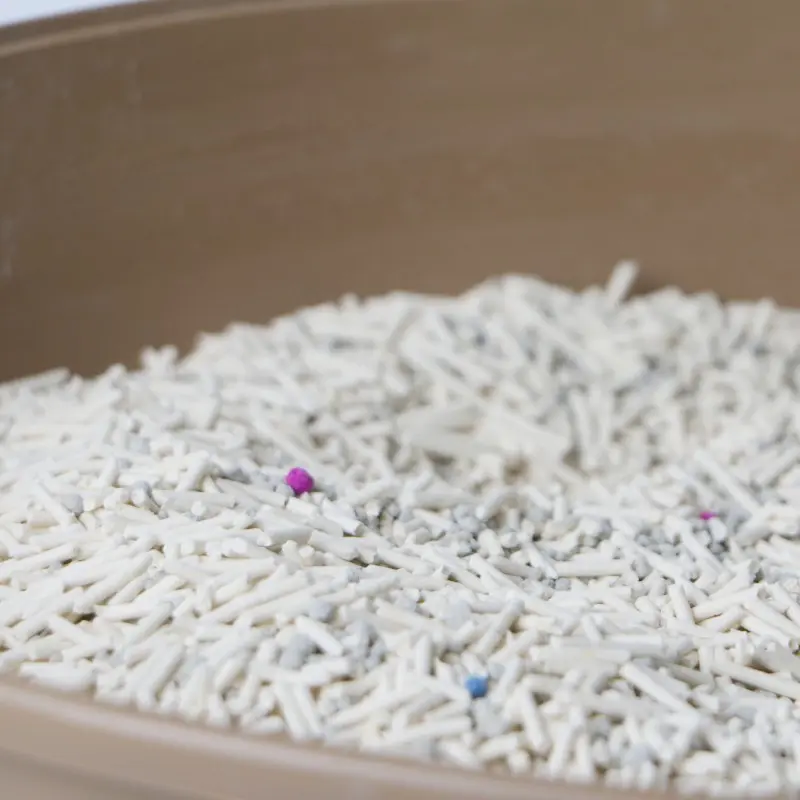
What Is Mixed Cat Litter? Complete Guide to Types, Benefits, Manufacturing Process, Applications, and Buying Tips
Introduction: Why Mixed Cat Litter Is Becoming Popular
The cat litter industry has evolved significantly as pet owners demand better odor control, stronger clumping performance, lower dust, and more environmentally friendly solutions. Traditional single-material cat litters, such as bentonite clay, silica gel, or plant-based litter, each have their own advantages but also limitations.
Mixed cat litter has become a popular solution by combining two or more different materials to create a balanced product with improved performance. By blending materials such as tofu, bentonite, activated carbon, corn, cassava, pine, or silica gel, manufacturers can optimize absorption, odor control, clumping strength, tracking performance, and user experience.
For consumers, mixed cat litter provides a more effective daily cleaning experience. For pet brands, wholesalers, and retailers, customized mixed cat litter creates opportunities to develop premium products for different markets.
This article explains what mixed cat litter is, its different types, how it works, customization benefits, manufacturing processes, applications, competitive advantages, and practical buying experience.
What Is Mixed Cat Litter?
Mixed cat litter is a type of cat litter made by combining two or more different litter materials into one formula to achieve better overall performance.
Unlike single-material litter products, mixed cat litter uses the advantages of multiple ingredients while reducing their weaknesses.
For example:
Bentonite clay provides strong clumping ability
Tofu litter provides natural absorption and low dust
Activated carbon improves odor control
Silica gel increases moisture absorption
Corn or cassava adds biodegradability
A mixed formula allows manufacturers to create a product that performs better than many traditional single-material options.
Common mixed cat litter combinations include:
Tofu + Bentonite cat litter
Tofu + Activated Carbon cat litter
Tofu + Corn cat litter
Bentonite + Zeolite cat litter
Plant-based mixed cat litter
Silica + Mineral mixed cat litter
The goal of mixed cat litter is not simply adding materials together, but creating a scientifically balanced formula.
First, let's understand what mixed cat litter is. As the name suggests, mixed cat litter is made by combining multiple materials, with most of them being a combination of tofu cat litter and bentonite clay. The proportions and additives may vary, but the general idea is to combine the advantages of these two cat litters for convenience, safety, and comfort. Bentonite clay cat litter is relatively inexpensive, and adding it helps reduce costs and improves clumping properties, reducing residual cat urine. Bentonite clay also acts as a drying agent and has some antibacterial properties, so adding it can save costs, enhance clumping, and improve antibacterial capabilities.
Now, let's look at the advantages of mixed cat litter.
It has better absorption because it typically contains a variety of materials that complement each other. These materials can help reduce environmental pollution, and they are usually sterilized, making them safe to use.
Mixed cat litter is convenient and cost-effective. Using it can reduce the frequency of changing the litter, saving cat owners time and money.
Here's a tip: the recommended ratio for mixed cat litter is 7:3. Since bentonite clay cat litter can produce a lot of dust, it's better not to add too much to avoid affecting the overall dustiness of the product.
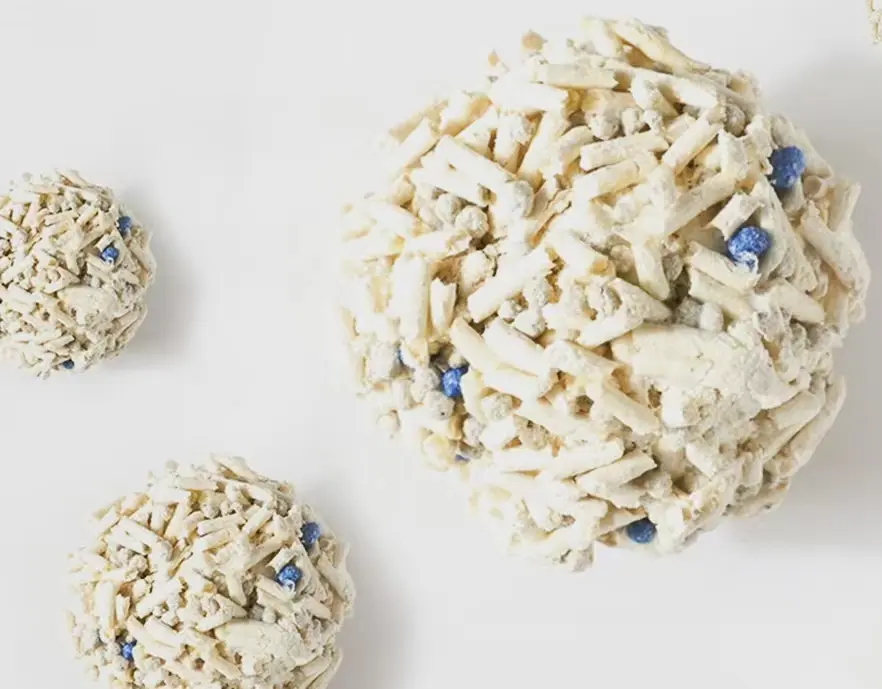
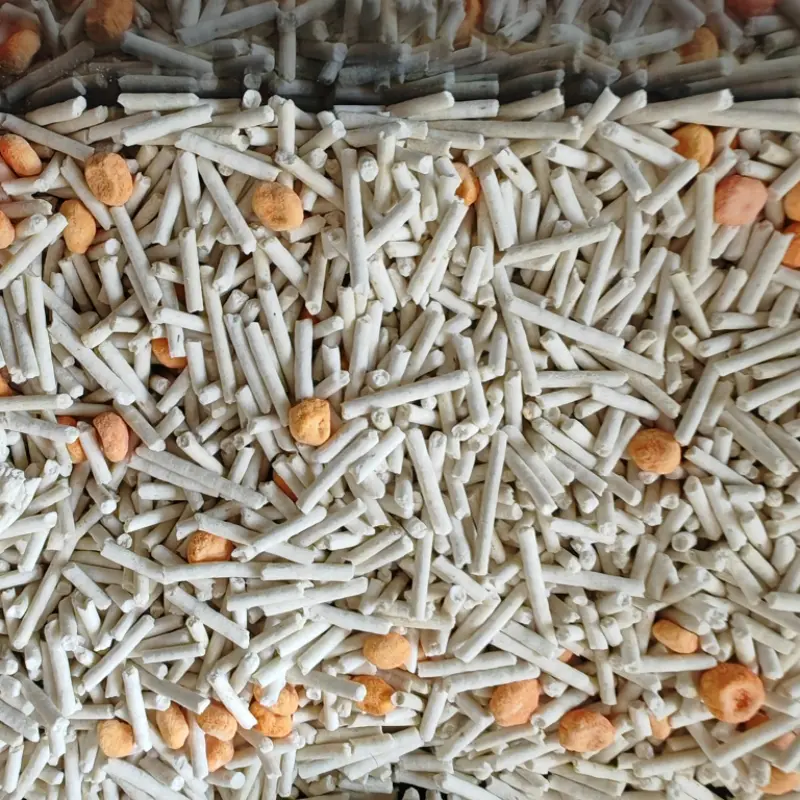
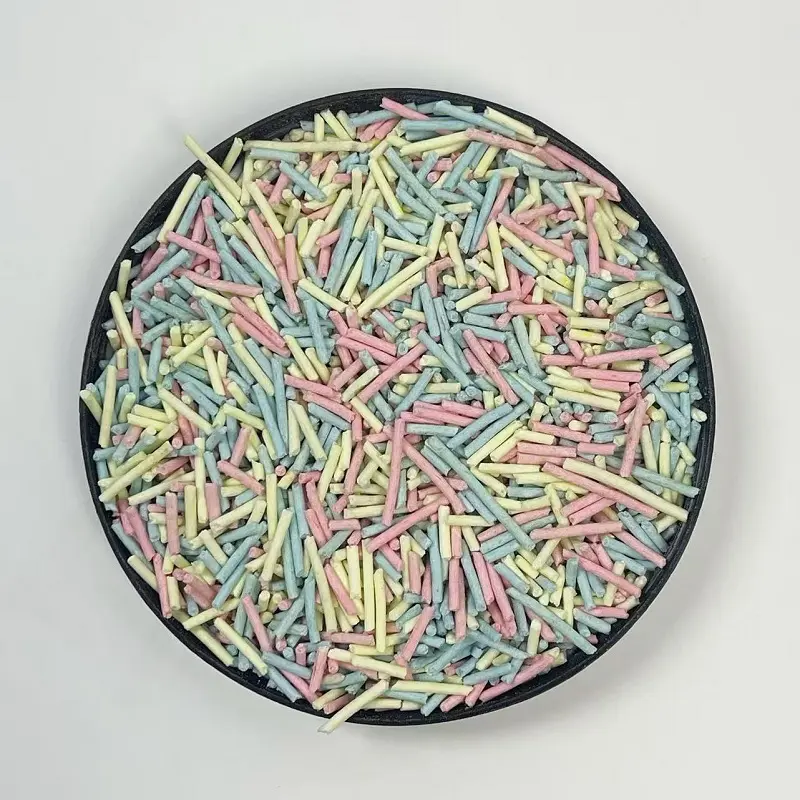
"This picture showed the bentonite cat litter can help tofu cat litter clumps hard and cover the odors"
What makes a high-quality mixed cat litter?
Let's delve into the benefits of our factory's mixed cat litter based on years of production experience and cat care knowledge.
First,our mixed cat litter effectively neutralizes odors, as it contains six layers of deodorizing technology that can tackle various odors. It works through oxidation to break down odor molecules, adsorbs odors with catechins, reduces ammonia production with lilac extract, inhibits odor sources with biological enzymes, and reacts with odor factors through persimmon tannin, among others. It's these multiple layers of deodorizing technology that allow our mixed cat litter to quickly eliminate odors.
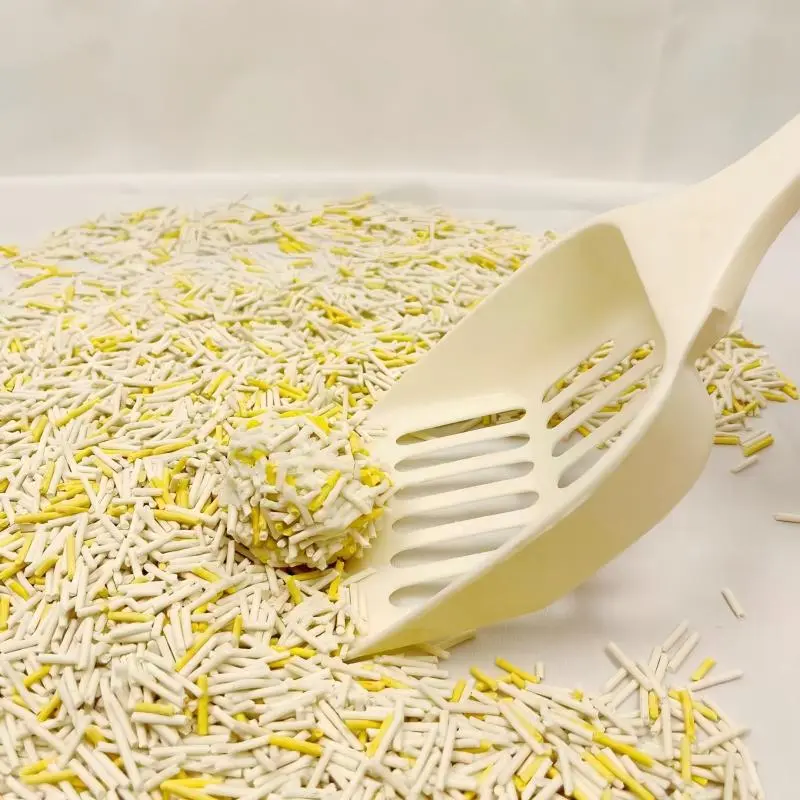
Our cat litter also provides a good solution to clumping issues. We use a rapid water absorption technology that can quickly absorb and form clumps, ensuring that they are strong and don't break apart when you scoop them. This significantly reduces the effort required for cleaning the litter box, especially for busy cat owners. Moreover, our cat litter effectively tackles dust issues. Through multiple dust removal processes, our cat litter protects the respiratory and urinary systems of both cats and humans, providing a fresh breathing space for all.
Lastly, our cat litter is environmentally friendly and healthy. It is made from natural materials such as high-quality pea fiber and cornstarch, ensuring the health and comfort of cats. This also reflects our commitment to environmental protection and consumer health.
In summary, our cat litter is undoubtedly an excellent choice for efficient deodorizing, strong clumping, low dust, environmental friendliness, and health. It addresses many of the problems that cat owners may encounter and provides a more comfortable and healthy environment for both cats and owners."
Why Do Manufacturers Develop Mixed Cat Litter?
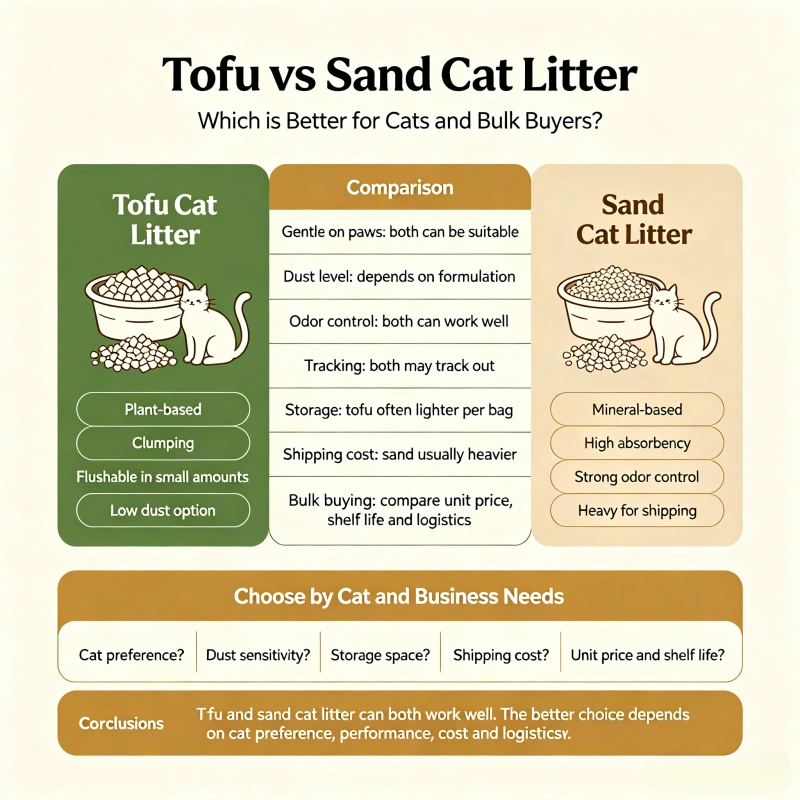
Every cat litter material has advantages and disadvantages.
For example:
Bentonite clay:
Advantages:
Strong clumping
Affordable
Easy cleaning
Disadvantages:
Heavy
Dusty
Not biodegradable
Tofu litter:
Advantages:
Natural
Lightweight
Low dust
Disadvantages:
Higher cost
Sometimes weaker clumping
By mixing different materials, manufacturers can achieve:
Stronger clumping
Better odor control
Lower dust
Improved texture
Lower production cost
Better market positioning
Types of Mixed Cat Litter
1. Tofu and Bentonite Mixed Cat Litter
This is one of the most popular mixed cat litter formulas.
Typical ratio:
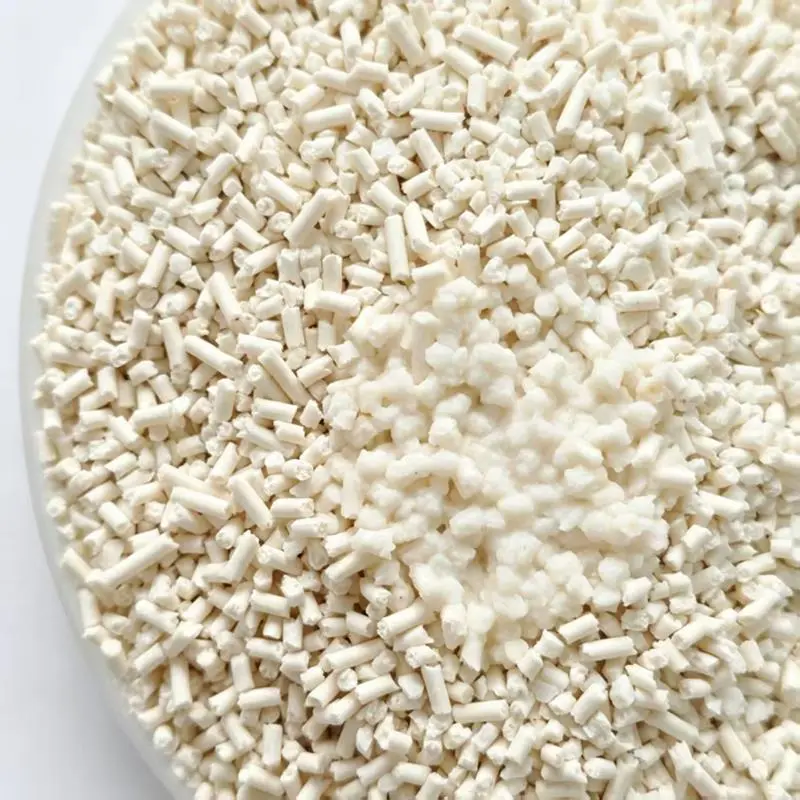
30%-70% tofu fiber
30%-70% bentonite clay
Advantages:
Strong clumping from bentonite
Low dust from tofu
Better absorption
Reduced weight compared with pure clay
This type is popular among consumers who want stronger performance but still prefer natural ingredients.
2. Tofu and Activated Carbon Cat Litter
This formula focuses on odor control.
Activated carbon has millions of tiny pores that can absorb odor molecules.
Benefits:
Strong ammonia control
Suitable for multi-cat homes
Longer freshness
It is commonly marketed as premium odor-control cat litter.
3. Tofu and Corn Mixed Cat Litter
This is a fully plant-based formula.
Main ingredients:
Soybean fiber
Corn fiber
Natural starch
Advantages:
Renewable materials
Biodegradable
Low dust
Gentle texture
It is suitable for eco-conscious consumers.
4. Bentonite and Zeolite Mixed Cat Litter
Zeolite is a natural mineral known for odor absorption.
Benefits:
Improved ammonia control
Strong moisture absorption
Lower odor release
This type is commonly used in economical and commercial cat litter products.
5. Tofu and Cassava Mixed Cat Litter
Cassava provides natural starch and binding properties.
Advantages:
Fast clumping
Smooth texture
Plant-based formula
It is popular in premium natural cat litter markets.
6. Silica and Plant-Based Mixed Cat Litter
This combines:
Silica moisture absorption
Plant-based biodegradability
Advantages:
Excellent moisture control
Reduced odor
Lightweight
How Does Mixed Cat Litter Work?
The working principle of mixed cat litter depends on the combined properties of different materials.
1. Liquid Absorption
Different materials absorb moisture in different ways.
For example:
Tofu fiber absorbs liquid through plant pores
Silica absorbs moisture through microscopic channels
Bentonite expands when wet
The combination improves overall absorption speed.
2. Clumping Formation
Clumping materials create solid waste blocks.
The process:
Cat urine contacts litter particles
Absorbent materials capture moisture
Binding materials combine particles
Solid clumps form
Owners remove waste easily
Good clumping reduces litter consumption.
3. Odor Control
Mixed litter controls odor through multiple mechanisms:
Moisture locking
Bacterial reduction
Odor molecule absorption
Activated carbon filtration
Premium formulas can maintain freshness longer than single-material products.
4. Dust Reduction
By adding low-dust plant materials, manufacturers can reduce the dust problems commonly found in mineral litter.
Custom Mixed Cat Litter: Benefits for Brands and Wholesalers
The pet product market is becoming increasingly competitive. Customized mixed cat litter allows brands to create unique products instead of competing only on price.
1. Customized Formula Development
Manufacturers can create formulas based on target markets.
Examples:
Premium Natural Formula
Ingredients:
Tofu
Corn
Cassava
Target customers:
Eco-conscious cat owners
Strong Odor Control Formula
Ingredients:
Bentonite
Activated carbon
Zeolite
Target customers:
Multi-cat households
Hypoallergenic Formula
Features:
Low dust
Unscented
Natural ingredients
Target customers:
Sensitive cats and owners
2. Customized Pellet Size
Different pellet sizes provide different experiences.
Small pellets:
Softer feeling
Suitable for kittens
Medium pellets:
Balanced performance
Large pellets:
Less tracking
Cleaner floors
3. Private Label Packaging
OEM manufacturers can customize:
Brand logo
Packaging design
Product name
Instructions
Barcode
Retail sizes
Common package options:
2.5kg
5kg
6L
10L
Mixed Cat Litter Manufacturing Process
Step 1: Raw Material Inspection
Factories inspect incoming materials:
Moisture level
Purity
Safety
Absorption performance
Step 2: Material Processing
Different materials are processed separately.
Examples:
Soybean fiber drying
Clay purification
Carbon activation
Step 3: Formula Mixing
Materials are mixed according to a specific ratio.
The formula determines:
Absorption
Clumping
Odor control
Cost
Step 4: Pellet Production
The mixture is shaped into pellets.
Manufacturers control:
Size
Density
Hardness
Step 5: Quality Testing
Testing includes:
Dust level
Absorption speed
Clumping strength
Odor control
Packaging quality
Step 6: Packaging and Export
Finished products are packed for:
Retail stores
Supermarkets
Online marketplaces
Pet distributors
Application Environments of Mixed Cat Litter
1. Household Cats
Mixed cat litter is widely used in:
Apartments
Houses
Indoor cat environments
2. Multi-Cat Homes
Multi-cat households need stronger odor control.
Mixed formulas provide:
Longer freshness
Better absorption
Easier cleaning
3. Cat Cafes
Businesses benefit from:
Reduced smell
Lower cleaning frequency
Better customer experience
4. Animal Shelters
Shelters require cost-effective and efficient litter solutions.
Mixed litter provides:
Good performance
Lower operating costs
Easy handling
Problems Solved by Mixed Cat Litter
1. Weak Performance of Single Materials
Some materials are excellent in one area but weak in another.
Mixed litter balances performance.
2. Bad Odor Problems
The combination of absorbent and deodorizing materials improves smell control.
3. Excessive Dust
Plant-based ingredients reduce mineral dust.
4. High Product Cost
Manufacturers can optimize formulas to maintain performance while controlling costs.
5. Different Cat Preferences
Mixed formulas provide more choices for cats with different habits.
Competitor Analysis: Mixed Cat Litter vs Other Cat Litter Types
| Type | Advantages | Disadvantages |
|---|---|---|
| Mixed Cat Litter | Balanced performance, customizable, flexible formulas | Formula quality varies between suppliers |
| Bentonite Clay | Excellent clumping, low price | Heavy, dusty |
| Tofu Cat Litter | Natural, biodegradable, low dust | Higher cost |
| Silica Gel | Excellent moisture absorption | Not biodegradable |
| Wood Pellet Litter | Renewable and natural | Weak clumping |
Why Mixed Cat Litter Has Market Advantages
Mixed cat litter combines the strengths of different materials.
It allows brands to create products targeting:
Budget customers
Premium buyers
Eco-conscious consumers
Multi-cat households
Practical Experience and Buying Tips
Choose According to Cat Lifestyle
For one indoor cat:
Tofu mixed litter
Low dust formulas
For multiple cats:
Bentonite + carbon formulas
For sensitive cats:
Unscented plant-based formulas
Test Clumping Speed
A good mixed litter should:
Absorb quickly
Form firm clumps
Avoid breaking during scooping
Consider Tracking Performance
Large pellets usually reduce tracking.
Avoid Strong Artificial Fragrances
Many cats dislike strong smells.
Natural odor control is usually better.
FAQ About Mixed Cat Litter
1. What is mixed cat litter?
Mixed cat litter is made by combining two or more litter materials to improve absorption, clumping, odor control, or environmental performance.
2. What materials are used in mixed cat litter?
Common materials include tofu, bentonite, corn, cassava, silica gel, activated carbon, and zeolite.
3. Is mixed cat litter better than regular cat litter?
In many cases, yes. Mixed formulas provide balanced performance by combining different material advantages.
4. Is mixed cat litter safe for kittens?
High-quality mixed cat litter with natural ingredients and low dust is generally suitable for kittens.
5. Does mixed cat litter control odor better?
Yes. Many formulas include activated carbon or odor-absorbing minerals for improved smell control.
6. Can mixed cat litter be customized?
Yes. Manufacturers can customize ingredients, ratios, pellet sizes, fragrance, and packaging.
7. Is mixed cat litter environmentally friendly?
Plant-based mixed formulas can be environmentally friendly, especially when they use renewable materials.
8. How often should mixed cat litter be replaced?
Daily scooping is recommended. Full replacement depends on cat numbers and product quality.
9. Which mixed cat litter is best for multiple cats?
Formulas containing bentonite, activated carbon, or zeolite usually provide stronger odor control.
10. How do I choose a reliable mixed cat litter manufacturer?
Look for:
Stable raw material supply
OEM experience
Quality testing
Production capacity
Export experience
Conclusion
Mixed cat litter is an innovative solution that combines different materials to overcome the limitations of traditional single-material litter products. By blending ingredients such as tofu, bentonite, activated carbon, corn, or silica, manufacturers can create products with better absorption, stronger odor control, lower dust, and improved user experience.
For cat owners, mixed cat litter provides more choices for different needs. For pet brands and wholesalers, customized mixed cat litter offers opportunities to develop unique products and compete in the growing global pet care market.
As consumers continue to prioritize pet health, convenience, and sustainability, mixed cat litter will remain an important category in the future of cat care products.
387.webp)