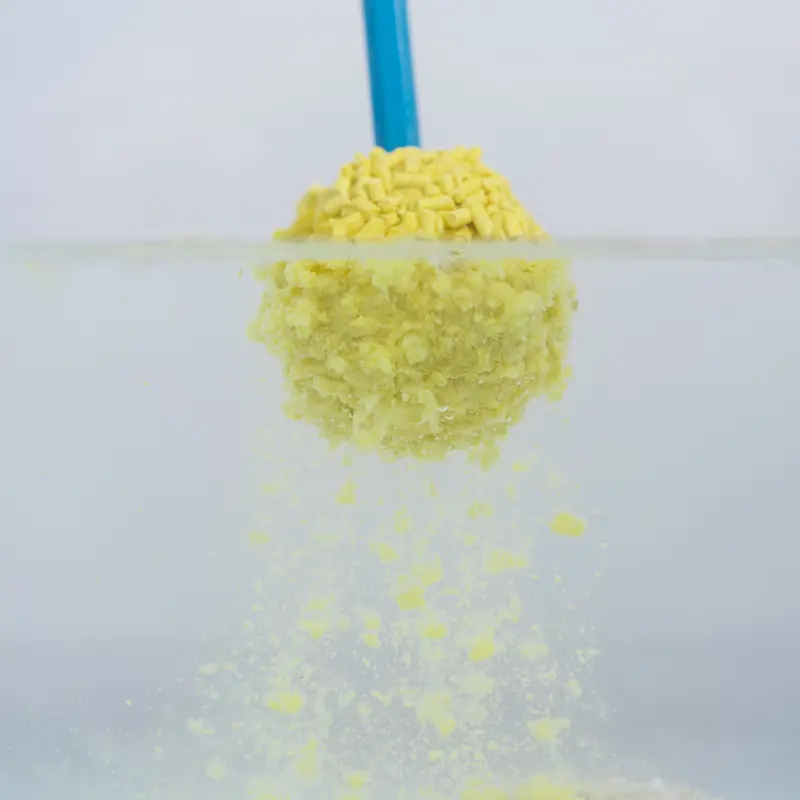
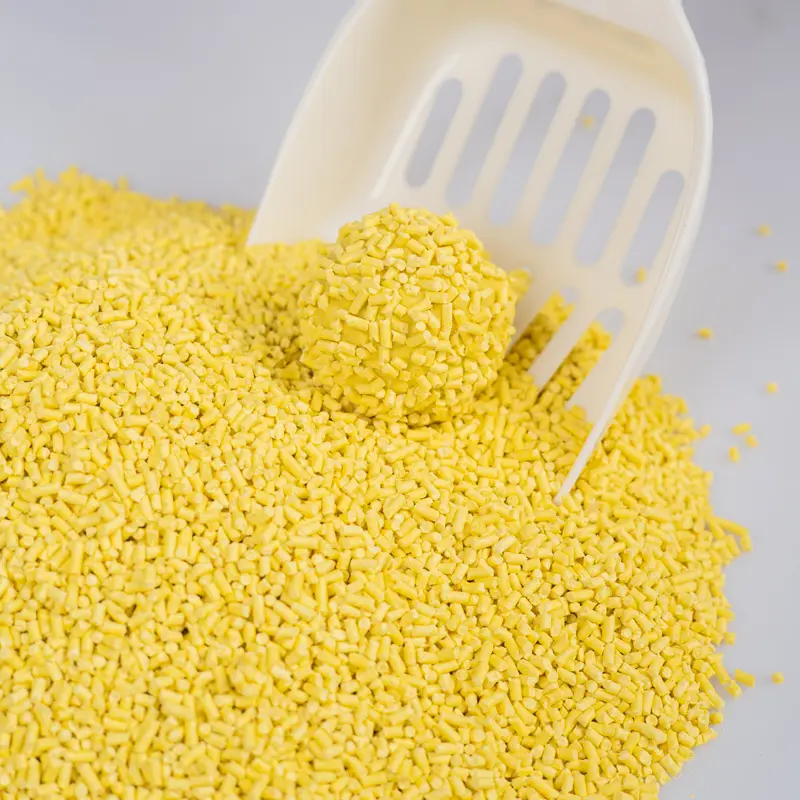
Eco-friendly corn cat litter is an option for Polish cat owners looking for plant-based litter with a comfortable texture and convenient cleaning. Made from corn-derived materials, some formulas absorb moisture and form clumps that can be removed with a scoop. For retailers and private-label brands, corn cat litter also offers an alternative product category for the Polish pet-care market.
However, choosing litter for a kitten requires more care than choosing litter for an adult cat. A product described as natural, biodegradable, or suitable for kittens is not automatically safe if a young kitten eats it. Age, chewing behavior, particle texture, fragrance, and clumping properties all matter.
This guide explains what Polish consumers should check before buying corn cat litter, how to compare its performance and price, when clumping litter may be unsuitable for young kittens, and what local distributors should know about sourcing an eco-positioned product.
Is Eco-Friendly Corn Cat Litter a Good Choice for Kittens in Poland?
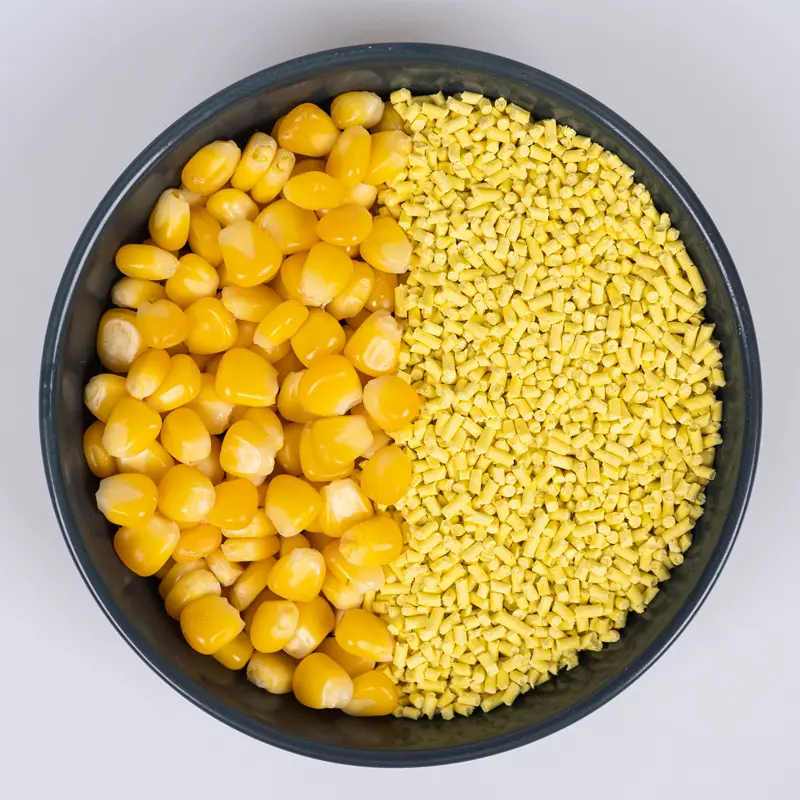
Corn cat litter is made from processed corn or corn-derived ingredients. Depending on the formula, it may also contain plant fibres and binders that help the particles absorb moisture and form clumps.
The potential advantages include a plant-derived material base, a choice of particle textures, and easy removal of used clumps when the formula performs well. These benefits vary by product and should not be assumed from the ingredient list alone.
For kitten owners, the first question is not whether a litter is environmentally friendly. It is whether the product is appropriate for the kitten's age and behavior.
Very young kittens often explore their surroundings by mouthing objects, including litter. National Kitten Coalition advises avoiding clumping litter until kittens are at least four months old because swallowed litter may cause intestinal blockage. If a kitten repeatedly eats litter, consult a veterinarian before continuing with a clumping formula.
Important: For kittens under four months old, or any kitten that tries to eat litter, ask a veterinarian about an appropriate non-clumping option. A manufacturer's “for kittens” description should not replace age-specific safety guidance.
Poland's Cat Market: Why Product Selection Matters
Poland has a substantial pet-care market. FEDIAF's 2026 Facts & Figures report estimates that the country had approximately 7.463 million cats in 2024. The figure indicates a large potential audience for cat-care products, but it does not establish the market share of corn cat litter or prove that one particular formula is the most popular.
Polish consumers can already find corn-based litter through established retailers. For example, Rossmann Poland lists Super Benek Corn Cat, a plant-based litter in a 4.4 kg package. This shows that corn litter is represented in local retail, although the availability of one brand does not prove demand for every corn-based formula.
For cat owners, the most useful comparison is based on the kitten's age, the litter's texture, its dust and fragrance characteristics, cleaning requirements, and cost over time.
For Polish retailers and distributors, additional questions include product consistency, packaging options, technical specifications, supplier documentation, and whether the product can support the brand's environmental claims.
What Is Corn Cat Litter Made Of?
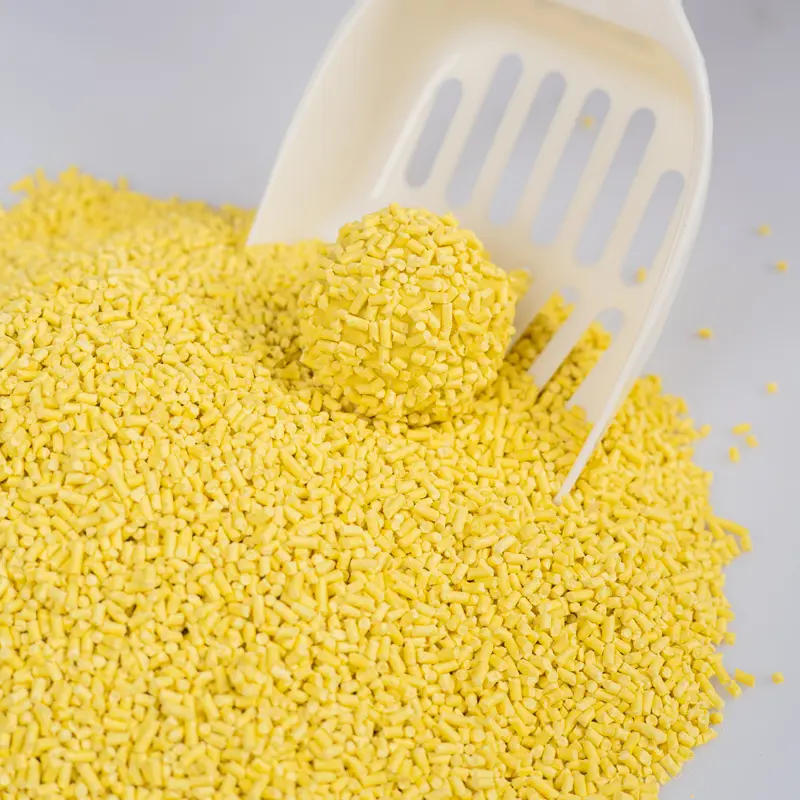
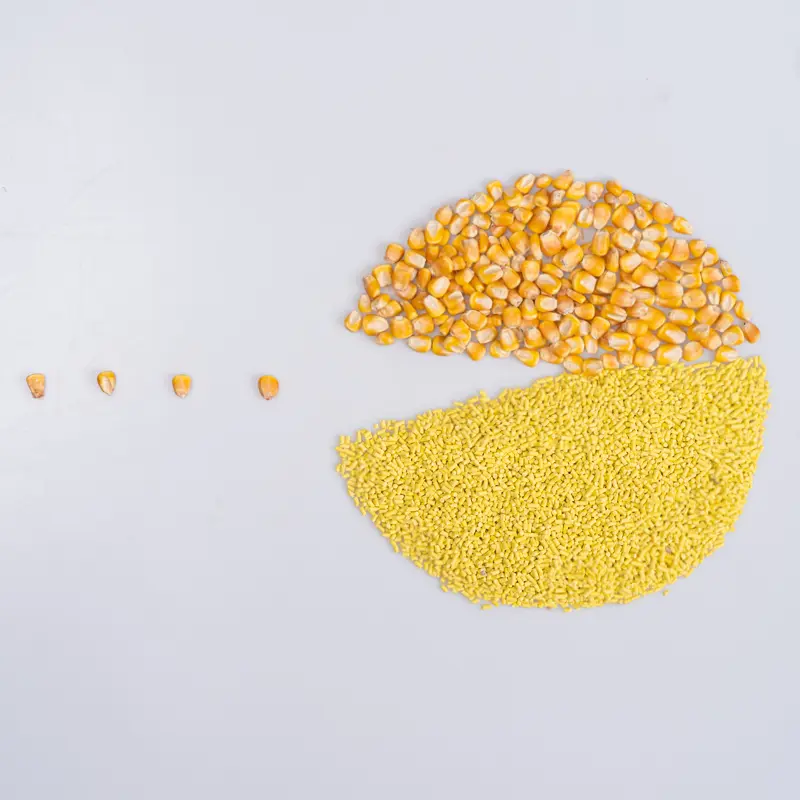
Corn cat litter is a type of cat litter made from corn kernels. It is an alternative to traditional clay-based cat litters and is considered more environmentally friendly by some cat owners. Corn cat litter is made from natural, renewable resources, which can make it an attractive option for those concerned about the environmental impact of cat litter disposal.The short and fine grules can give a kitten a good footfeel.And it is non-toxic, it is belcoming more and more popular in Poland.
Gelin Town Pet's product listing for eco-friendly corn cat litter for kittens in Poland identifies four main ingredients:
Corn starch: A corn-derived material used as part of the product's base.
Corn flour: Another corn-derived ingredient in the litter formulation.
Pea fibre: A plant-derived material that contributes to the formula's physical structure.
Guar gum: A plant-derived binder that may contribute to clump formation.
The finished product's behavior depends on the combination of ingredients, particle structure, processing, and quality control. A formula containing these ingredients is not automatically dust-free, non-toxic if swallowed, or suitable for every kitten.
It is also important to distinguish between three claims:
| Claim | What it means | What buyers should verify |
|---|---|---|
| Plant-based | Some or all ingredients come from plant-derived materials | The ingredient declaration and any relevant additives |
| Biodegradable | The product can break down under specified conditions | Evidence relating to the finished product and the conditions tested |
| Suitable for kittens | The product is intended for a kitten-related use case | Age guidance, ingestion-risk information, and appropriate use instructions |
A product may have plant-derived ingredients without being suitable for ingestion. Likewise, biodegradability does not automatically mean that the used litter is appropriate for home composting or toilet disposal.
Compared with tofu cat litter, what is the strength of corn cat litter?
Corn cat litter is a similar product as tofu cat litter. They are made from natural plant fibres and eco-friendly to the environment.But there are some differences between them.
Granules.
Corn cat litter's granlue is short, tofu cat litter's granule is longer. The short granules is more suitable for kittens.If you are a cat litter brand who want to develop a new cat litter for kitten in Poland,the corn cat litter can meet you requirement.
Absorption rate
Corn cat litter have a better absortion rate than tofu cat litter.The short granules can absorb the urine more quickly and sufficiently.
Harder clumps
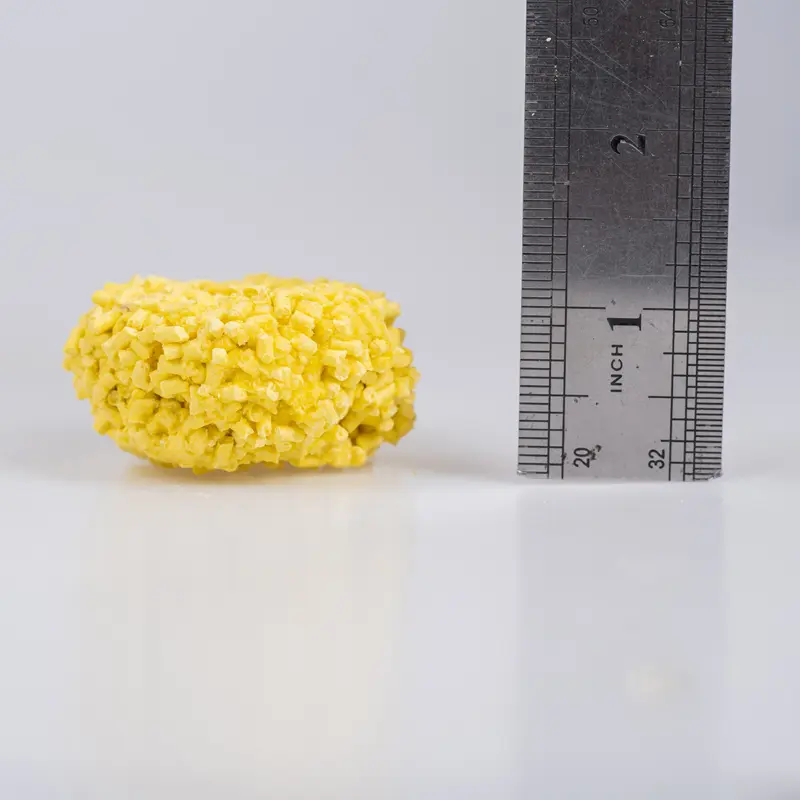
As every pellets of corn cat litter can absorb the urine well, its clumps is a bit harder. And not easy to break into small pieces when you scoop them out of litter box.
Low consumption
The clumps of corn cat litter is a bit smaller than normal tofu cat litter. Each pellets can works well, there is no pellet was wasted in use.
Can be used in litter robot.
The granule of corn cat litter is short. It can be used in litter robot. For normal tofu cat litter, as the pellets is longer,it is not suitable to be used in litter robot.
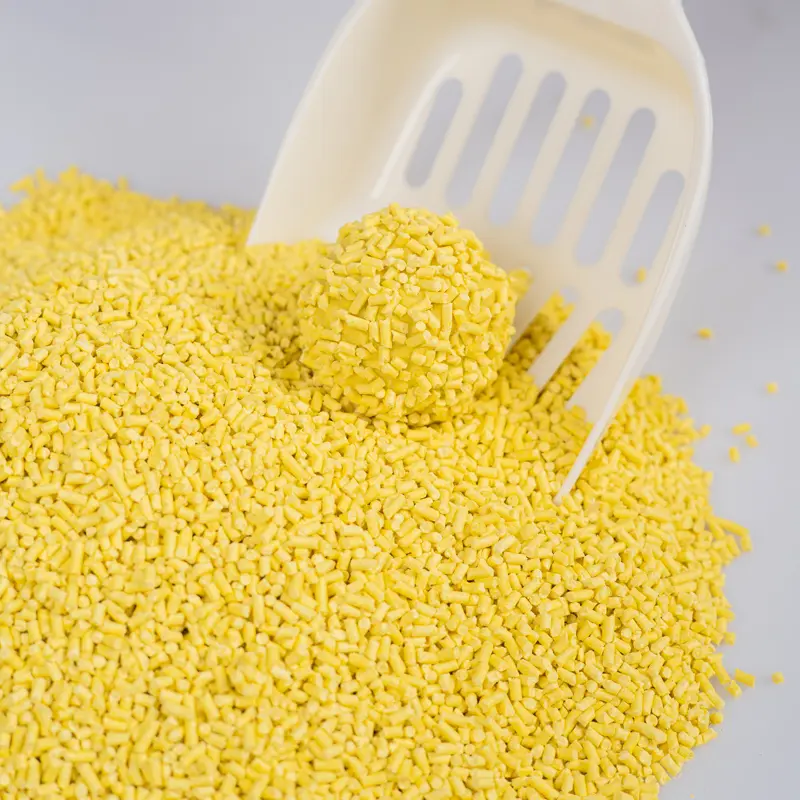
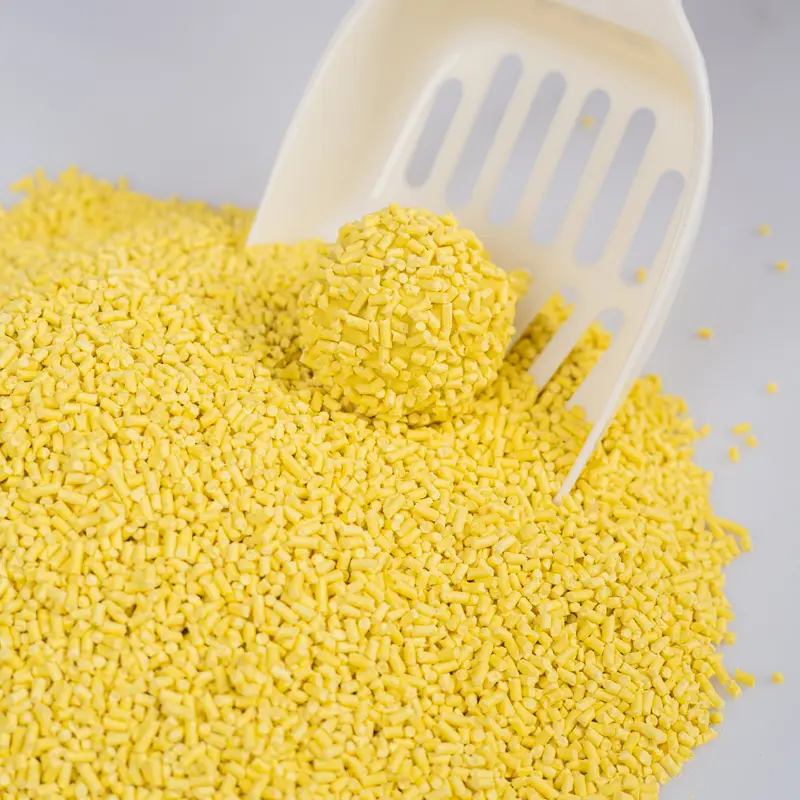
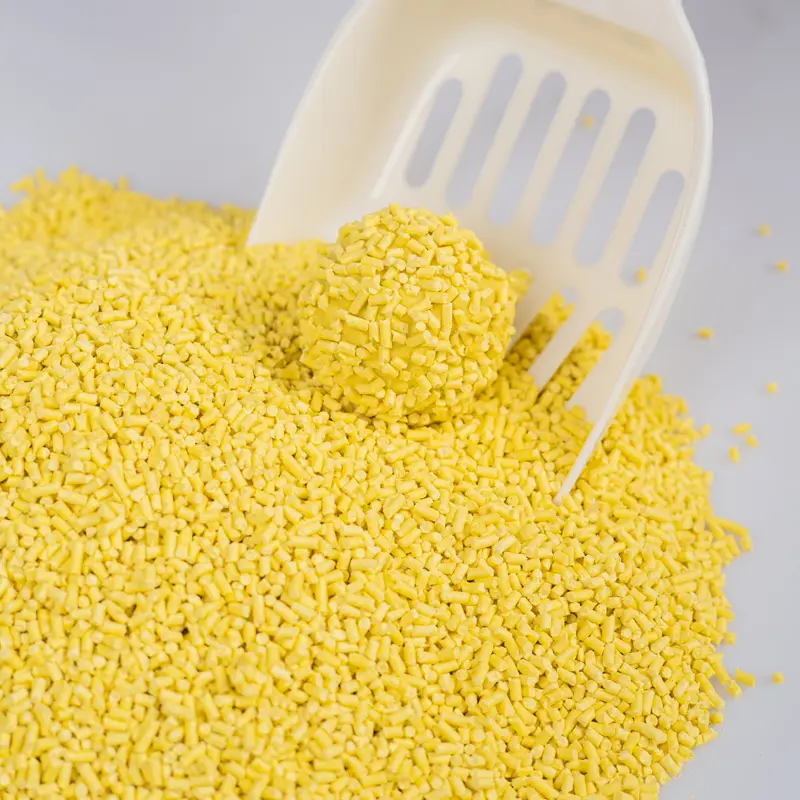
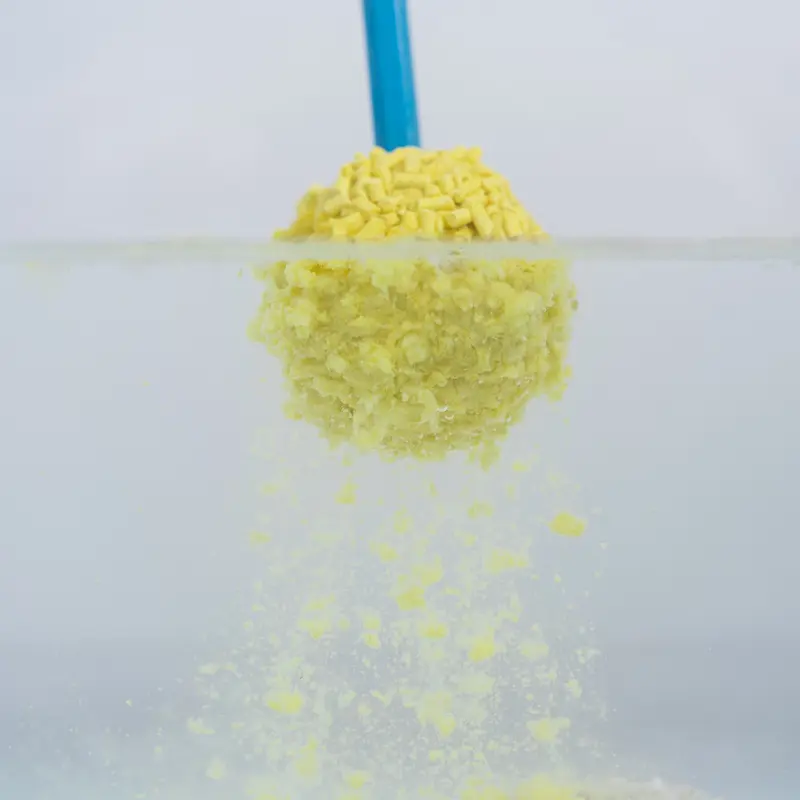
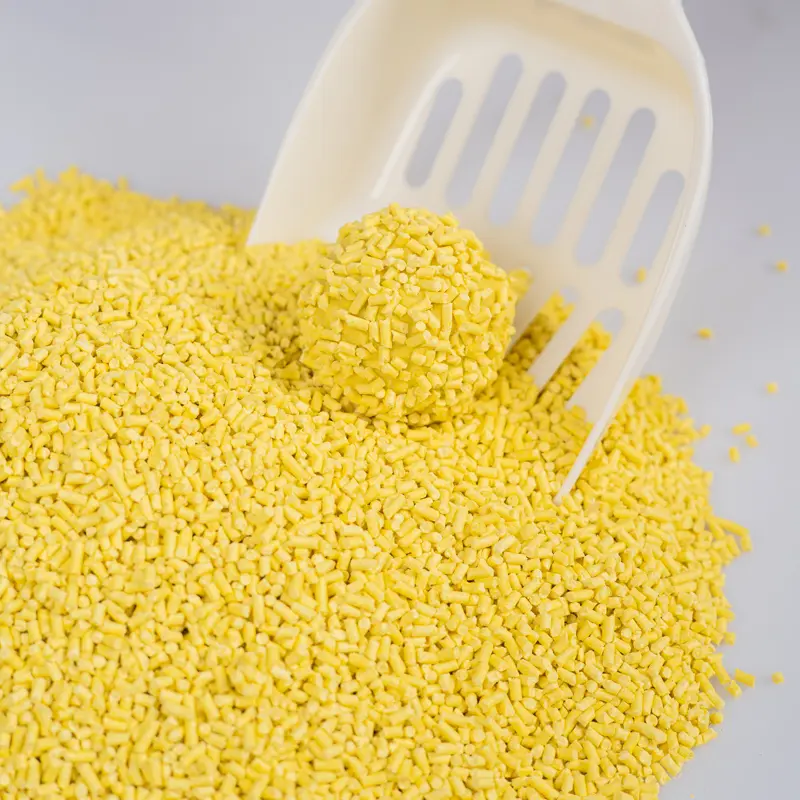
This picture showed corn cat litter is a clumping cat litter, which can be scooped out of litter box easily.
Small Granules vs. Larger Pellets: Which Is Better for Kittens?
Granule size affects the texture under a cat's paws, the amount of material tracked outside the tray, and how the litter behaves during scooping. Some kittens may prefer fine, sand-like particles, while others may adapt readily to granulated or pellet-style products.
There is no universal granule size that is best for every kitten.
| Comparison factor | Small-granule corn litter | Larger-pellet litter |
|---|---|---|
| Paw feel | May feel closer to fine sand | More distinct, larger particles |
| Cat acceptance | May suit cats accustomed to fine litter | Some cats may need time to adapt |
| Tracking | Smaller particles may be carried outside the tray more easily | Larger particles may reduce some types of tracking |
| Scooping | Depends on whether the formula clumps and stays intact | Depends on pellet design and whether the product clumps |
| Dust | Depends on processing and particle consistency | Not automatically dust-free |
| Young-kitten suitability | Depends on age, behavior, and ingestion risk | Must also be assessed according to the specific product |
For kittens that are old enough to use clumping litter, introduce a new formula gradually where practical. Monitor whether the kitten uses the tray normally, whether it chews the granules, and whether its paws or fur collect excessive litter.
If a kitten begins eating litter, stop treating the material as an ordinary texture preference and seek veterinary advice.
Product Specifications: Eco-Friendly Corn Cat Litter for Poland
Gelin Town Pet lists the following information for its corn cat litter.
| Specification | Manufacturer-listed information |
|---|---|
| Product category | Corn cat litter |
| Main ingredients | Corn starch, corn flour, pea fibre, guar gum |
| Granule diameter | Approximately 2 mm |
| Granule format | Short granules |
| Bulk density | 650–700 g/L |
| Moisture content | ≤10% |
| Absorption rate | ≥350% |
| Clumping | Yes, according to the product listing |
| Tracking | Described by the manufacturer as low-tracking |
| Dust | Described by the manufacturer as low-dust |
| Fragrance | Natural or customized options listed |
| Packaging options | 6L/2.5kg, 7L/2.8kg, 10L/4.5kg, or customized |
| OEM/private label | Listed as available |
| Listed minimum order quantity | 1 × 20-foot container |
| Listed payment terms | T/T |
These specifications are taken from the manufacturer's product page. They are not independent test results, and the public listing does not provide a full test method for every performance claim.
For buyers who need a precise particle-size range, quantified dust results, or evidence of absorption and clump strength, request a current technical data sheet and supporting test documentation.
For products marketed specifically for kittens, buyers should also request clear age guidance and information about ingestion risks. Do not assume that small granules alone establish kitten safety.
How to use corn cat litter?
Prepare the Litter Box:
Start by cleaning the litter box thoroughly if you are switching from a different type of cat litter.
Ensure the litter box is completely dry before adding the new litter.
Fill the Litter Box:
Pour the corn cat litter into the litter box to the recommended depth, usually around 2-3 inches. Follow the specific guidelines provided by the cat litter brand.
Maintain the Litter Level:
Regularly check and maintain the litter level. Add more litter as needed to keep it at the recommended depth.
Daily Scooping:
Scoop out clumps and solid waste from the litter box daily. Corn cat litter typically forms clumps that make it easier to scoop.
Regular Cleaning:
Even though corn cat litter is known for its clumping abilities, it's a good idea to change the entire litter regularly. The frequency depends on the number of cats and the specific brand of litter, but it's often recommended to change the litter completely once a month.
Dispose of Waste Properly:
Dispose of used litter and waste in a trash bag. Do not flush it down the toilet, as corn-based litters may not break down as easily as some other types.
Monitor Your Cat's Reaction:
Keep an eye on your cat's behavior and health. If you notice any signs of discomfort, allergies, or changes in litter box habits, consult with your veterinarian.
Store Properly:
Store the unused cat litter in a cool, dry place to prevent it from clumping or absorbing moisture.
How to Choose Cat Litter for a Young Kitten
A suitable litter should make it easy for a kitten to access the tray, explore the texture, and learn its toileting routine without exposing it to unnecessary risks.
1. Consider the kitten's age first
Very young kittens may ingest litter while investigating the tray. Because of this behavior, a non-clumping litter is often the more cautious option for kittens under four months old.
The exact choice should take the kitten's development and behavior into account. Follow veterinary guidance and the instructions provided with the litter.
2. Choose a comfortable, low-dust texture
Cats have sensitive paws, and an unfamiliar texture may affect whether they use the tray. A fine texture can be appealing to some cats, but it should not be selected solely for softness.
Look for clear product information about particle consistency and dust. Do not interpret “natural” or “corn-based” as proof that a formula is dust-free.
3. Avoid unnecessary fragrance
A strong perfume may appeal to some owners but may be unpleasant to a cat whose nose is close to the litter. Unscented products can be a practical starting point, particularly when introducing a new litter.
If the kitten avoids a scented product, consider changing to an unscented option and reassess the tray's location and cleanliness.
4. Keep the tray easy to enter
A low-sided litter tray can help a small kitten get in and out more easily. Place it somewhere accessible and quiet, away from food and water bowls.
Keep the tray clean and monitor whether the kitten uses it consistently. If a kitten suddenly stops using the litter box or appears uncomfortable when urinating or defecating, contact a veterinarian rather than assuming the problem is simply the litter.
5. Observe the kitten after changing litter
When introducing a new formula, monitor the kitten's behavior and check whether it chews or eats the granules. Do not continue a product trial if the kitten repeatedly ingests litter.
If you suspect that the kitten has swallowed a significant amount of clumping litter, or if it develops vomiting, diarrhea, lethargy, abdominal discomfort, or difficulty passing stool, seek veterinary advice promptly.
How Well Does Corn Cat Litter Absorb Moisture and Control Odor?
For kittens old enough to use a clumping formula, absorption and odor control are important everyday performance factors.
A useful product should absorb liquid and allow used material to be removed without leaving excessive wet residue. Firm clumps can make cleaning easier, but the quality of the result varies between formulas.
Absorption rate
Gelin Town Pet lists an absorption rate of at least 350% for this corn cat litter. Before using the figure to compare products, buyers should confirm the measurement method, test liquid, exposure time, sample preparation, and units.
An absorption percentage is difficult to interpret consistently when different suppliers use different test procedures.
Clump strength
A strong clump should remain intact during removal. A fragile clump may break into smaller pieces, leaving used litter in the tray and increasing waste.
When assessing samples, record whether clumps form consistently, how easily they can be scooped, and whether wet material adheres to the bottom of the tray.
Odor management
Odor control depends on absorption, waste removal, the litter formula, and the cleaning routine. Fragrance alone does not prove that a product controls unpleasant smells effectively.
For a product comparison, keep the tray, litter depth, and cleaning schedule consistent. Record whether odors return quickly after cleaning instead of relying on a general claim such as “long-lasting freshness.”
How to Test Corn Cat Litter Before Buying a Larger Bag
A simple evaluation can help adult-cat owners and retailers compare products more systematically. For young kittens, do not conduct a trial with clumping litter if their age or behavior makes it unsuitable.
Step 1: Check the instructions
Read the recommended use, age guidance, litter depth, storage conditions, and disposal instructions. Confirm that the product is appropriate for the animal that will use it.
Step 2: Prepare a consistent test
For a product performance comparison, use the same type of tray, the recommended litter depth, and a measured quantity of liquid. Keep the conditions consistent between samples.
This evaluates the formula's physical performance, but it is not a substitute for laboratory testing.
Step 3: Record clump quality and residue
Observe whether the used material forms a cohesive clump, whether it breaks during removal, and whether wet particles remain attached to the tray.
If the product is intended for commercial sale, ask the supplier for its defined clump-strength test method and supporting results.
Step 4: Monitor dust and tracking
Observe the product while filling the tray and during ordinary use. Record visible dust and the amount of litter carried outside the tray.
A short visual inspection cannot substantiate claims such as “99% dust-free.” Quantitative marketing claims require an appropriate test method and reliable supporting data.
Step 5: Compare actual consumption
For an appropriate adult-cat trial, record the amount of litter added, waste removed, frequency of full replacement, and total cost.
Use this information to calculate the daily cost instead of assuming that a larger or more expensive package automatically represents better value.
How Much Does Corn Cat Litter Cost in Poland?
Retail prices vary by brand, package size, formula, and promotion. A useful benchmark comes from a Polish retailer's listed price for another corn-based litter.
Rossmann Poland lists Super Benek Corn Cat in a 4.4 kg package at 26.99 zł, equivalent to approximately 6.13 zł/kg at the displayed price.
| Retail benchmark | Listed value |
|---|---|
| Product | Super Benek Corn Cat |
| Package weight | 4.4 kg |
| Displayed retail price | 26.99 zł |
| Approximate price per kilogram | 6.13 zł/kg |
This is a single-product retail reference, not the average price of corn cat litter in Poland and not a quotation for Gelin Town Pet's product. Prices may change, and different formulas are not necessarily equivalent.
Compare the cost per day
To determine whether a litter offers good value, calculate how much it costs to use over time.
Cost per kilogram = Package price ÷ Net weight in kilograms
Cost per day = Total litter cost ÷ Number of days the litter lasts
For example, a hypothetical 30 zł bag used over 20 days has a cost of 1.50 zł per day. A hypothetical 36 zł bag used over 28 days costs approximately 1.29 zł per day.
These examples demonstrate the calculation; they are not measured usage estimates for any named product.
For households with multiple cats, actual consumption can differ substantially from a single-cat household. Record your own usage and follow the product's replacement instructions rather than relying on a universal duration claim.
Is Corn Cat Litter Environmentally Friendly?
Corn-based litter uses plant-derived materials, which may appeal to consumers looking for alternatives to mineral-based products. However, the environmental impact of the finished litter depends on more than the ingredient source.
A complete assessment would consider raw-material sourcing, processing, production energy, packaging, shipping, product consumption, and end-of-life disposal.
It is also important to distinguish between environmental claims.
Plant-based describes the source of some or all ingredients.
Biodegradable means the material can break down under specified conditions; the conditions and evidence matter.
Compostable requires evidence that the product is suitable for the relevant composting conditions.
Flushable concerns both the product's behavior and the compatibility of the material with plumbing and wastewater systems.
These terms are not interchangeable. A plant-based product should not automatically be described as suitable for home composting or toilet disposal.
How should used cat litter be disposed of in Poland?
Follow the package instructions and check the guidance issued by your local municipality or waste operator. Polish government guidance for bio-waste excludes animal faeces from the brown bio-waste container, so used litter should not be placed in that container simply because its ingredients are plant-based.
Do not assume that a “flushable” claim means that every quantity of litter can safely be flushed. Local wastewater requirements and the product's specific directions still matter. When the appropriate route is unclear, check with your local waste service before disposal.
For manufacturers and importers, any claim about biodegradability, composting, or toilet disposal should be supported by suitable evidence and written in a way that does not mislead consumers.
OEM and Private-Label Corn Cat Litter for Poland
For Polish pet shops, distributors, wholesalers, and online retailers, a corn cat litter product must meet both customer expectations and commercial requirements.
Gelin Town Pet lists corn cat litter with OEM and customized packaging options. Its published formats include 6L/2.5kg, 7L/2.8kg, and 10L/4.5kg.
What should a Polish importer verify?
| Procurement requirement | What to confirm |
|---|---|
| Ingredients | Full ingredient declaration and any additives |
| Particle size | Actual size range and acceptable production variation |
| Absorption | Test method, measurement conditions, and results |
| Clumping | Clump formation conditions and removal performance |
| Dust | Assessment method and supporting documentation |
| Kitten-use guidance | Minimum age, ingestion-risk advice, and clear directions |
| Packaging | Bag dimensions, material, net weight, seals, and carton arrangement |
| Quality control | Incoming-material checks, production inspections, and batch consistency |
| Polish-language labeling | Directions, storage information, and disposal guidance |
| Commercial terms | Minimum order quantity, lead time, payment, and shipping conditions |
The supplier's published minimum order quantity is one 20-foot container, and its listed payment terms are T/T. Confirm the current conditions, final package specifications, production schedule, sample policy, and shipping terms directly before placing an order.
A practical OEM development process
1. Define the target customer. Decide whether the product is aimed at adult cats, older kittens, multi-cat households, or a particular retail segment. Do not use “for kittens” as a general claim without specifying appropriate age guidance.
2. Agree on product specifications. Define the particle size, formula, clumping expectations, absorption targets, dust requirements, and packaging options.
3. Test representative samples. Evaluate the actual finished product rather than relying solely on the ingredient list. Request documentation for each quantitative performance claim.
4. Approve packaging and label information. Confirm the correct Polish-language instructions, ingredient details, storage guidance, and waste-disposal information.
5. Establish quality-control requirements. Document the approved formula, acceptable batch variation, inspection procedure, and evidence required before dispatch.
For a product positioned around kittens and environmental benefits, accurate safety instructions are especially important. A trustworthy label should explain the intended use and limitations rather than imply that natural ingredients eliminate every risk.
Frequently Asked Questions
What are your Popular Package Sizes?
Popular package sizes include 6L (2.5kg) and 7L (2.8kg). Additionally, custom sizes can be arranged upon special request.
What is your Minimum Order Quantity (MOQ)?
The MOQ is 1*20'FCL (20-foot Full Container Load).
Do you offer free samples?
Yes, free samples are available. However, if the shipping express cost is high, we kindly request assistance in sharing the cost. The shipping costs will be reimbursed after the orders are placed.
How long does an order take to be fulfilled?
For the first order, the production time is approximately 30 days. Subsequent orders typically take about 15 days.
Can I have OEM (Original Equipment Manufacturer)?
Yes, we offer OEM services and can provide private label packaging for our cat litter products.
Is corn cat litter safe for all kittens?
No litter should be assumed suitable for every kitten based on the material alone. Young kittens may swallow litter, and clumping products can cause intestinal blockage if ingested. National Kitten Coalition advises avoiding clumping litter until kittens are at least four months old. Consult a veterinarian if your kitten eats litter or if you are unsure which product is appropriate.
Is small-granule corn litter better for kittens?
Small granules may feel comfortable under the paws, but particle size alone does not establish safety or suitability. Age, chewing behavior, dust, fragrance, clumping, and the kitten's acceptance of the litter all matter.
Does natural corn cat litter contain chemicals?
Corn-based formulas vary. Gelin Town Pet's listed ingredients include corn starch, corn flour, pea fibre, and guar gum. Buyers should review the full ingredient declaration and ask about any fragrance or other additives rather than assuming that “natural” means additive-free.
Does corn cat litter clump well?
Clumping performance depends on the finished formula. Evaluate whether clumps form consistently, remain intact when removed, and leave minimal wet residue. Request product-specific test data when buying in bulk.
Can corn cat litter be flushed down the toilet in Poland?
Do not assume that it can. A plant-derived formula does not automatically guarantee that the product is suitable for toilet disposal. Follow the product directions and check local wastewater guidance before flushing any litter.
How much does corn cat litter cost in Poland?
Prices depend on brand, size, formula, and retail promotions. One current Rossmann Poland listing shows Super Benek Corn Cat at 26.99 zł for 4.4 kg, or approximately 6.13 zł/kg. This is a single retail example, not a market average.
Can Polish pet brands buy private-label corn cat litter?
Gelin Town Pet lists OEM and customized packaging options. Buyers should confirm product specifications, minimum order quantity, sample testing, quality-control procedures, Polish-language labeling, production timing, and delivery terms before ordering.
Final Recommendation
Eco-friendly corn cat litter can be a useful option for Polish cat owners looking for plant-derived materials, and the category offers opportunities for retailers and private-label brands. However, product choice should be based on verified performance and the needs of the individual cat rather than broad claims about being natural or suitable for kittens.
For very young kittens, focus first on age-appropriate safety and the risk of swallowing litter. For older kittens and adult cats that can appropriately use a clumping formula, compare texture, clump strength, dust, odor control, consumption, and cost per day.
For Polish importers, request technical specifications, representative samples, reliable test methods, clear age guidance, and packaging details before committing to a bulk order. Environmental and disposal claims should be supported by evidence and aligned with local requirements.
A responsible product guide should help readers make a safer and more informed choice, not promise that every plant-based litter is automatically safe, compostable, or suitable for every kitten.
References
- FEDIAF — Facts & Figures 2026
https://europeanpetfood.org/wp-content/uploads/2026/06/FEDIAF_Annual-Report_2026_WEBv1.1.pdf
- National Kitten Coalition — Choosing Litter: Listen to Your Cat
https://kittencoalition.org/choosing-litter-listen-to-your-cat/
Polish Ministry of Climate and Environment — Biodegradable Waste Sorting Guidance
https://www.gov.pl/web/klimat/segregacjaodpadow-pojemniki-bio