Corn clumping cat litter with effective odor control can be an attractive option for French cat owners looking for a plant-based alternative to conventional mineral litter. For households using an automatic litter box such as Litter-Robot, however, choosing the right formula involves more than checking whether the litter is made from corn.
The litter must form firm clumps, release used material during the cleaning cycle, manage unpleasant odors, and work with the specific machine model. Particle size, bulk density, moisture content, and the time allowed for clumping can all affect the result.
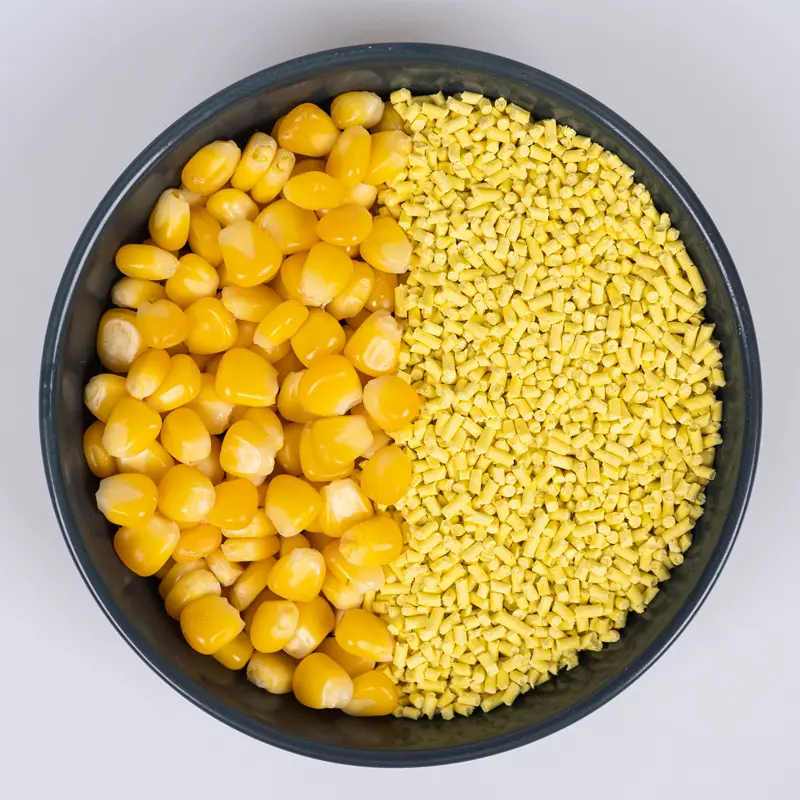
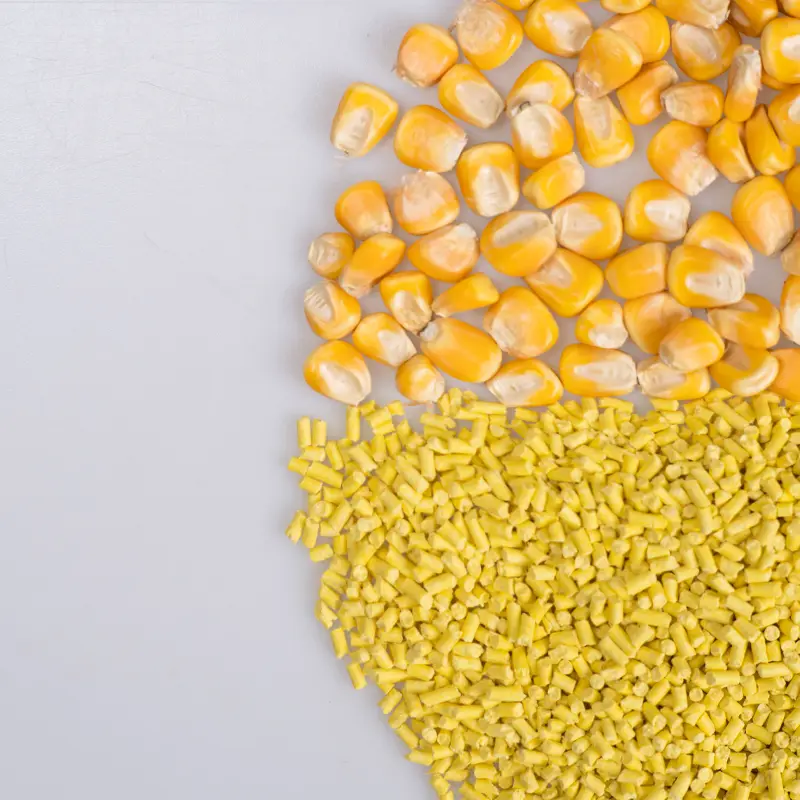
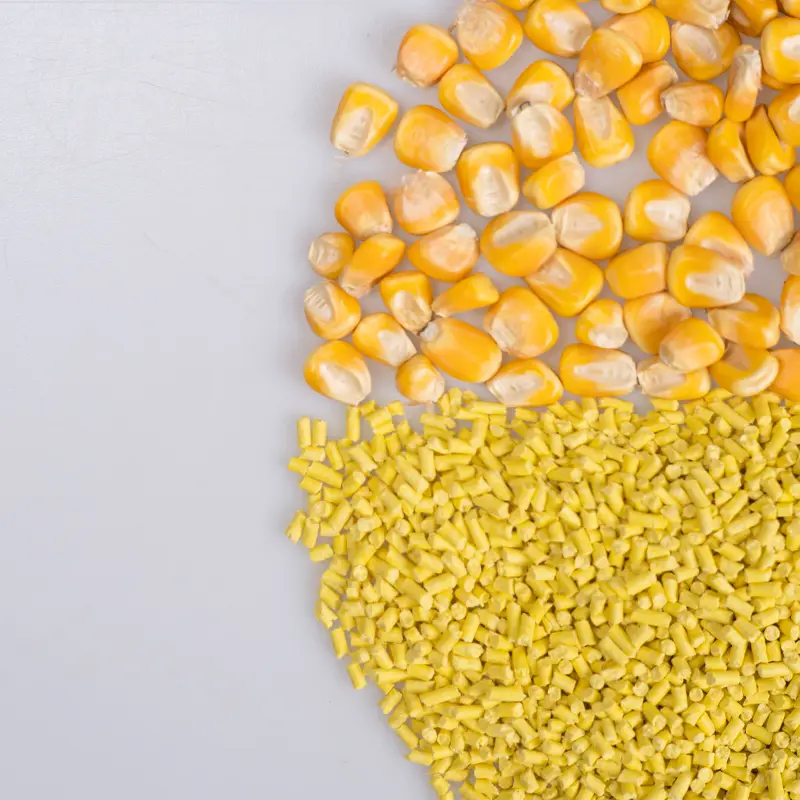
Gelin Town Pet's corn clumping cat litter is formulated with corn starch, corn flour, pea fibre, and guar gum. Its published specifications include short granules with a listed diameter of approximately 2 mm, a bulk density of 650–700 g/L, moisture content of no more than 10%, and a stated absorption rate of at least 350%. These are manufacturer-published figures; buyers should request the relevant test methods and supporting results before relying on them for technical comparisons.
This guide explains how to evaluate corn cat litter for odor control, what Litter-Robot owners should know before switching, how to test a product at home, and what French importers and private-label brands should consider when sourcing corn-based litter.
Why Is Corn Cat Litter Worth Considering in France?
France has a substantial cat-owning population. FEDIAF's 2025 Facts & Figures report, based on 2023 data, estimates the French cat population at approximately 14.9 million.
This figure establishes the scale of France's cat-care market, although it does not show what percentage of French households use corn litter or automatic litter boxes. The opportunity for corn-based litter should therefore be assessed through product performance, retail demand, customer feedback, and local sales data rather than assumptions about market share.
For consumers, corn litter offers a different material choice from mineral clay. For retailers and distributors, it creates an opportunity to offer an alternative to traditional litter products.
The most important buying considerations are:
Clumping: Used litter should form cohesive clumps that can be removed without excessive crumbling.
Odor control: Liquid and waste should be managed effectively between regular cleaning cycles.
Automatic-box compatibility: The litter must sift properly and should not interfere with the machine's operation.
Practical value: The cost per day depends on the amount of litter used, not just the price per bag.
Material and handling: Buyers should consider particle size, dust, tracking, packaging, and storage.
The best product is not necessarily the one with the most attractive environmental claims. It is the one that performs consistently for the cat, the household, and the intended litter-box system.
What Makes Corn Clumping Cat Litter Effective at Odor Control?
Odor control depends on how a litter handles moisture, waste, and the compounds responsible for unpleasant smells. A product may contain plant-derived ingredients and still deliver disappointing results if it forms weak clumps or allows urine to spread through the litter bed.
1. Efficient liquid absorption
A clumping litter should absorb urine and help concentrate the wet material into a removable mass. When liquid spreads too widely, a larger quantity of litter may become contaminated, making cleaning more difficult.
Gelin Town Pet lists an absorption rate of at least 350% for this corn cat litter. Before using this figure in a product comparison, buyers should ask how absorption was measured, whether the result is based on weight, how long the sample was exposed to liquid, and what test conditions were used.
A stated absorption rate is more useful when the method and conditions are clearly documented.
2. Firm clump formation
Absorption alone does not guarantee good odor control. If a clump breaks apart during removal, small pieces of used litter may remain in the tray.
A practical evaluation should check whether the clump:
Forms consistently under the specified conditions.
Can be lifted with a scoop without excessive crumbling.
Leaves minimal wet residue behind.
Remains intact during the cleaning cycle of an automatic litter box.
This last point is particularly important for Litter-Robot users, because the machine separates waste from reusable litter through a sifting cycle.
3. Removing waste at the right time
Even well-formulated litter cannot eliminate the need for cleaning. Leaving waste in the tray for too long can increase unpleasant odors, regardless of whether the litter is corn-based, clay-based, or made from another material.
For an automatic litter box, the cycle must allow enough time for the clump to form before the machine rotates. A clump that is still soft may break apart during separation and leave residue on the liner.
Follow the litter manufacturer's instructions and the machine's guidance. If the product needs more time to form a stable clump, adjust the cycle delay where your particular model supports that setting.
4. Fragrance is not the same as odor control
Gelin Town Pet lists natural or customized fragrance options. Buyers should distinguish between masking an odor with fragrance and controlling the underlying problem through effective absorption and clumping.
Some cats and owners prefer unscented litter. Others may tolerate a mild scent, but a stronger fragrance does not automatically mean better performance.
For a private-label product, fragrance preferences should be evaluated with real users rather than selected solely on the basis of marketing appeal.
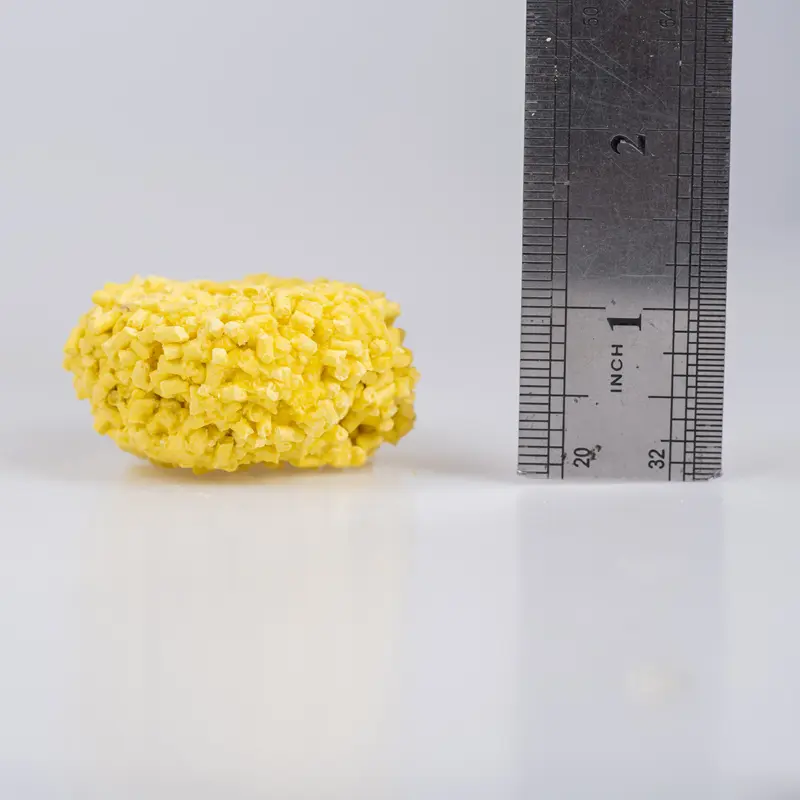
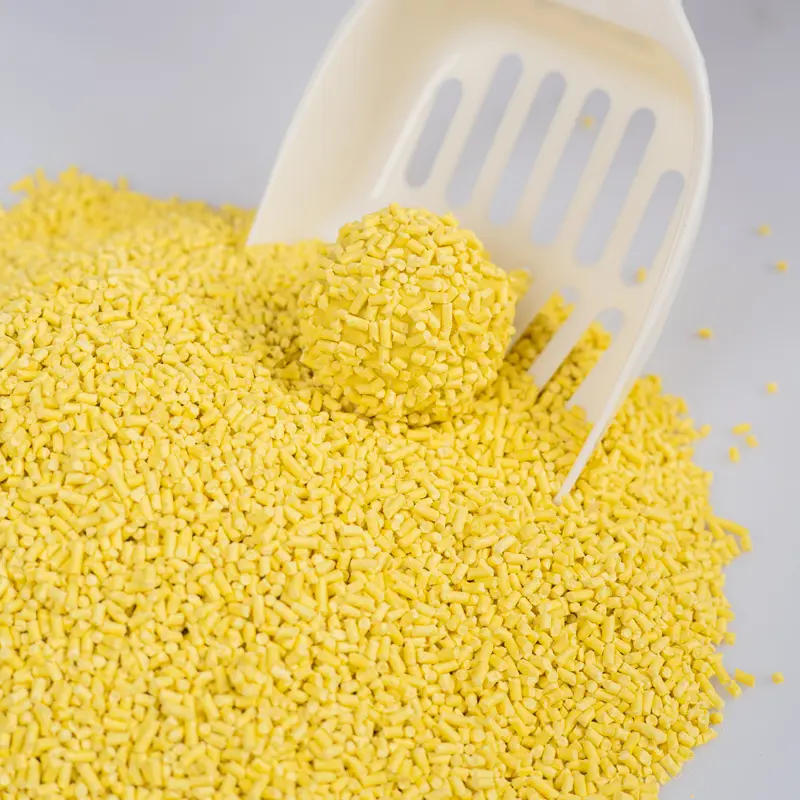
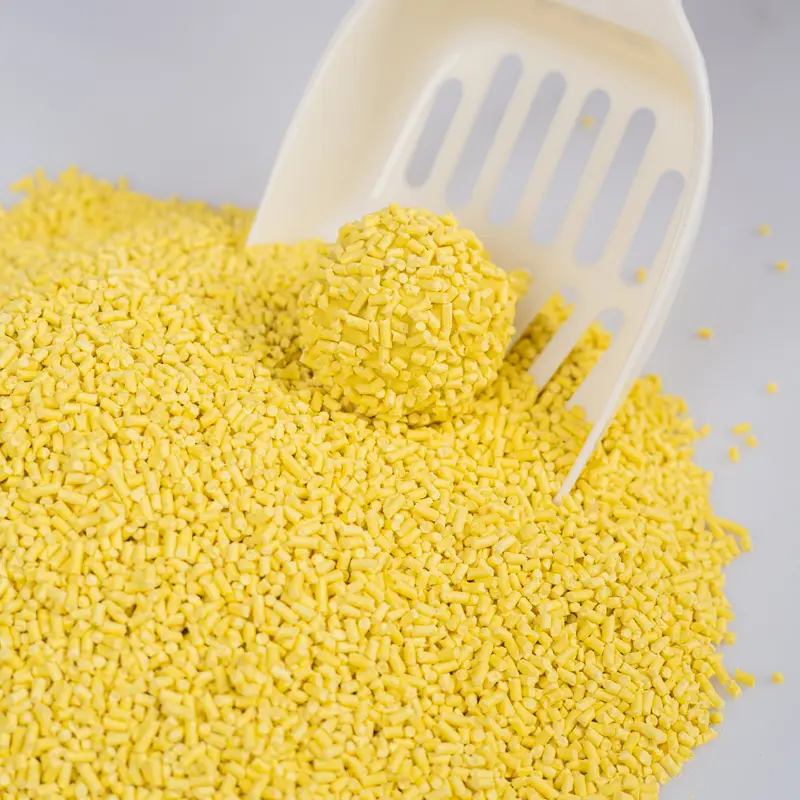
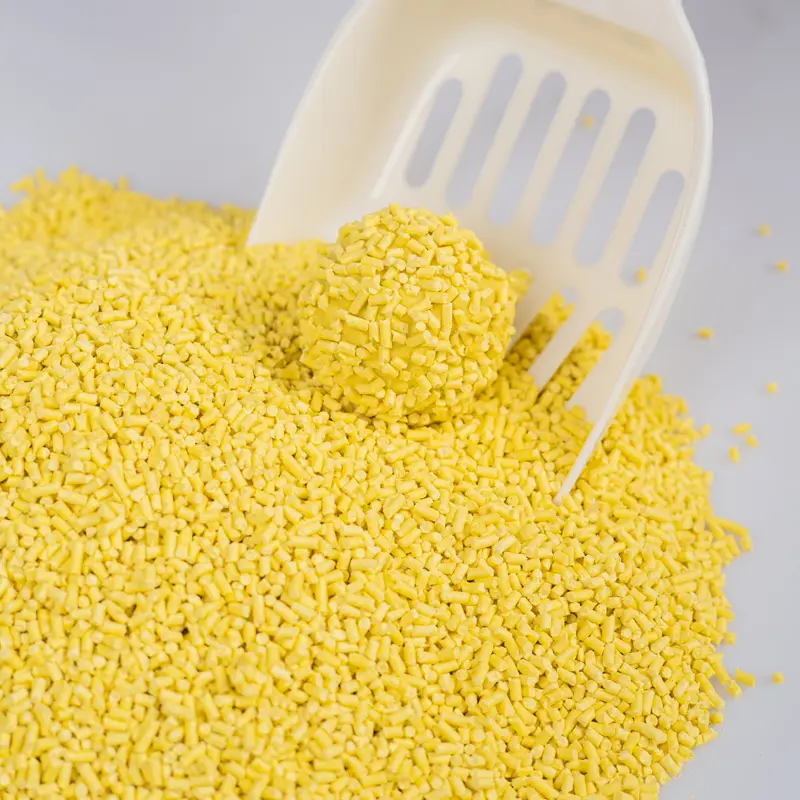
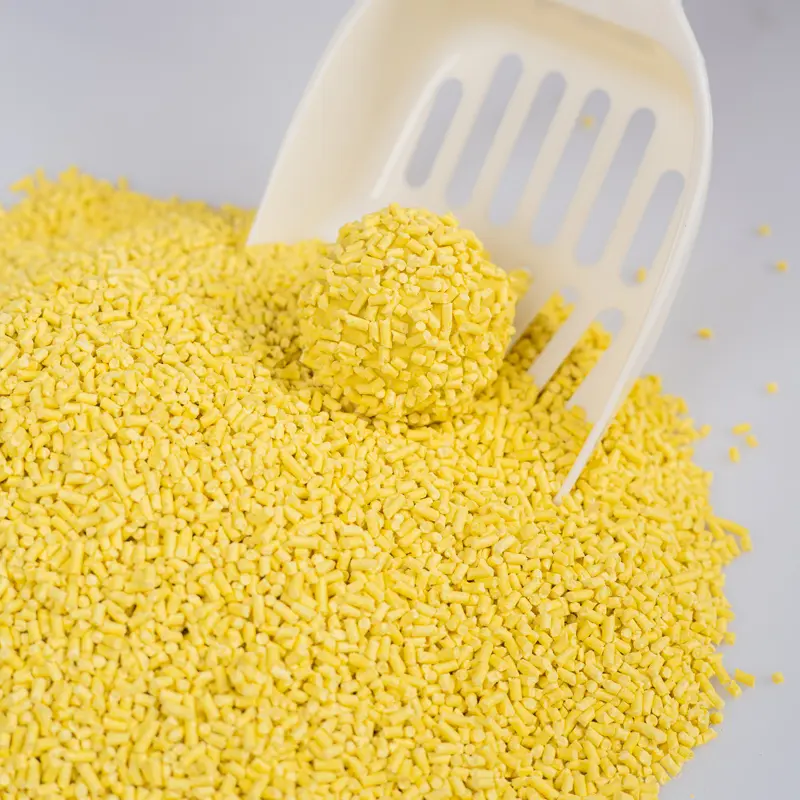
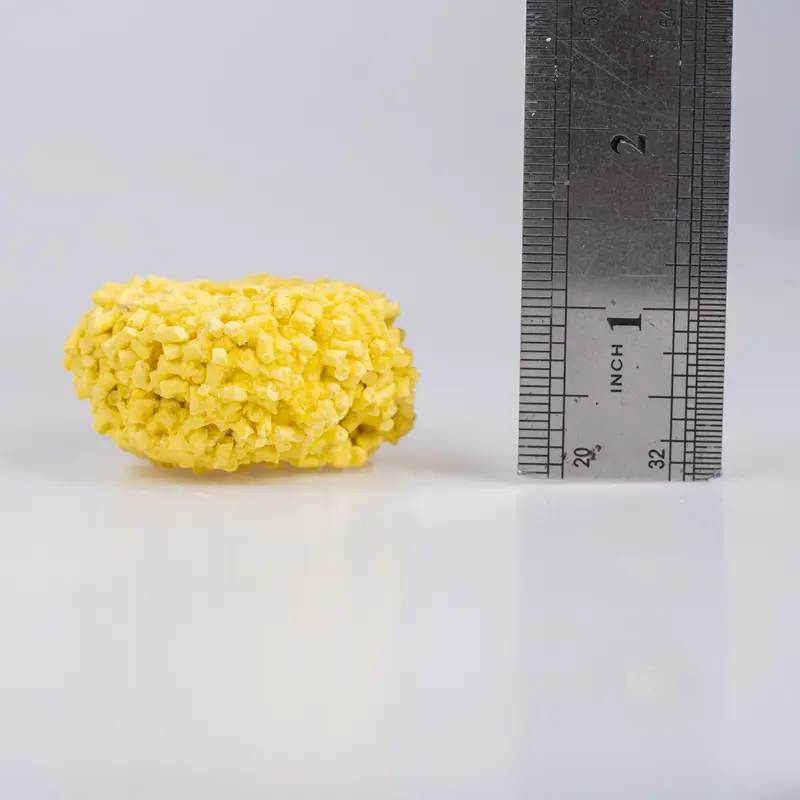
"This picture showed the corn cat litter have a tight clumps and it is thinner,so it is also a non-sticky cat litter"
Can Corn Clumping Cat Litter Be Used in Litter-Robot?
Some corn-based clumping litters may work with Litter-Robot, but compatibility cannot be guaranteed for every corn formula or every model.
Whisker's official guidance states that Litter-Robot requires clumping litter and excludes non-clumping, loose-clumping, newspaper-based, and wood-pellet products. Its guidance also lists certain corn-based litter products as compatible while not recommending another corn-based product.
This distinction matters because two formulas made from similar raw materials can have different clumping behavior, bulk density, and residue characteristics.
Before using a new corn litter, check the current guidance for your exact Litter-Robot model and test the product cautiously.
What matters most for automatic litter-box performance?
| Performance factor | Why it matters for Litter-Robot |
|---|---|
| Clump strength | Weak clumps may break during rotation and separation |
| Clumping time | Clumps that are still soft may leave residue on the liner or screen |
| Particle size | Granules must separate appropriately during the sifting cycle |
| Bulk density | Lightweight litter may behave differently from heavier litter in some sensor systems |
| Dust and residue | Fine particles can accumulate during ordinary use and may increase cleaning needs |
| Odor performance | Waste removal is only part of odor control; residual material and cleaning routines also matter |
Litter-Robot's model-specific instructions take priority over a general claim that a litter is “automatic-box compatible.” Do not overfill the globe or add excess litter to compensate for a lightweight formula.
An important note about lightweight corn litter
Gelin Town Pet lists a bulk density of 650–700 grams per litre. At that stated density, 4 litres would weigh approximately 2.6–2.8 kg before accounting for differences in measurement and packing conditions.
This does not, by itself, determine whether a particular Litter-Robot will operate correctly. It does show why consumers should check more than the package volume.
Some Litter-Robot documentation has warned that lightweight litter, including certain corn- or wheat-based products, may not provide enough weight to activate the cat sensor on some models. Sensor behavior and requirements vary, so consult the manual for your machine and verify normal operation after changing the litter.
Never exceed the prescribed fill line to try to resolve a sensor issue. If the machine fails to detect a cat or complete a cycle normally, follow the manufacturer's troubleshooting procedure and contact customer support when necessary.
Product Specifications: Corn Clumping Cat Litter for the French Market
The following table summarizes the specifications published by Gelin Town Pet for its corn clumping cat litter.
| Specification | Manufacturer-listed information |
|---|---|
| Product type | Corn clumping cat litter |
| Main ingredients | Corn starch, corn flour, pea fibre, guar gum |
| Granule diameter | Approximately 2 mm |
| Granule format | Short granules |
| Bulk density | 650–700 g/L |
| Moisture content | ≤10% |
| Absorption rate | ≥350% |
| Clumping | Listed as clumping |
| Tracking | Described by the manufacturer as low-tracking |
| Dust | Described by the manufacturer as low-dust |
| Fragrance | Natural or customized options listed |
| Packaging | 6L/2.5kg, 7L/2.8kg, 10L/4.5kg, or customized |
| OEM/private label | Available according to the product listing |
| Listed minimum order quantity | 1 × 20-foot container |
| Listed payment terms | T/T |
These are published supplier specifications, not independently verified laboratory results. The public listing does not define the testing method behind every performance claim or establish compatibility with every Litter-Robot model.
Importers should request a current technical data sheet, representative samples, and any relevant test documentation before approving the product for a specific application.
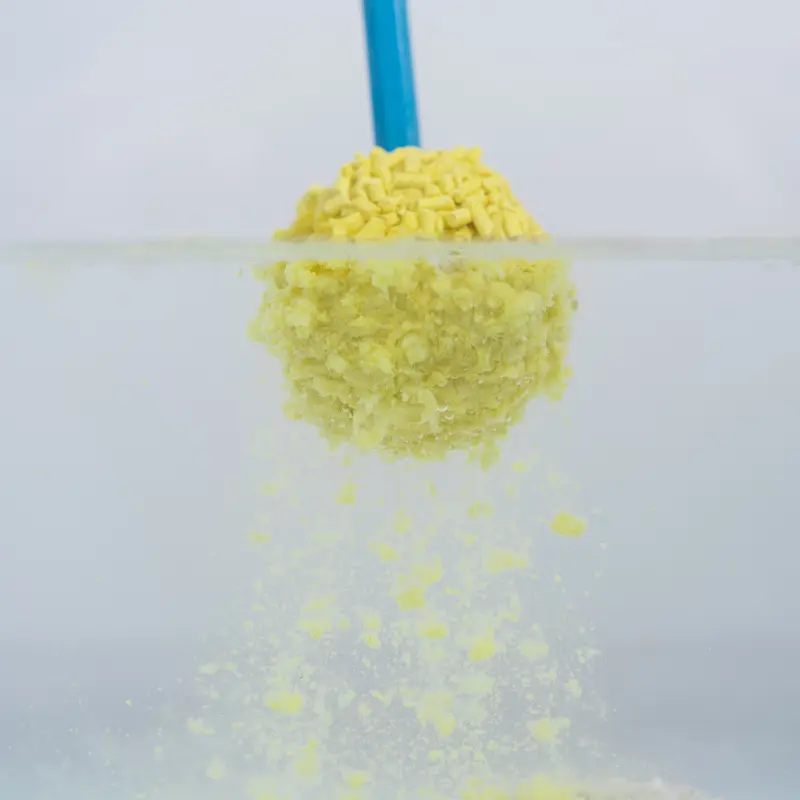
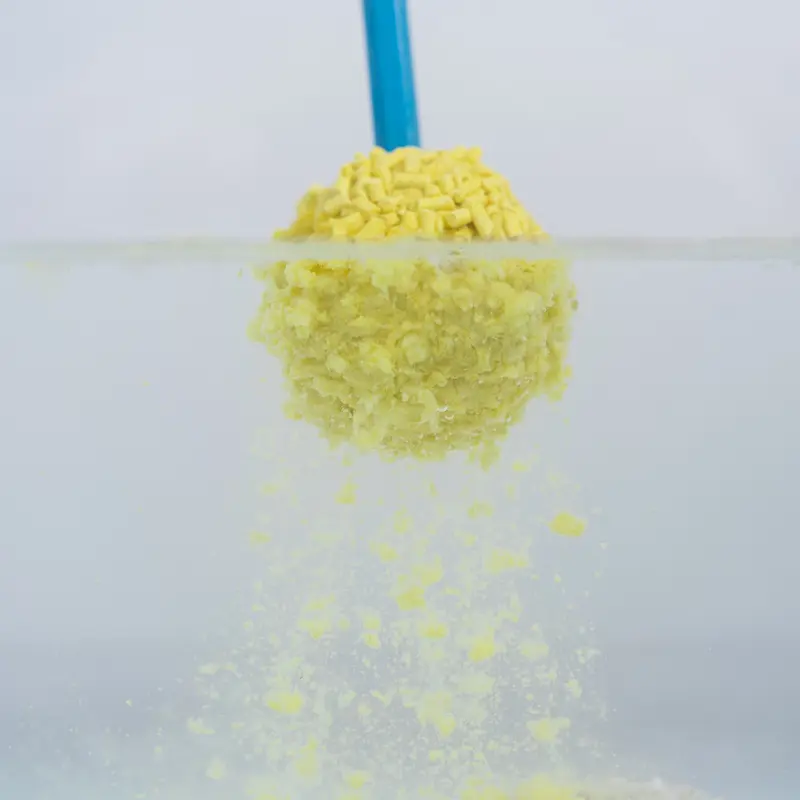
"This picture showed corn clumping cat litter can be dissolved into water very quickly,so it is a flushable cat litter"
How to Test Corn Cat Litter for Odor Control and Litter-Robot Compatibility
A short, consistent evaluation is more useful than relying on the words “high absorption,” “strong odor control,” or “automatic-box compatible.”
The following procedure is a suggested testing framework, not a claim that a particular product has already passed these tests.
Step 1: Check the product and machine instructions
Confirm the granule type, recommended litter depth, cleaning instructions, and any guidance relating to automatic litter boxes.
Identify the exact machine model. Do not assume that a successful result with one generation of Litter-Robot proves compatibility with every other version.
Step 2: Evaluate clump formation outside the machine
Before committing to a full litter-box change, use a small sample to observe how the litter reacts to a measured amount of liquid under consistent conditions.
Record the time taken to form a removable clump, whether the clump holds together, and how much wet residue remains on the test tray.
If the manufacturer provides a validated clump-strength method, use that method for a technical comparison. Otherwise, keep the observations descriptive rather than presenting them as standardized laboratory scores.
Step 3: Introduce the litter cautiously
Follow the machine manufacturer's transition guidance and your cat's needs. A sudden change in both litter type and litter-box system can make it harder to determine why a cat avoids the tray.
If your cat already uses a familiar clumping litter, a gradual transition may be helpful where the machine's instructions allow it. Monitor the cat's normal use and stop the transition if the cat consistently avoids the box.
Step 4: Observe the first cleaning cycles
Watch for signs that the new litter is not behaving correctly, including:
Clumps breaking apart during rotation.
Wet material remaining on the liner.
Excess litter being carried into the waste drawer.
Incomplete cycling, abnormal sensor behavior, or repeated cycle errors.
Unusual odor returning soon after cleaning.
These observations help identify the difference between a formula that works well in a conventional tray and one that performs reliably in an automatic sifting system.
If the machine behaves abnormally, stop using the new formula and follow the manufacturer's troubleshooting instructions.
Step 5: Track odor and consumption over several days
Use a simple record to compare product performance under ordinary use.
| Metric | What to record |
|---|---|
| Clump integrity | Whether clumps remain intact during cleaning |
| Liner residue | Whether scraping or extra manual cleaning is needed |
| Odor after cycling | Whether unpleasant odors return quickly |
| Dust and tracking | Visible dust during filling and litter carried outside the machine |
| Top-ups | Amount of fresh litter added |
| Waste-drawer condition | Whether waste is removed properly |
| Machine operation | Whether cycles and sensors behave normally |
Keep the cleaning routine and fill level consistent. The goal is to establish whether the formula meets your needs without ignoring hygiene or the machine manufacturer's safety guidance.
Corn Cat Litter vs. Clay and Tofu Litter for Automatic Boxes
Corn, clay, and tofu litter can all offer clumping options, but not every formulation is appropriate for a self-cleaning litter box.
| Comparison point | Corn clumping litter | Clay clumping litter | Tofu litter |
|---|---|---|---|
| Main material | Corn-derived ingredients | Mineral clay, often bentonite | Plant-derived ingredients, often soybean or pea fibre |
| Clumping | Depends on formula and binder | Many formulas form firm clumps | Depends on granule form and formula |
| Weight | Often lighter than traditional clay, but varies | Often heavier than plant-based alternatives | Varies with particle size and density |
| Odor control | Depends on absorption, clumping, and cleaning | Depends on formulation and clump removal | Depends on formulation and clump removal |
| Automatic-box suitability | Must be confirmed for the specific formula and model | Still depends on clumping behavior and machine instructions | Some pellet formats may not sift appropriately |
| Best evaluation method | Test clump integrity, residue, odor, and sensor operation | Test clump integrity, residue, odor, and sensor operation | Test clump integrity, particle separation, and machine operation |
A material category is not enough to determine compatibility. Buyers should evaluate the finished formula and the requirements of the machine they intend to use.
What Is the Real Cost of Corn Cat Litter?
The lowest bag price does not necessarily represent the lowest running cost. A formula that breaks apart during cleaning may cause more litter to be discarded, while a product that leaves residue may require additional manual maintenance.
Compare products using a consistent measurement.
Cost per day = Total litter cost ÷ Number of days the litter lasts
For example, a hypothetical bag that costs €15 and lasts 20 days has an average litter cost of €0.75 per day. A hypothetical €18 bag that lasts 28 days costs approximately €0.64 per day.
These calculations are illustrative, not measured usage results for any named brand. Actual costs depend on the number of cats, their habits, the litter-box model, cleaning frequency, and how much litter must be replaced.
For Litter-Robot owners, include the practical cost of manual cleaning, unexpected litter waste, and any product-related operational problems when evaluating value. A slightly cheaper litter may not be the better option if it repeatedly leaves wet residue or interferes with the cleaning cycle.
Is Corn Cat Litter Environmentally Friendly?
Corn litter uses plant-derived raw materials, but a plant-based formula is not automatically better in every environmental category.
A balanced evaluation considers raw-material sourcing, processing, packaging, transport distance, product consumption, and end-of-life disposal.
It is also important to distinguish between environmental claims:
Plant-based describes the source of some or all ingredients.
Biodegradable requires evidence about how the finished product breaks down under specified conditions.
Compostable requires evidence that the material is suitable for the stated composting conditions.
Flushable is a separate claim involving both product behavior and plumbing or wastewater restrictions.
Gelin Town Pet's listing describes the product as biodegradable and flushable. However, buyers should not infer that every corn litter can be flushed simply because it contains plant-derived ingredients.
For French consumers, follow the specific product directions and local waste-disposal rules. For importers, avoid printing flushability or compostability claims without appropriate documentation and a clear understanding of the relevant local requirements.
How to use corn cat litter in France?
Select a Suitable Litter Box:
Choose an appropriate litter box for your cat. Make sure it's large enough for your cat to move comfortably and has high sides to prevent litter from being kicked out.
Fill the Litter Box:
Fill the litter box with a sufficient amount of corn cat litter. The ideal depth is typically 2-3 inches, but you can adjust it based on your cat's preferences.
Regularly Scoop Waste:
Corn cat litter is known for clumping when it comes into contact with moisture. Check the litter box daily and scoop out clumps and soiled litter. Dispose of these clumps in a sealed bag or a designated waste container.
Replenish as Needed:
As you scoop out soiled litter, replenish the box with fresh corn cat litter to maintain the desired depth. It's a good practice to completely change the litter and clean the box every few weeks or as needed.
Monitor Odors:
Keep an eye on odors. Corn cat litter is often good at controlling odors, but if you notice an odor buildup, consider changing the litter more frequently.
Dispose of Used Litter Responsibly:
If the corn cat litter you're using is biodegradable and flushable, you can flush the clumps down the toilet. Otherwise, follow local waste disposal guidelines to dispose of used litter properly.
Clean the Litter Box:
Every few weeks, empty the litter box, clean it with a mild, unscented soap, and rinse it thoroughly. Allow it to dry before adding fresh litter.
Observe Your Cat:
Pay attention to your cat's behavior and preferences. Some cats are picky about their litter, so if your cat seems uncomfortable or avoids the litter box, it might be worth trying a different brand or type of litter.
Safety First:
Ensure that the corn cat litter you choose is safe for your cat. While corn cat litters are generally considered safe, always check the product label and any specific health-related claims.
OEM and Private-Label Corn Cat Litter for France
For French pet product importers, wholesalers, online retailers, and private-label brands, a suitable corn cat litter must meet both consumer needs and commercial requirements.
Gelin Town Pet lists OEM services and customized packaging for this product. Standard package options include 6L/2.5kg, 7L/2.8kg, and 10L/4.5kg, with other packaging formats available by arrangement.
What should importers confirm before ordering?
| Procurement requirement | What to verify |
|---|---|
| Formula | Full ingredient declaration and any requested changes |
| Particle size | Agreed granule diameter and acceptable batch variation |
| Odor control | Test method, performance criteria, and supporting data |
| Clump strength | Clump formation conditions and acceptable integrity |
| Automatic-box compatibility | Test results from the exact formula and intended machine models |
| Density and moisture | Measurement method and production acceptance range |
| Packaging | Bag dimensions, material, net weight, sealing, and carton configuration |
| Quality control | Incoming-material checks, in-process inspection, and finished-product testing |
| French retail information | Appropriate French-language directions, storage instructions, and disposal wording |
| Supply terms | Minimum order quantity, lead time, payment, and shipping arrangements |
A practical OEM development process
1. Define the product requirements. Agree on granule size, clump strength, odor-management targets, fragrance preferences, packaging, and the intended consumer.
2. Test the sample. Evaluate absorption, clumping, residue, dust, tracking, and performance in the intended automatic litter box. A formula should not be marketed as compatible with a machine until the claim is adequately supported.
3. Set acceptance criteria. Document the agreed formula and measurable quality requirements so that the approved sample and bulk production can be compared consistently.
4. Approve packaging and labeling. Confirm French-language product instructions, packaging material, barcode, package weight, storage guidance, and disposal wording.
5. Confirm the order and shipping plan. The manufacturer lists a minimum order quantity of one 20-foot container and T/T payment terms. Confirm the applicable production schedule, carton configuration, loading quantity, shipping terms, and documentation in writing.
For businesses planning to sell into France, having a clear technical specification and traceable quality process is more useful than relying on general statements about natural ingredients or popularity.
Frequently Asked Questions
Q1:What is your Popular Package Size?
Popular package: 6L 2.5kg , 7L 2.8kg. Also can do any size as your special request.
Q2: What is your MOQ?
MOQ: 1*20'FCL
Q3: Do you offer free samples?
Yes, free samples are available, but if Shipping express cost is too high, we hope you can help to share it. We will return it to you after the orders are placed.
Q4: How long the order will be finished?
The 1st order:about 30days, 2nd order about 15 days.
Q5: Can I do OEM?
Yes, we also can provide the private label packaging.
Q6:Does corn clumping cat litter work in Litter-Robot?
Some corn-based clumping litters are listed as compatible, but this does not mean every formula works with every Litter-Robot model. Check the current official guidance for your machine and assess the new formula's clumping, density, residue, and sensor behavior before relying on it.
Q7:Is corn cat litter good at controlling odor?
It can provide useful odor control when the formula absorbs liquid efficiently, forms removable clumps, and is cleaned as directed. Actual performance varies by product and household. Look for a defined test method or evaluate the product under consistent conditions.
Q8:Does a 2 mm granule size guarantee compatibility with an automatic litter box?
No. Particle size is only one factor. Clump strength, bulk density, granule shape, dust, and the machine's sifting design also matter. Compatibility should be assessed for the finished formula and the specific model.
Q9:Why does corn cat litter sometimes leave residue in Litter-Robot?
Possible causes include weak clumps, insufficient clumping time, unsuitable litter depth, or a formula that does not separate cleanly during the cycle. Follow the product instructions and the machine manufacturer's guidance. If residue continues, stop the trial and consider a different formula.
Q10:What does an absorption rate of at least 350% mean?
Gelin Town Pet lists an absorption rate of at least 350%, but the public product page does not describe the test method. Before interpreting the figure as a specific weight gain or comparing it with competing products, request the test procedure, conditions, units, and supporting data.
Q11:Can corn cat litter be flushed in France?
Do not assume so. Plant-derived materials do not automatically guarantee safe plumbing or wastewater compatibility. Follow the product instructions and local disposal requirements, and do not flush litter unless this is explicitly supported by the relevant guidance.
Q12:Can French pet brands order this corn litter under their own labels?
Gelin Town Pet lists OEM services and customized packaging. Buyers should confirm the final formula, specifications, packaging artwork, minimum order quantity, production schedule, inspection plan, payment terms, and shipping details before placing a bulk order.
Final Recommendation: Test the Formula, Not Just the Material
Corn clumping cat litter can be an option for French cat owners who want a plant-based litter with useful odor control. For Litter-Robot users, the key question is whether the actual formula forms stable clumps and separates correctly during the machine's cleaning cycle.
Gelin Town Pet publishes useful starting specifications, including approximately 2 mm short granules, a stated absorption rate of at least 350%, bulk density of 650–700 g/L, and several package formats. These figures should be verified through current technical documentation and practical testing before being used as proof of independent performance or universal machine compatibility.
For consumers, assess odor, clumping, residue, and normal machine operation. For importers and private-label brands, request representative samples, technical test methods, batch specifications, and written confirmation of the intended application.
The most reliable product is not simply one advertised as natural or popular in France. It is one that delivers consistent results in the actual litter-box system, meets the cat's needs, and supports its performance claims with clear evidence.
References
- Whisker — Does Litter-Robot Require Special Litter?
https://www.whisker.com/support/article/does-litter-robot-require-special-litter/
- FEDIAF — Facts & Figures 2025
https://europeanpetfood.org/wp-content/uploads/2025/06/FEDIAF-Facts-Figures-2025.pdf
FACCO — Key Figures for the Animal Population in France, 2025–2026
https://www.facco.fr/chiffres-cles-de-la-population-animale-2/