511.webp)
810.webp)
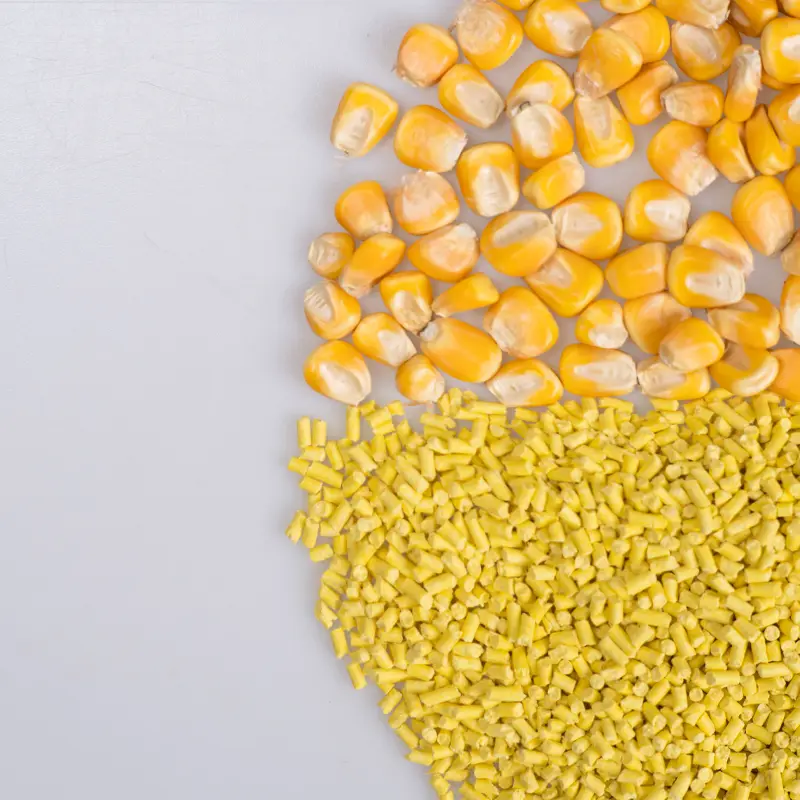
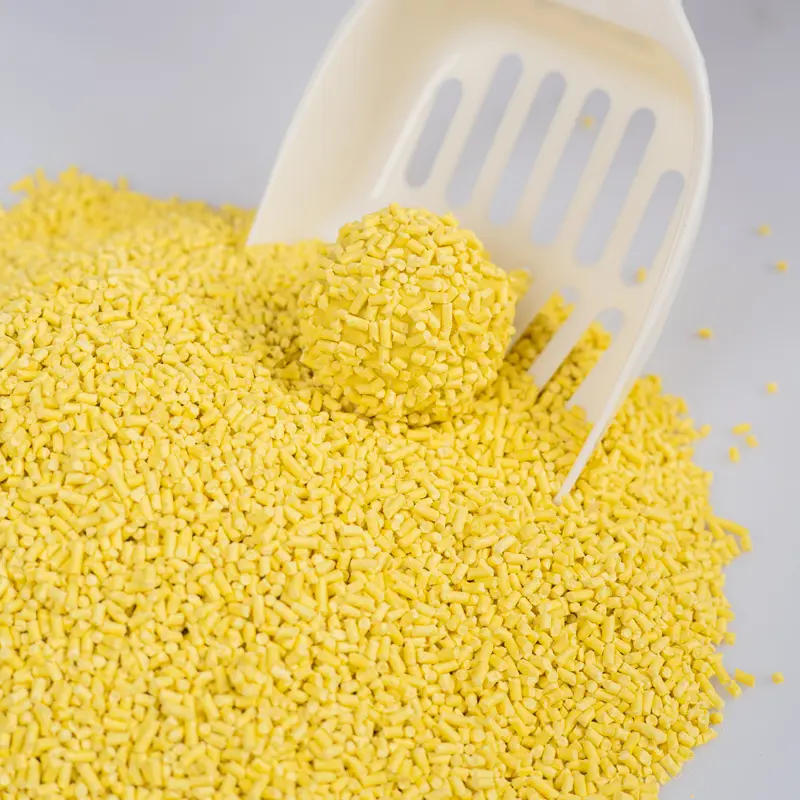
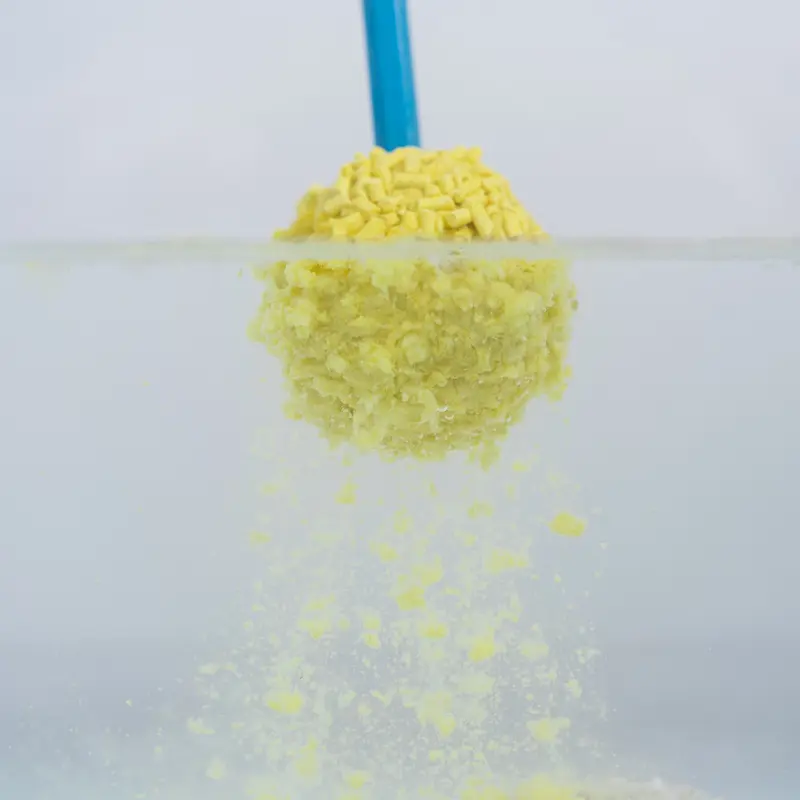
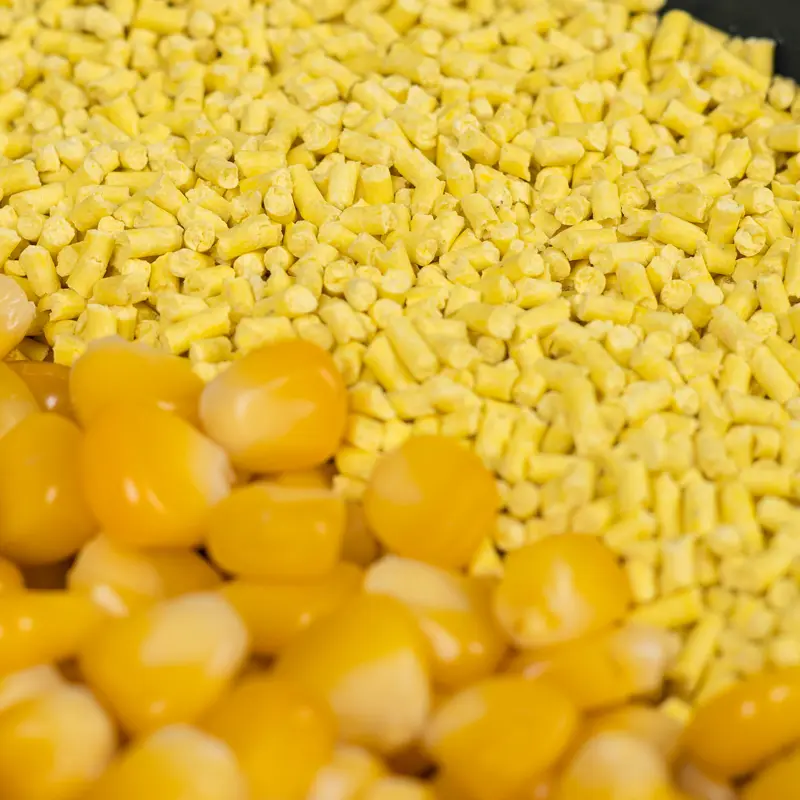
Natural corn cat litter with small granules and a non-stick formula is an option for Singapore cat owners looking for a plant-based litter that is comfortable for cats, easy to scoop, and practical for everyday indoor use. For importers, pet shops, and private-label brands, the same product category offers an opportunity to serve buyers who want an alternative to conventional mineral-based litter.
However, a small-granule formula is not automatically better, and a product described as “non-stick” should still be evaluated for clumping strength, tray residue, odor control, dust, and tracking. Singapore's warm, humid climate also makes appropriate packaging and dry storage important.
This guide explains how small-granule corn cat litter works, which features matter most, how to assess non-stick performance, and what Singapore consumers and B2B buyers should check before choosing a product.
Is Small-Granule Corn Cat Litter Becoming Popular in Singapore?
Singapore has an established market for cat-care products, including plant-based cat litter. In September 2026, Singapore's National Parks Board reported that approximately 66,000 pet cats had been licensed following the introduction of the cat licensing scheme. This is an administrative licensing figure, not a census of every cat in Singapore or a measurement of demand for any particular litter type.
Local retail listings also show that corn cat litter is available to Singapore consumers. For example, NTUC FairPrice lists Angel Natural Corn Cat Litter in a 6L package. This confirms the availability of at least one corn-based option through a major local retailer, but it does not establish that small-granule corn litter holds a leading market share.
For buyers searching for natural corn cat litter, the more useful question is whether the product meets their needs in four areas:
Cat acceptance: Is the particle texture comfortable, and will the cat use it consistently?
Clumping: Does the used litter form clumps that can be lifted without excessive crumbling?
Non-stick performance: Does the litter come away from the tray without leaving excessive wet residue?
Everyday value: How often must the owner top up or replace the litter, and what is the cost per day?
These performance factors are more useful for comparing products than the word “popular” alone.
What Is Natural Small-Granule Corn Cat Litter?
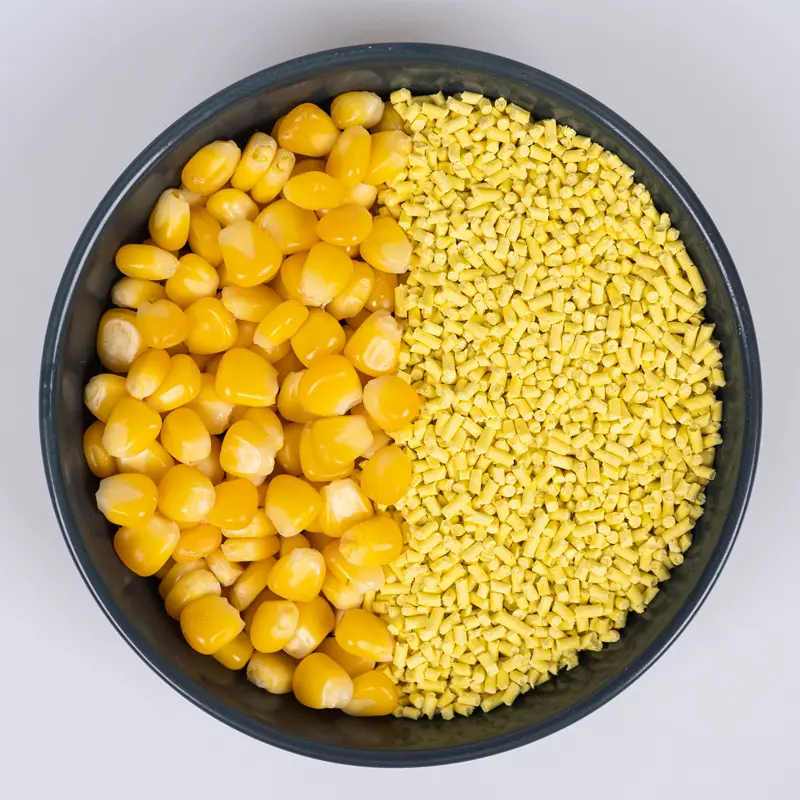
Natural corn cat litter is made primarily from processed corn or corn-derived materials. Some formulas also contain plant fibres and binders to help the litter absorb moisture and form removable clumps.
Gelin Town Pet's Natural Corn Cat Litter Small Granule Non-Stick product lists the following ingredients:
Corn starch
Corn flour
Pea fibre
Guar gum
Corn-derived materials form the main litter base, while the overall formulation determines how the finished product behaves when it comes into contact with moisture.
A small-granule structure may provide a texture closer to fine particles than conventional large pellets. Some cats may prefer this feel, particularly when transitioning from a fine-grained litter. However, particle size also influences tracking, dust, and handling.
The manufacturer's product listing does not provide a numerical particle-size range. Buyers who require a specific granule diameter should request a technical specification rather than assume that “small granule” has a standardized measurement across brands.
What Does “Non-Stick” Mean in Corn Cat Litter?
For cat owners, “non-stick” usually refers to the ability to remove used litter without having too much wet material adhere to the bottom of the tray.
This feature matters because stuck residue can make cleaning more difficult. It can also mean that the owner needs to scrape the tray, discard additional litter, or clean the box more frequently.
A useful non-stick formula should be assessed across three related performance factors.
1. Easy clump removal
When urine contacts a clumping litter, the material should form a mass that can be lifted with a scoop. A clump that breaks apart excessively may leave smaller wet particles behind.
Check how well the clump holds together during removal rather than evaluating the formula only by how quickly the surface appears wet.
2. Less wet residue on the tray
A product that forms clumps but allows liquid to reach the tray bottom may still be difficult to clean.
The results depend on several factors, including the formula, litter depth, tray surface, amount of liquid, and time allowed for the clump to form. Therefore, “non-stick” should be treated as a product-performance claim that needs to be demonstrated under defined conditions.
3. Less unnecessary litter waste
If the used clump can be removed cleanly, the owner may be able to retain more of the uncontaminated litter.
This can improve convenience and potentially reduce consumption. However, the amount saved will depend on actual clump performance and cleaning habits. It should not be presented as a guaranteed percentage reduction without comparative test results.
Factors influencing consumers' choice of cat litter
The factors that influence consumers' choice of cat litter are diverse. When selecting cat litter, consumers typically consider several factors, such as:
Absorbency and clumping: Consumers often consider the absorbency of cat litter, hoping it can rapidly absorb urine and form solid clumps for easy cleaning.
Odor control: For multi-cat households, consumers are concerned about whether the cat litter can effectively control odors to keep the litter box fresh.
Dust and airborne particles: Consumers generally dislike cat litter that generates excessive dust and airborne particles, as it can affect indoor air quality.
Environmental friendliness: An increasing number of consumers are paying attention to the environmental impact of cat litter and prefer products that are biodegradable or recyclable to reduce their environmental footprint.
Ingredients: Consumers may be concerned about the ingredients in cat litter and prefer products that do not contain harmful or chemical substances, especially those that could harm pets and humans.
Price: Price is typically a significant factor in the purchase decision. Consumers aim to find cat litter that offers reasonable quality at an affordable price.
Flushability: Some consumers may prefer flushable cat litter for easy disposal of litter and clumps.
Texture: Some cats may have specific texture preferences for cat litter, so consumers may take this into consideration.
Pet age and needs: Different-aged pets may require different types of cat litter, and a pet's age and specific needs can influence the choice.
These factors vary depending on consumers' needs and preferences. Therefore, different cat owners may consider various factors based on their specific situations when choosing cat litter. Singaporean cat owners have embraced our small granule, non-stick natural corn-based cat litter as their preferred choice for a cleaner, more comfortable, and more sustainable litter box experience.

Our corn-based cat litter forms tight, non-dispersing clumps, is easy to scoop without sticking to the bottom, and features small, comfortable granules that are gentle on your cat's paws.
Why Choose Small Granules Instead of Large Cat Litter Pellets?
Small granules and large pellets offer different user experiences. Neither format is universally best for every cat or household.
| Comparison factor | Small-granule corn litter | Larger-pellet litter |
|---|---|---|
| Texture | Often closer to a fine-grained surface | More distinct, larger particles |
| Cat acceptance | May suit cats that prefer finer textures | Some cats may need time to adapt |
| Tracking | Smaller particles may travel outside the tray more easily | Larger particles may reduce some types of tracking, depending on shape |
| Scooping | Performance depends on clump strength and granule structure | Depends on whether the product forms clumps or breaks down |
| Dust | Depends on processing, particle consistency, and handling | Not automatically dust-free |
| Storage | Needs protection from moisture like other plant-based litter | Also requires suitable storage conditions |
| Best selection method | Test comfort, tracking, and clump removal | Test comfort, tracking, and clump removal |
A practical example is a cat that consistently prefers the texture of fine litter but leaves small particles around the tray. In that situation, switching to a much larger pellet may reduce some tracking but could also lead to litter rejection.
Instead of choosing by granule size alone, test the product alongside your cat's behavior and your normal cleaning routine.
 No toxic chemicals added, safe in case of accidental ingestion by cats.
Why is corn-based cat litter favored by Singaporean consumers?
Corn-based cat litter has gained favor among Singaporean consumers for several reasons:
Environmental Friendliness: Singaporean consumers are increasingly focused on environmental concerns, and corn-based cat litter is biodegradable and made from natural materials, making it environmentally friendly and in line with Singapore's sustainable development principles.
Harmless Ingredients: Corn-based cat litter is typically made from natural materials and does not contain harmful chemicals, making it relatively safe for both cats and humans.
Absorbency: In terms of absorbency, corn-based cat litter exhibits excellent performance by quickly absorbing urine and forming solid clumps, aiding in maintaining a clean and dry litter box.
Flushability: Corn-based cat litter is flushable, making it convenient for disposing of litter and clumps and reducing the burden of waste management.
Price: The price of corn-based cat litter is generally more affordable compared to silica gel cat litter, which is acceptable to consumers.
Texture: Corn-based cat litter features smaller, gentle, and comfortable granules, making it more readily accepted by cats.
Incorporating these qualities, our corn-based cat litter caters to the preferences of Singaporean consumers who prioritize eco-friendliness, pet well-being, and the cleanliness of their homes.
How can we assist you?
At our company, we are committed to providing exceptional products and services to meet your specific needs and expectations. If you are interested in our natural corn cat littern in Singapore, here's how we can assist you:
Providing Value: Our company's mission is to offer you high-quality products and services to meet your needs and expectations.
Competitive Pricing: As a manufacturing company, we can help you save costs by eliminating middlemen and offering more competitive prices, enhancing your market competitiveness.
Innovation and Improvement: We prioritize innovation and improvement, dedicating ourselves to developing new products and technologies that cater to diverse consumer demands and assist you in expanding your market.
Customer Satisfaction: We consider customer satisfaction our top priority, ensuring not only the delivery of satisfactory cat litter products but also providing services in packaging materials.
Whether you are looking for high-quality cat litter products, competitive pricing, innovative solutions, or exceptional customer service, we are here to assist you every step of the way. Your success is our success, and we look forward to partnering with you.
Is Corn Cat Litter Suitable for Singapore's Humid Climate?
Singapore's climate is tropical, with relatively high humidity throughout the year. According to the Meteorological Service Singapore, mean annual relative humidity is approximately 82%, based on the 1991–2020 climate reference period.
This climate information is relevant to how cat litter is stored and handled, although it does not prove that a particular corn formula will perform poorly in Singapore.
Plant-derived litter should be protected from excessive moisture during storage. For households and retailers, these practices are useful:
Keep unused litter in its original packaging or a suitable sealed container.
Store opened bags in a cool, dry location, away from leaks and damp floors.
Avoid placing litter next to wet laundry, open windows exposed to heavy rain, or other sources of moisture.
Reseal packages after opening to limit unnecessary exposure to humid air.
Inspect the material before use and do not use litter that has become damp, developed an unusual smell, or shows visible mold.
For wholesalers and importers, packaging durability matters too. Ask suppliers whether the proposed bag material and seals are suitable for the expected storage, transport, and retail conditions.
A claim such as “moisture-resistant packaging” should be supported by suitable packaging specifications or testing rather than inferred from the fact that the bag looks sealed.
How to Test Non-Stick Corn Cat Litter Before Buying
A simple, consistent evaluation can help cat owners and retailers compare products without relying entirely on marketing claims.
The following procedure is a suggested evaluation method, not a claim that any named product has already passed independent testing.
Step 1: Prepare the same test conditions
Use a clean, dry tray and add each product to the depth recommended by its manufacturer. Record the product name, bag size, initial quantity, and any specific instructions.
When comparing two formulas, keep the tray type, litter depth, liquid amount, and waiting time as consistent as possible.
Step 2: Assess clump formation
Apply a measured amount of liquid under the same conditions to each sample. Record how the material responds and how long it takes to form a clump that can be removed.
Avoid using an unmeasured amount of water for one product and a different amount for another; inconsistent conditions make the comparison less useful.
Step 3: Check tray residue
Lift the formed clump using the same scooping method each time.
Record whether:
The clump remains intact.
Wet particles fall apart during removal.
Material sticks to the bottom of the tray.
Scraping or additional cleaning is required.
For a supplier evaluation, photographs can help document the results, but photographs alone do not replace a defined test method or quantitative measurement.
Step 4: Observe tracking and dust
Pour each sample from a consistent height and observe visible dust during filling. After ordinary use, check how much material is carried outside the tray.
Do not describe a product as “dust-free” based solely on a brief visual check. If dust performance is important for a commercial specification, request the supplier's test method and supporting results.
Step 5: Monitor real household use
Once the cat accepts a product, record daily scooping, fresh litter added, unpleasant odor, and the condition of the remaining material.
This helps answer the question that matters most to many owners: does the product remain practical under normal conditions?
Replace litter and clean the tray when required by the manufacturer's instructions or when its condition becomes unsuitable. Do not extend use beyond recommended hygiene practices just to claim a longer lifespan.
How Much Does Corn Cat Litter Cost in Singapore?
The retail price depends on the brand, package size, product formula, and promotion.
As a dated comparison point, NTUC FairPrice's online listing for Angel Natural Corn Cat Litter – Charcoal showed a promotional price of S$5.95 for 6L, against a listed regular price of S$10.90. The promotion was shown as running until 31 October 2026 when checked on 26 October 2026.
| Price measure | Listed figure |
|---|---|
| Package size | 6L |
| Promotional price | S$5.95 |
| Regular listed price | S$10.90 |
| Approximate promotional price per litre | S$0.99/L |
| Approximate regular price per litre | S$1.82/L |
These figures are a snapshot from one retailer for a different branded product. They are not a market average, a quote for Gelin Town Pet's product, or proof that all corn litter formulas offer the same performance. Prices and promotions can change.
Compare cost per day, not just price per bag
A lower-priced bag is not always the most economical option if the litter forms weak clumps or needs frequent top-ups.
Use this formula:
Cost per day = Total cost of litter used ÷ Number of days covered
For example, a hypothetical bag costing S$12 that lasts 12 days costs S$1 per day. A hypothetical S$16 bag lasting 20 days costs S$0.80 per day.
These figures illustrate the calculation only; they are not measured lifespan claims for any product. For an accurate comparison, use the same household, the same cat, and a consistent cleaning routine.
Product Specifications: Natural Corn Cat Litter Small Granule Non-Stick
Gelin Town Pet lists its natural corn cat litter for wholesale and OEM enquiries. The currently published product information is summarized below.
| Specification | Published product information |
|---|---|
| Product type | Natural corn cat litter, small-granule non-stick positioning |
| Main ingredients | Corn starch, corn flour, pea fibre, guar gum |
| Country of origin | China |
| 6L package | 2.5kg |
| 7L package | 2.8kg |
| 10L package | 4.5kg |
| Customized packaging | Available upon order confirmation |
| OEM / private label | Listed as available |
| Listed minimum order quantity | 1 × 20-foot container (20FCL) |
| Listed payment terms | T/T |
The specifications above are based on the manufacturer's published listing. The product page does not publish a numerical particle-size range, measured absorption capacity, clump-strength values, or quantitative tray-residue results.
Buyers who need these figures should request a current technical data sheet and representative samples. Confirm the final specification, package configuration, available formula, and order terms in writing before approving production.
What Should Singapore Importers and Pet Retailers Check?
For pet retailers, e-commerce sellers, importers, and private-label brands, the sourcing decision involves product performance as well as supply consistency.
A supplier should be able to explain what is included in the formula, how performance is assessed, which package formats are available, and what quality checks are performed before shipment.
Before placing a bulk order, confirm the following:
| Procurement requirement | Questions to ask |
|---|---|
| Particle size | What is the actual granule-size range, and how much variation is acceptable? |
| Non-stick performance | What method is used to assess residue on the tray? |
| Clumping | How is clump formation and integrity evaluated? |
| Absorption | Are measured results available, and under what test conditions? |
| Dust | Is there a defined assessment method or test report? |
| Packaging | What are the bag dimensions, net weight, seal type, and carton configuration? |
| Humidity protection | How is the packaging selected and checked for the intended shipping and storage conditions? |
| Batch consistency | Which raw-material, in-process, and finished-product inspections are performed? |
| OEM requirements | Can the supplier support the required brand artwork, bag size, language, and barcode? |
| Supply terms | What are the minimum order, production lead time, payment terms, and shipping arrangements? |
OEM and private-label opportunities
Gelin Town Pet lists customized packaging and OEM support for its corn cat litter. The published minimum order quantity is one 20-foot container, with payment terms listed as T/T. Buyers should confirm these conditions directly before making a purchase commitment.
A typical private-label project involves five stages:
Define product requirements. Agree on the target texture, granule size, clumping criteria, intended customer, package weight, and any fragrance requirements.
Evaluate samples. Compare the formula's clumping, absorption, tray residue, dust, tracking, and packaging.
Approve technical specifications. Document the agreed formula, measurable acceptance criteria, and quality-control requirements.
Finalize packaging. Confirm artwork, packaging material, labels, barcodes, product directions, storage guidance, and disposal instructions.
Confirm production and delivery. Agree on the approved sample, inspection process, order quantity, delivery schedule, and shipping terms.
The purpose of this process is to reduce the risk of approving a sample that differs from the bulk product or making performance claims that cannot be substantiated.
Is Natural Corn Cat Litter Environmentally Friendly?
Corn-based litter uses plant-derived materials, but this alone does not establish its total environmental impact.
Relevant factors include ingredient sourcing, processing, manufacturing energy, package material, transport distance, product consumption, and disposal.
Singapore's National Environment Agency has explained that biodegradable materials do not automatically deliver a better environmental outcome in the local waste system. Contaminated waste is generally handled differently from clean recyclable or separately collected organic material, so a product's end-of-life pathway matters.
For this reason, distinguish carefully between the following claims:
Plant-based: Describes the source of some or all of the ingredients.
Biodegradable: Requires evidence of how the finished product breaks down under specified conditions.
Compostable: Requires evidence that the product is suitable for the stated composting conditions and facility.
Flushable: Should not be assumed from the use of corn or other plant-derived materials.
Before flushing any cat litter, check the product's specific instructions and the applicable local wastewater guidance. Do not assume that a plant-based formula is automatically suitable for household plumbing.
For consumers, follow the recommended disposal instructions. For manufacturers and distributors, ensure that any environmental claims are clear, accurate, and supported by appropriate evidence.
Frequently Asked Questions
Is small-granule corn cat litter a good choice for Singapore apartments?
It can be a suitable option if the cat accepts the texture and the formula performs well in the household's litter tray. Evaluate tracking, clumping, odor, and storage needs. Small granules are not automatically better for every cat or apartment.
Does non-stick corn cat litter prevent all residue from sticking to the tray?
Not necessarily. “Non-stick” is a performance claim, not a guarantee that no material will adhere under every condition. Tray type, litter depth, liquid quantity, and time allowed for clumping can all affect the result. Request test evidence or conduct a consistent product comparison.
What is the particle size of this natural corn cat litter?
The manufacturer's current product listing describes the product as small-granule litter but does not specify a numerical particle-size range. Buyers who need a defined range should request the latest technical specification.
Is corn cat litter safe if a cat swallows some?
Do not assume that a product is safe to ingest simply because it is made from corn or other plant-derived ingredients. Cats may ingest small amounts during grooming, while kittens and cats that chew litter may face additional risks. Follow the product instructions and consult a veterinarian if a cat repeatedly eats litter or develops symptoms.
Can corn cat litter be flushed in Singapore?
Do not assume that it can. Plant-based ingredients do not guarantee that the material is suitable for plumbing or wastewater systems. Follow the product-specific directions and check local guidance before considering flushing.
How should corn cat litter be stored in Singapore?
Store it in a cool, dry place, reseal opened packages, and protect it from leaks and prolonged exposure to moisture. Singapore's mean annual relative humidity is around 82%, so practical moisture control is worth considering for both households and retailers.
Can Singaporean pet shops order this litter under their own brands?
Gelin Town Pet lists OEM services and customized packaging for this product. The published minimum order quantity is one 20-foot container. Confirm formula options, package sizes, specifications, production lead time, payment terms, and shipping arrangements with the supplier.
Final Recommendation
Natural corn cat litter with small granules and a non-stick formula may appeal to Singapore cat owners who value a fine texture and convenient scooping. However, the best choice should be based on demonstrated product performance rather than an assumption that every small-granule or plant-based formula behaves the same way.
For consumers, prioritize cat acceptance, clump integrity, tray cleanliness, storage, and cost per day. For retailers and importers, request measurable specifications, representative samples, documented quality checks, and clear packaging requirements before ordering.
For Gelin Town Pet's product, the published formula and package options provide a starting point for product evaluation and OEM discussions. Confirm the actual particle-size range and test evidence for non-stick performance before using specific quantitative claims in retail listings or marketing campaigns.
References
- Meteorological Service Singapore — Climate of Singapore
National Parks Board — Cat Management Framework updates
https://www.nparks.gov.sg/news/news-detail/cat-owners-reminded-to-license-their-cats-by-31-august-2026-as-transition-period-for-pet-cat-licensing-comes-to-an-endNational Environment Agency — Readers' Letter on Reducing Disposables and Environmental Impact