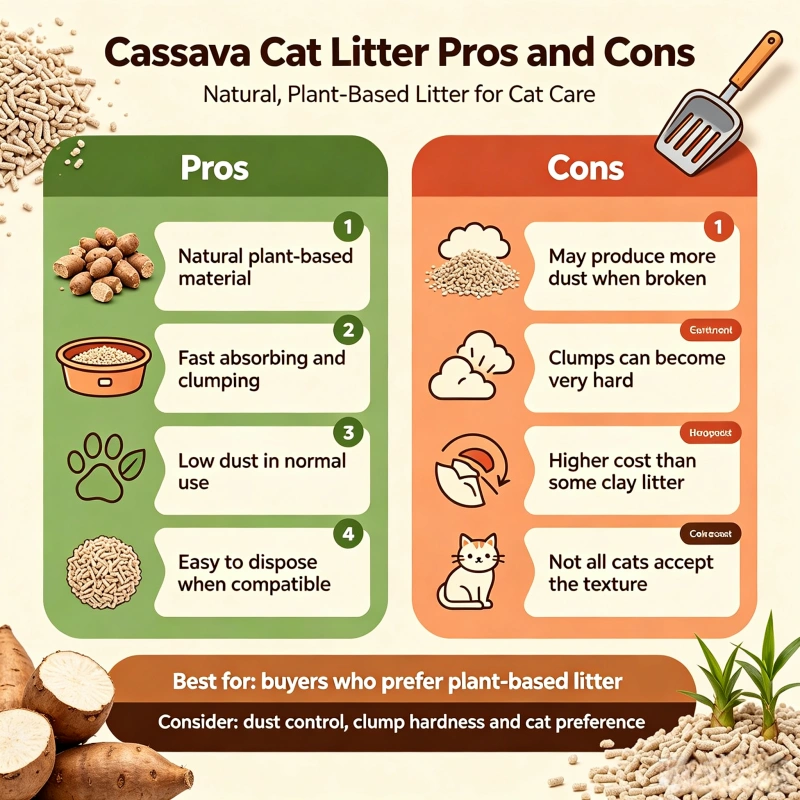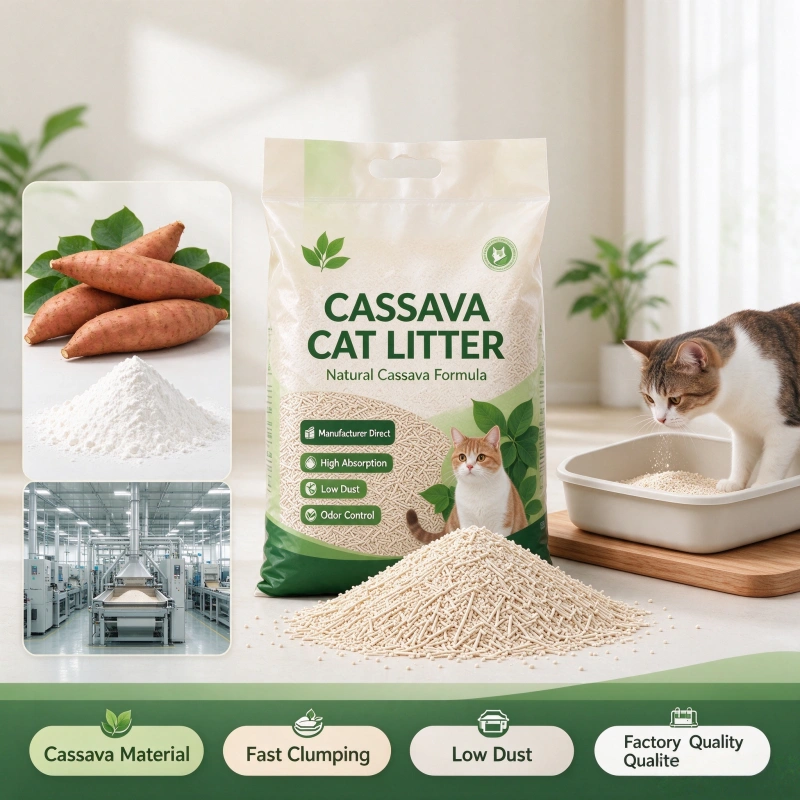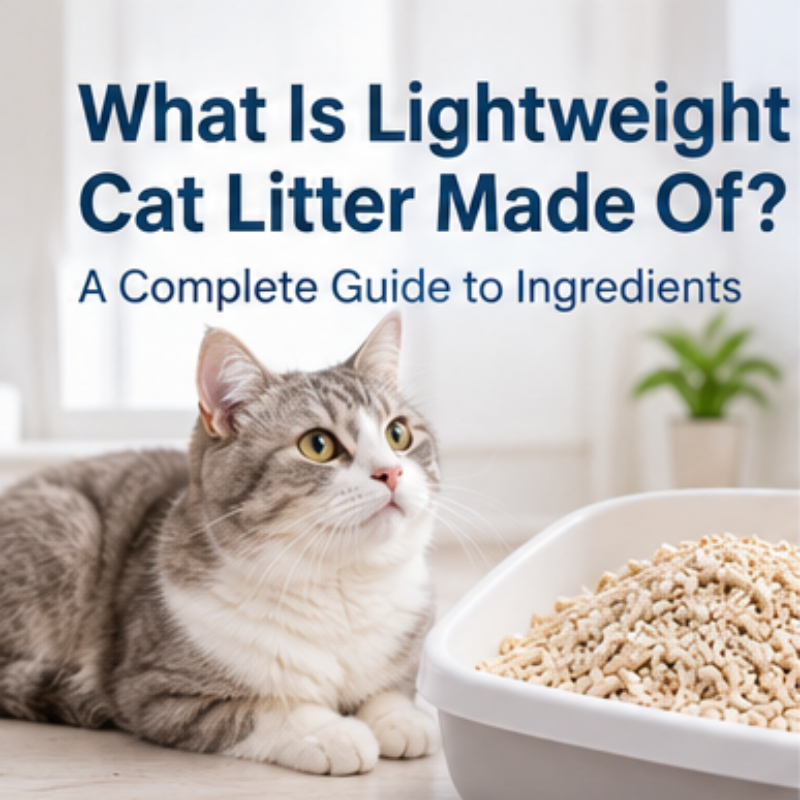
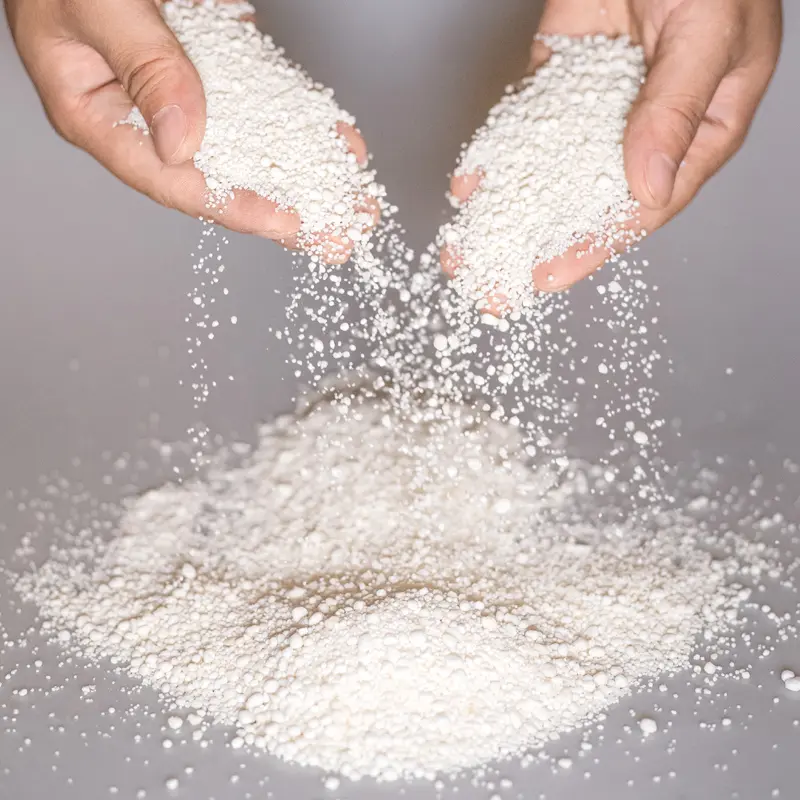
Cassava cat litter is generally made by processing cassava-derived starch or other suitable cassava-based materials into granules that absorb moisture and form removable clumps. Commercial formulas may also include corn starch, plant fibers, guar gum, or other binders to improve pellet formation and product performance.
However, making consistent cassava cat litter involves more than mixing starch with water and shaping it into small particles. Raw material quality, moisture control, starch gelatinization, granulation, drying, screening, and final inspection all influence the finished product.
For manufacturers, the main challenge is maintaining consistent absorption, clumping strength, pellet durability, low dust, and storage stability. For buyers, understanding these steps makes it easier to evaluate a supplier and compare products based on measurable specifications rather than marketing claims.
This guide explains how cassava cat litter is made, what ingredients are used, how the commercial production process works, and which quality tests help determine whether a finished product is suitable for retail and wholesale markets.
Table of Contents
What Is Cassava Cat Litter?
What Is Cassava Cat Litter Made Of?
How to Make Cassava Cat Litter: 9 Manufacturing Steps
Equipment Used in Cassava Cat Litter Production
How to Test Cassava Cat Litter Quality
Can You Make Cassava Cat Litter at Home?
Common Manufacturing Problems and How to Prevent Them
How to Choose a Cassava Cat Litter Manufacturer
Frequently Asked Questions
1. What Is Cassava Cat Litter?
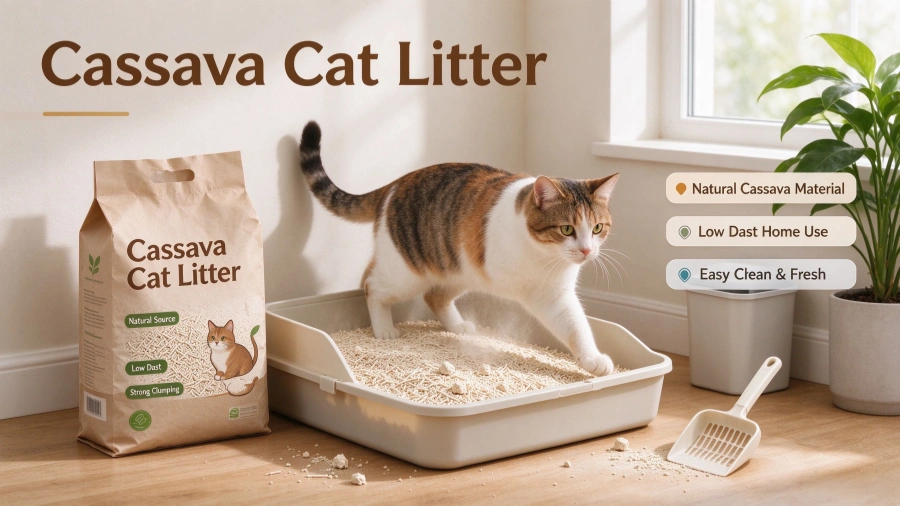
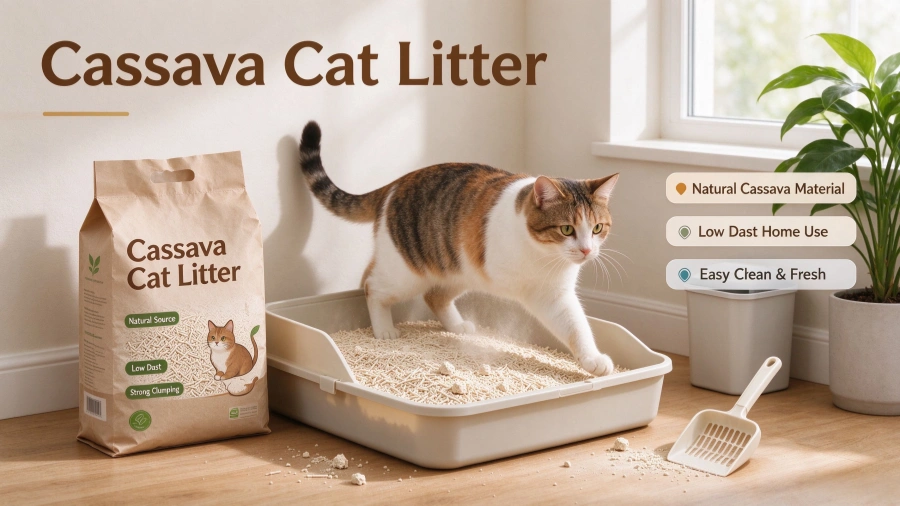
Cassava cat litter is a type of plant-based cat litter made primarily from cassava-derived materials.
Cassava, also called tapioca or yuca, is a tropical root crop widely used as a source of starch. Its starch can be processed and combined with suitable ingredients to create granules that absorb liquid and form clumps when exposed to moisture.
Unlike conventional bentonite litter, cassava-based litter uses plant-derived materials as its main formulation components.
Its finished performance depends on the complete formula and manufacturing process, not simply on whether cassava appears in the ingredient list.
Commercial cassava cat litter may be developed in different formats:
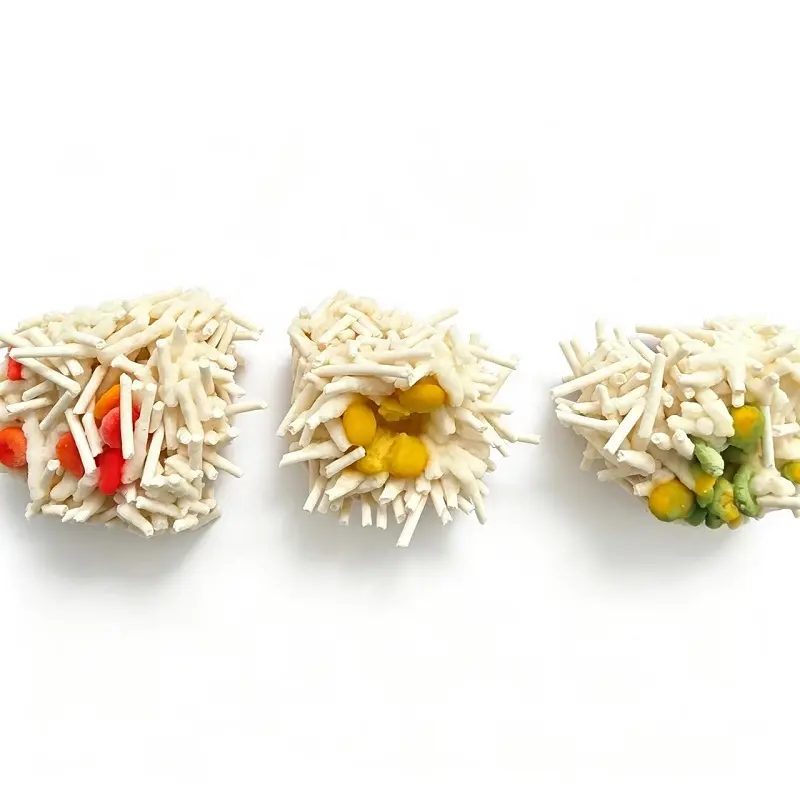
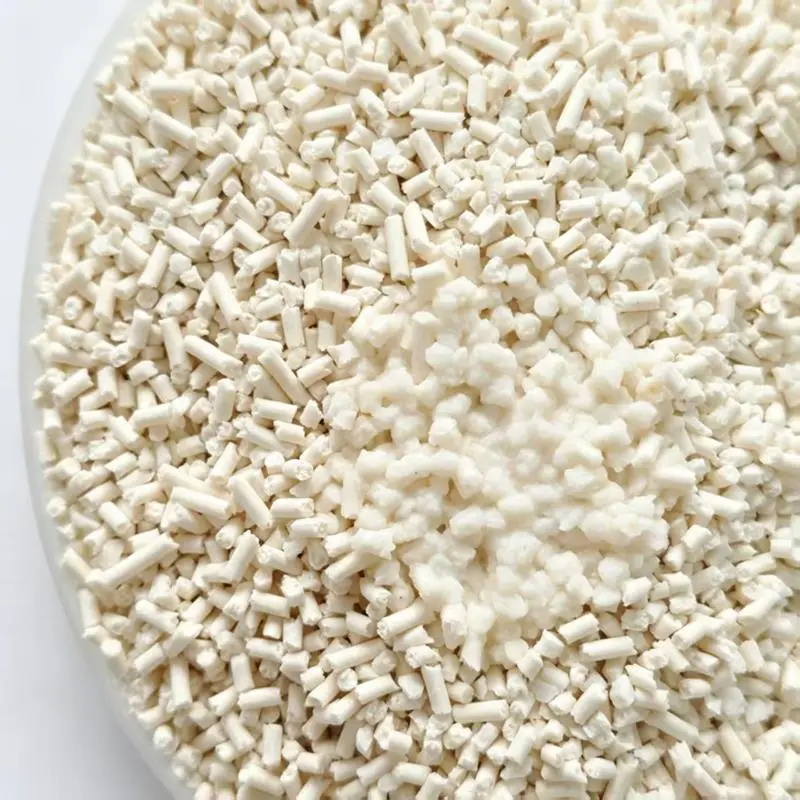
Fine granules.
Rounded or pearl-shaped particles.
Cylindrical pellets.
Mixed-size granules.
Customized particle structures for specific product requirements.
The appearance, particle dimensions, clumping behavior, and absorption capacity depend on the raw materials and production equipment.
For more information about commercial products, see Gelin Town's cassava cat litter product range.
2. What Is Cassava Cat Litter Made Of?
There is no single universal formula for cassava cat litter.
Some products rely mainly on cassava starch, while others combine cassava starch with corn starch, plant fibers, or additional binders.
The appropriate formula depends on the target particle structure, absorption, clumping performance, production method, and selling price.
2.1 Cassava Starch
Cassava starch, often called tapioca starch, is one of the most important ingredients in many cassava cat litter formulas.
It provides the starch-based material that helps form the granules.
When starch is heated in the presence of water under suitable conditions, it can undergo gelatinization. The starch granules absorb water, swell, and form a more viscous structure.
This behavior can contribute to binding and pellet formation during processing.
However, gelatinization depends on several factors, including:
Starch characteristics.
Water content.
Temperature.
Processing time.
Other ingredients in the mixture.
A 2025 review of cassava starch describes its physicochemical properties and explains how water, heat, and other formulation conditions influence gelatinization and pasting behavior.
For cat litter manufacturing, this means the same cassava starch may behave differently under different production conditions. A formula should therefore be tested using the actual raw material and equipment.
2.2 Corn Starch
Corn starch can be used as a complementary starch ingredient in some cassava cat litter formulas.
It may contribute to binding and granule formation under suitable processing conditions.
The ratio between cassava starch and corn starch should be determined through formulation trials.
Too much or too little of a particular starch may affect granule hardness, moisture response, and clumping behavior.
For manufacturers developing different plant-based products, comparing material characteristics is more useful than assuming one fixed starch ratio will work for every formula.
2.3 Plant-Based Fibers
Some formulas incorporate plant fibers to modify the physical structure of the litter.
Fibers can influence:
Granule texture.
Particle strength.
Bulk density.
Liquid distribution.
Handling behavior.
Potential material options depend on the product design and raw material supply.
Gelin Town also manufactures tofu cat litter, corn cat litter, and other plant-based litter products.
2.4 Guar Gum, Xanthan Gum, and Other Binders
Binders help connect particles and contribute to the physical structure of the finished granules.
Depending on the formula, a manufacturer may evaluate guar gum, xanthan gum, or another suitable binder.
The amount and type of binder can influence:
Granule cohesion.
Clump integrity.
Resistance to breakage.
Water absorption behavior.
Processing consistency.
A 2021 study recorded at the Technical University of Denmark investigated cat litter made from cassava trunk pith, using a glycerol and palm-oil binder system and evaluating guar gum and xanthan gum as clumping agents.
This is an interesting research route for cassava-based biomass utilization. However, the study used cassava trunk pith, not simply the conventional cassava-root starch formula used in many commercial products. Its experimental formula should not be treated as a universal commercial recipe.
2.5 Optional Functional Additives
Some manufacturers may include additional ingredients for specific product requirements.
Examples can include:
Activated carbon.
Baking soda.
Deodorizing materials.
Fragrance.
Colorants.
Other formulation-specific additives.
These ingredients are optional rather than essential to every cassava cat litter product.
An additive should be selected for a clear technical purpose and evaluated as part of the finished formula. Simply adding more functional ingredients does not guarantee better odor control, safety, or clumping performance.
2.6 Important Raw Material Safety Consideration
Cassava roots naturally contain cyanogenic glycosides, which can release hydrogen cyanide under certain conditions.
The FAO/WHO Codex Code of Practice for the Reduction of Hydrocyanic Acid in Cassava and Cassava Products explains that cyanogenic compound levels vary with cassava variety and processing conditions.
Manufacturers should use appropriately processed, traceable raw materials and carry out relevant safety assessments, particularly when working with cassava roots, peels, or agricultural residues instead of established commercial starch ingredients.
Do not assume that freshly harvested cassava roots, peels, or wet processing residues are suitable for direct use in cat litter. Unprocessed raw materials should not be treated as a ready-to-use pet product ingredient.
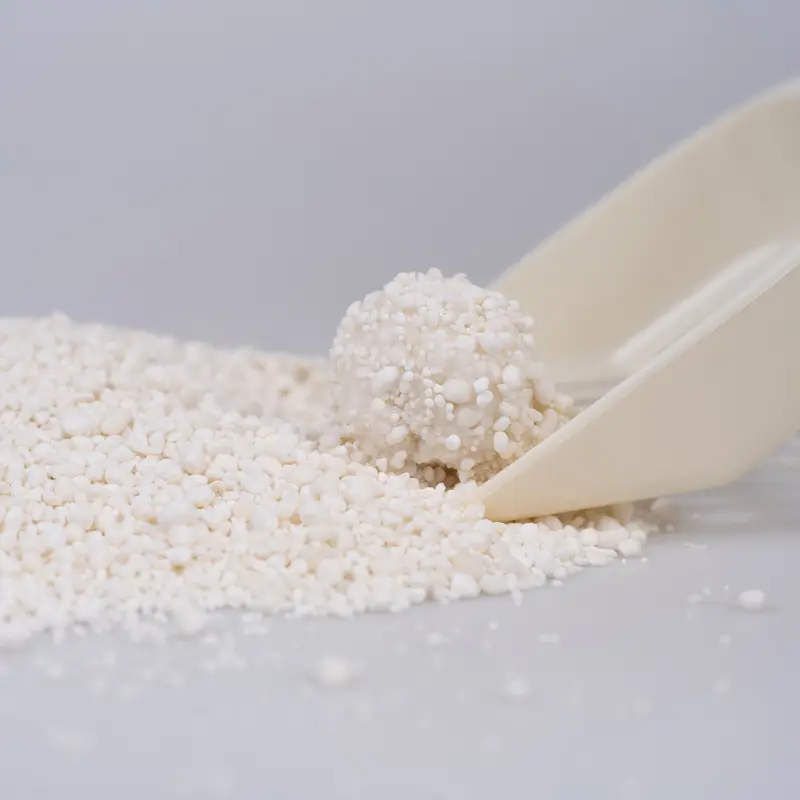
3. How to Make Cassava Cat Litter: 9 Manufacturing Steps
Commercial cassava cat litter production generally includes raw material inspection, preparation, formula mixing, moisture conditioning, granulation, drying, cooling, screening, quality testing, and packaging.
The exact process depends on the formulation, equipment, raw material characteristics, and required product specifications.
Step 1: Select and Inspect Cassava Raw Materials
The first step is selecting suitable cassava-derived materials.
For many commercial products, manufacturers use processed cassava starch rather than freshly harvested roots.
Before production, incoming materials should be inspected for consistency and suitability.
Important checks include:
Material identity and supplier information.
Batch traceability.
Moisture content.
Appearance and color.
Foreign matter.
Particle-size consistency.
Packaging condition.
Supplier specifications and applicable safety documentation.
If cassava fibers, peels, or other agricultural by-products are used, additional processing and safety evaluation may be necessary.
Raw material variations can influence the entire production process. For example, changes in starch properties or moisture may affect mixing, extrusion, drying, and final granule strength.
The quality of the finished litter therefore starts with controlled incoming materials.
Step 2: Prepare and Process the Raw Materials
Different raw materials require different preparation methods.
For dried cassava starch, the preparation process may include sieving and removing foreign particles or unsuitable material.
For wet cassava-derived fibers or other biomass, additional dewatering, drying, grinding, and size classification may be required.
The purpose is to prepare materials with suitable physical characteristics before formula mixing.
A consistent raw material particle structure helps manufacturers control:
Ingredient distribution.
Moisture adjustment.
Granulation behavior.
Finished particle appearance.
Product-to-product consistency.
Manufacturers should not assume that wet cassava pulp, dry cassava fiber, and refined cassava starch can be processed using the same settings.
They are different materials and may require different production routes.
Step 3: Weigh and Mix the Ingredients
After preparation, the materials are measured according to the approved formulation.
A typical starch-based formula may contain cassava starch, corn starch, and selected binders. Other products may include plant fibers or additional functional ingredients.
The ingredients are transferred to an industrial mixer.
Uniform mixing is important because uneven ingredient distribution can cause variations in granule formation and finished-product performance.
Manufacturers should control:
Ingredient weighing accuracy.
Mixing sequence.
Mixing time.
Material feeding.
Minor ingredient distribution.
Batch identification.
Water may also be introduced during the mixing or conditioning stage, depending on the production system.
The amount of water should be determined through formula validation. Too little moisture can prevent proper processing, while too much can make the mixture difficult to form and increase the drying load.
For private-label production, the approved formula should be documented so that future batches can be compared with the original sample.
Step 4: Add Water and Condition the Mixture
Before granulation, the prepared material may need controlled moisture addition and conditioning.
This step allows water to distribute through the mixture and prepares the material for forming.
In starch-based formulas, water and heat are important because they influence the gelatinization behavior of cassava starch.
The amount of water should be sufficient for the intended processing method, but excessive moisture can cause production difficulties.
The correct conditioning approach depends on:
Cassava starch characteristics.
Other starches and fibers.
Binder type.
Mixing equipment.
Extrusion or granulation system.
Target granule dimensions.
There is no single water ratio that applies to every cassava litter formula.
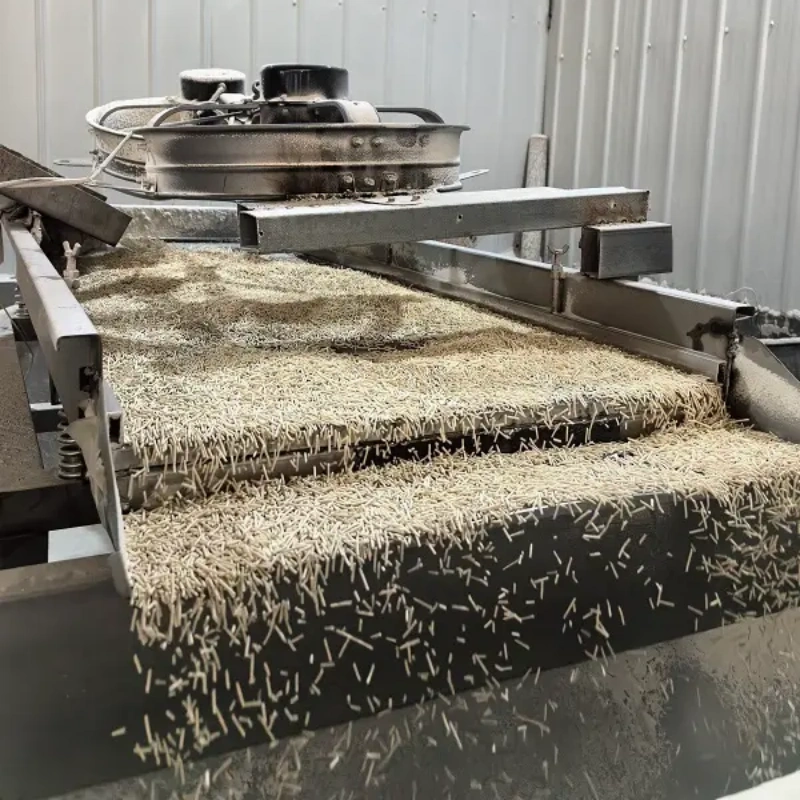
Step 5: Extrude or Granulate the Material
After mixing and conditioning, the material enters a suitable extrusion or granulation system.
The equipment forms the mixture into granules or pellets according to the selected product design.
Depending on the machine, the process may involve forcing material through a die, shaping it with a granulator, or using another suitable forming method.
Important operating factors include:
Material feeding consistency.
Moisture before forming.
Die design and opening size.
Forming pressure or mechanical conditions.
Cutting length.
Production speed.
Particle size should be selected according to the intended product.
For example, a brand may prefer fine granules for a particular retail positioning, while another may choose rounded, larger particles.
The manufacturer should confirm both the particle diameter and length where relevant.
A visually uniform granule is not enough to establish product quality. The formed particles should also maintain suitable strength and performance after drying and handling.
Step 6: Dry the Newly Formed Granules
Freshly formed cassava cat litter contains residual moisture.
Drying reduces this moisture to a validated level suitable for the intended product and packaging conditions.
Manufacturers may use belt dryers, rotary dryers, microwave systems, or other suitable equipment.
The correct drying conditions depend on:
Initial moisture.
Particle diameter and shape.
Material composition.
Binder system.
Dryer airflow.
Heating method.
Product throughput.
Both under-drying and over-drying can create problems.
Under-drying may lead to:
Excessive residual moisture.
Poor storage stability.
Changes in product texture.
Premature clumping under unsuitable storage conditions.
Over-drying may lead to:
Increased brittleness.
Particle cracking.
More broken granules.
Additional fines during transportation.
The drying endpoint should be confirmed by measuring the finished product rather than relying only on a fixed temperature or processing time.
An 80°C setting or a 15–30-minute drying period should not be treated as a universal standard for every production line.
Step 7: Cool and Screen the Finished Granules
After drying, the granules should be cooled before final inspection and packaging.
Cooling helps bring the material to suitable packaging conditions.
The product then passes through screening equipment to separate particles according to size.
Screening can remove:
Excessive fine particles.
Broken granules.
Oversized particles.
Other material outside the agreed size range.
A dust collection system may also be used to control separated fines and airborne particles.
Manufacturers should distinguish between visible powder content and airborne dust generated during pouring or handling. They are related but not identical measurements.
Removed fines and off-specification particles should be handled under documented production procedures. They should not automatically be returned to finished products without quality review.
Step 8: Add Optional Functional Ingredients and Finalize the Product
Depending on the formula, selected ingredients may be incorporated during mixing or applied at a later production stage.
For example, certain deodorizing ingredients or fragrance components may require different application methods depending on their physical properties and heat sensitivity.
The manufacturer should confirm that the ingredients are compatible with the finished product.
For a customized cassava cat litter project, possible specifications may include:
Unscented or scented options.
Customized colors.
Different granule sizes.
Different raw material combinations.
Selected odor-management ingredients.
Retail or bulk product formats.
Every formulation change should be evaluated because it may influence product appearance, absorption, clumping, or storage.
Step 9: Conduct Final Quality Inspection and Package the Product
Before packaging, the finished granules should be checked against the approved product specification.
The inspection may include:
Moisture content.
Particle size distribution.
Bulk density.
Water absorption.
Clump integrity.
Pellet strength.
Dust or fines content.
Odor-control performance where claimed.
Appearance and color.
Qualified product is then transferred to the packaging line.
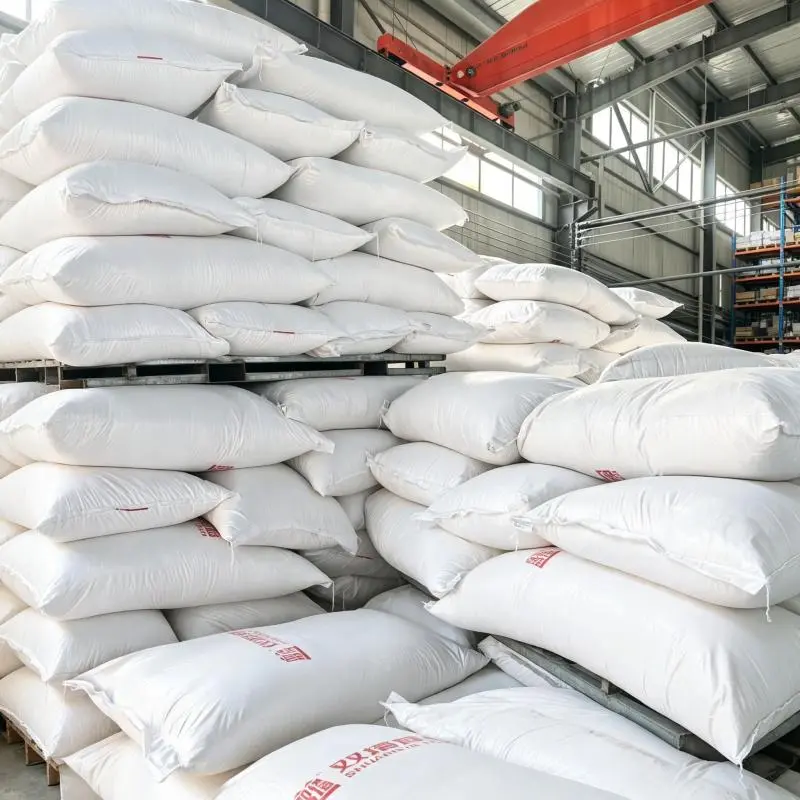
Retail and wholesale packaging may include customized bags, bulk bags, and outer cartons.
Gelin Town's cassava litter product pages list packaging options such as 6 L / 2.5 kg, 7 L / 2.8 kg, and 10 L / 4.5 kg, with other specifications subject to confirmation.
For product examples and commercial packaging information, see our plant-based cassava cat litter in Europe and cassava cat litter product introduction for Norway.
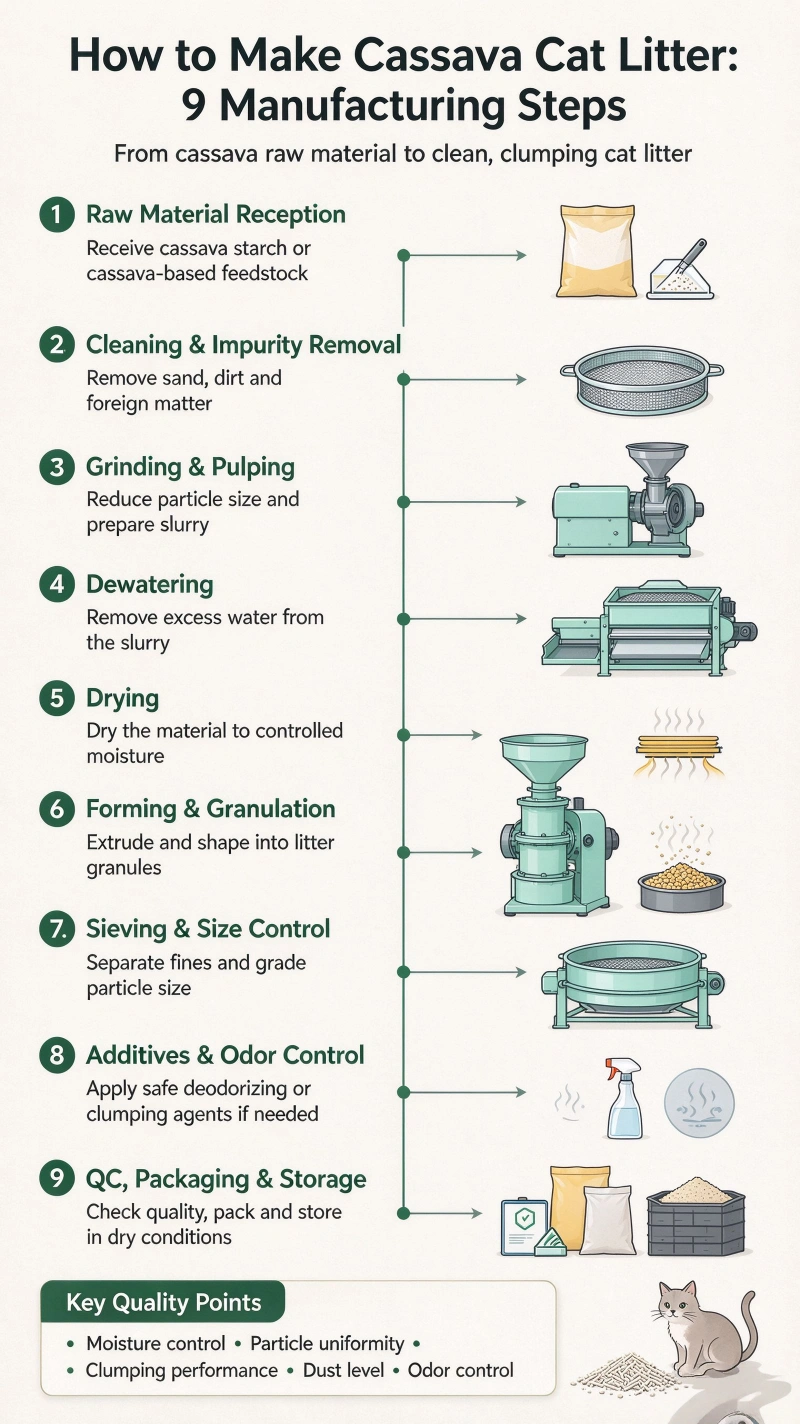
4. Equipment Used in Cassava Cat Litter Production
A commercial cassava cat litter production line may include equipment for raw material preparation, mixing, forming, drying, screening, dust collection, and packaging.
The actual equipment configuration depends on whether the factory uses refined starch, plant fibers, or a combination of materials.
| Equipment | Main Function | Production Importance |
|---|---|---|
| Raw material storage and feeding system | Stores and transfers ingredients | Supports controlled material handling |
| Sieve or screening equipment | Removes unsuitable material | Improves incoming material consistency |
| Grinder or crusher | Reduces particle size when required | Prepares fibers or biomass for processing |
| Weighing and batching system | Measures formulation ingredients | Reduces formula variation |
| Industrial mixer | Blends starches, fibers, binders, and water | Improves ingredient distribution |
| Extruder or granulator | Forms the mixture into granules | Controls particle structure |
| Cutting system | Adjusts granule length where applicable | Maintains product dimensions |
| Dryer | Reduces residual moisture | Supports product stability |
| Cooling conveyor | Cools finished granules | Prepares product for final screening |
| Vibrating screen | Grades particles by size | Removes fines and off-specification granules |
| Dust collection system | Collects separated fines and airborne particles | Supports workshop and product quality control |
| Automatic packing machine | Weighs and seals finished product | Improves packaging consistency |
A factory should not select equipment based only on machine output capacity.
The production line must also be suitable for the formula, particle dimensions, energy requirements, moisture-control needs, and expected order volume.
To learn more about Gelin Town's facilities and production arrangements, visit our cat litter factory page.
5. How to Test Cassava Cat Litter Quality
A batch of cassava cat litter may look uniform but still perform differently during actual use.
For manufacturers, importers, and private-label buyers, quality testing should evaluate several characteristics together.
There is no single measurement that can determine whether a cassava cat litter product is high quality.
5.1 Moisture Content Test
Moisture content influences product weight, storage stability, and physical characteristics.
Manufacturers should define a suitable moisture specification for each formula and use a consistent test method.
A buyer should request:
The actual moisture result.
The agreed product specification.
The sample or batch identification.
The measurement method.
The sampling procedure.
A lower moisture value is not automatically better in every case. The acceptable range should be established through product and storage validation.
5.2 Water Absorption Test
The absorption test measures how much liquid the litter can take up under defined conditions.
A simple comparative procedure is:
Weigh a dry litter sample.
Place it in a suitable test container.
Add a measured quantity of test liquid.
Allow a specified contact time.
Separate or drain the unabsorbed liquid using the agreed procedure.
Measure the retained liquid or final sample mass.
Repeat the test with additional samples.
One possible calculation is:
Water absorption (%) = Retained liquid mass ÷ Initial dry sample mass × 100
For example, if a 10 g sample retains 25 g of liquid under the agreed test conditions, the calculated absorption is 250%.
This is an illustrative calculation, not a guaranteed performance value for any specific product.
When comparing suppliers, the test liquid, sample mass, contact time, drainage procedure, and calculation method must be identical.
5.3 Clumping Speed and Clump Integrity Test
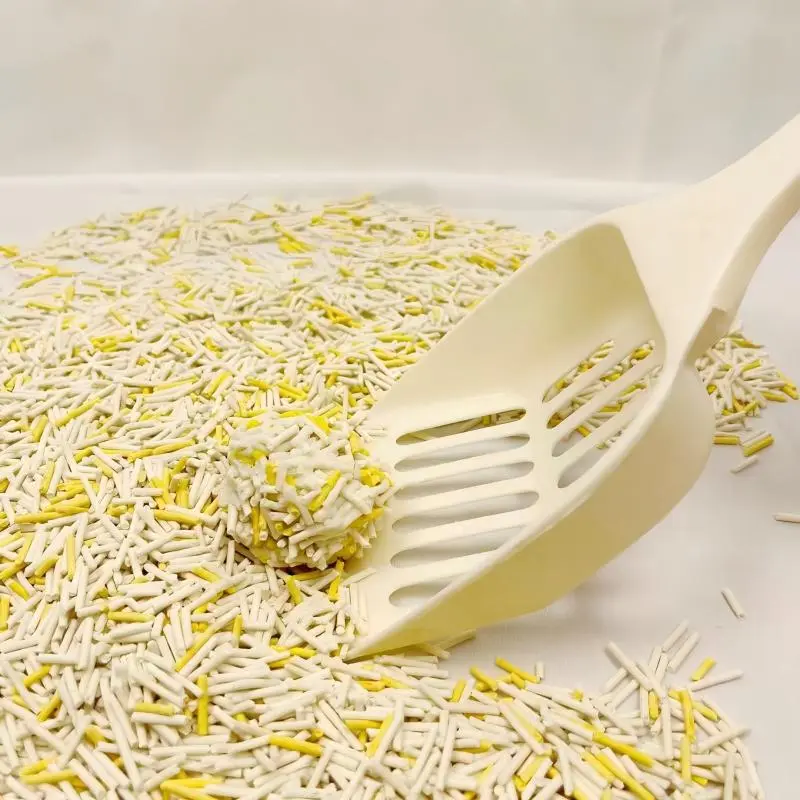
Cassava starch-based litter is often designed to form removable clumps when it absorbs liquid.
A useful test should evaluate both the time required for clumping and the strength of the formed clump.
A practical comparison can follow these steps:
Add the same amount of litter to identical trays.
Apply the same measured liquid volume.
Wait for an agreed period.
Remove the clump using the same scoop or testing device.
Record whether it remains intact.
Inspect the bottom of the tray for wet residue.
Repeat the procedure with multiple samples.
For objective testing, manufacturers can agree on a clump mass-retention or breakage measurement.
A claim such as "99% clumping performance" is not meaningful unless the calculation method and test conditions are disclosed.
5.4 Dust and Fine Particle Test
Dust performance is influenced by raw material preparation, granule hardness, drying, screening, packaging, and transportation.
Manufacturers should define:
Sample mass.
Screening method.
Sieve specifications.
Handling procedure.
Dust collection equipment.
Calculation method.
Number of test repetitions.
It is also useful to distinguish between the fine-particle content of a sample and the airborne dust produced when the product is poured.
These are different product characteristics and should not be reported as if they were the same measurement.
5.5 Pellet Strength and Breakage Test
A pellet may look strong immediately after drying but become brittle during transportation.
A simple comparison should examine the amount of broken material generated after controlled handling.
Manufacturers can test:
Granule breakage after repeated handling.
Fine particles created during pouring.
Changes in particle distribution after transportation simulation.
Visible damage to the product inside the package.
This is particularly important for exporters shipping full container loads.
5.6 Odor-Control Test
If a product is marketed for odor management, the claim should be supported by an appropriate test.
A controlled ammonia challenge test may be used to compare odor-related performance, but it should define:
Sample mass.
Test liquid or odor challenge.
Chamber volume.
Temperature and humidity.
Measurement instrument.
Observation time points.
Control sample.
Number of repeated tests.
The report should explain whether it measures ammonia concentration, another specific compound, or a human sensory score.
A product containing activated carbon, baking soda, or another deodorizing ingredient should not automatically be described as having superior odor control without testing the finished formula.
5.7 Packaging and Storage Stability Test
The finished product should remain consistent under the agreed storage and transportation conditions.
Check:
Bag sealing.
Packaging material.
Net weight.
Carton strength.
Moisture protection.
Product flowability.
Changes in odor or appearance.
Pellet breakage during handling.
For B2B buyers, it is useful to review batch test results from the actual production order rather than relying only on a development sample.
For more detailed information about supplier specifications, quality testing, and commercial evaluation, see our cassava cat litter manufacturer and OEM/ODM guide.
6. Can You Make Cassava Cat Litter at Home?
It is possible to experiment with a small plant-based pellet sample, but making a consistent commercial-quality cassava cat litter product at home is much more difficult.
A simple household experiment cannot reliably reproduce the controls available in an industrial production line.
Important limitations include:
Raw material safety: Fresh cassava roots and by-products may contain cyanogenic compounds that require appropriate processing and assessment.
Moisture control: Household drying methods may leave moisture distributed unevenly.
Granule formation: Manual shaping does not produce consistent particle size or structure.
Dust control: Household equipment cannot reliably measure or control fine particles.
Clumping performance: A homemade sample may not form stable, removable clumps.
Storage stability: A small batch may change during storage, especially if moisture remains too high.
Hygiene: Raw agricultural materials and home processing environments may introduce contamination.
If the purpose is a commercial product, use suitable processed raw materials and a controlled manufacturing process.
Do not make litter directly from fresh cassava roots or peels without appropriate processing and safety validation. Keep experimental materials away from cats, especially when their composition and residual compounds have not been evaluated.
For everyday cat use, a tested commercial product with clear ingredient and usage information is a more dependable option than an unverified home-made batch.
7. Common Manufacturing Problems and How to Prevent Them
Manufacturing problems often appear as changes in pellet appearance or performance.
The following table connects common defects with possible process causes.
| Product Problem | Possible Manufacturing Cause | Recommended Control |
|---|---|---|
| Granules are too soft | Insufficient binding or unsuitable forming conditions | Review formula and granulation parameters |
| Pellets break easily | Excessive drying, unsuitable binder system, or weak particle structure | Review moisture endpoint and pellet-strength test |
| Irregular granule size | Inconsistent feeding, die wear, or unstable cutting | Check feeding and forming equipment |
| Excessive dust | Poor screening, brittle granules, or transportation damage | Improve screening and durability control |
| Weak clumping | Unsuitable starch behavior, binder system, or moisture conditions | Review formulation and clump testing |
| Uneven product performance | Inconsistent raw materials or insufficient mixing | Improve batch weighing and mixing control |
| Premature product sticking | Excessive moisture or unsuitable storage | Check drying, cooling, and packaging conditions |
| Product changes during storage | Moisture exposure or insufficient stability control | Improve packaging and storage validation |
The same visible problem can have more than one cause.
For example, excessive dust may result from over-drying, weak granules, inappropriate screening, or damage during transportation. Simply installing a stronger dust collector may not solve the original problem.
A reliable manufacturer should investigate the production process and identify the actual cause before changing the formula.
8. How to Choose a Cassava Cat Litter Manufacturer
For importers, wholesalers, distributors, and pet brands, finding a supplier involves more than comparing prices.
The manufacturer should be able to explain its raw material system, production process, quality-control procedures, packaging options, and ability to maintain repeat-order consistency.
8.1 Confirm the Raw Material Composition
Ask whether the product is based mainly on cassava starch, cassava fiber, or a combination of materials.
Do not assume that every product marketed as cassava litter is made from 100% cassava.
Request the ingredient description and confirm whether the formulation will remain consistent between batches.
8.2 Review the Manufacturing Process
Ask which stages are completed at the factory.
A supplier should be able to explain:
Raw material inspection.
Mixing and formulation.
Granulation or extrusion.
Drying and cooling.
Screening and dust control.
Final inspection.
Packaging and batch identification.
A factory visit or production video can provide additional visibility into the process.
8.3 Request Product Test Reports
Ask for relevant data concerning:
Moisture.
Water absorption.
Clumping.
Granule durability.
Dust or fines.
Odor-control performance where claimed.
Storage stability where relevant.
The results should identify the test methods and sample or batch whenever possible.
8.4 Confirm MOQ and Packaging
The minimum order quantity may depend on the formula, packaging material, printed-bag requirements, and production schedule.
Gelin Town's published cassava cat litter listing shows an MOQ of 1 × 20-foot FCL. Current loading quantity and commercial terms should be confirmed for the exact product and package configuration.
The listed retail packaging options include 6 L / 2.5 kg, 7 L / 2.8 kg, and 10 L / 4.5 kg, with customization subject to confirmation.
For more manufacturing information, review the company's cassava cat litter product page.
8.5 Check the Factory's Other Plant-Based Products
A manufacturer with experience in several plant-based formulas may be able to support broader product development.
For comparison, Gelin Town also offers plant-based cat litter, peanut shell cat litter, and cereal cat litter.
These products are different formulations. Their product properties should be assessed separately rather than assuming that all plant-derived litter performs in the same way.
8.6 Evaluate Factory Capacity and Quality Management
Review production facilities, batch records, material sourcing, quality procedures, and packaging capabilities.
Shandong Gelin Town Pet Products Co., Ltd. was established in 2020. Its published company information describes a production area of approximately 16,000 m² and annual production capacity of approximately 7,000 tons.
The company's main product categories include plant-based, tofu, corn, cassava, cereal, mixed, and health-monitoring cat litter.
Learn more about the Gelin Town cat litter factory and its company background.
For buyers developing a complete plant-based litter range, comparing cassava with tofu cat litter, corn cat litter, or mixed cat litter can also help define product positioning.
8.7 Establish a Written Product Specification
Before mass production, agree on a specification sheet covering:
Raw material description.
Ingredient declaration.
Granule dimensions and shape.
Color and fragrance.
Moisture target and test method.
Absorption test conditions.
Clumping acceptance criteria.
Dust measurement method.
Packaging material and dimensions.
Net weight or volume.
Batch identification.
Procedures for handling nonconforming products.
The specification should be based on the approved sample and updated only through an agreed change-control process.
For additional guidance on technical requirements and supplier evaluation, see the OEM/ODM cat litter buying guide.
9. Frequently Asked Questions About Making Cassava Cat Litter
Q1. What is the main ingredient in cassava cat litter?
Cassava starch is a primary ingredient in many commercial formulas. Other products may combine it with corn starch, plant fibers, or suitable binders. The complete formulation varies by manufacturer.
Q2. Can cassava starch make cat litter clump?
Cassava starch can contribute to granule formation and clumping because it changes its structure when exposed to water and suitable processing conditions. Actual clumping performance depends on the complete formula, pellet structure, moisture, and manufacturing process.
Q3. Is cassava cat litter made from cassava roots or cassava starch?
Many commercial products use processed cassava starch extracted from roots. Other research and product-development routes investigate cassava fibers or agricultural by-products. These materials require different preparation and formulation methods.
Q4. What equipment is needed to make cassava cat litter?
A commercial production line may use raw material handling systems, weighing equipment, mixers, extruders or granulators, dryers, cooling conveyors, vibrating screens, dust collection systems, and packaging machines.
Q5. What is the correct drying temperature for cassava cat litter?
There is no universal drying temperature. The suitable temperature and processing time depend on the initial moisture, formula, granule size, dryer design, and desired finished-product specification. Manufacturers should validate the drying endpoint through product testing.
Q6. What moisture content should cassava cat litter have?
The acceptable moisture content depends on the formula, manufacturing conditions, packaging, and storage requirements. Buyers should agree on a numerical target and test method with the manufacturer instead of relying on a general industry number.
Q7. How can manufacturers improve cassava cat litter clumping?
Clumping can be improved through suitable starch selection, binder formulation, moisture conditioning, granulation, and drying control. Manufacturers should measure both clumping speed and clump integrity under consistent test conditions.
Q8. Is cassava cat litter biodegradable?
Plant-derived ingredients may have biodegradable potential, but the finished product's actual degradation depends on its complete formula and disposal conditions. A manufacturer should provide relevant test evidence before making a specific biodegradability or compostability claim.
Q9. Can cassava cat litter be flushed down the toilet?
Do not assume that all cassava cat litter is flushable. Even if a material breaks down in water, it may still create plumbing or wastewater problems. Follow the product instructions and local wastewater regulations. Gelin Town generally recommends against flushing its cassava cat litter.
Q10. Can I make cassava cat litter at home?
A small experiment may be possible with appropriately processed materials, but household production cannot reliably control residual moisture, particle size, dust, clumping, storage stability, or raw material safety. For regular pet use or commercial sales, a properly tested manufactured product is more dependable.
Conclusion: Making Good Cassava Cat Litter Requires More Than a Starch-Based Formula
Cassava cat litter manufacturing involves a series of connected processes, beginning with suitable raw material selection and continuing through preparation, formulation mixing, moisture conditioning, granulation, drying, cooling, screening, testing, and packaging.
Every stage can influence the final product.
Consistent raw materials help reduce batch variation. Controlled moisture and processing conditions support stable granule formation. Suitable drying and screening help manage breakage and dust. Final testing provides evidence of absorption, clumping, durability, and storage performance.
For manufacturers, the goal is to develop a formulation that can be reproduced consistently. For buyers, the most reliable approach is to request product specifications, test methods, samples, and batch records before placing bulk orders.
Gelin Town Pet provides plant-based cat litter manufacturing, wholesale, OEM, and ODM services for international pet brands, importers, and distributors.
Explore our cassava cat litter products or contact Gelin Town Pet to discuss your raw material requirements, product specifications, and customized packaging.
Frequently Asked Questions
Q1: Can cassava cat litter be mixed with tofu cat litter?
Yes. Mixing the two combines their respective advantages and can also effectively reduce costs.
Q2: What is the minimum order quantity (MOQ) for OEM?
One × 20‑foot GP container (about 11 tons). Delivery is 20–30 days after design approval.
Get an OEM/ODM Quote
Email: info@sdgelin.cn
References and Further Reading
FAO/WHO Codex Alimentarius – Code of Practice for the Reduction of Hydrocyanic Acid in Cassava and Cassava Products
Chamorro et al. (2025) – Physicochemical Characterization and Properties of Cassava Starch: A Review
Technical University of Denmark Research Database – Preparation and Properties of Biodegradable Cat Litter Produced from Cassava Trunk Pith
U.S. Federal Trade Commission – Environmental Claims: Summary of the Green Guides