582.webp)
199.webp)
555.webp)
479.webp)
517.webp)
422.webp)
482.webp)
Fine-particle corn cat litter is an option worth evaluating for Australian cat owners looking for a plant-based litter with a soft texture, convenient scooping, and practical odor management. For pet product distributors, retailers, and private label brands, it also offers an opportunity to develop a differentiated cat litter product for a market with a substantial cat-owning population.
However, choosing litter for kittens requires more than comparing pellet size or ingredient labels. Age, litter-eating behavior, dust levels, clumping performance, and the manufacturer's safety guidance all matter.
In this guide, we explain what fine-particle corn cat litter is, how to evaluate its performance, what Australian buyers should consider, and how importers can develop a customized product for their own brands.
Why Consider Fine-Particle Corn Cat Litter in Australia?
Australia is an established companion-animal market. According to Animal Medicines Australia's Pets in Australia: A National Survey of Pets and People 2025, approximately 5.8 million pet cats live in Australia, and around 34% of households own at least one cat.
These figures demonstrate the size of the cat-care market, but they do not establish that corn cat litter is the most popular litter material. Fine-particle corn litter should therefore be positioned as a product opportunity to evaluate, rather than a proven market leader.
Source: Animal Medicines Australia — Pets in Australia 2025.
For Australian retailers and distributors, the main product-development questions are straightforward:
Will the texture appeal to cats and their owners?
Does the product control dust during pouring and scooping?
Can it form stable clumps under normal use?
Does it manage everyday litter-box odors?
Can the supplier maintain consistent specifications between batches?
Does the product have clear instructions for kittens and appropriate disposal?
A product that performs consistently across these areas is easier to evaluate for retail distribution than one marketed mainly through broad claims such as “natural,” “safe,” or “eco-friendly.”
What Is Fine-Particle Corn Cat Litter?
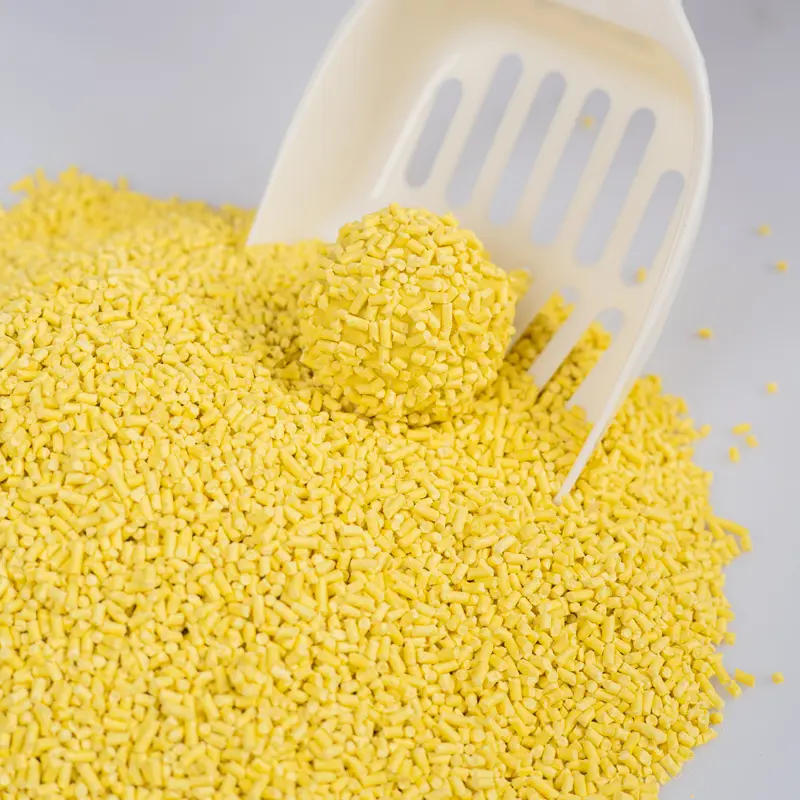
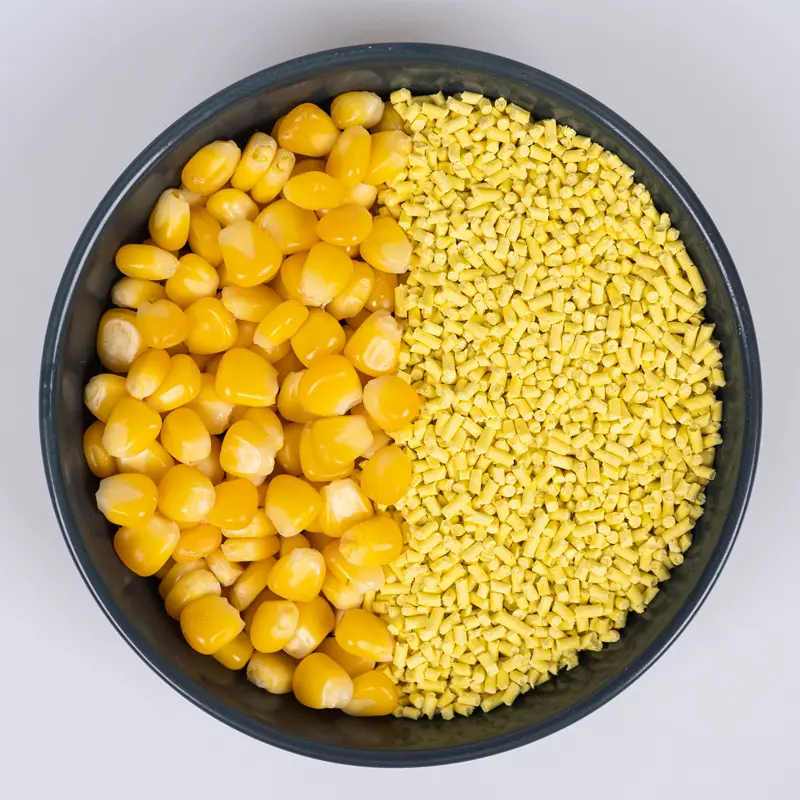
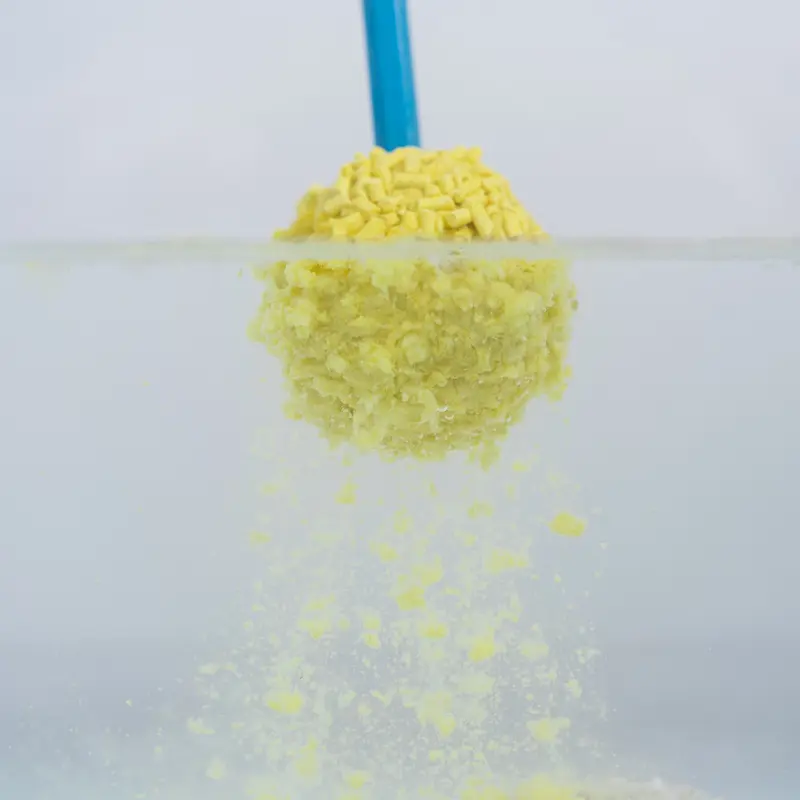
Fine-particle corn cat litter is a litter product made primarily from corn-derived material, processed into relatively small particles or granules. Depending on the formula, it may also contain binders, deodorizing ingredients, or other functional additives.
The exact composition varies by manufacturer. Buyers should check the ingredient declaration instead of assuming that every corn litter contains only corn.
Compared with larger pellets, a fine-particle formula may offer a texture closer to granular litter. Some cats may accept this texture readily, while others may prefer larger pellets. Acceptance should be evaluated with the individual cat rather than assumed from particle size alone.
Potential product advantages
1. A granular texture
Fine particles may appeal to cats that prefer a sand-like substrate. The actual texture, however, depends on particle shape, hardness, and size distribution.
2. Plant-derived material
Corn-based formulations can appeal to customers interested in plant-derived litter materials. Environmental claims should be supported by evidence about the actual ingredients, manufacturing process, packaging, and disposal route.
3. Convenient scooping
Some formulas are designed to bind wet material into clumps. Clump strength and removal performance must be tested on the finished product because they depend on the formula, moisture exposure, and time allowed before scooping.
4. Options for product differentiation
Manufacturers may be able to offer different particle sizes, fragrance options, package weights, and branding formats. Availability depends on the supplier's confirmed capabilities.
Is Fine-Particle Corn Cat Litter Suitable for Kittens?
The answer depends on the kitten's age, behavior, and the specific product.
Kittens explore their surroundings with their mouths and may swallow litter while playing or grooming. Ingested litter can pose a risk, particularly when a kitten repeatedly eats litter or consumes material that may form a blockage. Clumping behavior is also relevant when selecting litter for young animals.
An Australian veterinary-reviewed guide from Pet Circle highlights the need to consider kitten age, ingestion risk, and respiratory irritation when selecting litter.
Reference: Pet Circle — Best Litter for Kittens.
Before using fine-particle corn litter for a kitten:
Check the product's age-related instructions and ingredient information.
Supervise the kitten when introducing a new litter.
Monitor for persistent litter eating, coughing, irritation, or digestive problems.
Stop using the product and seek veterinary advice if the kitten repeatedly ingests litter or develops concerning symptoms.
Ask a veterinarian to recommend a suitable litter if the kitten is very young, unwell, or prone to eating non-food materials.
Important: Corn-based does not automatically mean safe to ingest. Likewise, “natural” and “plant-based” are not substitutes for a product-specific safety assessment.
For a manufacturer, kitten suitability should be supported by appropriate product evaluation and careful labeling—not simply by marketing the product as gentle or natural.
The market prospects for the popular fine-particle corn cat litter in Australia.
The fine-particle corn cat litter, popular in the Australian market, is expected to have a bright future.
Increased Pet Health Awareness: Pet owners in Australia are becoming increasingly concerned about the health and well-being of their pets. Fine-particle corn cat litter is typically non-toxic and free of irritating substances, making it more pet-friendly. This characteristic aligns with the health trend in the Australian market.
Environmental Sustainability: Corn cat litter is often made from natural and biodegradable materials, such as cornstarch. This reduces the reliance on non-renewable resources and aligns with the principles of environmental sustainability, meeting consumers' demand for eco-friendly products.
Excellent Odor Control: Fine-particle corn cat litter forms tight clumps and usually offers outstanding odor control, helping to keep the litter box fresh. In Australia, this feature is crucial in alleviating potential odor issues.
Safety: The smaller and softer particles of fine-particle corn cat litter are safer for young kittens, increasing pet safety. This makes it a popular choice among pet owners in the Australian market.
Acceptance: Fine-particle corn cat litter is more readily accepted by pets, particularly young kittens. This contributes to its competitiveness in the market.
Low Dust: Multiple dust-reduction processes reduce dust production, benefiting the respiratory health of both pets and pet owners. Lower dust levels can minimize allergy issues and provide a cleaner indoor environment.
Therefore, fine-particle corn cat litter is expected to continue its popularity in the Australian market, especially among pet owners who prioritize pet health, environmental sustainability, and high performance. This cat litter possesses several attractive features, making its future market prospects promising.
Precautions When Using Fine-Particle Corn Cat Litter for Kittens
Keep out of reach of children: Ensure that the fine-particle corn cat litter is stored in a secure place inaccessible to children, as it may pose a choking hazard if ingested.
Avoid ingestion: While fine-particle corn cat litter is non-toxic, it's advisable to prevent pets and humans from ingesting it, as it is not meant for consumption.
Proper disposal: Dispose of used litter and clumps in accordance with local waste disposal regulations. Some fine-particle corn cat litters are flushable, but it's essential to follow the manufacturer's guidelines for safe disposal.
Regular cleaning: Maintain a clean litter box by scooping waste and clumps daily to ensure a hygienic environment for your pet.
Monitor for allergies: If you or your pet exhibit any allergic reactions or sensitivities, such as skin rashes or respiratory issues, discontinue use and consult a healthcare provider or veterinarian.
Keep away from food: Store the fine-particle corn cat litter away from food and food preparation areas to prevent contamination.
Limit dust exposure: When handling the litter, consider using a dust mask and gloves to minimize exposure to dust particles, which can be a concern for some individuals with respiratory sensitivities.
Follow manufacturer's recommendations: Adhere to the usage and disposal instructions provided by the manufacturer of the specific fine-particle corn cat litter brand you are using.
By following these precautions, you can ensure the safe and effective use of fine-particle corn cat litter for your pet.
684091.webp "Highly- -Absorbent- Clumping-Fine-Particle-Corn-Cat-Litter (1)684091.webp")
Corn cat litter is typically made from natural corn granules and does not contain any toxic or irritating substances, making it very safe.
How to Customize?
If you need us to provide contract manufacturing services for you, we need to establish a collaborative relationship and ensure that we can meet your requirements. Typically, you will need to provide the following information and resources:
Design Files: If the packaging requires specific designs or branding, you may need to provide relevant design files or drawings, or you can directly supply the packaging bags.
Payment Terms: We need to reach an agreement between both parties regarding pricing, payment terms, and delivery conditions.
Product Specifications and Requirements: Please provide detailed product specifications, quality standards, and production quantities
Production Schedule: Understanding your delivery requirements is crucial so that we can plan the production schedule accordingly.
By providing this information and working closely with our team, we can ensure that your customized products meet your specifications and expectations.
Calling all aspiring cat litter dealers in Australia! If you're venturing into the cat litter business, we extend a warm welcome to collaborate with us. Our Fine-Particle Corn Cat Litter, already a popular choice for kittens across Australia, presents an exciting opportunity to establish a mutually beneficial partnership.
With a product that cat owners trust and feline companions adore, partnering with us allows you to tap into a growing market and offer a high-quality cat litter solution to your customers. As we aim to expand our reach and make this exceptional cat litter even more accessible, we invite you to become a part of this exciting journey.
By joining forces with us, you gain access to a reliable and innovative product that's tailored to the Australian market. We provide support, resources, and a product that's in demand. This collaboration promises to be a purr-fect fit for those looking to make their mark in the cat litter industry.
So, if you're ready to embark on this journey and offer a superior cat litter solution to Australian cat owners, reach out to us today. Let's make cats and their owners across Australia happier and their litter boxes cleaner with Fine-Particle Corn Cat Litter!
Fine-Particle Corn Cat Litter Specifications
B2B buyers should request a technical data sheet before ordering samples or confirming a private label project.
The following table is a product-development specification framework, not a claim that every corn litter has these specifications. Actual values should be agreed with the manufacturer and verified through testing.
| Specification | What buyers should confirm | Why it matters |
|---|---|---|
| Main material | Corn-derived ingredients and other additives | Ingredient transparency |
| Particle size | Actual particle-size range in millimeters | Texture and handling |
| Particle distribution | Percentage of particles within agreed size ranges | Batch consistency |
| Moisture content | Measured percentage and test method | Storage stability and performance |
| Bulk density | Measured value, such as g/L | Packaging and freight planning |
| Clumping performance | Test method and defined acceptance criteria | Scooping convenience |
| Absorption capacity | Measured under a documented method | Product performance |
| Dust level | Test method and result | Handling and user experience |
| Odor management | Defined evaluation conditions | Realistic product claims |
| Fragrance | Unscented or specified fragrance option | Market and customer preferences |
| Packaging | Bag material, net weight, sealing, and carton configuration | Retail and logistics suitability |
| Shelf life | Validated period and storage conditions | Inventory management |
What particle size should you choose?
There is no single particle-size specification that suits every cat or market. A fine-particle product should be developed around the intended use, performance targets, and customer preferences.
For product development, a buyer might ask a supplier to evaluate several particle-size bands—for example, a finer grade and a medium-fine grade—rather than committing to one size before testing.
The evaluation should cover:
Cat acceptance and texture preference.
Dust generated during pouring and scooping.
Clump formation and removal.
Tracking outside the litter box.
Absorption under repeatable test conditions.
Packaging integrity during transport.
A particle-size specification should also state how size is measured. A nominal size alone may hide variation between fine particles and oversized granules.
Fine-Particle Corn Cat Litter vs. Other Litter Types
No litter type is best for every cat. The right choice depends on the formula, the cat's behavior, the owner's preferences, and the intended use.
| Comparison factor | Fine-particle corn litter | Tofu cat litter | Bentonite clay litter |
|---|---|---|---|
| Main material | Corn-derived material | Commonly plant fibers such as soybean residue | Natural clay, often sodium bentonite |
| Texture | Fine granular texture, depending on grade | Often cylindrical pellets, although formats vary | Usually granular |
| Clumping | Formula-dependent | Formula-dependent | Many products are designed to clump |
| Dust | Must be tested on the finished product | Must be tested on the finished product | Varies by formulation and processing |
| Weight | Depends on bulk density | Depends on formula and pellet size | Depends on mineral composition and density |
| Plant-based positioning | Possible, subject to ingredient verification | Possible, subject to ingredient verification | Generally mineral-based |
| Kitten suitability | Depends on age, behavior, and product guidance | Depends on age, behavior, and product guidance | Depends on product design and ingestion risk |
| Disposal | Follow product instructions and local rules | Follow product instructions and local rules | Follow product instructions and local rules |
For a retailer, the best approach is to compare actual samples rather than assume that one material will outperform another in every category.
Practical Experience: How to Evaluate Fine-Particle Corn Cat Litter
For manufacturers, importers, and product developers, a structured test is more useful than relying on a single impression from opening a sample bag.
The following is a practical evaluation workflow, not a claim of completed testing or a report of measured results.
Step 1: Inspect the product on arrival
Check the bag seal, printed information, net weight, visible particle variation, and any signs of moisture damage. Record the batch number and photograph any issues.
Step 2: Evaluate dust during pouring
Pour a consistent quantity into a clean litter tray using the same method for each sample. Record visible dust and, where needed, use a suitable standardized test.
Avoid describing a product as “100% dust-free” unless the claim is clearly defined and supported by appropriate evidence.
Step 3: Measure absorption consistently
Use the same sample weight, liquid quantity, temperature, and observation time for each product being compared. Record the method and results instead of using an unsupported absorption percentage.
Step 4: Test clumping and scoopability
If the product is designed to clump, evaluate how well wet material binds together and whether it breaks apart during removal. Use a consistent waiting period before scooping.
Step 5: Observe tracking
Place the tray in a controlled test area and record the quantity of material found outside the tray over a defined period. For household trials, note the litter mat, tray design, and number of cats.
Step 6: Review odor performance
Odor results depend on the amount of litter, urine load, ventilation, and cleaning frequency. Use repeatable conditions and avoid claiming that any litter eliminates all odors.
Step 7: Evaluate kitten acceptance separately
A performance test using adult cats does not establish kitten suitability. Any kitten trial should follow an appropriate safety protocol, and kittens that eat litter should not be encouraged to continue using a product that may be unsuitable.
How to Develop a Corn Cat Litter Product for the Australian Market
For Australian wholesalers, pet retailers, importers, and private label brands, product differentiation can come from the formula, packaging, particle specifications, and clarity of product instructions.
A structured OEM or ODM project typically follows these stages.
1. Define the target customer
Decide whether the product is intended for general cat owners, premium pet retailers, online sellers, multi-cat households, or a specialized kitten-litter range.
If the product is marketed for kittens, define the intended age range and safety-evaluation requirements before making claims.
2. Confirm the formula
Discuss the main material, binders, fragrance, deodorizing ingredients, and any other additives. Request ingredient information and supporting documentation for relevant claims.
3. Set the particle-size requirements
Agree on the target particle-size distribution, allowable variation, and inspection method. The final specification should be measurable rather than based only on terms such as “fine” or “small.”
4. Request and test samples
Evaluate samples for dust, absorption, clumping, tracking, odor management, and packaging. Record the results and identify which requirements must be improved before approval.
5. Develop private label packaging
Packaging can be customized according to the manufacturer's available options and the buyer's requirements. Important considerations include:
Bag weight and dimensions.
Packaging material and moisture protection.
Brand logo, product name, and artwork.
Usage and disposal instructions.
Ingredient information and relevant warnings.
Barcode and destination-market labeling requirements.
6. Approve the final product specification
Before mass production, confirm the approved sample, formula, particle-size range, packaging artwork, inspection criteria, and any required documentation.
7. Confirm production and shipping details
Discuss minimum order quantity, production lead time, carton configuration, shipping arrangements, and procedures for handling non-conforming products. These details should be confirmed in writing rather than assumed from a general product listing.
What Australian Importers Should Check Before Ordering
When sourcing fine-particle corn cat litter from an overseas manufacturer, importers should evaluate more than the unit price.
Product quality: Request current specifications and samples. Check particle consistency, dust, moisture, absorption, and clumping where applicable.
Packaging and freight: Compare bag weights, carton dimensions, pallet configuration, and shipping volume. Lightweight or compact packaging does not automatically mean a lower landed cost.
Compliance: Confirm the current Australian requirements that apply to the product, its ingredients, labeling, packaging, and import route. Seek professional advice where necessary, especially when making kitten-safety or environmental claims.
Claims and documentation: Ask for evidence supporting statements such as “low dust,” “biodegradable,” “compostable,” “flushable,” or “safe for kittens.” These claims are not interchangeable and should not be used without appropriate support.
Repeat-order consistency: Ask how the manufacturer controls raw materials, production variation, finished-product inspection, and batch traceability.
Commercial terms: Confirm MOQ, payment terms, lead time, sample cost, shipping terms, and the process for addressing quality complaints.
A well-defined specification and an approved reference sample can help prevent misunderstandings when the product moves from development to bulk production.
Frequently Asked Questions
Is fine-particle corn cat litter popular in Australia?
Corn cat litter is a product category that retailers can evaluate for the Australian pet-care market, but the available national pet-ownership statistics do not establish its specific market share or prove that fine-particle corn litter is the country's most popular litter type. Retailers should validate demand through category research, competitor listings, customer feedback, and sample trials.
Is corn cat litter good for kittens?
It may be suitable for some kittens, but suitability depends on the product's ingredients, particle design, age guidance, and whether the kitten tries to eat litter. Check the label and consult a veterinarian if you are unsure.
Does fine-particle corn cat litter create less dust?
Not necessarily. Particle size alone does not determine dust performance. Manufacturing, drying, handling, and transport can affect the amount of fine material. Compare products using a defined test method.
Does corn cat litter clump?
Some corn-based formulas are designed to clump, while others may behave differently. Check the product specification and test clump strength and scoopability before purchase.
Can corn cat litter be flushed?
Do not assume it is flushable because it is plant-based. Follow the manufacturer's disposal instructions and local wastewater or plumbing guidance.
Can an importer customize corn cat litter?
Depending on the supplier's capabilities, customization may include particle-size requirements, formula options, fragrance, bag weight, packaging artwork, and private label branding. Confirm all available options and minimum order quantities with the manufacturer.
What is the most important test before a bulk order?
There is no single test that covers every requirement. At minimum, buyers should define and evaluate the key performance criteria for the intended market, approve a reference sample, and confirm packaging and documentation before placing a large order.
Conclusion
Fine-particle corn cat litter may offer a useful product-development opportunity for Australian pet retailers and private label brands interested in plant-derived litter options. Its commercial potential should be evaluated through actual customer demand, repeatable performance testing, clear product specifications, and responsible product claims.
For kittens in particular, a fine texture or plant-based ingredient does not automatically establish safety. Buyers should verify age guidance, consider the risk of litter ingestion, and avoid unsupported claims.
For B2B buyers, the most reliable sourcing process is to define the target market, compare samples, document specifications, approve packaging, and confirm quality-control requirements before mass production.
References
Animal Medicines Australia, Pets in Australia: A National Survey of Pets and People 2025: https://animalmedicinesaustralia.org.au/resources/pets-in-australia-a-national-survey-of-pets-and-people-3/
Pet Circle, Best Litter for Kittens: https://www.petcircle.com.au/discover/best-cat-litter-for-kittens