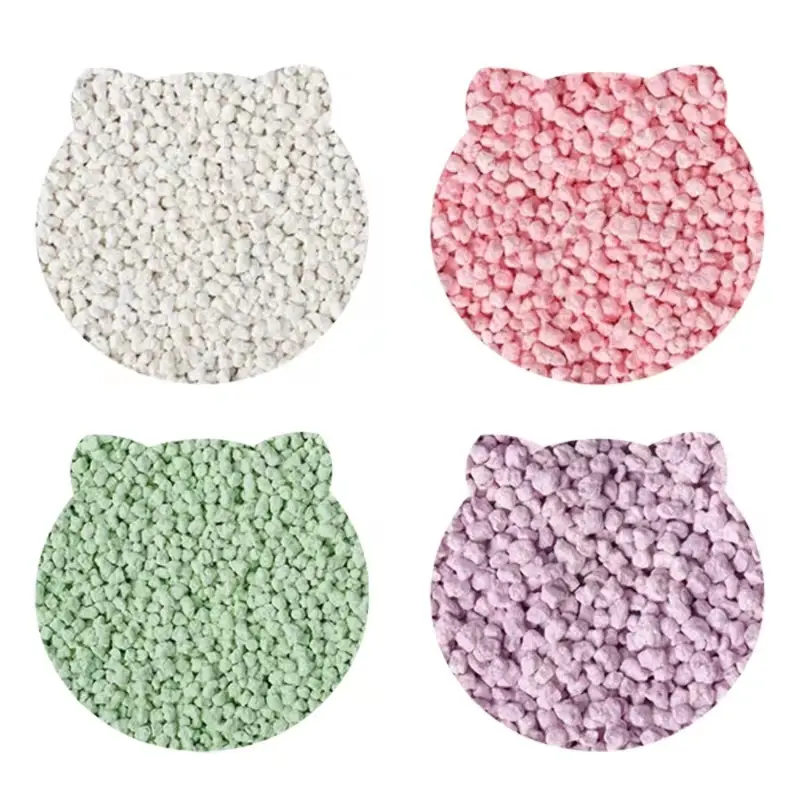
Choosing the right cat litter involves more than controlling unpleasant odors. Polish cat owners also consider clumping performance, dust, ease of cleaning, package size, and the environmental characteristics of the product.
Odor-control tofu cat litter offers an alternative to conventional mineral and silica-based products. Made with plant-derived ingredients such as pea fiber, soybean fiber, corn starch, and guar gum, it is designed to absorb moisture, form removable clumps, and support convenient daily litter box maintenance.
For importers, wholesalers, and pet brands, tofu cat litter also provides opportunities to develop differentiated products through customized formulas, pellet sizes, fragrances, and private-label packaging.
However, one important point deserves attention in Poland: a tofu litter product that disperses in water is not automatically approved for flushing through every household toilet or municipal wastewater system. Local disposal instructions must be checked before making a flushability claim.
This guide explains how odor-control tofu cat litter works, which product specifications matter, how to evaluate biodegradable claims, and what Polish buyers should consider when sourcing tofu litter from a manufacturer in China.
Table of Contents
What Is Odor-Control Tofu Cat Litter?
Why Consider Tofu Cat Litter for the Polish Market?
How Does Tofu Cat Litter Control Odor?
Main Ingredients of Odor-Control Tofu Cat Litter
Product Specifications for the Polish Market
Is Tofu Cat Litter Really Flushable in Poland?
Is Tofu Cat Litter Biodegradable and Eco-Friendly?
How to Switch from Crystal Cat Litter to Tofu Cat Litter
How to Choose High-Quality Odor-Control Tofu Cat Litter
OEM and Private-Label Tofu Cat Litter for Polish Buyers
Why Work with Gelin Town Pet?
Frequently Asked Questions
1. What Is Odor-Control Tofu Cat Litter?
Tofu cat litter is a plant-based cat litter made from processed plant fibers and binding ingredients.
Depending on the formula, common materials include:
Pea fiber.
Soybean fiber.
Corn starch.
Guar gum.
Other suitable plant-derived ingredients.
These materials are processed into granules or pellets that absorb liquid and form clumps when exposed to cat urine.
Odor-control tofu cat litter is designed to manage unpleasant smells through a combination of liquid absorption, clump formation, and regular waste removal.
Unlike non-clumping crystal litter, a clumping tofu formula allows owners to remove urine-soaked material with a scoop.
The remaining clean litter can then be maintained by adding fresh product as needed, following the manufacturer's instructions.
Gelin Town provides different tofu cat litter products for household, wholesale, and private-label applications.
1.1 Odor Control and Clumping Are Connected
A useful odor-control product should do more than cover unpleasant smells.
It should:
Absorb urine effectively.
Help concentrate contaminated material into removable clumps.
Maintain sufficient clump strength during scooping.
Minimize unnecessary wet residue.
Support consistent daily litter box cleaning.
A strong perfume does not automatically indicate strong odor control.
The underlying formulation and removal of used litter are more important.
1.2 Tofu Cat Litter Is Different from Silica Crystal Litter
Silica crystal litter and tofu cat litter use different materials and maintenance methods.
| Feature | Tofu Cat Litter | Silica Crystal Litter |
|---|---|---|
| Main material | Plant fibers and starch-based ingredients | Porous silica gel |
| Clumping | Usually clumping | Many standard products are non-clumping, although clumping variants exist |
| Waste removal | Remove urine clumps and feces | Follow the product's specific replacement instructions |
| Physical form | Cylindrical or crushed plant-based granules | Crystal or granular particles |
| Weight | Depends on pellet structure and density | Depends on crystal size and formulation |
| Odor management | Absorption, clumping, and optional additives | Moisture adsorption and optional additives |
| Disposal | Follow local waste rules | Follow local waste rules |
Neither product category is automatically better for every cat. The best option depends on the formula, cleaning routine, product performance, and individual cat preference.

"This picture showed the odor control tofu cat litter can be dissolved into very quickly,so it is one of the best flushable cat litter in Poland market"
The specification of odor control tofu cat litter:
| Item | Specification |
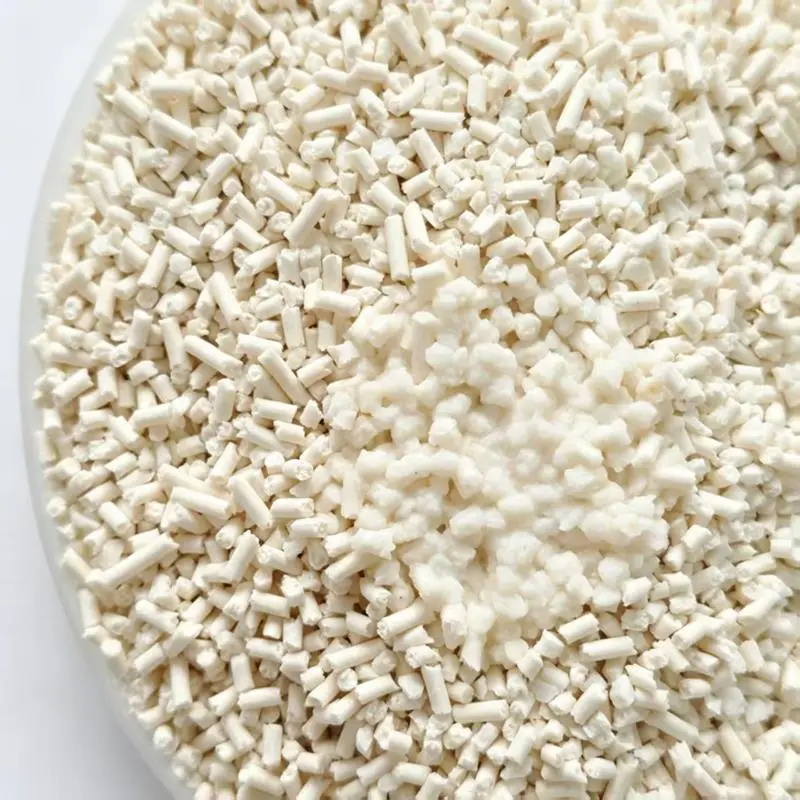
| Granule Size | Diameter 1.5mm-3mm,Columnar granules |
| Material | Pea fibre, Soybean fibre,corn starch and Guar gum |
| Perfume | Natural, or customized as your request |
| Density | 650-700g/Liter |
| Moisture | ≤10% |
| Absorption Rate | ≥350% |
| Track | Less track |
| Dust | Little dust |
| Biodegradable | Yes |
| Clumping | Yes |
| Flushable | Yes |
2. Why Consider Tofu Cat Litter for the Polish Market?
Polish online retailers and pet product brands now list several tofu-based products, including unscented formulas, green tea and lavender versions, and different package sizes.
Examples include SAGAPO Tofu Natural, Miłek Tofu, OTIS Tofu, and Have A Pet Tofu products.
Their product pages emphasize different combinations of plant-based materials, clumping, odor management, fragrance, and packaging.
This means a new tofu litter product entering the Polish market should offer more than the general statement that it is natural or eco-friendly.
It needs a clear product position and measurable performance requirements.
2.1 Plant-Based Ingredient Positioning
Tofu cat litter offers a product concept based on plant-derived ingredients.
Depending on the formula, it may use soybean fiber, pea fiber, corn starch, and other suitable materials.
For consumers interested in alternatives to conventional mineral litter, this provides a different raw material profile.
For distributors, ingredient transparency can also help distinguish products within a retail category.
2.2 Convenient Daily Cleaning
Clumping tofu litter allows cat owners to remove urine-soaked material without replacing the complete litter bed after every use.
The remaining product can be maintained by replenishing the litter level.
This can make daily litter box maintenance more convenient, provided that the formula produces stable clumps and the litter box is cleaned regularly.
2.3 Lightweight Handling
Plant-based pellet products can offer lighter handling compared with some conventional mineral litters.
The actual difference depends on bulk density and package weight.
For Polish retailers, package design should balance ease of carrying, shelf presentation, and transportation efficiency.
2.4 Different Product Options
Tofu litter can be developed in different product formats.
For example:
Standard cylindrical pellets.
Fine-particle products.
Crushed tofu litter.
Space-puffed tofu litter.
Unscented formulas.
Fragranced formulas.
Selected deodorizing formulas.
Buyers can compare different plant-based cat litter options before deciding which product format fits their target customers.
3. How Does Tofu Cat Litter Control Odor?
To understand odor control, it is important to understand what happens when urine enters the litter.
Cat urine contains urea and other compounds. As waste remains in the litter box, biological and chemical processes can contribute to the formation of unpleasant odors, including ammonia.
An odor-control litter needs to manage moisture and make used material easier to remove.
3.1 Absorb Liquid Quickly
The plant-fiber structure and starch-based ingredients help the product absorb liquid under suitable conditions.
Effective absorption can reduce the spreading of urine through the litter bed.
However, absorption performance depends on the complete formula and particle structure.
A high absorption percentage alone does not guarantee good odor control.
3.2 Form Removable Clumps
When exposed to liquid, a suitable clumping formula forms a mass that can be removed with a litter scoop.
This helps isolate used material from the remaining clean litter.
The clump should be strong enough to withstand ordinary scooping without excessive crumbling.
Weak clumps can leave wet residue behind, reducing the practical effectiveness of the litter.
3.3 Remove Used Litter Regularly
Even high-quality tofu litter needs daily maintenance.
Cat owners should remove feces and urine clumps regularly.
Leaving used material in the tray for too long can lead to odor accumulation, regardless of the litter type.
3.4 Consider Optional Odor-Control Ingredients
Some products include additional ingredients for particular odor-management requirements.
Examples include:
Activated carbon.
Baking soda.
Yucca-derived ingredients.
Postbiotic or other biological formulation components.
These ingredients have different functions and should not be treated as interchangeable.
For example, Gelin Town offers a baking soda tofu cat litter formula, a yucca deodorizing tofu cat litter, and a postbiotic tofu cat litter product.
The performance of each finished formula should be evaluated through product-specific testing.
The presence of a deodorizing ingredient does not automatically prove an antibacterial, health-related, or long-lasting odor-control benefit.
4. Main Ingredients of Odor-Control Tofu Cat Litter
The formula determines the physical characteristics and performance of the finished litter.
Gelin Town's published Poland-market product listing identifies pea fiber, soybean fiber, corn starch, and guar gum as its main ingredients.
4.1 Pea Fiber
Pea fiber is a plant-derived material used in tofu litter formulations.
It helps form the physical structure of the pellets and can contribute to the liquid-handling properties of the finished product.
Its actual performance depends on fiber characteristics, particle size, moisture, and the complete formula.
See our tofu cat litter made from pea fiber for an example of this ingredient approach.
4.2 Soybean Fiber
Soybean fiber and soybean-processing materials are traditional raw materials associated with tofu cat litter.
They provide a plant-fiber structure that can be processed into absorbent granules.
Not every tofu cat litter product has the same soybean content.
Buyers should check the actual ingredient declaration for each SKU instead of assuming that the name alone confirms a specific composition.
4.3 Corn Starch
Corn starch can help bind the plant-fiber material during production.
When the starch is exposed to suitable moisture and processing conditions, it contributes to pellet formation and cohesion.
The correct formula depends on the characteristics of the fibers and the manufacturing process.
4.4 Guar Gum
Guar gum is a plant-derived binder used in some tofu cat litter products.
It can contribute to the physical integrity of the pellets and their behavior when exposed to liquid.
The appropriate quantity should be established through formulation trials and finished-product testing.
4.5 Optional Fragrance and Functional Ingredients
Depending on market positioning, buyers may request:
Unscented tofu litter.
Green tea fragrance.
Lavender fragrance.
Other customized fragrance options.
Activated carbon.
Baking soda.
Other suitable functional materials.
Fragrance should be selected according to customer preference and tested for compatibility with the base formula.
An unscented product can be a useful option for customers who prefer to avoid added perfume.
5. Product Specifications for the Polish Market
The technical specification should be clear before requesting a price quotation or approving a sample.
Gelin Town's current Poland-market product page publishes the following information:
| Specification | Manufacturer-Published Information |
|---|---|
| Main ingredients | Pea fiber, soybean fiber, corn starch, guar gum |
| Granule shape | Cylindrical |
| Granule diameter | 1.5–3 mm |
| Bulk density | 650–700 g/L |
| Moisture content | ≤10% |
| Absorption rate | ≥350% |
| Clumping | Yes |
| Dust | Described as little dust |
| Tracking | Described as reduced tracking |
| Fragrance | Natural or customized |
| Retail packaging | 6 L / 2.5 kg, 7 L / 2.8 kg, 10 L / 4.5 kg |
| OEM/ODM | Available |
| Listed MOQ | 1 × 20-foot FCL |
These are the manufacturer's published product specifications. They should not be interpreted as independently verified results for every production batch.
5.1 What Does an Absorption Rate of 350% Mean?
Absorption figures need to be understood together with their test method.
A common calculation is:
Water absorption (%) = Retained liquid mass ÷ Initial dry sample mass × 100
For example, a 10 g sample retaining 35 g of liquid under a defined testing procedure would have a calculated absorption rate of 350%.
This is an illustrative calculation, not an independent test result for Gelin Town's product.
When comparing suppliers, use the same:
Initial sample weight.
Test liquid.
Contact time.
Drainage procedure.
Measurement method.
Number of test repetitions.
Without these details, two suppliers' absorption percentages may not be directly comparable.
5.2 Why Pellet Size Matters
Gelin Town's listed pellet diameter is 1.5–3 mm.
Different particle sizes can change the product's texture, flowability, handling, and consumer experience.
Fine granules may appeal to cats that prefer a smaller particle structure, while standard cylindrical pellets can be easier to handle and package.
For additional product formats, compare our crushed tofu cat litter.
6. Is Tofu Cat Litter Really Flushable in Poland?
This is one of the most important questions for Polish consumers and importers.
Some tofu cat litter products sold in Poland and elsewhere in Europe advertise that small amounts of used litter can be flushed.
For example, certain retailer products describe their formulas as water-soluble or flushable in limited quantities.
However, a product that disperses in water is not automatically accepted by a local wastewater system.
6.1 What Does Flushable Actually Mean?
Three different concepts should be separated.
| Term | Meaning |
|---|---|
| Water dispersible | The material breaks apart or disperses when exposed to water |
| Flushability tested | The product has undergone a specific test of toilet and wastewater behavior |
| Locally permitted | The local wastewater operator allows this disposal method |
These concepts are not equivalent.
A granule may break apart in a container of water but still behave differently in household pipework, sewer systems, or wastewater facilities.
6.2 What Do Polish Wastewater Rules Say?
Polish law provides restrictions on introducing solid waste that may reduce the capacity of sewer pipes.
Article 9 of the Act on Collective Water Supply and Collective Sewage Disposal specifically lists materials such as gravel, sand, ash, and fibers among prohibited solids when they may obstruct sewer infrastructure.
A local example is the PWiK water and wastewater company in Ruda Śląska, whose official FAQ explicitly lists cat litter among items that should not be put into a toilet.
This means that a manufacturer's flushability statement cannot override local wastewater rules.
6.3 How Should Used Tofu Cat Litter Be Disposed of in Poland?
The practical recommendation is:
Remove used clumps and feces from the litter box.
Place them in a suitable waste bag.
Follow the waste-sorting instructions of your local municipality.
Do not place used cat litter in the BIO bin simply because its original material is plant-based.
Do not flush it unless the local wastewater authority explicitly confirms that the specific product and disposal method are allowed.
Poland's Ministry of Climate and Environment excludes animal excrement from the BIO waste stream. The Wrocław municipal sorting guide also lists animal excrement and litter tray materials such as gravel and wood shavings among mixed waste examples.
Local rules should always be checked because collection systems and accepted waste categories can differ between municipalities.
For the Polish market, Gelin Town recommends verifying local disposal requirements before using flushability as a consumer-facing product claim.
7. Is Tofu Cat Litter Biodegradable and Eco-Friendly?
Tofu cat litter is often positioned as an environmentally considerate alternative because its principal ingredients can come from plant-derived materials.
However, an environmental claim should refer to the finished product and its actual disposal conditions.
7.1 Plant-Based Does Not Automatically Mean Fully Biodegradable
A product may contain soybean fiber, pea fiber, corn starch, and binders.
Its degradation behavior depends on the complete formulation and the environment where it is disposed of.
A manufacturer making a biodegradability claim should identify:
Whether the test applies to the raw material or finished product.
The testing environment.
The duration of the test.
The degradation measurement.
The test standard or assessment method.
Any relevant limitations.
7.2 Biodegradable Does Not Automatically Mean Compostable
Composting and biodegradation are related but different concepts.
A product that biodegrades under particular laboratory conditions may not necessarily be suitable for home composting or every municipal composting facility.
Furthermore, used cat litter contains animal waste, which may not be accepted in local organic waste systems.
7.3 Why Polish and EU Environmental Claims Need Care
Directive (EU) 2024/825 entered into application on September 27, 2026.
It strengthens rules addressing misleading environmental claims and sustainability labels in consumer marketing.
For tofu cat litter sold in Poland, broad statements such as "100% eco-friendly" or "zero environmental impact" should not be used without appropriate supporting evidence.
A more useful product description identifies the actual plant-derived ingredients and describes the specific tested environmental characteristic.
7.4 Packaging Is Also Part of the Environmental Product Story
Buyers should consider:
Recyclability of the packaging structure.
Material composition.
Packaging weight.
Transport efficiency.
Moisture protection.
The availability of local recycling facilities.
A plant-based litter product does not automatically make its packaging environmentally preferable.
For private-label projects, packaging claims should be reviewed separately from litter-formula claims.

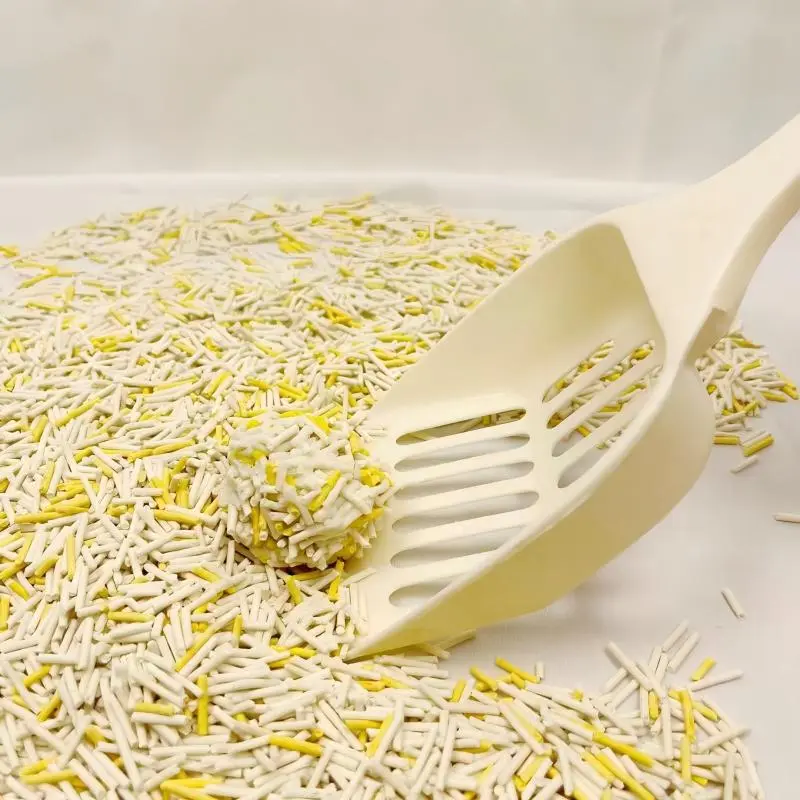
"We can see that the clumps of tofu cat litter is not thick, so it will not stick into the bottom of your litter box"
8. How to Switch from Crystal Cat Litter to Tofu Cat Litter
Some cats accept a new litter immediately, while others prefer a gradual change.
If your cat currently uses crystal litter, the following method can help reduce disruption.
Step 1: Prepare a Clean Litter Box
Wash the tray with mild detergent and water.
Rinse it thoroughly and let it dry before introducing the new litter.
Step 2: Start with a Separate Tofu Litter Box
Where space permits, offer a second litter box containing the tofu product.
This gives your cat a choice instead of forcing an immediate switch.
Step 3: Observe Your Cat's Preference
Watch whether your cat:
Enters the new tray comfortably.
Digs and covers its waste.
Uses the new tray consistently.
Avoids the unfamiliar texture.
Shows signs of litter box discomfort.
Step 4: Gradually Change the Existing Litter
If your cat accepts the new product, gradually increase the amount of tofu litter.
You can start with a small proportion and increase it over several days or longer, depending on your cat's response.
A second litter box is often preferable when the cat does not accept mixed materials.
Step 5: Maintain Daily Cleaning
Remove clumps and feces regularly.
Do not wait until the litter becomes heavily soiled before adding fresh material.
Step 6: Keep the Product Dry
Store unused litter in a sealed package in a dry location.
Moisture exposure can affect the condition of plant-based litter.
Step 7: Do Not Force the Transition
If your cat refuses the new litter, slow the transition or return temporarily to the familiar product.
The goal is comfortable and consistent litter box use.
9. How to Choose High-Quality Odor-Control Tofu Cat Litter
Not all tofu cat litter products perform the same way.
Before choosing a product for home use or wholesale distribution, compare the actual formula and test information.
9.1 Check the Ingredient Composition
Ask whether the formula uses:
Pea fiber.
Soybean fiber.
Corn starch.
Guar gum.
Other binders.
Optional deodorizing ingredients.
Gelin Town also provides a broader OEM/ODM tofu cat litter range with customized specifications for international buyers.
9.2 Evaluate Absorption
Use the same liquid, sample quantity, contact time, and drainage method when comparing products.
A high absorption figure is only useful when the method is clear.
9.3 Test Clumping Strength
A good clumping product should form a removable clump that does not crumble excessively during scooping.
A practical comparison should use:
The same quantity of litter.
Identical trays.
The same liquid volume.
The same contact time.
The same scoop or removal procedure.
Record the clump's integrity and the amount of wet residue left behind.
9.4 Verify Dust Performance
Dust claims should include a defined testing method.
Visible fine-particle content and airborne dust during pouring are different measurements.
A buyer should request the sample size, test equipment, measurement procedure, and reported result.
9.5 Evaluate Odor-Control Performance
A deodorizing ingredient alone does not prove superior odor management.
For commercial testing, define the sample mass, test liquid or odor challenge, test environment, observation period, control sample, and measurement method.
9.6 Review the Product's Storage Stability
Plant-based litter should be protected against unsuitable moisture exposure.
Ask about:
Recommended storage conditions.
Packaging structure.
Shelf life.
Batch traceability.
Moisture specifications.
Changes in the formula during repeat production.
10. OEM and Private-Label Tofu Cat Litter for Polish Buyers
For Polish importers, wholesalers, distributors, and pet retailers, product selection is only the beginning.
A long-term supplier should be able to provide stable specifications, appropriate packaging, product documentation, and repeat-order consistency.
10.1 Customizable Formula
Depending on the project, manufacturers may offer customization of:
Pea fiber and soybean fiber combinations.
Starch and binder systems.
Pellet dimensions.
Fragrance.
Color.
Selected deodorizing additives.
Standard or crushed granule formats.
For example, buyers can compare Gelin Town's standard tofu cat litter with its mixed cat litter to evaluate different product concepts.
10.2 Packaging Options
Gelin Town's existing product listing provides packaging examples including:
| Package | Published Size |
|---|---|
| Retail bag | 6 L / 2.5 kg |
| Retail bag | 7 L / 2.8 kg |
| Retail bag | 10 L / 4.5 kg |
| Customized packaging | Available upon confirmation |
For Polish retail, buyers should consider Polish-language packaging, barcode requirements, net weight, product instructions, manufacturer or importer information, and the substantiation of environmental claims.
10.3 MOQ and Bulk Order
The current Gelin Town Poland-market product listing specifies an MOQ of 1 × 20-foot FCL.
This is the published MOQ for the listed product. It should not be assumed to apply to every formula, packaging combination, or future development project.
Confirm the exact order quantity, SKU mix, loading plan, and production schedule before placing a purchase order.
10.4 Quality Documentation
Before mass production, buyers should request a specification sheet covering:
Ingredient description.
Granule diameter.
Moisture.
Bulk density.
Absorption test result and method.
Clumping performance.
Dust measurement.
Fragrance.
Packaging.
Shelf life.
Batch identification.
For a complete procurement checklist, review our OEM/ODM tofu cat litter buying guide.
10.5 Why Product Claims Should Be Agreed Before Printing
For the Polish market, the following claims require particular attention:
| Proposed Claim | Evidence or Confirmation Needed |
|---|---|
| Odor control | Defined odor-performance test |
| Low dust | Defined dust test |
| High absorption | Test method and batch result |
| Biodegradable | Finished-product test under specified conditions |
| Compostable | Evidence for the stated composting environment |
| Flushable | Product-specific testing and local wastewater acceptance |
| Antibacterial | Relevant test against defined microorganisms |
Do not approve final packaging artwork until the product claims have been checked.
11. Why Work with Gelin Town Pet?
Shandong Gelin Town Pet Products Co., Ltd. is a Chinese cat litter manufacturer specializing in tofu, corn, plant-based, mixed, and other cat litter products.
The company's published tofu cat litter product specifications include:
Pea fiber.
Soybean fiber.
Corn starch.
Guar gum.
1.5–3 mm cylindrical granules.
Customizable fragrance and packaging.
OEM and private-label options.
The company also offers customized tofu cat litter manufacturing and other plant-based litter products for international buyers.
You can learn more about the company's cat litter factory and production facilities.
Our aim is to help international customers establish clear product requirements before sample approval and mass production.
For Polish importers and distributors, this means discussing the complete formula, product testing, packaging, environmental claims, local disposal instructions, and supply terms before launching a new product.
Contact Gelin Town Pet to discuss odor-control tofu cat litter, customized specifications, and private-label cooperation for Poland.
12. Frequently Asked Questions About Tofu Cat Litter in Poland
Q1. Is tofu cat litter popular in Poland?
Tofu cat litter is available through multiple Polish and European pet product retailers. Products such as SAGAPO, Miłek, OTIS, and Have A Pet demonstrate the availability of different plant-based formulations. However, availability of these products does not establish a specific market share or prove that tofu litter is the most popular litter type in Poland.
Q2. What is the best tofu cat litter for odor control?
The best product depends on the complete formulation and how consistently it absorbs liquid and forms removable clumps. Look for clear performance specifications and product-specific test results rather than relying only on fragrance or marketing claims.
Q3. Can tofu cat litter be flushed down the toilet in Poland?
Do not assume that it can. Some brands advertise small-quantity flushability, but local wastewater rules may prohibit cat litter. PWiK in Ruda Śląska explicitly lists cat litter among items that should not be flushed. Check the local water utility's requirements before considering this disposal method.
Q4. Is biodegradable tofu cat litter suitable for the BIO waste bin?
Not automatically. Poland's Ministry of Climate and Environment excludes animal excrement from the BIO waste stream. Used cat litter contains animal waste, so follow your municipality's disposal instructions instead of assuming that plant-based material belongs in the brown bin.
Q5. What ingredients are used in odor-control tofu cat litter?
Common ingredients include pea fiber, soybean fiber, corn starch, and guar gum. Some formulations also use activated carbon, baking soda, or other selected deodorizing ingredients.
Q6. Does tofu cat litter control odor better than crystal litter?
Not necessarily. Both materials have different odor-management mechanisms. Tofu litter typically relies on absorption, clumping, and removal of used material, while silica crystal products absorb and retain moisture. Performance depends on the exact formulation and maintenance routine.
Q7. Is unscented tofu cat litter better for sensitive cats?
Unscented litter can be a useful choice for cats or households that prefer to avoid added fragrance. However, individual cats have different preferences. Introduce a new product gradually and observe your cat's behavior.
Q8. Can tofu cat litter be used in an automatic litter box?
Some tofu litter products may be compatible with selected automatic litter boxes. Compatibility depends on pellet size, granule shape, clump formation, and the machine's sifting mechanism. Test the exact product with the intended model and follow the machine manufacturer's instructions.
Q9. What is the MOQ for Gelin Town tofu cat litter?
Gelin Town's existing Poland-market product listing specifies an MOQ of 1 × 20-foot FCL. Buyers should confirm the exact MOQ and packaging arrangement for the selected formula and order configuration.
Q10. Can Gelin Town provide private-label tofu cat litter for Poland?
Yes. Gelin Town lists OEM and customized packaging services for this product. Buyers can discuss pellet specifications, ingredients, fragrance, package sizes, labels, and the supporting product documentation required for the Polish market.
Conclusion: Choose Odor-Control Tofu Cat Litter Based on Performance and Responsible Disposal
Odor-control tofu cat litter offers a plant-based alternative for Polish consumers looking for convenient clumping, moisture absorption, and easier daily cleaning.
However, the best product is not simply the one with the strongest environmental marketing or the word "flushable" on its packaging.
Buyers should evaluate the complete formula, absorption, clumping integrity, dust, odor management, package protection, and product-specific environmental evidence.
For the Polish market, used tofu cat litter should be disposed of according to local municipal and wastewater requirements. A product that disperses in water should not automatically be promoted as safe for every Polish toilet or sewer system.
Gelin Town Pet provides tofu cat litter manufacturing, OEM, ODM, wholesale, and private-label services for international pet brands, importers, and distributors.
Explore our tofu cat litter products, review our cat litter manufacturing facilities, or contact Gelin Town Pet to discuss customized products and wholesale cooperation for Poland.