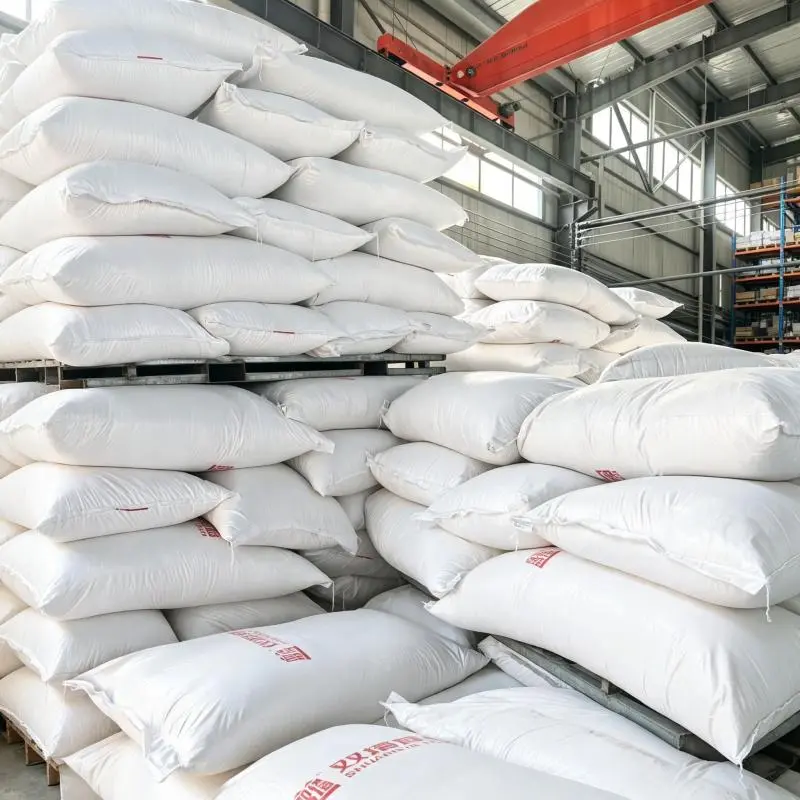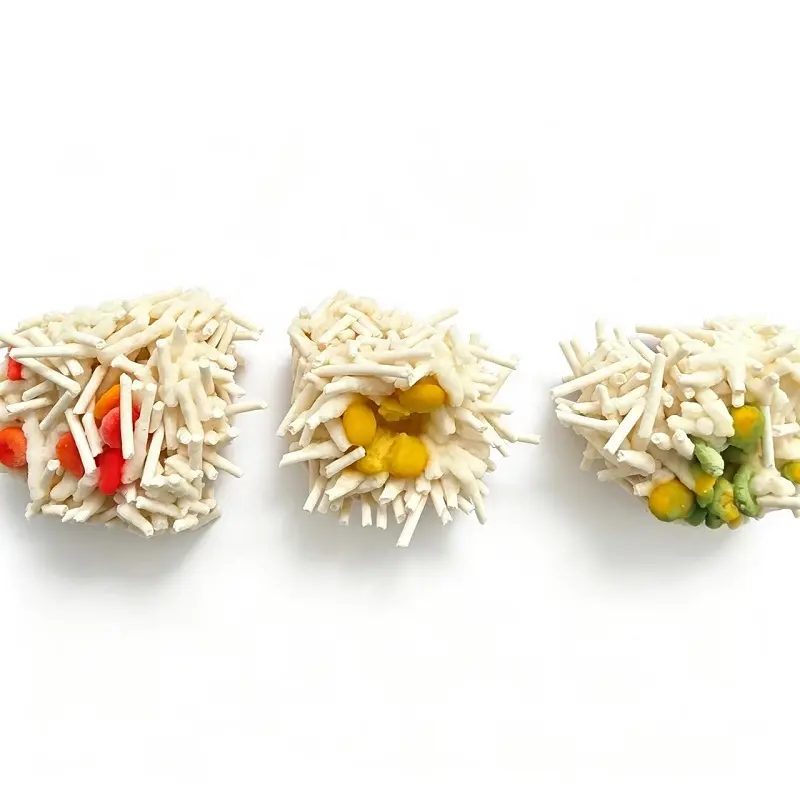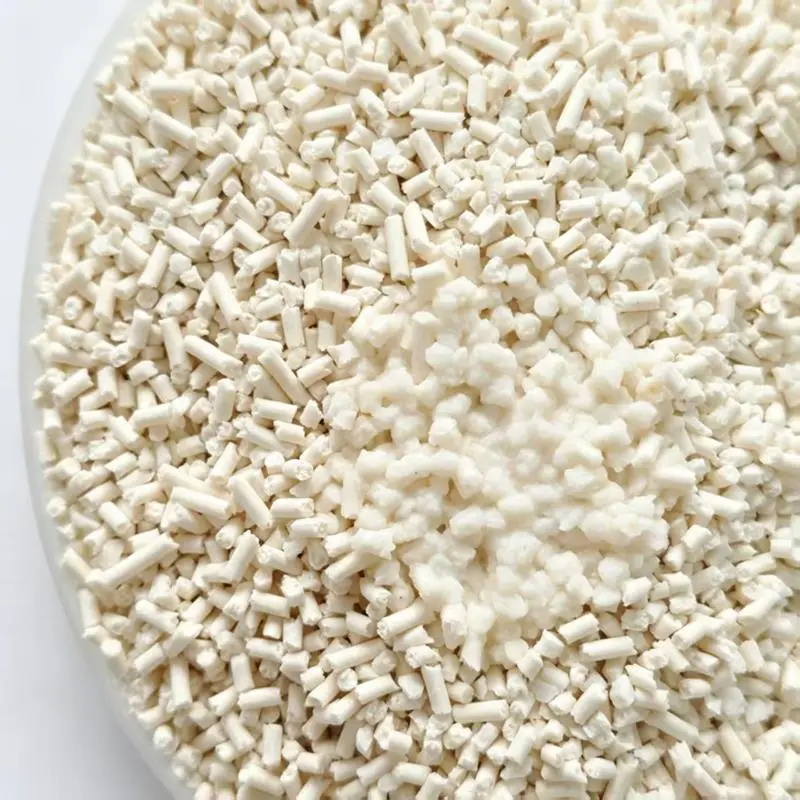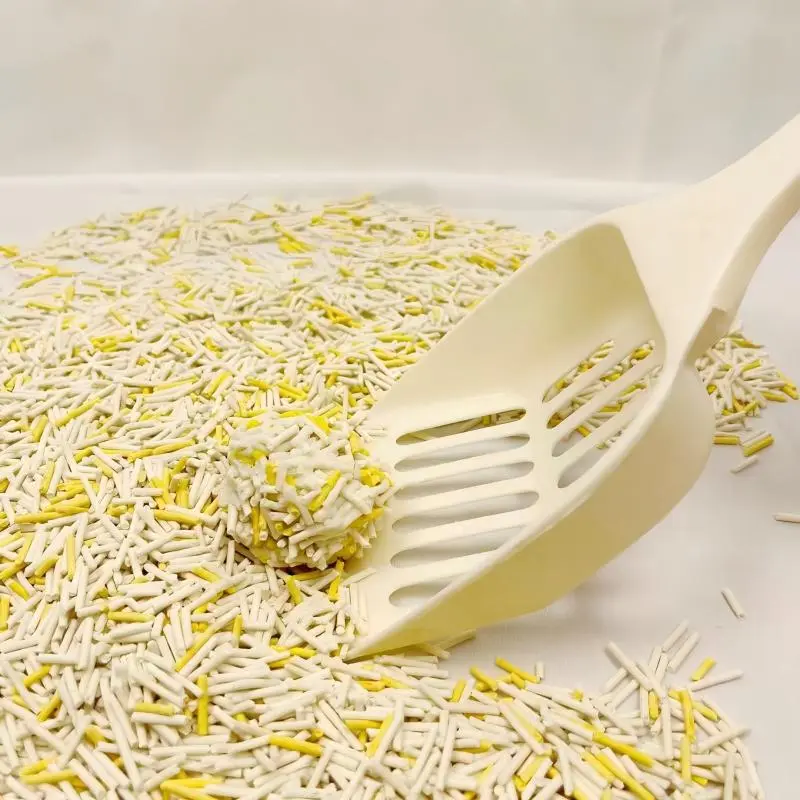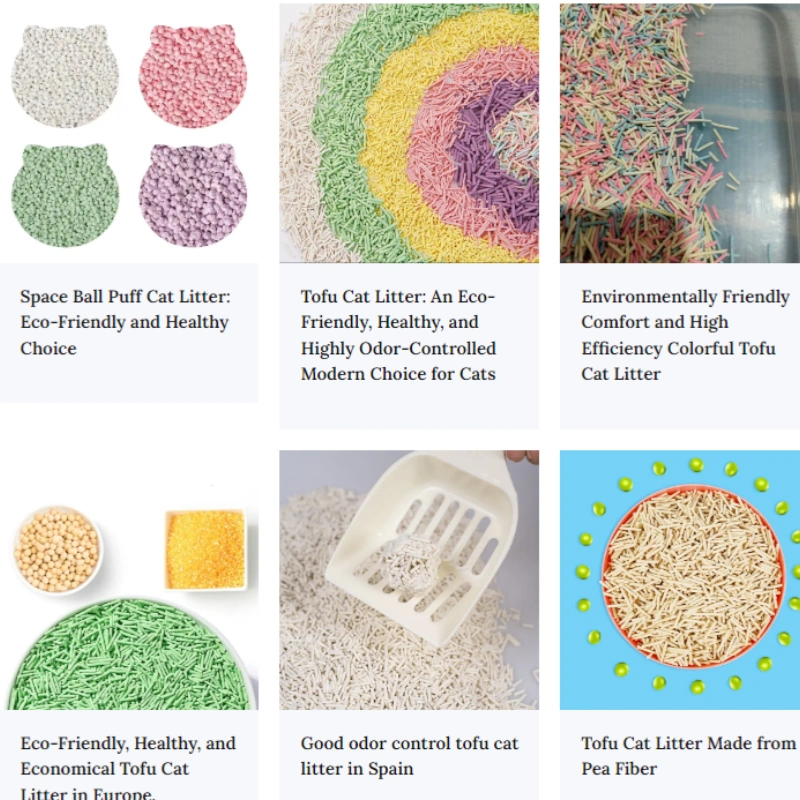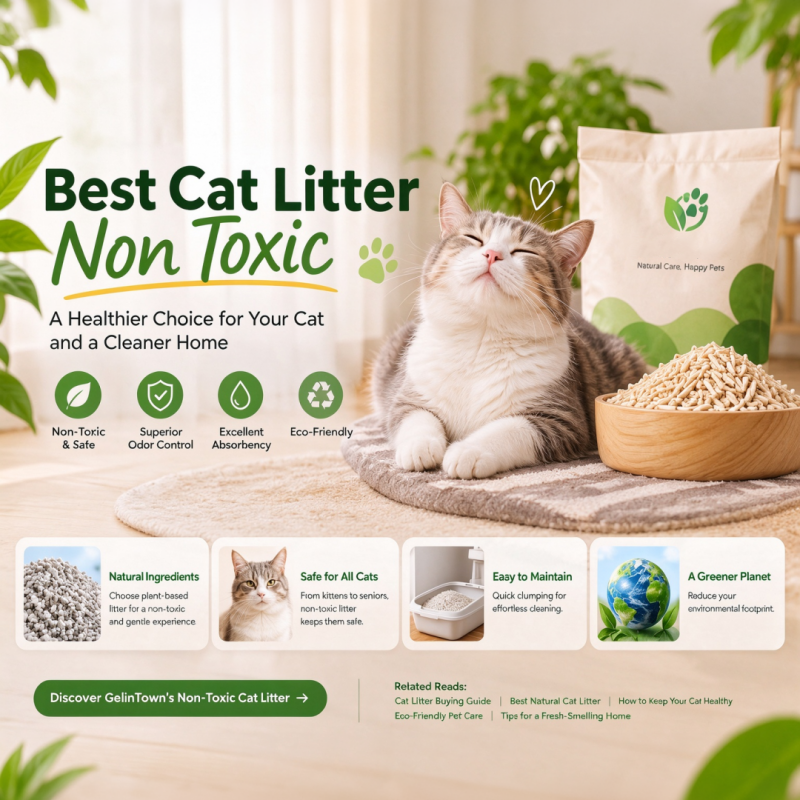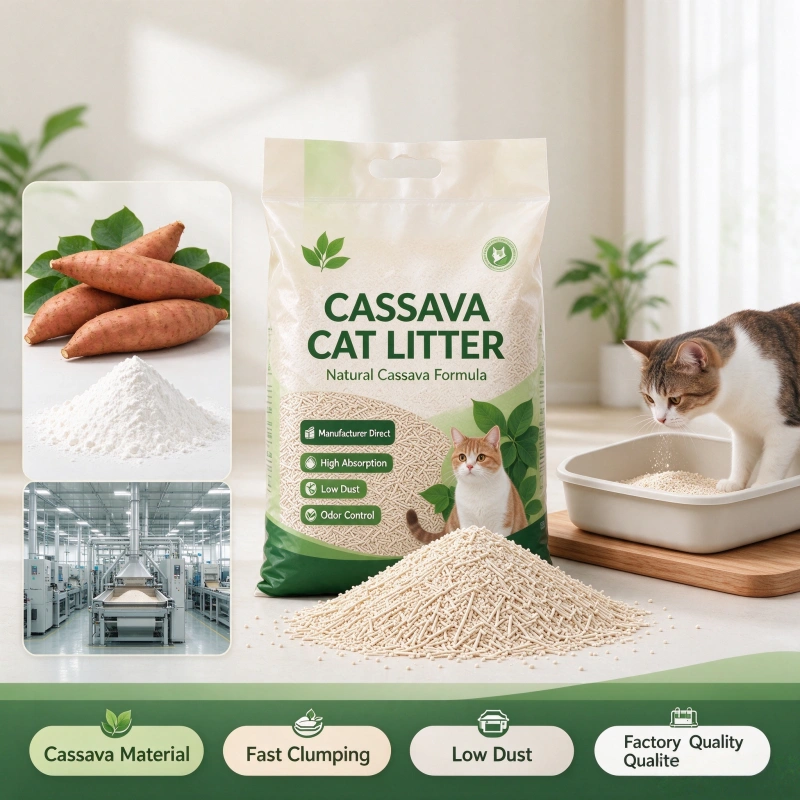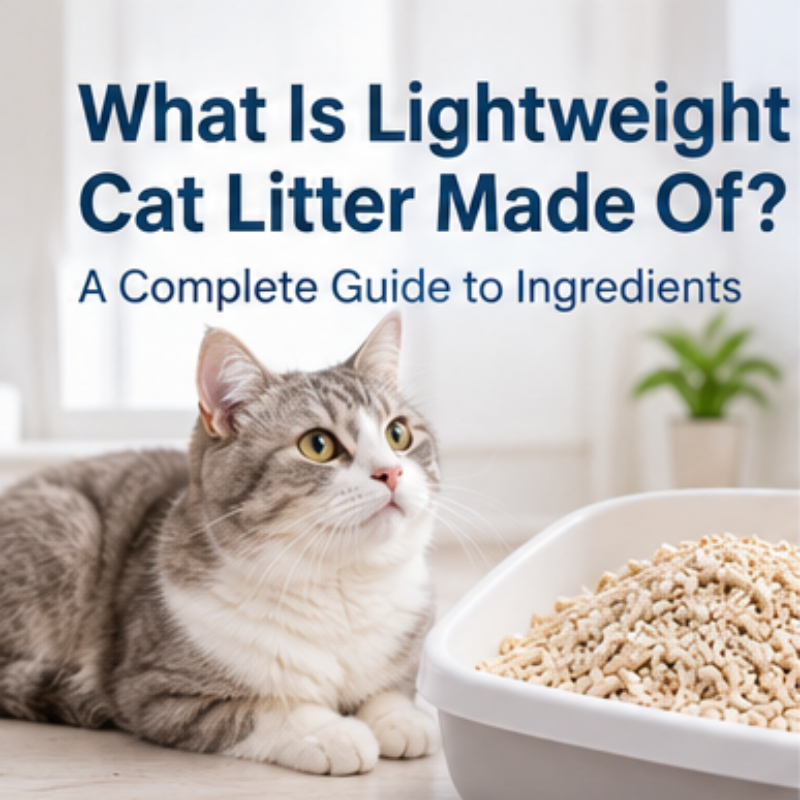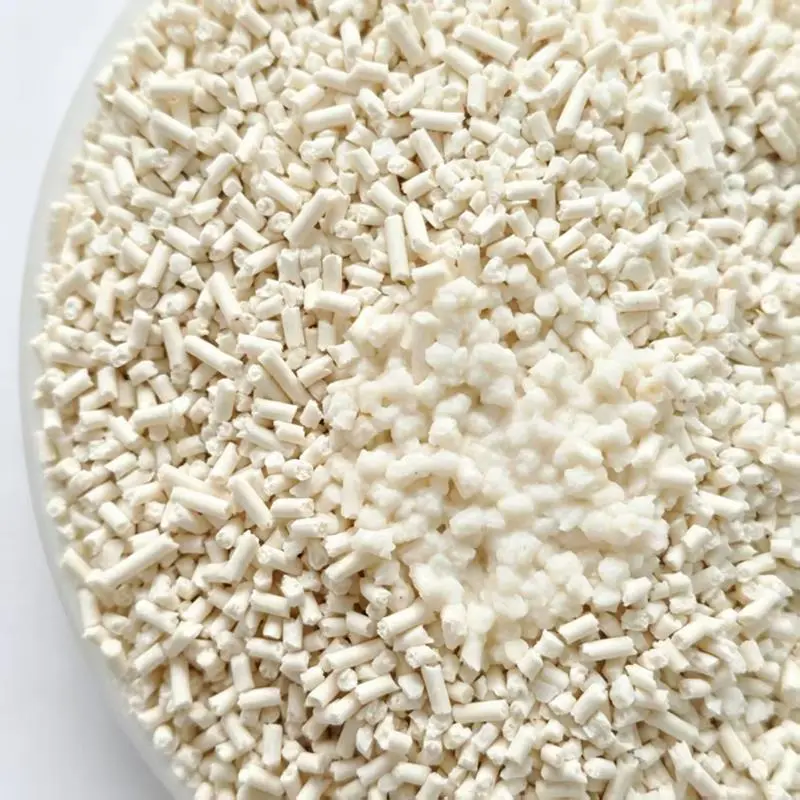
Tofu cat litter is made by processing plant-based fibers, starches, and suitable binding ingredients into absorbent granules. Although it is commonly associated with soybean by-products, commercial formulas may also use pea fiber, soybean fiber, corn starch, cassava starch, and other plant-derived materials.
The manufacturing process involves more than mixing ingredients and pressing them into pellets. Raw material quality, moisture control, formula consistency, extrusion, drying, cooling, and dust removal all influence the final product's absorption, clumping strength, pellet durability, and storage stability.
For pet brands, wholesalers, and distributors, understanding how tofu cat litter is manufactured also makes it easier to evaluate suppliers and compare product specifications.
This guide explains how tofu cat litter is made, what materials are used, how a commercial production line operates, and which quality checks matter before a product reaches the market.
Table of Contents
What Is Tofu Cat Litter Made Of?
Main Ingredients Used in Tofu Cat Litter
How to Make Tofu Cat Litter: 8 Manufacturing Steps
Equipment Used in Tofu Cat Litter Production
How Manufacturers Control Tofu Cat Litter Quality
Can You Make Tofu Cat Litter at Home?
How to Choose a Reliable Tofu Cat Litter Manufacturer
Frequently Asked Questions
1. What Is Tofu Cat Litter Made Of?
Tofu cat litter is a plant-based cat litter produced mainly from processed plant fibers and binding ingredients. The name comes from its traditional connection with tofu and soybean processing by-products, rather than from finished tofu being used as the main ingredient.
One commonly used material is okara, also known as soybean pulp. It is the fibrous residue left after soybeans are processed to make soy milk or tofu. Depending on the manufacturer and formula, other plant fibers can also be used.
For example, some commercial formulas combine pea fiber or soybean fiber with corn starch and guar gum to produce pellets with suitable cohesion and absorption performance.
The composition is not identical across all manufacturers. A premium clumping formula, an economy product, and a mixed plant-fiber litter may require different raw material combinations and processing conditions.
Gelin Town's tofu cat litter product range includes plant-fiber-based products with customizable specifications for different markets.
2. Main Ingredients Used in Tofu Cat Litter
The formula determines how the raw materials behave during production and how the finished pellets perform during use. Each ingredient has a different function.
2.1 Soybean Fiber and Okara
Soybean fiber is one of the traditional raw materials used in tofu cat litter.
It is obtained from soybean processing and provides a plant-fiber structure that can hold liquid and work with starch-based binders during pellet formation.
Before production, manufacturers need to check the condition of the material. Important considerations include:
Consistent moisture content.
Clean appearance without foreign materials.
Stable fiber characteristics between deliveries.
Appropriate grinding and particle-size consistency.
Suitable storage and handling conditions.
Fresh soybean pulp and commercially dried soybean fiber require different preparation procedures. Wet raw materials need appropriate dewatering and drying before they can be used reliably in a controlled production process.
2.2 Pea Fiber
Pea fiber is another plant-based material used in commercial tofu cat litter.
It can serve as a major fiber component or be blended with soybean-derived materials. Its characteristics influence the texture, structure, and processing behavior of the finished pellets.
Gelin Town offers tofu cat litter made from pea fiber, with customizable granule sizes and product specifications.
When comparing pea-fiber formulas, buyers should look beyond the ingredient name. Fiber processing, particle size, moisture, and the binder system all affect the finished product.
2.3 Corn Starch
Corn starch is commonly used as a binding ingredient.
During processing, moisture and heat help starch contribute to cohesion between the plant-fiber particles. This supports pellet formation and influences how the litter behaves when it comes into contact with liquid.
An unsuitable starch ratio can cause production problems. Depending on the fiber and processing conditions, pellets may become too weak, too hard, or inconsistent in structure.
2.4 Guar Gum and Other Binders
Some manufacturers use guar gum or other suitable binding materials to improve cohesion.
The binder system can influence:
Pellet strength.
Clump formation.
Water absorption behavior.
Resistance to breakage during transportation.
The way used litter breaks down in water.
There is no single binder ratio that works for every formula. The appropriate formulation depends on the plant fiber, starch type, target pellet size, extrusion equipment, and desired product performance.
2.5 Optional Functional Additives
Some formulas include additional materials to support specific product features.
Examples include activated carbon, baking soda, plant-derived deodorizing ingredients, fragrances, and colorants.
These ingredients are not essential to every tofu cat litter formula. They should only be included when they have a defined purpose and are compatible with the base formulation.
For private-label products, it is important to confirm the ingredient disclosure, intended function, and supporting test information for each additive.
3. How to Make Tofu Cat Litter: 8 Manufacturing Steps
Commercial tofu cat litter production generally follows a sequence of raw material preparation, batching, mixing, granulation, drying, cooling, screening, and packaging.
The exact equipment and operating parameters vary according to the raw material, formula, production capacity, and product specifications.
Step 1: Select and Inspect the Raw Materials
The first step is selecting suitable plant fibers, starches, and binding ingredients.
A manufacturer should establish clear incoming-material requirements rather than relying only on supplier descriptions.
Typical checks include:
Raw material identity and supplier traceability.
Moisture and appearance.
Foreign matter and contamination.
Odor and signs of deterioration.
Consistency between different material batches.
This step is particularly important when using agricultural or food-processing by-products. Different suppliers and processing conditions can produce fibers with different moisture levels and physical characteristics.
If raw material quality changes significantly, the same formula may behave differently during mixing and extrusion.
Step 2: Dry, Grind, and Prepare the Plant Fibers
Some materials need additional processing before mixing.
When wet soybean residue or other high-moisture fibers are used, they need suitable dewatering and drying. The prepared material is then ground or processed to achieve a more consistent particle structure.
This stage helps improve:
Material handling.
Mixing uniformity.
Extrusion consistency.
Finished pellet strength.
Grinding conditions should match the production formula. Excessively coarse material can create an uneven pellet structure, while an unsuitable fine-particle distribution may affect dust levels and water absorption.
The goal is not simply to make the smallest possible powder. It is to prepare a consistent raw material that can be processed reliably.
Step 3: Weigh and Mix the Ingredients
Prepared plant fibers, starches, and binders are weighed according to the production formula.
The ingredients are then transferred into an industrial mixer.
Uniform mixing is essential because different ingredient concentrations can create variations in pellet strength and performance. Water or other processing moisture may also be introduced in a controlled manner, depending on the production system.
Manufacturers should pay attention to:
Accurate ingredient weighing.
Consistent mixing time.
Uniform distribution of minor ingredients.
Controlled moisture addition.
Prevention of material accumulation inside the mixer.
A poorly mixed batch may produce pellets with different densities, uneven hardness, or inconsistent clumping behavior.
For OEM and ODM products, formula records and batch traceability are particularly important because customers may require multiple product specifications under the same brand.
Step 4: Extrude and Form the Pellets
After mixing, the prepared material enters a granulator or extrusion system.
The machine forces the material through a die or forming structure to create cylindrical pellets. A cutting mechanism then controls the pellet length.
The production system can be adjusted according to the required granule diameter and product design.
Common commercial tofu cat litter specifications include different pellet diameters such as 1.5 mm, 2.0 mm, and 3.0 mm. Actual available options depend on the manufacturer and production equipment.
Granule size influences several product characteristics:
| Product characteristic | What manufacturers should consider |
|---|---|
| Pellet diameter | Affects texture, contact area, and consumer preference |
| Pellet length | Influences appearance, handling, and product consistency |
| Pellet density | Can affect weight, absorption behavior, and package volume |
| Pellet hardness | Influences breakage during transport and scooping |
| Shape consistency | Helps create a more uniform retail product |
A smaller pellet is not automatically better, and a harder pellet does not necessarily provide better clumping. These characteristics need to be evaluated together with the intended application.
Step 5: Dry the Newly Formed Pellets
Freshly formed pellets contain residual moisture.
Drying reduces the moisture level and helps stabilize the finished product for storage and transportation.
Industrial drying systems may use different heating and air-circulation configurations. The correct operating conditions depend on the formula, pellet dimensions, initial moisture, dryer design, and target product specifications.
Both insufficient and excessive drying can create problems.
If pellets are not dried sufficiently:
Storage stability may be reduced.
Pellets may stick together.
Moisture variation may occur between packages.
Product deterioration may become more likely under unsuitable storage conditions.
If pellets are dried excessively:
The product may become brittle.
Handling and transportation may create more broken particles.
Fine particles may increase.
The intended clumping behavior may change.
Manufacturers therefore need to validate drying conditions using actual product measurements instead of applying one temperature setting to every formula.
Step 6: Cool the Pellets and Remove Dust
After drying, pellets need to cool before final screening and packaging.
Cooling allows the product temperature to stabilize and helps prevent freshly dried pellets from being packed while still too warm.
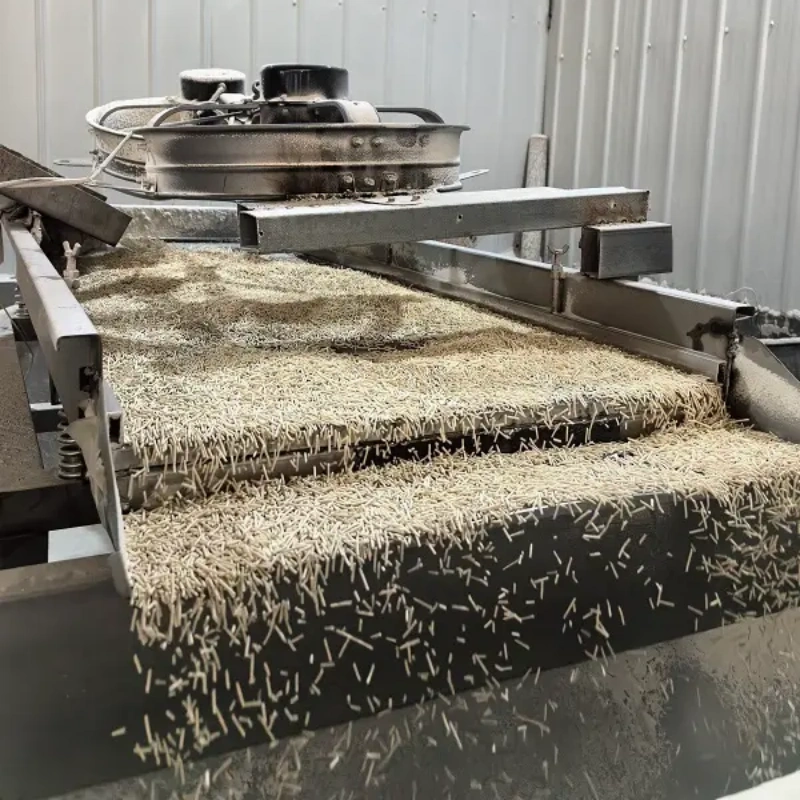
The product then passes through screening and dust-removal equipment.
This stage separates material according to particle size and removes excessive fines, broken pieces, and unsuitable particles.
A well-managed screening process helps improve:
Appearance consistency.
Package cleanliness.
Particle-size distribution.
Product handling and customer experience.
The removed fines and rejected material should be handled according to the manufacturer's documented production-control procedures. They should not be automatically mixed back into finished products without appropriate quality checks.
Step 7: Apply Optional Additives and Finalize the Formula
Depending on the product design, manufacturers may add fragrance or other functional ingredients during an appropriate stage of production.
The timing of additive application depends on the ingredient's properties and the manufacturing process.
For example, a fragrance-sensitive ingredient may require a different application method from a material incorporated into the initial dry mixture.
For a private-label project, buyers should decide in advance whether they need:
Unscented tofu cat litter.
Lightly scented formulas.
Activated-carbon or other deodorizing options.
Customized colors.
A specific plant-fiber combination.
Each variation should be evaluated as a distinct formulation. Changing a fragrance, binder, or functional additive can affect the product's processing behavior and finished performance.
Step 8: Inspect, Weigh, and Package the Finished Product
The final step is finished-product inspection and packaging.
Qualified product is transferred to automatic or semi-automatic weighing and bagging equipment. Packaging formats can include retail bags, bulk bags, and customized private-label packaging.
Packaging should protect the litter from excessive moisture during storage and distribution.
Before shipment, manufacturers should verify:
Correct product identification.
Accurate net weight.
Appropriate packaging material.
Sealed bags without visible damage.
Correct labels, barcodes, and batch information.
Carton condition and shipment quantity.
For international orders, packaging specifications should also be checked against the buyer's destination-market requirements.
4. Equipment Used in Tofu Cat Litter Production
A commercial tofu cat litter factory needs a production system that supports consistent material preparation, pellet formation, moisture control, and finished-product handling.
The equipment configuration depends on the formula and production capacity.
| Equipment | Main function | Why it matters |
|---|---|---|
| Raw material storage and feeding system | Stores and transfers ingredients | Supports controlled material handling |
| Crusher or grinder | Processes plant fibers | Improves particle-size consistency |
| Weighing and batching system | Measures ingredients | Reduces formula variation |
| Industrial mixer | Blends fibers, starch, and binders | Improves mixture uniformity |
| Extruder or granulator | Forms pellets | Controls pellet structure and output |
| Cutting system | Adjusts pellet length | Helps maintain product specifications |
| Dryer | Reduces residual moisture | Supports storage stability |
| Cooling conveyor | Stabilizes pellet temperature | Prepares pellets for screening |
| Vibrating screen | Separates particles by size | Removes fines and unsuitable particles |
| Dust collection system | Collects airborne and separated fines | Supports product cleanliness and workshop management |
| Automatic packing machine | Weighs and seals finished litter | Improves packaging efficiency and consistency |
A factory should not select equipment based on machine capacity alone. The production line must be compatible with the actual raw materials, product specifications, energy supply, workshop layout, and expected order volume.
To learn more about Gelin Town's production facilities, visit its tofu cat litter factory introduction and cat litter factory profile.

5. How Manufacturers Control Tofu Cat Litter Quality
A good-looking pellet does not necessarily mean a high-performing product.
For importers and private-label brands, the most useful approach is to evaluate the product through a documented quality-control process.
The following checks provide a practical framework for comparing samples and approving production batches.
5.1 Raw Material Inspection
Incoming materials should be checked before entering production.
Important records include supplier information, material specifications, batch identification, moisture results, and relevant contamination checks.
This helps manufacturers investigate product variations when raw materials change.
5.2 Moisture Content
Moisture content is an important indicator of product stability.
Manufacturers should define an appropriate moisture specification for each formula and use a consistent measurement method.
When comparing suppliers, request both the moisture result and the test method. Two suppliers may report different values because of different sampling or testing procedures.
5.3 Water Absorption
Water absorption can be measured by comparing the sample's dry mass with its mass after absorbing a defined quantity of liquid under controlled conditions.
One common calculation is:
Water absorption (%) = (Absorbed liquid mass ÷ Initial dry sample mass) × 100
For example, if a 10 g dry sample retains 30 g of liquid under the agreed test conditions, the calculated absorption rate is 300%.
This is an illustrative calculation, not a guaranteed result for any particular product.
The test liquid, sample weight, contact time, drainage procedure, and test temperature should remain consistent when comparing products. A higher absorption percentage does not automatically mean better performance in every litter box.
5.4 Clumping Speed and Clump Strength
For clumping tofu cat litter, the product should absorb liquid and form a clump that can be removed without excessive crumbling.
A practical comparison should use:
The same amount of litter in each test container.
The same measured liquid volume.
The same contact time.
The same scoop or removal method.
The same procedure for checking clump breakage.
Recording both clumping time and clump integrity provides more useful information than relying on a general claim such as "fast clumping."
5.5 Dust and Fine Particle Content
Dust performance is influenced by raw material preparation, pellet hardness, drying conditions, screening, and transportation.
A manufacturer should define how dust or fines are collected and measured. The sampling method and sieve specifications should also be recorded.
The term "dust-free" should not replace an actual test result. Buyers should request a measured figure and understand what the supplier includes in its dust calculation.
5.6 Pellet Strength and Transportation Performance
Even if a sample performs well in a small laboratory test, it may break during long-distance transportation.
Manufacturers should examine pellet breakage after handling, loading, packaging, and simulated transportation where appropriate.
This is especially important for exporters and distributors buying container quantities.
5.7 Packaging and Storage Stability
Finished tofu cat litter should be packed in suitable moisture-resistant packaging.
A manufacturer should also evaluate whether the product maintains its specified appearance, flowability, and performance under the agreed storage conditions.
For importers, it is useful to request batch records and product samples from the actual production run rather than approving a development sample alone.
Important: There is no single universal specification that automatically makes every tofu cat litter product high quality. Buyers and manufacturers should agree on the test method, sampling procedure, and acceptance limits for each product. For a more detailed evaluation framework, see our OEM/ODM Tofu Cat Litter Buying Guide.
6. Can You Make Tofu Cat Litter at Home?
It is technically possible to experiment with a small plant-fiber pellet sample at home, but making a consistent commercial-quality tofu cat litter product is much more difficult.
A simplified small-scale experiment might involve:
Obtaining a clean plant-fiber material suitable for the intended formulation.
Removing excess moisture and drying the material thoroughly.
Grinding it into a consistent particle size.
Mixing it with a suitable starch-based binder.
Adding a controlled amount of moisture to support pellet formation.
Forming small pellets with simple pelletizing equipment.
Drying, cooling, and screening the sample.
However, this process does not guarantee a product that is hygienically suitable, low in dust, strongly clumping, or stable during storage.
There are several important limitations:
Raw material hygiene: Food-processing by-products can deteriorate if they are stored or handled improperly.
Moisture control: Household drying methods may not produce a consistent result throughout the sample.
Pellet strength: A homemade mixture may crumble easily during handling.
Performance consistency: Different batches may have very different absorption and clumping behavior.
Quality verification: Home preparation does not replace appropriate testing for dust, moisture, contamination, and storage stability.
For these reasons, homemade samples should not automatically be treated as suitable long-term cat litter or commercial products. Raw wet soybean pulp should not simply be placed in a litter box.
For a retail brand, wholesale business, or export project, working with a qualified manufacturer is a more practical route to consistent product quality.

7. How to Choose a Reliable Tofu Cat Litter Manufacturer
For importers, wholesalers, distributors, and private-label pet brands, choosing a manufacturing partner involves more than finding the lowest price per bag.
The supplier must be able to produce the required formula consistently, maintain quality records, and support packaging and delivery requirements.
Here are seven questions worth asking before placing a bulk order.
7.1 What Raw Materials Does the Factory Use?
Ask whether the product is primarily soybean-based, pea-fiber-based, or made from a combination of plant fibers.
Request a clear ingredient description and check whether the same formulation will be maintained during repeat orders.
7.2 Can the Factory Customize Pellet Specifications?
Confirm the available diameter, length, hardness, color, and packaging options.
Gelin Town's OEM/ODM tofu cat litter offers configurable product specifications, including different pellet sizes and packaging options.
7.3 Does the Supplier Provide Test Results?
Request relevant data for moisture, absorption, clumping, dust, and other agreed quality indicators.
The results should identify the test method and sample or batch whenever possible.
7.4 Can the Manufacturer Support Different Cat Litter Formulas?
A supplier with broader product-development capabilities may be able to support different market positions.
For example, some buyers may prefer a conventional tofu formula, while others may want to compare crushed tofu cat litter, mixed cat litter, or other plant-fiber formulations.
A formula change should be tested rather than assumed to deliver the same performance.
7.5 Can the Factory Provide Private-Label Packaging?
For private-label projects, discuss:
Bag material and size.
Net weight and volume labeling.
Custom logo and artwork.
Barcode and retail information.
Carton specifications.
Destination-market labeling requirements.
You can also review the manufacturer's private-label and OEM soy cat litter service.
7.6 Does the Supplier Have Manufacturing Capacity and Quality Procedures?
Ask about production facilities, quality-control responsibilities, batch management, and the ability to handle repeat orders.
Gelin Town states that Shandong Gelin Town Pet Products Co., Ltd. was established in 2020 and operates a production area of approximately 16,000 square meters, with an annual capacity of approximately 7,000 tons. The company's product range also includes plant-based cat litter, corn cat litter, and other litter products.
For additional background, visit the company's About Us page.
7.7 Can the Manufacturer Support Long-Term Supply?
A supplier should be able to discuss production planning, raw material sourcing, packaging availability, lead times, and repeat-order quality control.
A sample approval should be followed by a clear product specification and written acceptance criteria. This makes it easier for both parties to manage changes and maintain consistency.
8. Frequently Asked Questions About Making Tofu Cat Litter
Q1. What is the main ingredient in tofu cat litter?
The main ingredient is usually a plant-based fiber, such as soybean fiber, soybean residue, or pea fiber. Starches and binders are often added to help form and strengthen the pellets. The exact formula varies between manufacturers.
Q2. Is tofu cat litter made from real tofu?
Not usually. The name refers to its traditional association with tofu production. Many products use soybean-processing by-products or other plant fibers rather than finished tofu.
Q3. How long does it take to manufacture tofu cat litter?
The time depends on the raw material moisture, formula, production capacity, extrusion system, drying equipment, and packaging arrangement. A factory should calculate its production schedule using the actual process and order requirements rather than relying on one universal manufacturing time.
Q4. Why does tofu cat litter sometimes become dusty?
Dust may come from inconsistent raw materials, unsuitable grinding, weak pellets, excessive drying, poor screening, or breakage during transportation. Dust levels should be measured using a consistent method instead of relying on visual appearance alone.
Q5. What determines the clumping performance of tofu cat litter?
Clumping depends on the plant-fiber structure, starch and binder system, pellet dimensions, moisture, and processing conditions. A suitable test should evaluate both clumping speed and the strength of the formed clump.
Q6. Is all tofu cat litter biodegradable and flushable?
No. Plant-based ingredients do not automatically prove that a finished product is biodegradable under every disposal condition or safe to flush through every toilet system. These claims should be supported by product-specific testing and local disposal requirements. Users should follow the product label and local wastewater guidance.
Q7. Can I order customized tofu cat litter under my own brand?
Yes. Many manufacturers provide OEM and ODM services. Buyers can discuss raw materials, pellet size, color, fragrance, packaging weight, bag design, and other product requirements before sample development and bulk production.

Conclusion: The Quality of Tofu Cat Litter Starts with the Manufacturing Process
Tofu cat litter manufacturing involves a coordinated process that begins with plant-fiber selection and continues through formula mixing, extrusion, drying, cooling, screening, and packaging.
Every stage can affect the final product. Consistent raw materials help stabilize the formula. Controlled moisture supports product stability. Suitable extrusion and drying conditions help maintain pellet structure. Screening and finished-product testing help control dust, particle variation, and packaging quality.
For buyers, the most reliable way to evaluate tofu cat litter is to look beyond promotional descriptions. Request samples, review test methods, confirm product specifications, and establish measurable acceptance criteria before bulk production.
Gelin Town Pet provides tofu cat litter manufacturing, OEM, and ODM services for international pet brands, wholesalers, and distributors. Contact our team to discuss raw materials, pellet specifications, and customized packaging for your market.
Explore our tofu cat litter products or contact Gelin Town Pet to discuss your project.
Company Introduction: Gelin Town
Gelin Town is a leading manufacturer specializing in the production of high-quality tofu cat litter. Based in China, our factory is dedicated to creating eco-friendly, efficient, and safe cat litter solutions. With a commitment to sustainability and innovation, Gelin Town has established itself as a trusted name in the pet care industry.
Our Commitment
At Gelin Town, we are dedicated to producing top-tier tofu cat litter that not only meets the needs of pet owners but also supports environmental sustainability. Our mission is to deliver high-quality, eco-friendly cat litter that ensures the well-being of pets and peace of mind for their owners.
Contact Us
To learn more about our products or to discuss your specific cat litter needs, please visit our website or contact our customer service team. Gelin Town is here to provide you with the best in pet care solutions.
Call Us
+8615589218666
Email Us
info@sdgelin.cn
Office Address
Room103,Building3,Jinshui chang Street(Internet Town), Zaozhuang High-tech Zone, Zaozhuang City, Shandong Province, China