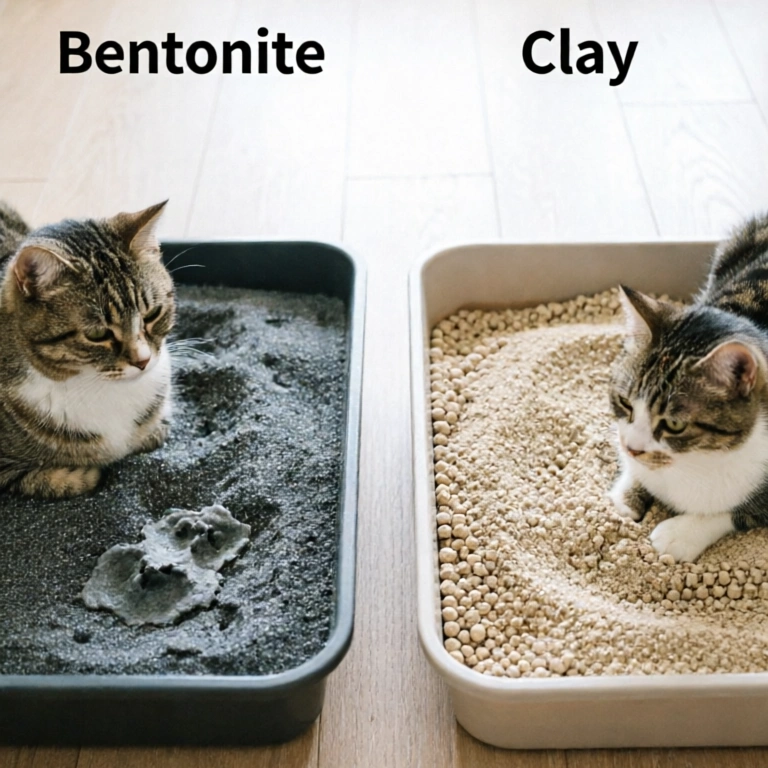
If you've been shopping for cat litter, you've probably come across the terms "bentonite cat litter" and "clay cat litter." Many pet owners assume they are exactly the same product, while others believe bentonite is a completely different material. The reality lies somewhere in between.
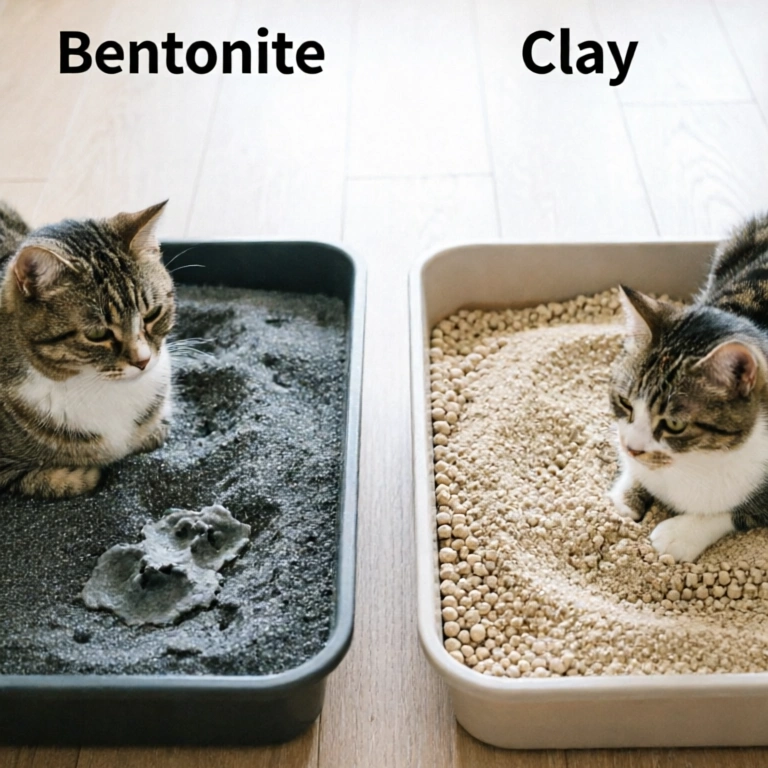
Bentonite is actually a type of clay, but not all clay cat litter is made from bentonite. This distinction significantly affects clumping ability, odor control, dust production, lifespan, price, and overall user experience. Understanding these differences helps cat owners choose the right litter for their pets and helps wholesalers, retailers, and private-label brands select products that meet different market demands.
This comprehensive guide compares bentonite cat litter and traditional clay litter from every important angle, including raw materials, manufacturing processes, performance, safety, environmental impact, cost, and long-term value.
Understanding Clay Cat Litter
Clay cat litter is a broad category rather than a specific product.
The word "clay" refers to several naturally occurring minerals that absorb moisture. Different manufacturers may use different types of clay depending on local mineral resources and production costs.
Common clay minerals include:
Bentonite
Fuller’s Earth
Attapulgite
Sepiolite
Kaolin
Calcium clay
Traditional clay litter generally absorbs urine but does not always form hard clumps.
Before the invention of clumping litter in the 1980s, most cat litters consisted of absorbent non-clumping clay that required frequent complete replacement.
Today, clay litter can be divided into two main categories:
Non-clumping clay litter
Clumping bentonite clay litter
Therefore, bentonite litter belongs to the clay family, but represents a more advanced product category.
What Is Bentonite Cat Litter?
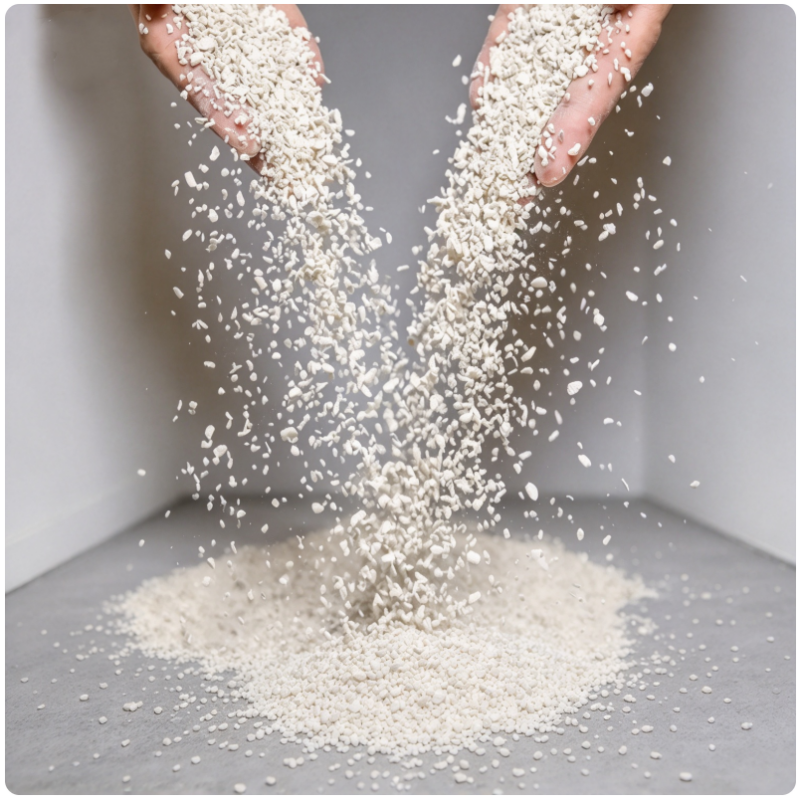
Bentonite cat litter is manufactured primarily from sodium bentonite or calcium bentonite, both of which originate from volcanic ash deposits.
The defining characteristic of bentonite is its remarkable swelling ability.
When liquid contacts bentonite particles, they rapidly absorb moisture and expand several times their original size, forming solid clumps around urine.
These clumps remain intact during scooping, allowing only contaminated litter to be removed while leaving clean litter behind.
Because of this unique property, bentonite has become the dominant raw material for premium clumping cat litter worldwide.
Bentonite Is a Type of Clay—But Not All Clay Is Bentonite
This is perhaps the most important concept for consumers.
Think of it this way:
All bentonite is clay.
Not all clay is bentonite.
Just as all apples are fruit but not all fruit are apples, bentonite represents one specialized category within the larger clay family.
The confusion often comes from product packaging. Many manufacturers simply label their products as "clay cat litter," even when bentonite is the primary ingredient.
Reading the ingredient list provides the most accurate information.
Raw Material Comparison
Traditional Clay
Traditional clay litter may contain several naturally occurring minerals.
Characteristics include:
Lower swelling capacity
Moderate absorption
Non-clumping performance
Stable particle shape
Lower raw material cost
Different mining regions produce different clay compositions, resulting in varying product quality.
Bentonite
Bentonite contains a high percentage of montmorillonite, which gives it exceptional water absorption and expansion properties.
Characteristics include:
Extremely high absorbency
Rapid clump formation
Strong odor locking
Excellent moisture retention
High swelling ratio
These mineral characteristics explain why bentonite dominates the premium cat litter market.
Manufacturing Process Comparison
Although both products originate from natural clay deposits, manufacturing methods differ considerably.
Clay Litter Production
Traditional clay litter typically follows these steps:
Clay mining
Crushing
Drying
Screening
Particle grading
Packaging
Because non-clumping litter requires fewer performance characteristics, processing is relatively straightforward.
Bentonite Litter Production
Premium bentonite litter involves additional manufacturing stages:
High-grade ore selection
Fine crushing
Moisture adjustment
Dust removal
Particle shaping
Granule strengthening
Activated carbon blending (optional)
Fragrance addition (optional)
Quality inspection
Automated packaging
These extra processes improve clumping consistency and reduce dust.
Absorption Performance
Absorption is where bentonite clearly outperforms most traditional clay litters.
Traditional Clay
Ordinary clay absorbs liquid into individual particles.
As the particles become saturated, urine spreads through the litter box.
Eventually the entire litter bed becomes contaminated, requiring complete replacement.
Bentonite
Bentonite rapidly surrounds urine with expanding clay particles.
The moisture remains concentrated inside compact clumps.
Only these clumps need removal.
Typical absorption comparison:
| Feature | Bentonite | Traditional Clay |
|---|---|---|
| Water absorption | 250–350% | 80–150% |
| Clumping | Excellent | Usually none |
| Waste removal | Scoop clumps | Replace entire box |
| Odor spread | Minimal | Higher |
Clumping Ability
This represents the biggest practical difference.
Traditional clay generally breaks apart when scooped because absorbed moisture disperses throughout the litter.
Bentonite creates firm, durable clumps that hold together during cleaning.
Benefits include:
Easier scooping
Less wasted litter
Cleaner litter boxes
Reduced bacterial growth
Better hygiene
For households with multiple cats, strong clumping significantly reduces maintenance time.
Odor Control Comparison
Cat urine produces ammonia as it decomposes.
The faster moisture is isolated, the better odors remain under control.
Traditional Clay
Because urine spreads throughout the litter, odor gradually increases.
Manufacturers often compensate by adding fragrances.
Bentonite
The clumping mechanism physically traps moisture inside solid masses.
Many premium bentonite products also include:
Activated carbon
Baking soda
Zeolite minerals
Natural deodorizing agents
As a result, odor control generally lasts much longer.
Dust Levels
Dust remains one of the most discussed issues in cat litter selection.
However, the comparison depends heavily on manufacturing quality.
Low-Quality Clay
May generate considerable dust due to irregular particle sizes.
Premium Bentonite
Modern production technologies include:
Multiple dust extraction systems
Air classification
Particle polishing
Granule reinforcement
Many premium bentonite products achieve dust levels below 1%.
Therefore, consumers should compare actual dust specifications rather than assuming one material is always cleaner.
Cleaning Convenience
Traditional clay litter requires:
Stirring
Frequent replacement
More washing
Bentonite litter allows:
Daily scooping
Partial replenishment
Less frequent complete replacement
For busy households, this convenience becomes a major advantage.
Cost Comparison
Initial purchase price does not tell the full story.
Traditional Clay
Advantages:
Lower retail price
Simple manufacturing
Lower transportation cost
Disadvantages:
Frequent replacement
Higher overall consumption
Bentonite
Advantages:
Longer service life
Lower monthly consumption
Better long-term value
Disadvantages:
Higher purchase price
Many consumers discover that premium bentonite actually costs less over time because less litter is discarded.
Safety Comparison
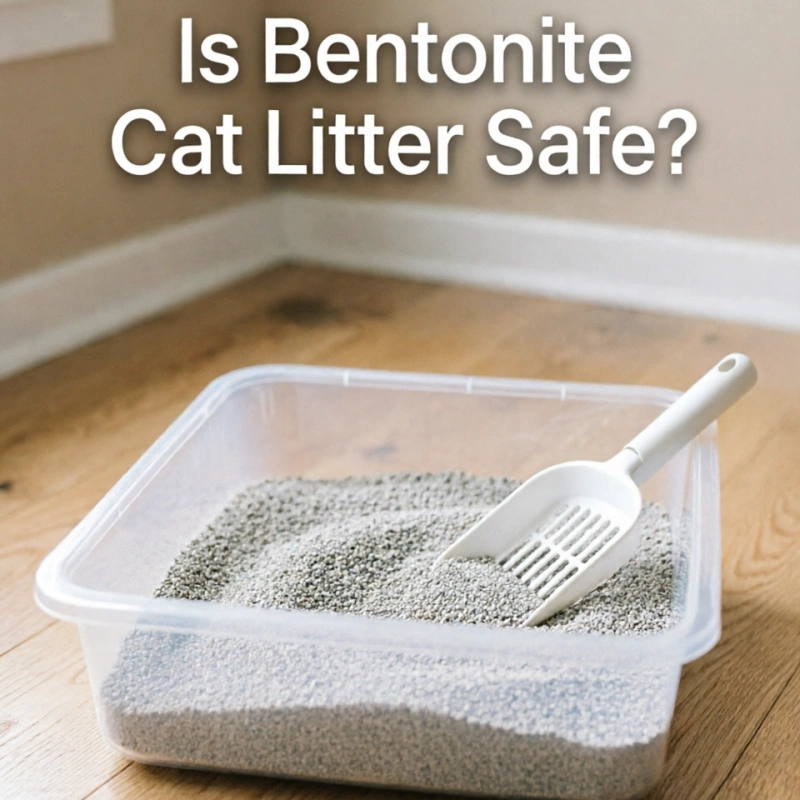
Both materials are generally considered safe when produced according to quality standards.
Bentonite Safety
Benefits include:
Chemically inert
Non-toxic
Stable mineral structure
Potential concerns:
Dust inhalation
Kittens eating clumping litter
Poor-quality products with excessive dust
Traditional Clay Safety
Benefits:
Simple mineral composition
Lower swelling
Potential concerns:
Dust
Faster bacterial growth due to saturated litter
More frequent handling
For healthy adult cats, both products are considered safe under normal use.
Environmental Impact
Environmental sustainability has become increasingly important.
Traditional Clay
Pros:
Natural mineral
Cons:
Mining required
Non-biodegradable
Higher consumption
Bentonite
Pros:
Longer lifespan
Less overall litter usage
Reduced waste volume
Cons:
Mining operations
Landfill disposal
Non-renewable mineral
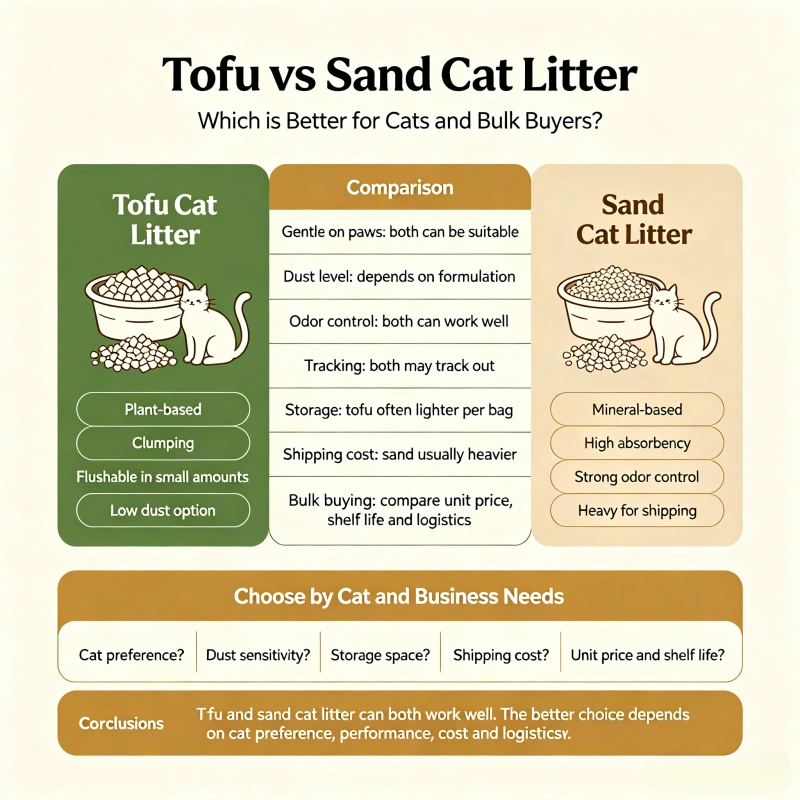
Plant-based alternatives such as tofu, corn, cassava, and wood litter generally offer better biodegradability but often sacrifice some clumping performance.
Weight Comparison
Traditional clay and bentonite are both relatively heavy compared with plant-based litter.
However, bentonite often requires smaller replacement quantities because only clumps are removed.
Many manufacturers now produce lightweight bentonite formulas using advanced processing technologies.
These products reduce shipping costs while maintaining strong clumping performance.
Suitable Users
Traditional Clay Is Best For
Budget-conscious buyers
Temporary use
Large-scale shelters replacing litter frequently
Owners who prefer complete litter replacement
Bentonite Is Best For
Multi-cat households
Busy families
Apartment living
Better odor control
Longer maintenance intervals
Premium pet stores
Market Trends
Global consumer preferences increasingly favor high-performance clumping litter.
Market research indicates that clumping bentonite litter now represents the majority of cat litter sales in North America, Europe, Japan, South Korea, and many emerging markets.
Recent product innovations include:
Low-dust bentonite
Activated carbon bentonite
Lavender-scented bentonite
Baby powder fragrance
Multi-cat formulas
Lightweight bentonite
Antibacterial bentonite
Traditional non-clumping clay continues to serve price-sensitive markets but experiences slower growth.
Side-by-Side Comparison
| Feature | Bentonite Cat Litter | Traditional Clay Litter |
| Material | Bentonite clay | Various clay minerals |
| Clumping | Excellent | Usually none |
| Absorption | Very high | Moderate |
| Odor control | Excellent | Moderate |
| Cleaning | Scoop clumps | Replace entire litter |
| Usage life | Long | Short |
| Dust | Low in premium grades | Depends on quality |
| Monthly consumption | Lower | Higher |
| Initial price | Higher | Lower |
| Long-term cost | Lower | Higher |
| Popularity | Very high | Declining |
Which One Should You Choose?
The answer depends on your priorities.
If your goal is the lowest purchase price, traditional clay litter may be sufficient.
However, if you value convenience, cleanliness, odor control, and overall performance, bentonite cat litter offers clear advantages.
For households with multiple cats, premium bentonite usually provides better value despite its slightly higher upfront cost.
Consumers should also remember that manufacturing quality matters just as much as raw material. A high-quality bentonite litter with low dust and strong clumping will outperform many inexpensive alternatives, while poorly processed bentonite may not deliver its full potential.
Final Thoughts
Although the terms "bentonite cat litter" and "clay cat litter" are often used interchangeably, they are not identical. Bentonite is one specialized type of clay distinguished by its exceptional swelling and clumping abilities. Traditional clay litter includes a broader range of minerals that typically absorb moisture without forming firm clumps.
In practical use, bentonite cat litter excels in absorbency, odor control, cleaning convenience, and long-term cost efficiency. Traditional clay litter remains a viable option for budget-conscious consumers but generally requires more frequent replacement and offers lower overall performance.
Understanding this distinction allows pet owners to choose products based on real performance rather than confusing marketing terminology. As manufacturing technology continues to improve, premium low-dust bentonite litter is expected to remain the preferred choice for cat owners seeking the best balance of hygiene, convenience, safety, and value.
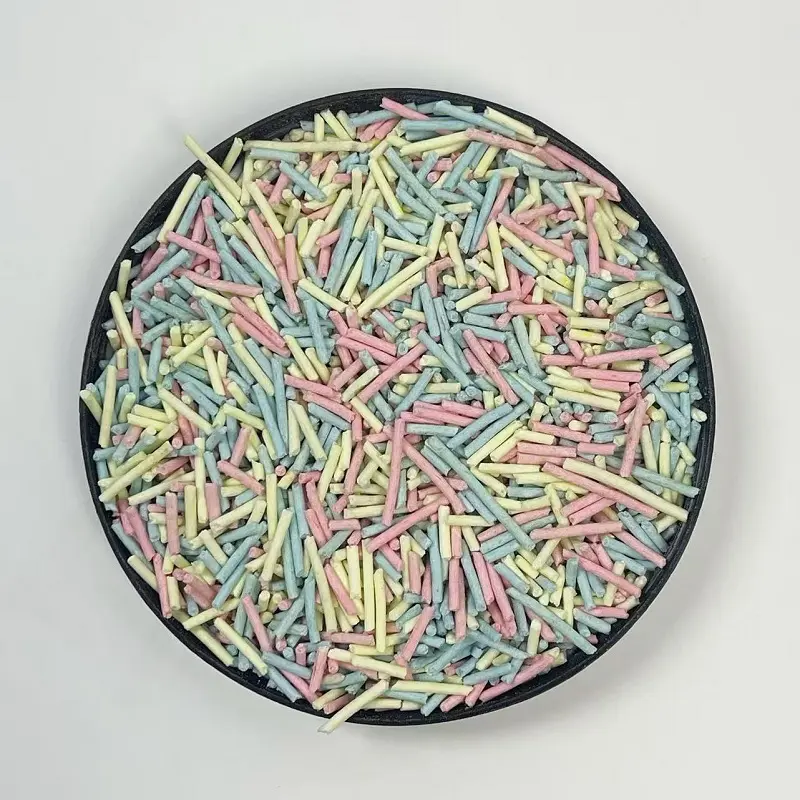
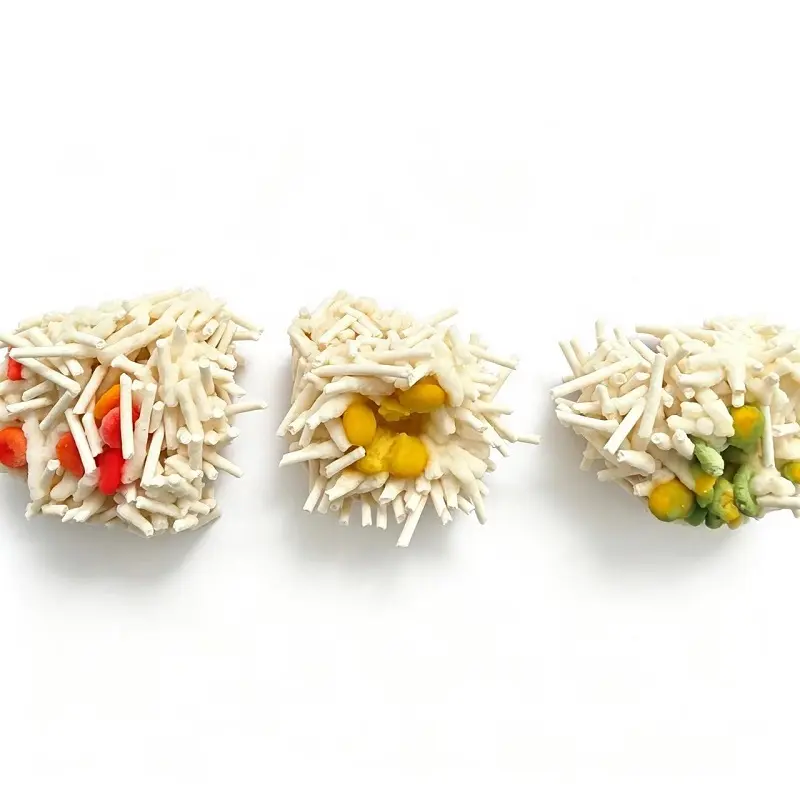
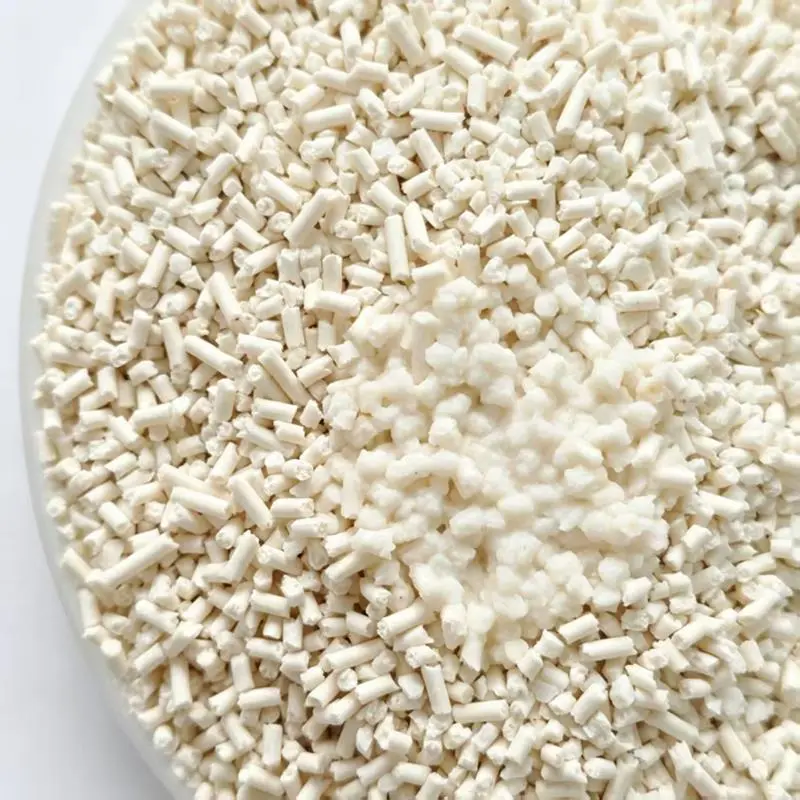
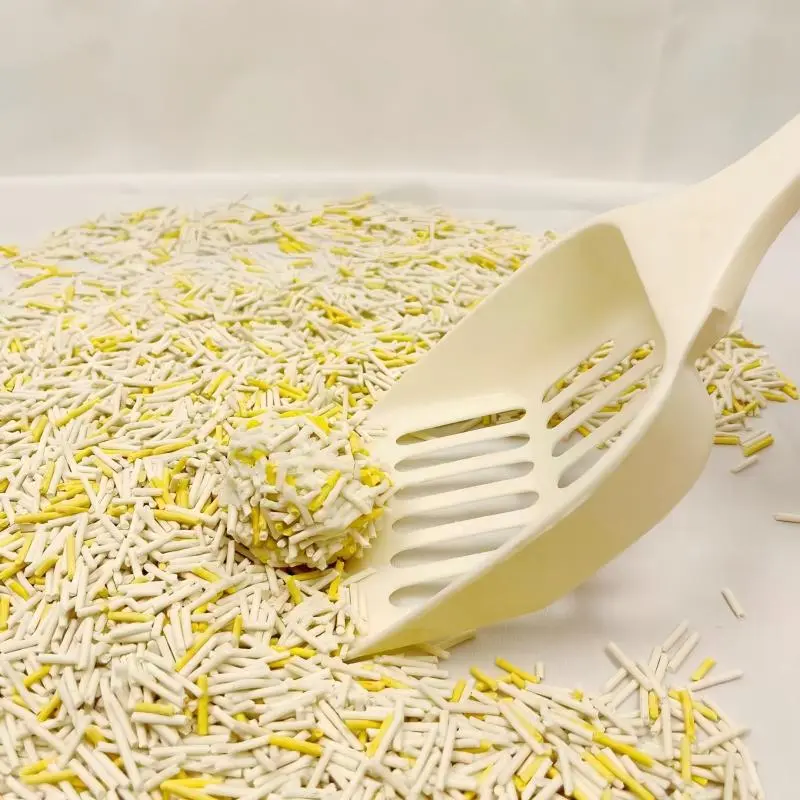
Cat litter is an essential item for cat owners. In addition to these two types of cat litter, tofu cat litter is a more premium option, and of course, it will be more expensive. The choice is up to you, depending on your budget.
387.webp)