Looking for a reliable manufacturer of 2.0mm tofu cat litter for your private-label pet brand?
Gelin Town Pet provides tofu cat litter manufacturing and private-label solutions for pet brands, importers, wholesalers, distributors, and retailers. Our product specifications include 1.5mm, 2.0mm, and 3.0mm pellet diameters, allowing buyers to develop different product formats for their target markets.
Our published tofu cat litter formulation includes pea fiber, soybean fiber, corn starch, and guar gum. Customers can discuss customized colors, packaging, and product specifications according to their project requirements.
A 2.0mm pellet is a useful product specification for brands seeking a middle-size option between finer and larger tofu litter formats. However, pellet diameter alone does not determine absorption, clumping strength, dust, or tracking. These characteristics also depend on raw materials, processing conditions, particle length, and finished-product quality control.
In this guide, we explain what 2.0mm tofu cat litter means, how to evaluate its performance, what can be customized for your brand, and how to develop a private-label natural cat litter product with Gelin Town Pet.
1. What Is 2.0mm Tofu Cat Litter?
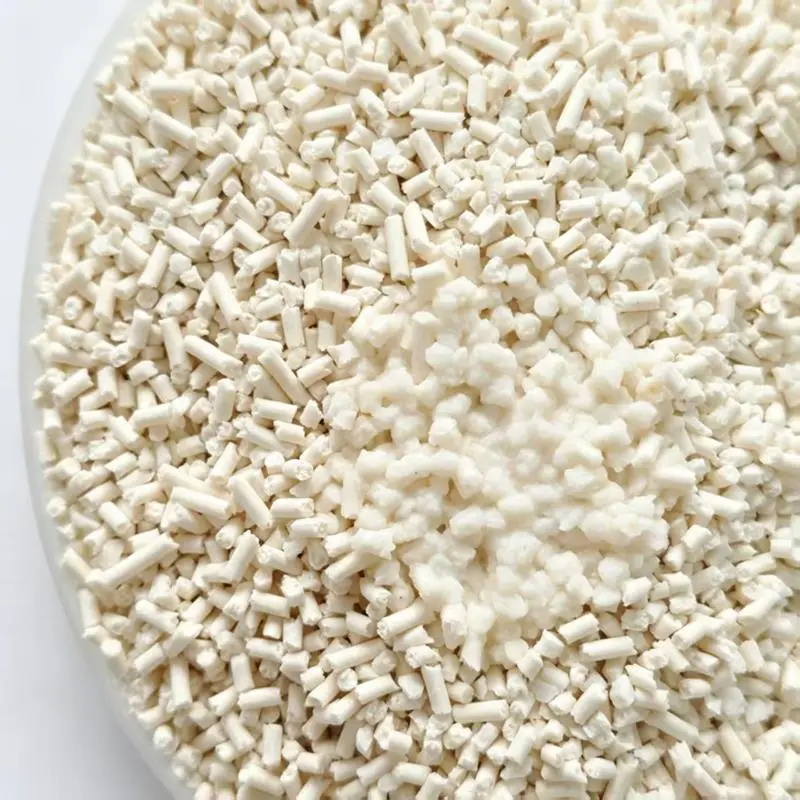
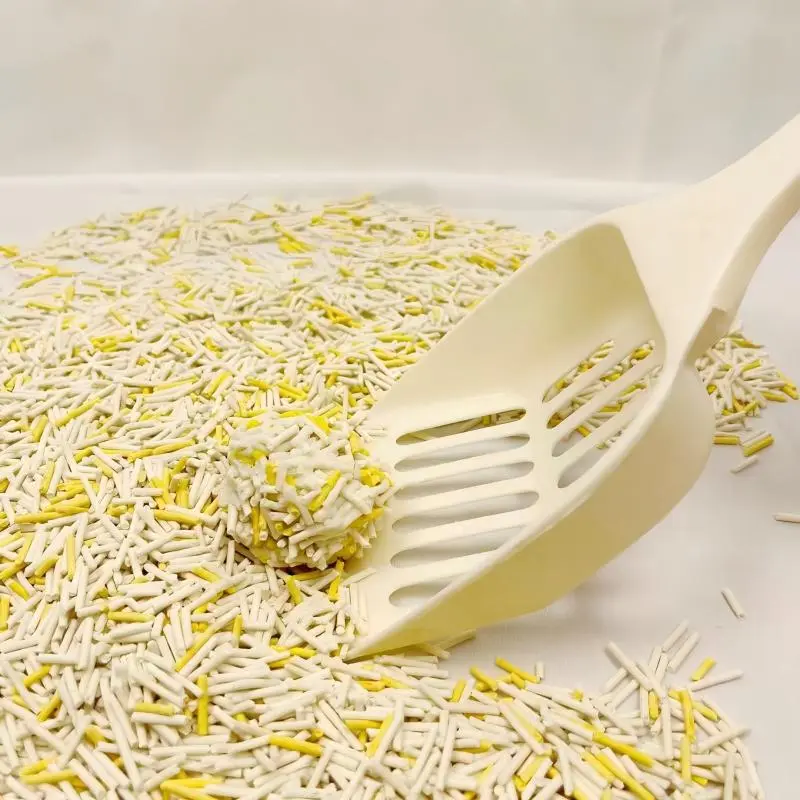
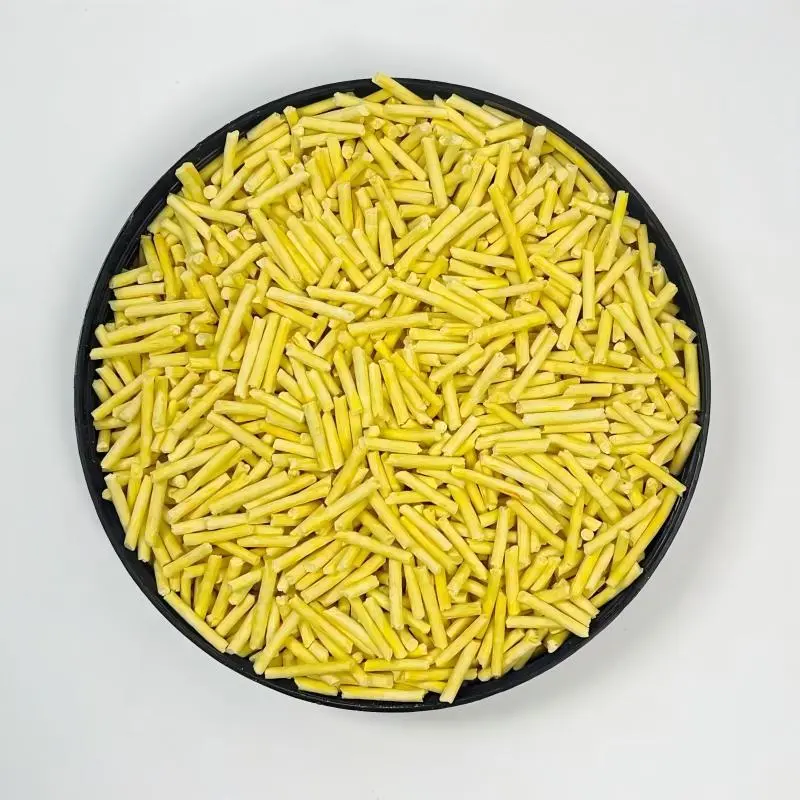
2.0mm tofu cat litter is a plant-fiber-based cat litter manufactured in pellet form, with a nominal pellet diameter of approximately 2.0 millimeters.
The dimension refers to the diameter of the cylindrical pellet, not necessarily its length. Pellet length, particle-size distribution, and the percentage of broken or fine particles should be specified separately when ordering.
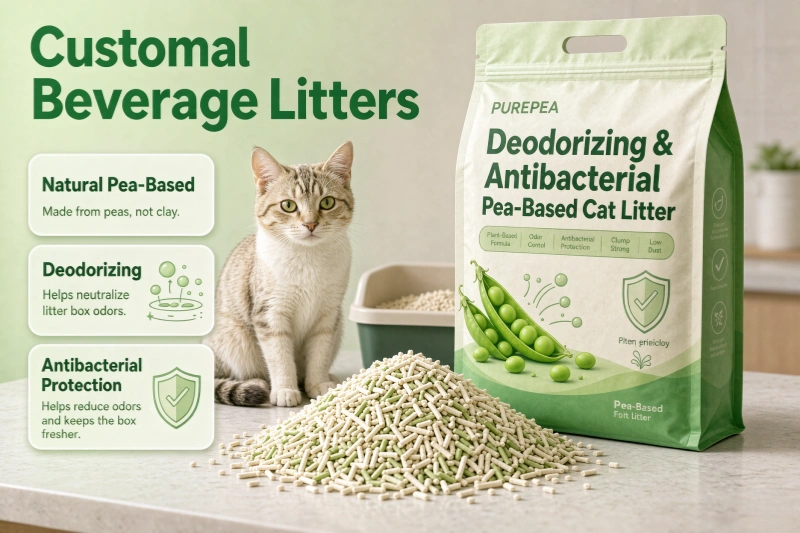
Tofu cat litter is commonly made from plant-derived ingredients such as soybean fiber, pea fiber, starch, and binders. These ingredients are processed into granules designed to absorb liquid and form clumps.
Gelin Town's published tofu cat litter specifications include:
Pea fiber.
Soybean fiber.
Corn starch.
Guar gum.
The exact formulation depends on the selected product and should be confirmed in the approved technical specification.
Explore our tofu cat litter product range to see the available product directions.
What does the 2.0mm size mean for a private-label brand?
The 2.0mm specification gives a brand a defined pellet diameter around which to build its product.
It can be used as the central size option in a product portfolio:
1.5mm: A smaller-pellet format.
2.0mm: An intermediate-pellet format.
3.0mm: A larger-pellet format.
These sizes are not a ranking of product quality. Each should be evaluated in relation to the selected formula, pellet length, cat acceptance, and the brand's target positioning.
For professional buyers, the most important question is not simply whether a product is 2.0mm. It is whether the actual size distribution and finished-product performance meet the agreed specification.
2. Why Consider 2.0mm Tofu Cat Litter for Your Brand?
A private-label brand needs a product specification that is clear, repeatable, and relevant to its target customers.
The 2.0mm format provides a defined middle-size option for brands that do not want to position their entire product range around either very fine or larger pellets.
A clear product specification
A stated 2.0mm diameter makes product comparison and purchasing communication easier.
For example, when comparing samples from different suppliers, buyers can request the same nominal diameter and then evaluate:
Actual pellet diameter.
Pellet length.
Particle-size distribution.
Broken-pellet percentage.
Dust and fines.
Absorption and clumping.
Product condition after transportation.
This is more useful than comparing product names alone.
Flexibility for product-line development
A brand may use 2.0mm tofu cat litter as its standard SKU while introducing other sizes or formats for different customer preferences.
For example, a product portfolio may include a 1.5mm version for customers who prefer smaller pellets and a 3.0mm version for customers who prefer a larger granule format.
Gelin Town's published product range includes these three diameter options, subject to the requirements and confirmation of each order.
A plant-based product direction
Tofu cat litter offers brands an alternative to conventional mineral-based litter.
The plant-fiber and starch-based formulation can support a product position built around plant-derived materials. However, a brand should describe the complete ingredient composition accurately rather than assume that every tofu litter formula is entirely natural or contains only tofu residue.
For a broader look at alternative materials, see our plant-based cat litter range.
A practical specification for wholesale sourcing
The 2.0mm diameter can be incorporated into a standard wholesale product or a customized private-label SKU.
Buyers can define the pellet diameter alongside other important specifications, including package weight, moisture target, absorption requirements, and clump performance.
The result is a more complete purchasing standard that can be used for sample approval and repeat orders.
3. Comparing 1.5mm, 2.0mm, and 3.0mm Tofu Cat Litter
One of the most common questions from product managers is whether 2.0mm tofu litter is better than 1.5mm or 3.0mm.
There is no universal answer. Diameter is only one part of the particle structure, and different formulas may perform differently even when their nominal diameters are identical.
| Specification | 1.5mm Tofu Cat Litter | 2.0mm Tofu Cat Litter | 3.0mm Tofu Cat Litter |
|---|---|---|---|
| Nominal diameter | 1.5mm | 2.0mm | 3.0mm |
| Relative particle size | Smaller | Intermediate | Larger |
| Product positioning | Fine-pellet option | Middle-size option | Larger-pellet option |
| Key evaluation | Texture, fines, tracking | Size consistency, texture, clumping | Texture, breakage, scooping |
| Customization | Formula and packaging | Formula and packaging | Formula and packaging |
Is 2.0mm always better for absorption?
No. Absorption depends on the material structure, fiber composition, processing, and test conditions.
A smaller pellet may present a different surface area and packing structure from a larger pellet, but that does not automatically guarantee better real-world absorption.
Buyers should compare different sizes using the same formula where possible, or clearly document any formula differences.
Does 2.0mm tofu litter produce stronger clumps?
Pellet diameter alone does not determine clump strength.
The result also depends on the binder system, fiber distribution, moisture absorption, liquid quantity, and time allowed for clump formation.
For a meaningful comparison, test 1.5mm, 2.0mm, and 3.0mm samples under the same conditions.
Which size should a pet brand select?
A practical approach is to request samples of two or three sizes and compare them against your intended retail positioning.
If your brand wants a central SKU between fine and larger pellet formats, 2.0mm is a logical specification to evaluate.
The final selection should be based on product testing and target-customer feedback, not diameter alone.
4. Gelin Town 2.0mm Tofu Cat Litter Product Specifications
For B2B customers, a product specification should provide enough information to evaluate the material, production requirements, and packaging.
Gelin Town's current tofu cat litter product listing provides the following information.
Published product specification
| Product Parameter | Published Information |
|---|---|
| Product | Tofu cat litter |
| Main materials | Pea fiber, soybean fiber, corn starch, and guar gum |
| Available pellet diameters | 1.5mm, 2.0mm, 3.0mm |
| Customization | Available for suitable projects |
| Color | Customizable |
| OEM | Available |
| Listed MOQ | 1 × 20FCL |
| Packaging examples | 6L/2.5kg, 7L/2.8kg, 10L/4.5kg |
| Origin | China |
| Payment terms | T/T listed on the product page |
These are published product-page details. The applicable MOQ, formula, dimensions, and packaging should be confirmed for the exact private-label project.
What should be added to the product specification sheet?
For a 2.0mm retail product, we recommend agreeing on the following details before mass production.
| Additional Specification | What to Define |
|---|---|
| Nominal diameter | 2.0mm |
| Diameter tolerance | Agreed manufacturing tolerance |
| Pellet length | Required length or length distribution |
| Particle-size distribution | Acceptable percentage within the specified range |
| Broken-pellet content | Agreed limit and test method |
| Moisture content | Target range and test method |
| Absorption | Target result and test procedure |
| Clumping performance | Test liquid, contact time, and evaluation method |
| Dust and fines | Test method and acceptance criteria |
| Bulk density | Measured density for packaging and logistics calculations |
| Packaging | Material, bag dimensions, weight, and volume |
This additional information helps ensure that both parties understand what "2.0mm tofu cat litter" means in a production order.
For more product-specific information, visit our OEM/ODM tofu cat litter product page.
5. Natural Tofu Cat Litter Formulation for Private-Label Brands
The raw material composition is an important part of a natural cat litter product's identity.
A tofu cat litter manufacturer may use different combinations of plant fibers, starches, and binders. These ingredients affect the granule structure and finished-product characteristics.
Pea fiber
Pea fiber is a plant-derived material used in certain tofu and plant-based litter formulations.
Its fiber structure contributes to the base material, while the final performance depends on how it is combined and processed with other ingredients.
Soybean fiber
Soybean-derived fiber is another plant-based ingredient used in tofu cat litter.
Buyers should ask suppliers to identify the main soybean material used in the formulation rather than assume that every product uses the same type of tofu-production residue.
Corn starch
Corn starch is used in the formulation as a starch-based component. Together with the plant fibers and binder system, it helps develop the finished granule structure.
Guar gum
Guar gum is a plant-derived gum used in various applications as a thickening or binding ingredient.
In a cat litter formulation, it may contribute to the binding system. The effect depends on the formula and processing conditions.
Why formula consistency matters
Two suppliers may use similar ingredient names but produce different finished products.
The differences can come from:
Ingredient grades and material sources.
Formula proportions.
Mixing uniformity.
Moisture before granulation.
Granulation conditions.
Drying and screening.
Storage and packaging.
For pet brands planning repeat orders, the approved formulation should be documented and protected against unapproved changes.
Gelin Town also offers pea-fiber-based cat litter as an alternative product direction for customers comparing plant-fiber formulations.
6. Private-Label Customization: Build Your Own 2.0mm Tofu Cat Litter
Private-label manufacturing allows a pet brand to sell a manufactured product under its own name without building a cat litter production facility.
For buyers who want to launch a 2.0mm tofu cat litter SKU, customization can cover more than printing a logo on an existing bag.
Formula customization
Depending on technical feasibility, buyers can discuss:
Plant-fiber composition.
Selected starch and binder systems.
Fragrance requirements.
Optional functional ingredients.
Product color.
Moisture and absorption specifications.
Clumping requirements.
Each formulation change should be reviewed through sampling. A change in ingredients may affect physical characteristics, storage behavior, cost, and product claims.
Pellet specifications
For a 2.0mm product, the buyer should confirm the nominal diameter as well as pellet length and the acceptable size distribution.
Additional considerations include:
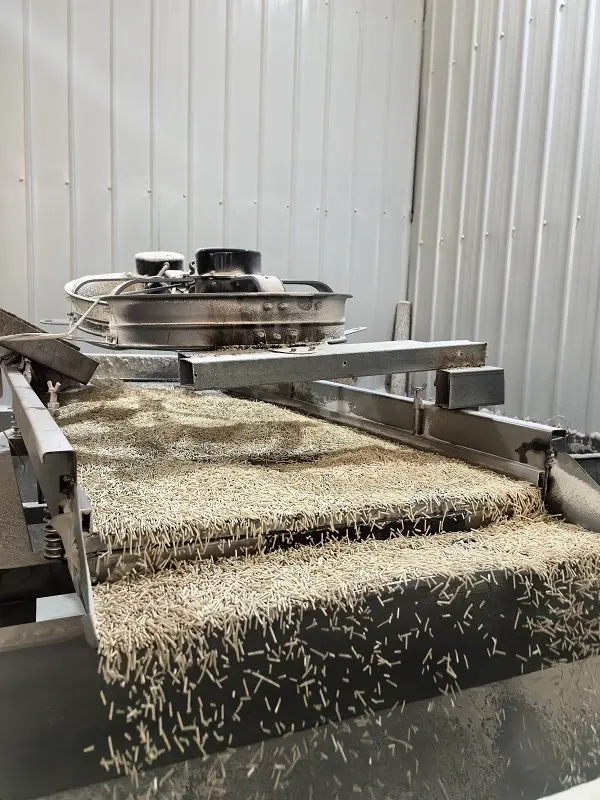
Cylindrical pellet shape.
Consistency between production batches.
Broken-pellet content.
Fine-particle levels.
Product condition after transport.
Fragrance and color options
Depending on the selected product, customers can discuss fragrance and color requirements.
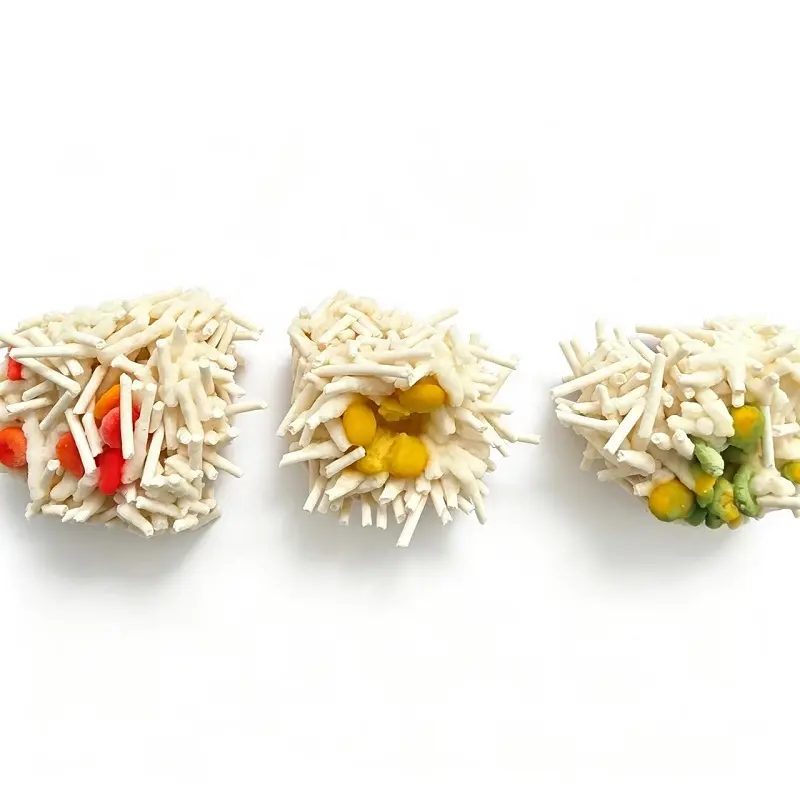
Possible fragrance directions may include unscented, green tea, peach, or lavender, subject to formula compatibility and sample evaluation.
Color can also be customized according to the agreed product design.
A fragrance-free SKU and a scented SKU should be evaluated separately because the addition of fragrance changes the finished formulation.
Different product formats
Brands interested in a wider tofu litter assortment can also review other product formats.
For example, crushed tofu cat litter offers an irregular-granule alternative to conventional cylindrical pellets.
Space-puffed tofu cat litter represents another product direction for brands seeking a differentiated product range.
The product format should be selected before packaging artwork is finalized because different particle structures may have different bulk densities.
7. Manufacturing Process for 2.0mm Tofu Cat Litter
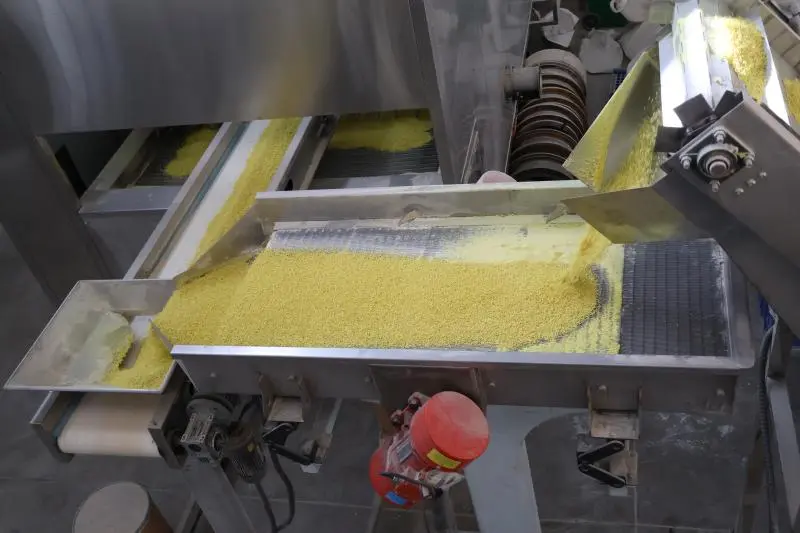
Producing consistent 2.0mm tofu cat litter requires control over raw materials, mixing, granulation, drying, screening, and packaging.
A typical manufacturing workflow includes the following stages.
Step 1: Raw material inspection
Incoming materials are checked against the applicable purchasing and formulation requirements.
Depending on the raw material, checks may include material identity, appearance, moisture, and other specified characteristics.
Step 2: Material preparation
Selected materials are prepared for production through suitable handling and processing steps.
The objective is to achieve a consistent input for the formula and granulation process.
Step 3: Weighing and mixing
The required ingredients are weighed according to the approved formula and mixed.
Consistent ingredient distribution is important because uneven mixing can influence pellet structure and product performance.
Step 4: Granulation and pellet forming
The prepared mixture is processed through granulation equipment to form the required pellet structure.
For the 2.0mm product, production parameters should be adjusted and checked against the agreed nominal diameter and tolerance.
Step 5: Drying and cooling
The newly formed particles are dried according to the product requirements.
Cooling and controlled handling help prepare the granules for the next production stages.
Step 6: Screening and dust removal
The material is screened to separate particles outside the agreed size range. Fine particles and broken granules can be removed according to the product specification.
Step 7: Finished-product inspection
Representative samples are checked against the agreed quality requirements.
Depending on the project, inspection may include moisture, pellet dimensions, absorption, clumping, dust, appearance, and packaging condition.
Step 8: Weighing and packaging
Qualified litter is filled into the approved packaging format.
The finished bags are checked for weight, seal integrity, printing, product identification, and other order requirements.
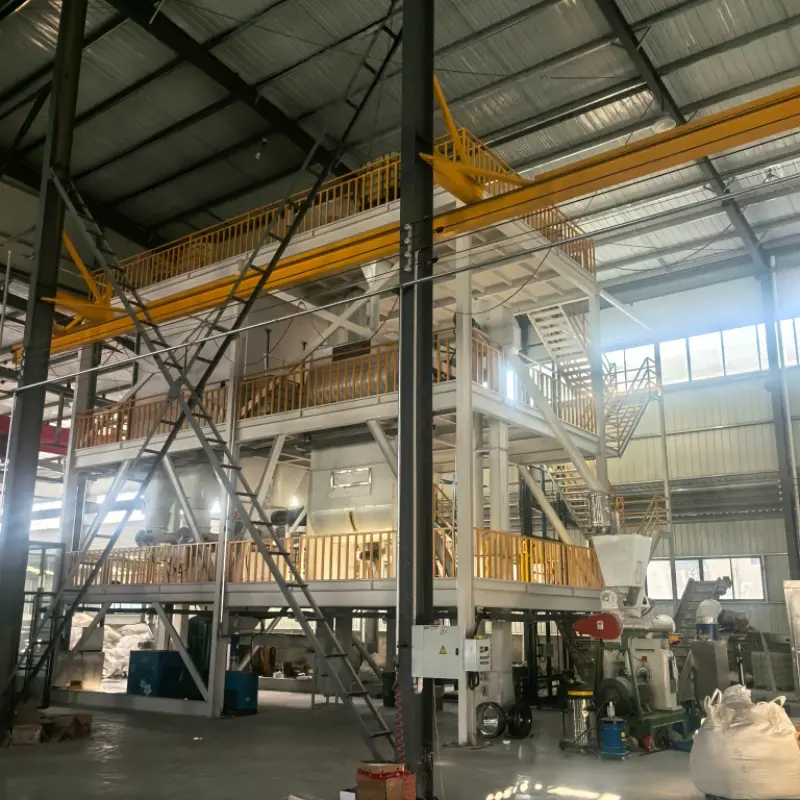
To learn more about our production facilities, visit the Gelin Town cat litter factory.
8. Quality Testing for Private-Label 2.0mm Tofu Cat Litter
For a private-label brand, the sample should be treated as the reference for bulk production.
However, approving one sample does not automatically guarantee that later batches will have identical specifications. The buyer and manufacturer should agree on measurable quality requirements before production.
Diameter and length inspection
Randomly select pellets from different parts of a sample or production batch.
Measure the diameter and length separately and record the range and distribution.
For a product sold as 2.0mm tofu cat litter, the specification should identify:
Nominal diameter.
Acceptable diameter tolerance.
Pellet length requirements.
Sampling quantity.
Measurement method.
Handling of broken and irregular particles.
This allows the product to be checked objectively rather than relying on a visual estimate.
Moisture testing
Moisture can influence storage condition and the physical behavior of plant-based litter.
The test report should specify the sample preparation method, equipment, and calculation procedure.
For importers, it is also useful to evaluate the product after storage under conditions relevant to the intended distribution route.
Absorption testing
Absorption should be measured using an agreed test method.
A comparison should keep the sample mass, liquid type, liquid quantity, contact time, drainage procedure, and calculation method consistent.
Do not compare supplier-reported absorption percentages unless the testing methods are sufficiently similar.
Clumping evaluation
Clumping should be assessed separately from absorption.
A practical test can examine:
How quickly the material forms a clump.
Whether the clump remains intact when lifted.
How much loose material falls away.
Whether wet residue remains on the test surface.
How the clump behaves after a defined waiting period.
The liquid quantity, waiting time, and handling method should be consistent across samples.
Dust and fines inspection
Dust performance is influenced by material selection, processing, screening, transportation, and packaging.
The test method should be defined before accepting a numerical dust specification.
Terms such as "dust-free" should not be treated as an absolute product guarantee unless the claim is properly defined and supported.
Packaging and transportation tests
For export products, testing should also consider whether the pellets remain in suitable condition after packaging and transportation.
Relevant checks may include:
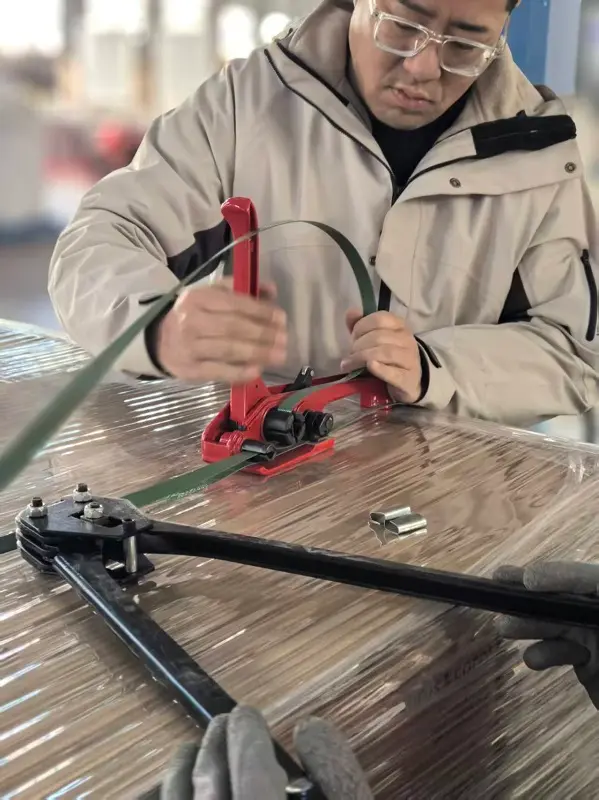
Bag seal integrity.
Package weight.
Granule breakage after handling.
Dust accumulation at the bottom of the bag.
Moisture change during storage.
Carton and pallet condition.
These checks are particularly useful when a brand expects repeat shipments over an extended period.
9. Private-Label Packaging Options for Pet Brands
Packaging is a key part of private-label product development. It influences moisture protection, retail presentation, shipping efficiency, and brand recognition.
Gelin Town's published tofu cat litter page lists several package examples.
Published package examples
| Package Volume | Net Weight |
|---|---|
| 6L | 2.5kg |
| 7L | 2.8kg |
| 10L | 4.5kg |
| Customized | Subject to product and packaging requirements |
Volume and net weight are different measurements. The final bag weight depends on product bulk density and the filling specification.
Private-label packaging customization
Depending on the project, buyers can discuss:
Customized bag dimensions.
PE or laminated bag structures.
Retail stand-up pouches.
Flat-bottom bags.
Kraft-style laminated packaging.
Zippers and carrying handles, where applicable.
Printed brand logos.
Product photography and graphic design.
Barcodes and QR codes.
Multi-language product information.
Outer cartons and shipping marks.
Packaging for different sales channels
Pet stores: Retail bags should communicate the product type, particle size, key features, and usage instructions clearly.
Supermarkets: Product presentation, shelf-facing design, barcode readability, and consistent package dimensions are important.
E-commerce brands: Packaging needs to consider parcel handling, bag durability, product weight, and protection against damage during fulfillment.
Distributors and wholesalers: Larger-volume bags and efficient carton or pallet configurations may be more practical.
Before printing, the buyer should approve the final artwork, language, product description, net weight, and any performance claims.
For further information about private-label services, see our OEM soy cat litter solutions.
10. MOQ, Samples, and Ordering Process
The purchasing requirements for a private-label project depend on the selected product, package structure, artwork, and order quantity.
Gelin Town's current tofu cat litter product listing publishes an MOQ of 1 × 20FCL. This is a reference for the listed offering, and the applicable terms should be confirmed for the exact 2.0mm SKU and packaging configuration.
What affects the MOQ?
Existing versus newly developed formula.
Number of product sizes or SKUs.
Custom fragrance or color requirements.
Bag material and printing method.
Custom artwork and packaging production.
Container loading and logistics arrangements.
What should buyers provide when requesting samples?
To make sample evaluation more useful, provide:
Target pellet diameter: 2.0mm.
Required pellet length, if specified.
Preferred material composition.
Unscented or fragrance requirements.
Desired package weight and volume.
Target country and sales channel.
Any reference sample or existing technical data sheet.
Typical private-label project workflow
| Stage | Main Activity | Buyer Approval |
|---|---|---|
| 1. Inquiry | Share target market and product requirements | Product brief |
| 2. Product selection | Confirm base tofu litter and 2.0mm specification | Product direction |
| 3. Sampling | Prepare and evaluate samples | Sample approval |
| 4. Specification | Confirm formula and quality parameters | Technical specification |
| 5. Packaging | Develop bag design and labels | Artwork approval |
| 6. Order confirmation | Confirm MOQ, price, payment and shipment terms | Purchase order |
| 7. Production | Manufacture against approved requirements | Agreed inspection |
| 8. Shipment | Prepare export packaging and documents | Shipping confirmation |
For more guidance on preparing a private-label project, read our How to Private Label Cat Litter guide.
11. Why Work with Gelin Town Pet for 2.0mm Tofu Cat Litter?
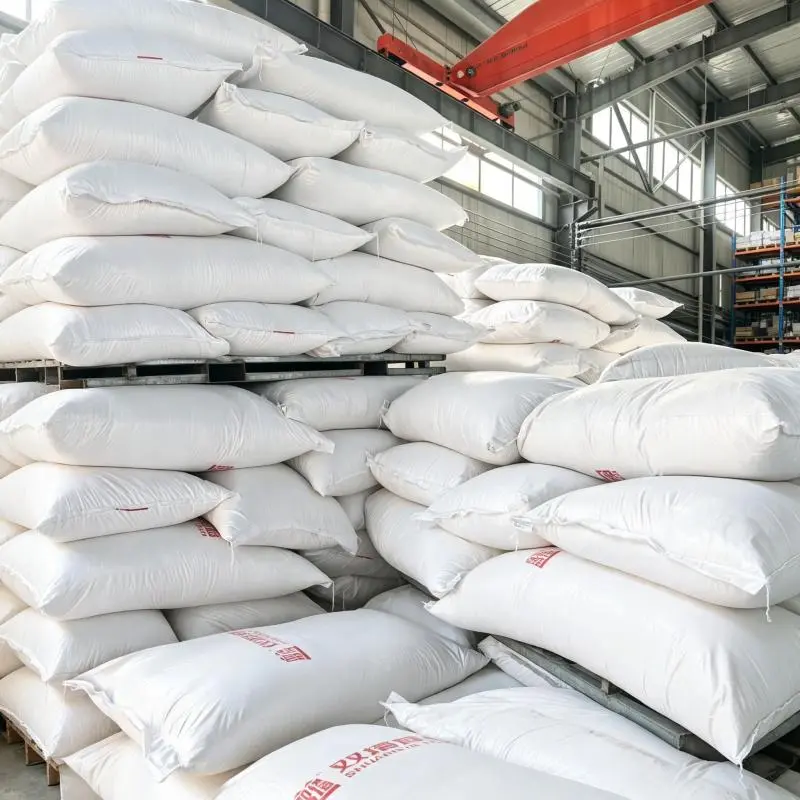
Shandong Gelin Town Pet Products Co., Ltd. was established in 2020 and focuses on cat litter manufacturing, including tofu and plant-based products.
According to our published company information, the production area covers approximately 16,000 m², with an annual production capacity of around 7,000 tons.
Our product range includes tofu cat litter, pea-fiber-based litter, crushed tofu litter, space-puffed tofu litter, corn cat litter, mixed litter, and functional cat litter.
Multiple pellet-size options
Our published tofu product specifications include 1.5mm, 2.0mm, and 3.0mm diameters. Buyers can discuss the required particle dimensions and other specifications for their product program.
Plant-based material options
The published tofu litter formulation includes pea fiber, soybean fiber, corn starch, and guar gum.
This provides a starting point for brands developing a plant-fiber-based product line.
OEM and private-label support
Customers can discuss product customization, including selected formulas, colors, packaging, and branding requirements.
Manufacturing and product-range flexibility
Working with a manufacturer that offers multiple cat litter categories can help brands coordinate product sourcing and plan a wider retail portfolio.
You can also review our mixed cat litter range when considering additional product options.
The final product specifications, sample results, commercial terms, and any applicable documents should be confirmed before each order.
12. Frequently Asked Questions About 2.0mm Tofu Cat Litter Private Label
1. What does 2.0mm mean in tofu cat litter?
It refers to the nominal diameter of the pellet, generally describing a cylindrical granule approximately 2.0 millimeters across. Pellet length and size tolerance are separate specifications that should also be confirmed.
2. Is 2.0mm tofu cat litter better than 1.5mm or 3.0mm?
Not automatically. Each size has a different particle structure, and the finished performance depends on the raw materials, formula, processing, and pellet dimensions. Buyers should compare samples under the same test conditions.
3. What materials are used in Gelin Town tofu cat litter?
The published tofu cat litter product specification lists pea fiber, soybean fiber, corn starch, and guar gum. The actual formulation for each order should be confirmed in the approved product specification.
4. Can I order 2.0mm tofu cat litter under my own brand?
Yes. Gelin Town provides OEM and private-label manufacturing. Buyers can discuss the 2.0mm product specification, color, fragrance, package size, and branding requirements.
5. Can the 2.0mm pellet length be customized?
Pellet diameter and pellet length are separate dimensions. The required length or length distribution should be discussed and confirmed with the manufacturer for the selected production process.
6. Can I customize the color and fragrance?
Color and fragrance customization can be discussed for applicable products. Final options should be evaluated through samples and recorded in the approved product specification.
7. What is the MOQ for 2.0mm tofu cat litter?
The current Gelin Town tofu product listing shows an MOQ of 1 × 20FCL. The actual MOQ for a customized 2.0mm SKU should be reconfirmed based on formula, packaging, printing, and order configuration.
8. What package sizes are available?
The published tofu product page lists 6L/2.5kg, 7L/2.8kg, and 10L/4.5kg examples. Customized sizes and packaging can be discussed for the intended market.
9. Does 2.0mm tofu cat litter guarantee faster absorption?
No. Absorption depends on the formulation, plant-fiber structure, processing, and test conditions. It should be measured using a defined method rather than inferred from the pellet diameter alone.
10. Is natural tofu cat litter automatically biodegradable and flushable?
No. Plant-derived ingredients do not automatically prove that every finished formula is biodegradable under all conditions or suitable for flushing. Buyers should request relevant test evidence and check local waste and wastewater requirements.
11. What should I test before placing a bulk order?
Evaluate particle diameter, length, moisture, absorption, clumping, dust, packaging integrity, and product condition after storage or transportation. Use agreed methods and retain an approved reference sample.
12. How can I request a private-label quotation?
Provide your target pellet size, product formulation requirements, package weight or volume, estimated quantity, destination country, and branding requirements. This information helps the manufacturer review the project and prepare a relevant quotation.
Develop Your 2.0mm Tofu Cat Litter Private Label Product with Gelin Town
A successful private-label cat litter product starts with a clear specification.
The 2.0mm diameter provides a defined pellet-size option, but long-term product quality depends on more than that single dimension. Material consistency, particle length, moisture, absorption, clumping, dust, and packaging all contribute to the finished product.
At Gelin Town Pet, we manufacture tofu and plant-based cat litter for international pet brands, importers, wholesalers, and distributors. Our published product options include 1.5mm, 2.0mm, and 3.0mm pellet diameters, with customization available for suitable projects.
Whether you are launching your first natural cat litter SKU or adding a new 2.0mm product to an established range, our team can discuss product specifications, samples, and private-label packaging.
Send us your target market, product requirements, estimated order quantity, and packaging details to discuss your 2.0mm tofu cat litter project.