345.webp)
904.webp)


When shopping for the longest-lasting corn cat litter in Canada, most cat owners want the same three things: fewer litter changes, reliable odor control, and lower costs over time. A bag that looks affordable at checkout may not be the best value if the litter breaks apart easily, sticks to the bottom of the box, or needs frequent topping up.
The key is to look beyond claims such as “long-lasting,” “highly absorbent,” and “natural.” The best corn cat litter for your home should form firm clumps, retain moisture inside those clumps, control odors between cleanings, and remain economical throughout its useful life.
This guide explains how to compare corn cat litter brands in Canada, how long a bag may last, which features matter most, and how to test a product before committing to a larger purchase.
What Makes Corn Cat Litter Last Longer?
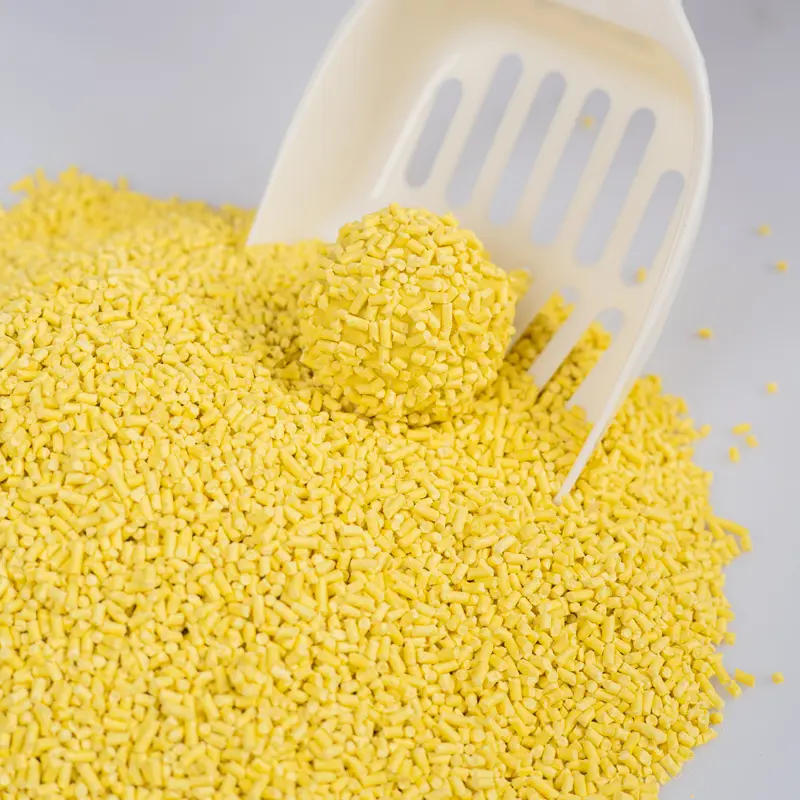
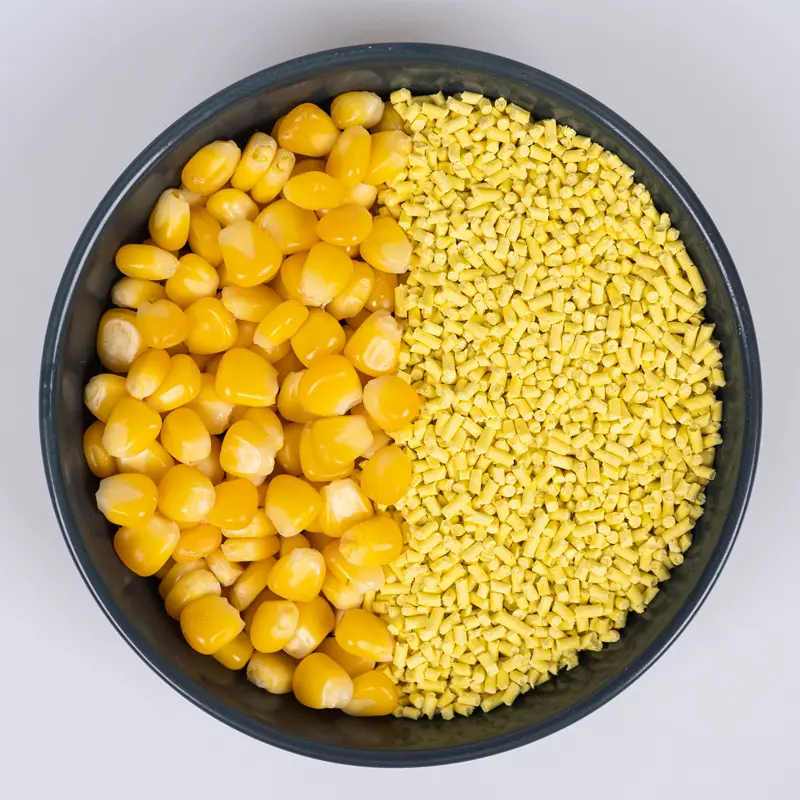
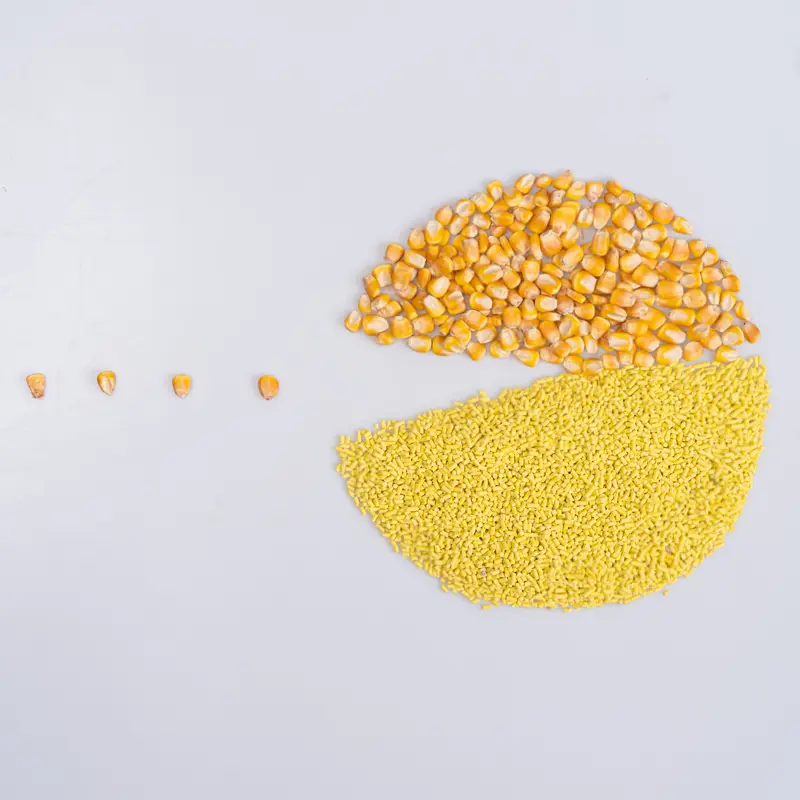
Corn cat litter is made primarily from processed corn or corn-derived plant material. Depending on the formula, it may absorb liquid and form clumps that can be removed with a litter scoop. However, not all corn-based formulas perform equally well.
A longer-lasting formula generally combines efficient absorption, strong clumping, limited tracking, and dependable odor control. These factors work together: when urine clumps remain intact, less clean litter is accidentally discarded during scooping.
1. High absorption with minimal waste
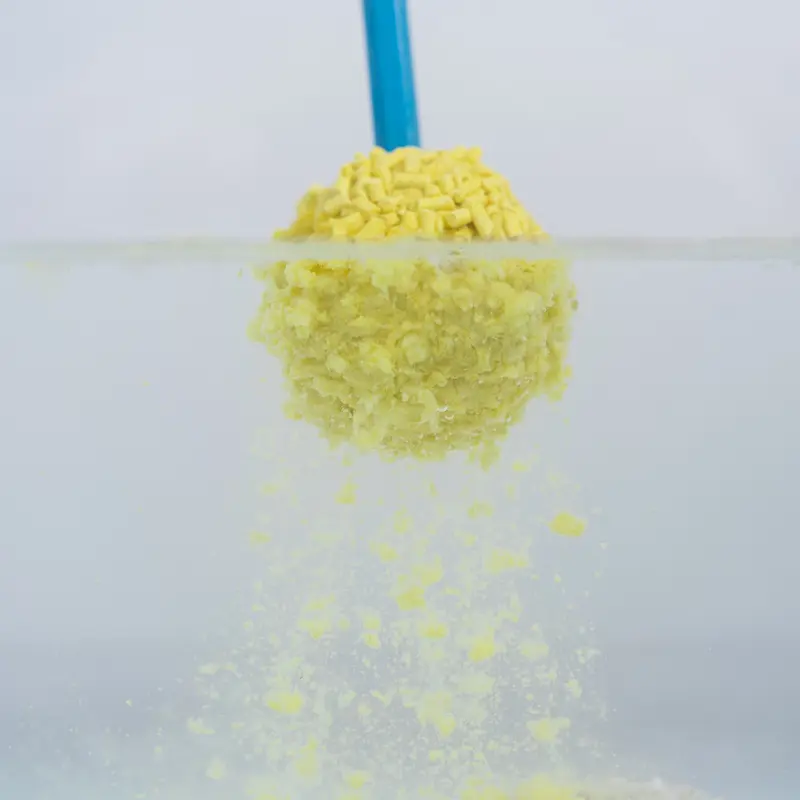
Absorption matters because liquid that spreads through the litter can make a larger area unusable. A good formula should absorb urine efficiently and allow the wet material to be removed without disturbing excessive amounts of clean litter.
However, maximum absorption alone does not guarantee the longest product life. If the litter absorbs liquid but forms weak clumps, those clumps may break during removal, leaving wet residue in the tray.
What to check: Look for product-specific absorption test results, the recommended litter depth, and evidence that the formula retains its structure after contact with liquid.
2. Firm, easy-to-remove clumps
Clump strength is one of the most useful indicators of litter efficiency. A firm clump is easier to lift with a scoop, while a fragile clump may crumble into small pieces.
When comparing products, examine whether:
Clumps remain intact when lifted from the tray.
The material does not leave excessive wet residue underneath.
Clean litter falls back through the scoop rather than being thrown away with the waste.
The litter does not form a hard layer on the bottom of the box under normal use.
A manufacturer’s claim of “fast clumping” should ideally be supported by a test that measures clump formation time and resistance to breakage.
3. Consistent odor control
Odor control can determine how long a household is willing to keep using a litter. A litter may still contain absorbent material after several days, yet become unpleasant because of trapped waste, residual moisture, or poor ventilation.
Corn litter formulas vary in their ability to control odor. Unscented products may be preferable for cats and owners that dislike added fragrance, but unscented does not automatically mean better odor control.
Keep in mind that odor masking is not the same as odor elimination. Daily scooping, a clean litter tray, and an appropriate number of boxes are still necessary.
4. Less tracking and dust
Fine particles may feel comfortable under a cat's paws, but lightweight particles can be carried outside the tray. Tracking does not directly determine absorption capacity, yet it affects how much litter ends up on the floor instead of in the box.
Compare particle size, dust performance, and tracking under ordinary household conditions rather than relying exclusively on labels such as “low dust” or “low tracking.”
5. Stable performance during storage
Corn-based litter contains plant-derived material, so storage conditions deserve attention. Keep unopened and opened bags in a cool, dry location, reseal the packaging properly, and protect the product from moisture and pests.
If litter develops an unusual smell, becomes damp, shows visible mold, or changes noticeably in texture, stop using it. A long-lasting product is only economical when it remains suitable for use.
How Long Does Corn Cat Litter Last in Canada?
There is no universal lifespan for corn cat litter. The answer depends on the formula, the amount used to fill the tray, the number of cats, how frequently they use the box, and how consistently waste is removed.
As one Canadian retail example, Fresh 4 Life Eco-Corn Clumping Cat Litter lists a suggested full change every 2–3 weeks, or as needed, alongside daily scooping and a recommended litter depth of 3–4 inches. This is a product-specific guideline, not a guarantee that every bag will last that long in every household.
Use the following table as a practical starting point rather than a fixed promise.
| Household situation | What to expect | What to do |
|---|---|---|
| One cat, regular daily scooping | A bag may last longer than in a busy multi-cat home | Track how much litter you add each week |
| Two cats sharing a box | Faster contamination and more frequent topping up are possible | Increase monitoring and provide additional boxes |
| Several cats | Litter consumption can rise substantially | Compare cost per cat per day, not just cost per bag |
| Cat urinates frequently or produces large clumps | The usable litter may be depleted sooner | Monitor changes and consult a veterinarian if urination changes suddenly |
| Poor clumping or persistent odor | The litter may need earlier replacement | Check litter depth, cleaning routine, and product suitability |
These are general household scenarios, not laboratory-established duration estimates for all corn cat litter brands.
A practical way to estimate how long one bag will last
Start by recording the bag size, purchase price, date opened, litter added, and date of the full litter change.
For example, suppose a hypothetical bag costs C$30:
| Useful life of the bag | Approximate cost per day |
|---|---|
| 14 days | C$2.14 |
| 21 days | C$1.43 |
| 28 days | C$1.07 |
These amounts are illustrative calculations, not current Canadian retail prices or a promise of how long a particular product will last.
The formula is simple:
Cost per day = Bag price ÷ Number of days the bag lasts
To compare different sizes accurately, use the same cat, litter tray, cleaning routine, and product-use instructions. For multi-cat households, you can also calculate cost per cat per day by dividing the daily cost by the number of cats sharing the litter supply, provided the cats are using the same system.
How to Find the Best Long-Lasting Corn Cat Litter in Canada
Before purchasing a large bag, evaluate the product in five areas.
| Buying factor | What to look for | Why it matters |
|---|---|---|
| Clumping performance | Firm clumps that lift without crumbling excessively | Reduces the amount of clean litter discarded |
| Absorption | Published results from a clearly described test | Helps assess how efficiently the formula handles liquid |
| Odor control | Product-specific evidence and clear usage instructions | Helps maintain acceptable conditions between cleanings |
| Dust and tracking | Clear testing methods or credible independent evaluations | Affects household cleanliness and daily maintenance |
| Value | Cost per day under your own conditions | Allows a fair comparison between bag sizes and brands |
Also check the product’s weight, ingredients, scent, recommended litter depth, storage instructions, and replacement guidance. A heavier bag does not necessarily last longer than a lighter one because formulas can differ in density, particle structure, and usable volume.
Should you choose fine-particle or larger-particle corn litter?
Fine-particle litter can feel softer underfoot, and many cats prefer a fine-grained texture. However, particle size alone cannot predict which formula will last longest.
Fine particles may be more easily tracked outside the box, depending on their shape, weight, and the cat's digging behavior. A larger or differently shaped granule may reduce tracking in some households, but it must still provide satisfactory clumping and comfort for the cat.
Rather than selecting a product based on particle size alone, test three outcomes together:
How readily the cat accepts the texture.
How well the litter clumps and can be removed.
How much usable litter remains after regular cleaning.
If your cat dislikes the new texture or avoids the tray, even technically efficient litter is not a good household choice.
Corn Cat Litter vs. Clay, Tofu, and Corn-Cassava Blends
Corn litter is one option among several clumping litter types. There is no universally superior material for every cat or household.
| Litter type | Potential advantages | Possible drawbacks | Best comparison criteria |
|---|---|---|---|
| Corn cat litter | Plant-based material; some formulas offer effective clumping and relatively light bags | Performance varies; tracking, odor, and clump strength depend on the formula | Clump integrity, usable days, cost per day |
| Clumping clay litter | Many formulas form firm clumps and are widely available | Can be heavy; dust and tracking vary by product | Dust, weight, clumping, disposal preferences |
| Tofu cat litter | Plant-based; pellet formats can reduce some types of tracking | Pellet texture may not suit every cat; formulas differ in absorption and waste removal | Cat acceptance, clump quality, pellet breakdown |
| Corn-cassava blend | A combined plant-based formula may offer a different balance of clumping and texture | Added ingredients do not automatically guarantee longer life or better value | Comparative tests using the same procedure |
The most useful comparison is not which material sounds more natural. It is which specific product performs reliably in your home at an acceptable daily cost.
Do not assume that a corn-based litter is flushable simply because it is plant-based. Follow the label and check the rules of your local Canadian municipality and wastewater system before disposing of any litter through plumbing. Disposal in household waste may be the appropriate option.
628576.webp "Corn-Cat-Litter (8)628576.webp")
Our product undergoes multiple dust control processes, rigorous sieving, resulting in minimal dust, ensuring the health of your pet's respiratory system.

Made from plant-based materials, water-soluble, and flushable for easy cleaning.
A 14-Day Home Test: Measure Whether Your Corn Cat Litter Really Lasts
Marketing descriptions are useful for screening products, but a controlled household comparison provides more relevant information about day-to-day performance.
The following is a suggested evaluation procedure, not a claim that any particular product has passed this test.
Step 1: Establish a consistent starting point
Clean and dry the litter tray according to the manufacturer's instructions. Add the recommended amount of litter and record the initial bag weight or amount used.
Use the same tray and keep the litter depth within the product's specified range throughout the test.
Step 2: Scoop consistently
Remove urine clumps and solid waste at a consistent time each day. Follow the package instructions; do not leave waste in the box simply to make the litter appear to last longer.
Record how much litter you add after scooping. A measuring container or kitchen scale can help you track consumption more consistently.
Step 3: Check four performance indicators
| Indicator | What to record |
|---|---|
| Clumping | Whether clumps stay intact during removal |
| Residue | Whether wet material remains stuck to the tray |
| Odor | Whether unpleasant odor develops despite regular cleaning |
| Litter loss | How much material is discarded or added during each check |
Take a brief daily note rather than relying on memory at the end of the test. If comparing two products, keep the other conditions as similar as possible. Do not mix the products during the comparison unless the manufacturer specifically recommends a gradual transition.
Step 4: Set clear stopping rules
Do not insist on completing 14 days if the tray develops persistent odor, widespread moisture, poor clumping, or other signs that the litter needs replacing. Clean the tray and refresh the litter when necessary.
The practical endpoint is the time at which the litter should be fully changed under the label instructions and the household's hygiene needs—not the maximum number of days you can leave it in the box.
Step 5: Compare cost and usability
At the end of the test, compare the total quantity used, top-up frequency, clump integrity, odor performance, and daily cost.
A product that costs more per bag may still represent better value if it lasts longer under equivalent conditions. Conversely, a cheaper bag may not be economical if poor clumping leads to higher daily consumption.
Five Common Mistakes That Make Corn Cat Litter Run Out Faster
1. Starting with too little litter.
A shallow layer may not allow clumps to form properly and can lead to more material sticking to the bottom. Use the depth recommended for your chosen product.
2. Skipping daily scooping.
Allowing waste to accumulate can worsen odor and contaminate more of the usable litter. Daily removal is a better starting routine than waiting until the box smells.
3. Adding too much litter.
More litter does not automatically mean a longer service life. Excessive depth can increase consumption without solving poor clumping, unsuitable tray size, or infrequent cleaning.
4. Ignoring your cat's preferences.
A cat may reject a new particle size, fragrance, or texture. Introduce a new litter gradually and monitor whether the cat continues to use the box normally.
5. Treating every household like a single-cat home.
A bag-life claim may not apply to a home with several cats. Provide enough litter boxes and calculate value based on your own household's consumption.
How Many Litter Boxes Do You Need?
The number of boxes affects cleanliness and maintenance. The Toronto Humane Society recommends the common guideline of one litter box per cat, plus one extra, with boxes placed in suitable locations. This is particularly useful to consider when evaluating litter use in a multi-cat home.
For example, a household with two cats can start by planning for three boxes where space permits. This may help avoid competition for a box and make it easier to keep each tray clean.
More boxes do not automatically reduce the total quantity of litter used. Their main purpose is to provide appropriate access and maintain a suitable toileting environment. You should still track overall litter consumption and follow each product's replacement instructions.
How to use the Short-grain corn cat litter?
Using short-grain corn cat litter is a straightforward process. Here's a step-by-step guide.
Prepare the Litter Box
Start by ensuring your cat's litter box is clean and free of any old litter or waste. If needed, clean and disinfect the litter box before adding the new litter.
Fill the Litter Box
Pour a sufficient amount of Short-Grain Corn Cat Litter into the litter box. The recommended depth is typically around 2-3 inches (5-7.5 cm) for most cats. Adjust the amount based on your cat's preferences and the size of the litter box.
Scoop Waste Daily
To maintain a clean and odor-free litter box, scoop out clumps and solid waste daily. Short-Grain Corn Cat Litter typically forms clumps upon contact with moisture, making it easy to scoop.
Add More Litter
Over time, as the litter absorbs moisture and clumps are removed, you may notice the level of litter in the box decreasing. Add more Short-Grain Corn Cat Litter as needed to maintain the recommended depth.
Regular Cleaning
Periodically, usually every 2-4 weeks, completely replace the old litter with fresh Short-Grain Corn Cat Litter. This helps ensure a clean and hygienic environment for your cat.
Maintain Litter Depth
Check the litter box regularly to ensure that the litter depth remains adequate for your cat's comfort and waste absorption needs. Add more litter if it becomes too shallow.
Dispose of Waste
Properly dispose of the scooped waste in a sealed bag and place it in the trash. Some brands of Short-Grain Corn Cat Litter may be flushable, but it's crucial to follow the manufacturer's guidelines to ensure safe disposal.
By following these steps, you can effectively use our longest lasting short-grain corn cat litter to provide a clean and comfortable environment for your cat while managing waste and odors. Remember to maintain regular cleaning and keep an eye on the litter depth to ensure your cat's satisfaction.
Is Long-Lasting Corn Cat Litter Better for the Environment?
Corn cat litter is made from plant-derived material, but that fact alone does not establish the environmental impact of a specific product.
A fair assessment should consider ingredient sourcing, processing, manufacturing energy, packaging, shipping distance, product lifespan, and disposal method. A lightweight bag may reduce handling effort, but its full environmental benefit depends on the wider supply chain.
Likewise, claims such as “biodegradable,” “compostable,” or “flushable” require careful interpretation. The product formulation, certification or test evidence, local disposal facilities, and applicable instructions all matter.
For Canadian buyers, review the exact package wording and local waste-management guidance instead of assuming that all corn cat litter can be composted or flushed.
Frequently Asked Questions About Long-Lasting Corn Cat Litter
Which corn cat litter lasts the longest in Canada?
There is no single product that can be confirmed as the longest-lasting for every Canadian household without a consistent, independent comparison. Look for firm clumping, appropriate absorption, reliable odor control, clear usage instructions, and credible evidence supporting the manufacturer's claims. Your own measured cost per day is often more useful than a general “long-lasting” label.
How often should corn cat litter be completely changed?
Follow the product label and change the litter sooner if persistent odor, widespread moisture, or poor clumping makes the box unsuitable. As one example, Fresh 4 Life Eco-Corn Clumping Cat Litter lists a suggested full change every 2–3 weeks or as needed. That schedule should not be treated as a universal rule for all corn-based products.
Does fine-particle corn litter last longer than regular corn litter?
Not necessarily. Fine particles may offer a texture some cats prefer, but longevity depends on absorption, clump strength, particle loss, and the amount of clean litter removed during scooping. Compare products through the same household test instead of using particle size as the only measure.
Is corn cat litter suitable for multi-cat households?
Some formulas are marketed for multi-cat homes, but the result depends on product performance, the number of cats, box access, and cleaning frequency. Check the product label, provide enough litter boxes, and monitor odor and consumption closely.
Is corn cat litter safe for kittens?
Suitability depends on the kitten's age, behavior, and the product instructions. Very young kittens may ingest litter, and clumping products can pose risks if swallowed. For kittens that chew or eat litter, ask a veterinarian about an appropriate option and follow age-specific guidance rather than assuming that plant-based litter is automatically safe.
Can corn cat litter be flushed down the toilet?
Do not assume so. Plant-based composition does not automatically make a litter suitable for plumbing or septic systems. Follow the product label and check local municipal guidance before flushing; otherwise, use the recommended waste-disposal method.
How can I reduce the cost of corn cat litter?
Calculate the cost per day, scoop consistently, maintain the recommended litter depth, store unused material in a dry sealed container, and avoid discarding excessive clean litter. Compare the amount consumed under the same household conditions rather than choosing solely by bag price.
Final Buying Advice: Focus on Usable Days, Not Advertising Claims
The best long-lasting corn cat litter in Canada is the one that maintains acceptable clumping and odor control, suits your cat's texture preferences, and delivers a competitive cost per day in your own home.
Start with the manufacturer's recommended setup. Scoop daily, record how much litter you add, and replace it whenever needed for hygiene. A short, consistent test can reveal more about value than a claim of “maximum absorption” or “long-lasting freshness” without supporting data.
Before buying a larger package, compare the formula, bag size, instructions, and available test evidence. That approach helps you choose a litter that is genuinely economical and practical—not just one that promises to last longer.
References
Agriculture and Agri-Food Canada, Sector Trend Analysis – Pet Food Trends in Canada: https://agriculture.canada.ca/en/international-trade/market-intelligence/reports-and-guides/sector-trend-analysis-pet-food-trends-canada-0
Pet Valu, Fresh 4 Life Eco-Corn Clumping Cat Litter: https://www.petvalu.ca/product/fresh-4-life-eco-corn-clumping-cat-litter/SCM15203
Toronto Humane Society, What to Do When Your Cat Avoids the Litter Box: https://www.torontohumanesociety.com/what-to-do-when-your-cat-avoids-the-litter-box/
Seattle Humane, Starting Out Right With Your New Cat and the Litterbox: https://www.seattlehumane.org/resource-library/your-new-cat-and-the-litterbox/