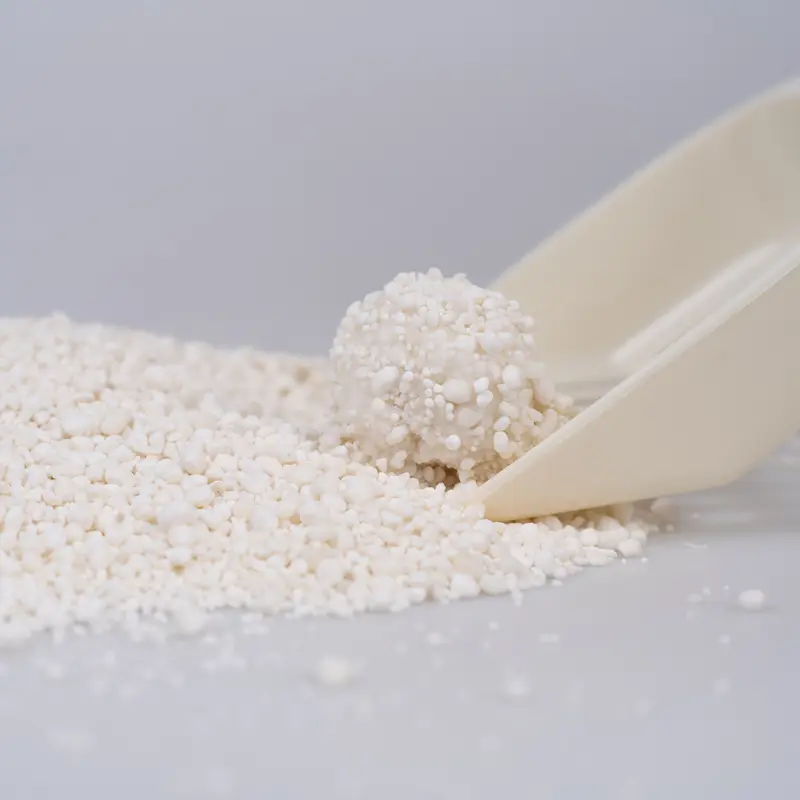
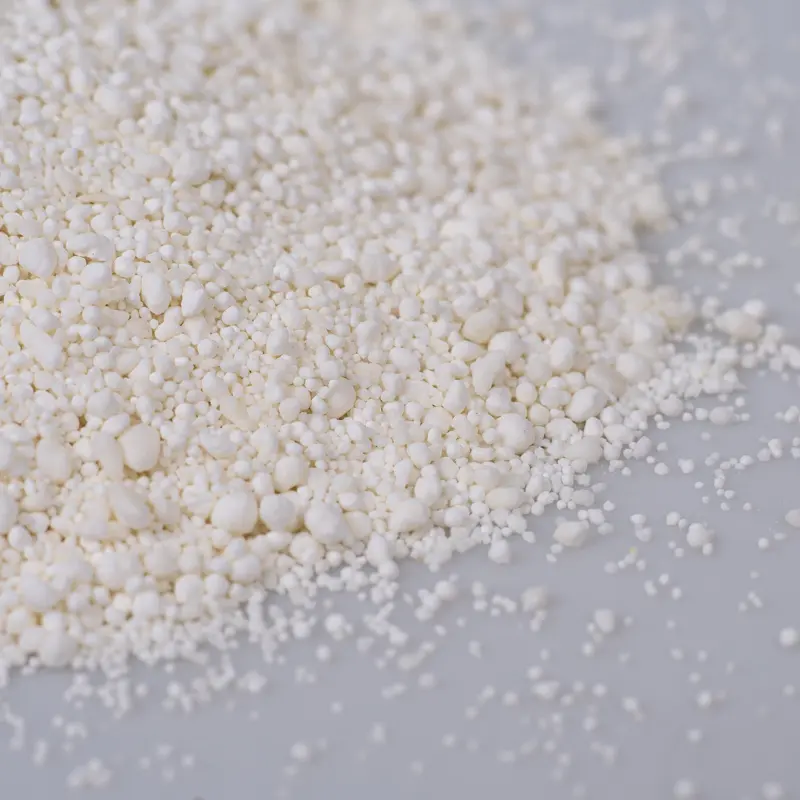
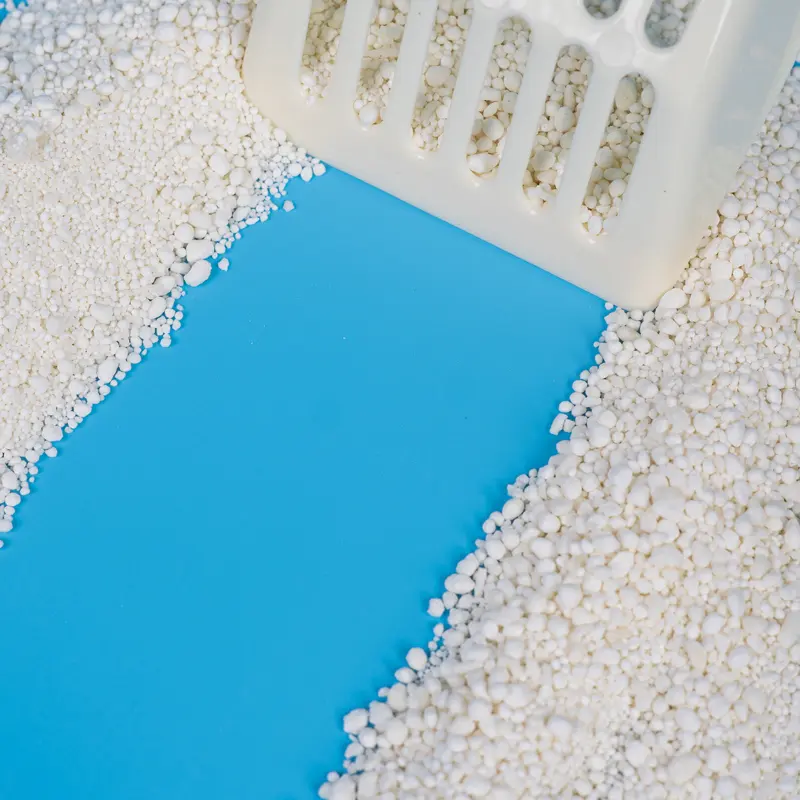
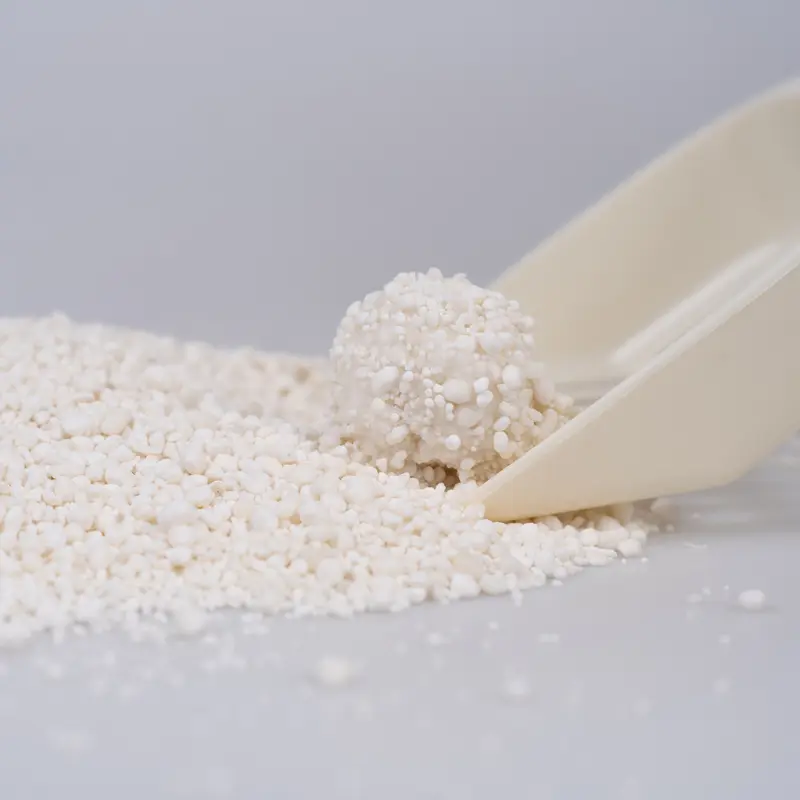
Plant-based cassava cat litter is an alternative to conventional mineral-based litter, designed for cat owners who want convenient cleaning, a rounded particle texture, and a product made from plant-derived ingredients. For European pet retailers, importers, and private-label brands, it may also offer an opportunity to expand an existing cat litter range with a different material and product format.
However, the words “dust-free,” “non-stick bottom,” and “eco-friendly” need careful evaluation. A litter that contains cassava starch does not automatically produce less dust, form stronger clumps, or have a lower environmental impact than every competing product. These benefits depend on the finished formula, manufacturing process, packaging, and how the litter is used.
This guide explains how plant-based cassava cat litter works, how to evaluate its main performance claims, what European consumers should know before buying it, and what B2B customers should verify before adding it to their product lines.
What Is Plant-Based Cassava Cat Litter?
Cassava cat litter is a plant-derived litter made using cassava-based materials. Cassava is a root crop whose starch can be processed for different industrial applications. In cat litter formulations, cassava starch may be combined with other ingredients to create granules that absorb liquid and form removable clumps.
Gelin Town Pet's New Plant-Based Cassava Cat Litter lists two main materials:
Cassava starch: A plant-derived ingredient used as part of the litter formulation.
Corn starch: Another starch-based ingredient that can contribute to binding and pellet formation under suitable processing conditions.
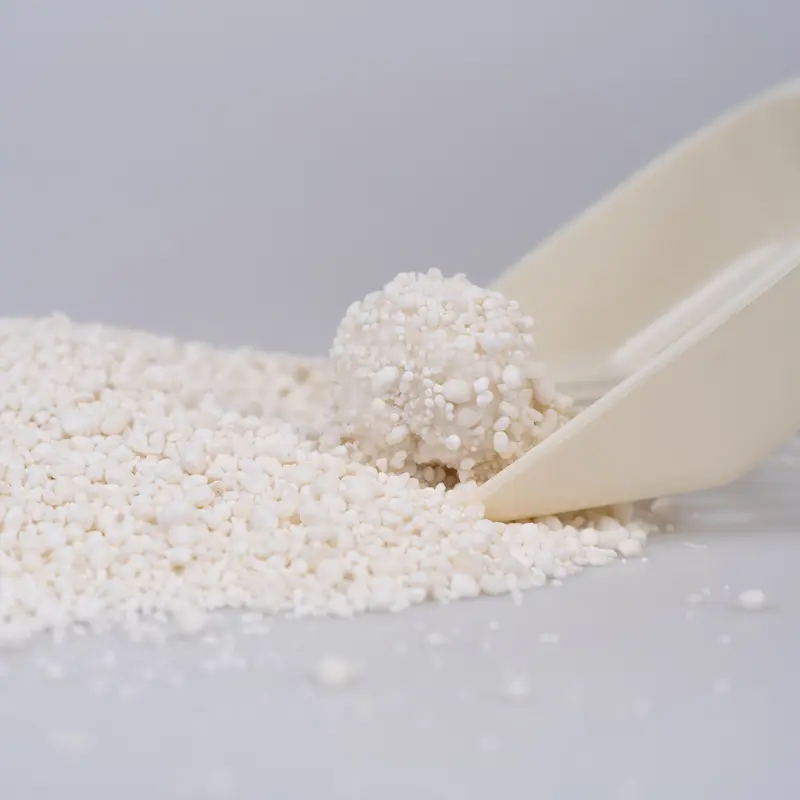
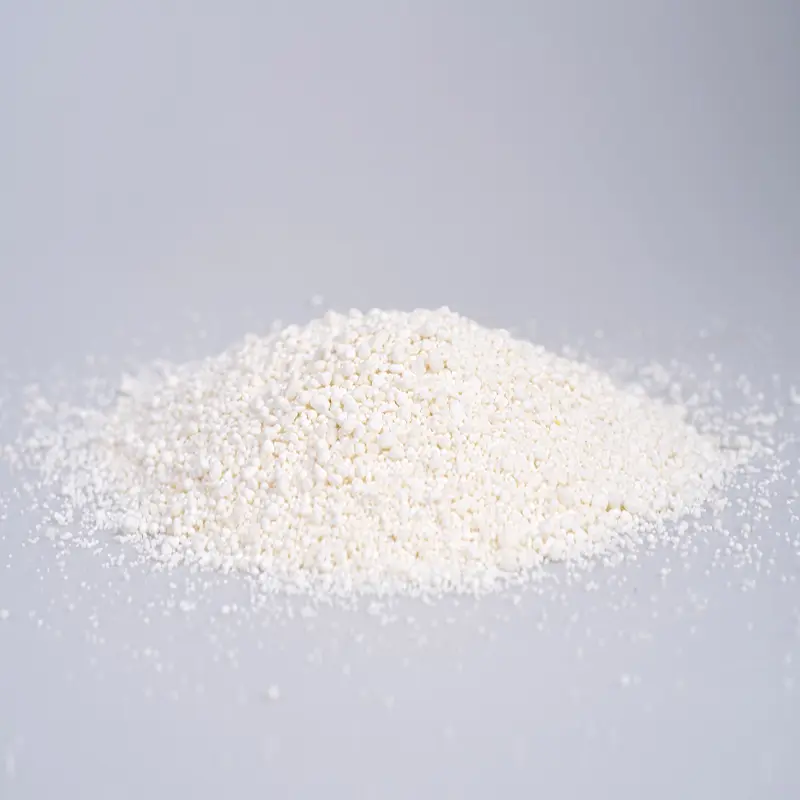
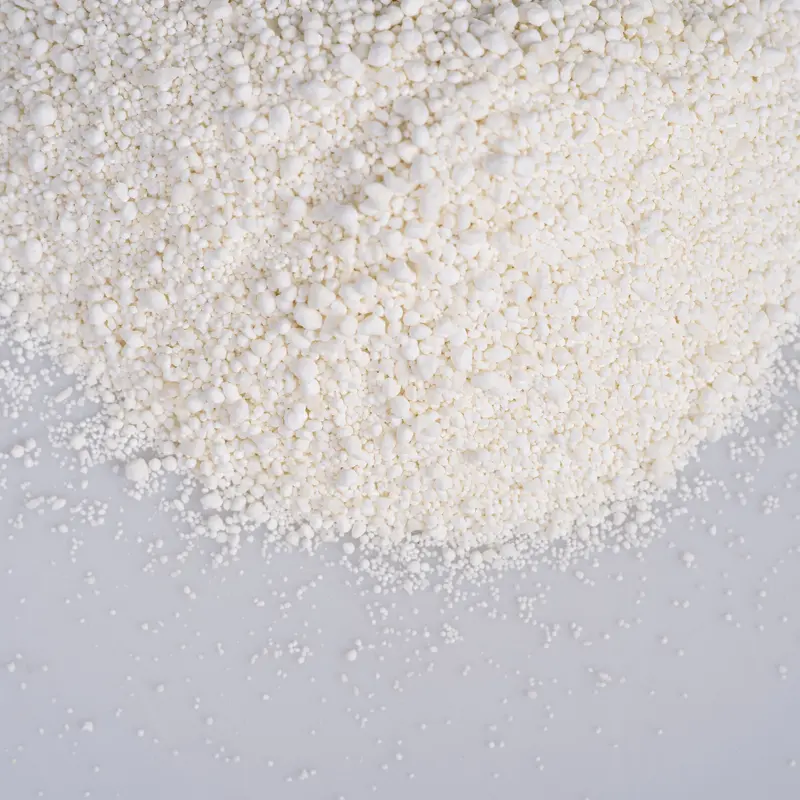
The product is described as having rounded, smooth particles of varying sizes and a clumping design. The manufacturer also positions it as a low-dust product with non-stick clumps.
The actual performance of the finished litter depends on the formulation, particle structure, processing conditions, and quality controls. Buyers should therefore distinguish between the ingredients used and the results demonstrated by product testing.
Why Consider Cassava Cat Litter for the European Market?
Europe has a substantial pet-care market. FEDIAF's 2026 Facts & Figures report, based on 2024 data, covers 41 European countries and reports approximately 140 million pet-owning households, representing 49% of households in the covered region.
This market context makes it reasonable for manufacturers and retailers to explore new cat litter formats. However, it does not establish the market share or sales growth of cassava cat litter specifically.
For businesses considering a new litter category, the commercial question is whether the product offers a meaningful combination of performance, customer acceptance, selling price, and supply reliability.
1. A plant-derived ingredient base
Cassava starch provides an alternative material base to conventional mineral litter. This may appeal to consumers who want to explore plant-based options.
However, “plant-based” describes the source of ingredients rather than the complete environmental performance of the product. A full assessment would consider raw material sourcing, manufacturing energy, packaging, transport, product consumption, and disposal.
For brands selling in Europe, a specific and supportable statement about ingredient sourcing is more useful than a broad environmental promise without evidence.
2. Rounded particles and a different texture
Particle texture influences how litter feels under a cat's paws and how it behaves when the cat digs or covers waste.
Rounded cassava-based granules may appeal to some cats, but there is no single texture that every cat prefers. Some cats accept a new litter quickly, while others avoid unfamiliar particle sizes or fragrances.
When changing products, observe whether the cat continues to use the tray normally rather than assuming that a smooth texture guarantees acceptance.
3. Potential for convenient clumping
The product is listed as a clumping formula. In a suitable formulation, clumping allows used litter to be removed without replacing the entire litter bed after every urination.
Good clumping performance should be assessed by checking whether clumps hold together when scooped and whether excessive wet material remains at the bottom of the tray.
The product listing does not provide a numerical clump-strength result. Buyers who need to compare it with other formulas should request the relevant test method or evaluate representative samples under consistent conditions.
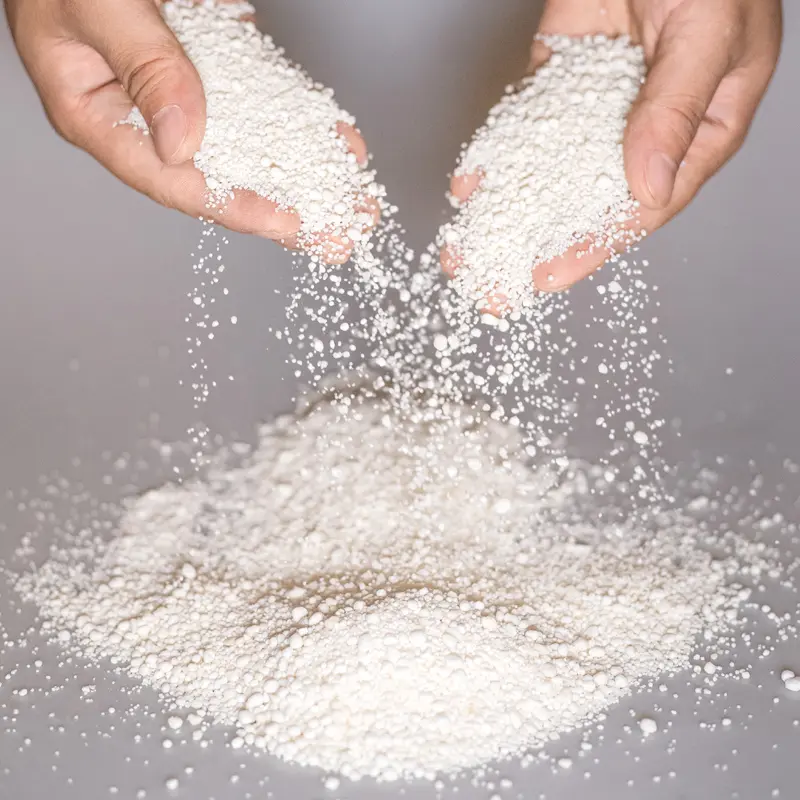
Specially processed pearl cat litter is virtually dust-free, allowing cats to breathe freely and promoting their respiratory health.
What Does “Dust-Free Cassava Cat Litter” Really Mean?
Dust is an important consideration for consumers who want a cleaner area around the litter box. However, “dust-free” is a strong claim and should not be assumed to mean that no airborne particles can be generated during filling, scooping, transport, or use.
Gelin Town Pet describes this cassava litter as having very low dust. Its published product page does not provide a numerical dust measurement or a detailed test method.
When comparing products, look at the following factors:
| Dust-related factor | What to check | Why it matters |
|---|---|---|
| Particle consistency | Whether granules have a consistent size and shape | Excessive fines can increase visible dust and change handling behavior |
| Manufacturing process | Whether screening and fines removal are part of quality control | The amount of loose material can influence dust generation |
| Packaging condition | Whether the bag is sealed and the product remains intact | Handling damage may create additional fines |
| Dust measurement | Whether a defined test method and results are available | A quantitative claim needs evidence |
| Real-world handling | Whether dust is noticeable during pouring and scooping | Helps assess suitability for the intended household |
How to test dust performance
For a basic comparison, use the same quantity of each product and pour it into the same type of tray from a consistent height. Record visible dust under the same lighting and handling conditions.
This is a preliminary observation, not a scientific measurement of airborne particles.
For commercial product development, use a defined dust or fines test with documented sample quantity, handling procedure, measurement equipment, and calculation method. Repeat the test and report the results under the same conditions for each sample.
Avoid claiming “100% dust-free” or “completely dust-free” unless the specific claim can be adequately substantiated. A more precise claim based on a clearly described test result is generally more useful to B2B buyers.
What Does “Non-Stick Bottom” Mean in Cassava Cat Litter?
The phrase “non-stick bottom” generally refers to reducing the amount of wet, used litter that adheres to the bottom of the tray.
This matters because stuck residue can make cleaning harder. Owners may need to scrape the tray, remove additional litter, or wash it more frequently.
A product's non-stick performance depends on the interaction of several factors:
The formulation and binding ingredients.
The amount of liquid introduced.
The litter depth.
The time allowed for clumping.
The tray surface.
The method used to remove the clump.
A product can form a clump quickly but still leave residue if liquid reaches the tray bottom. For that reason, the phrase “fast clumping” should not automatically be treated as proof of non-stick performance.
How to test non-stick performance
The following is a suggested comparative test, not a claim that any specific product has passed it.
Step 1: Prepare the test trays. Use identical, clean, dry trays with the same surface material. Add the same mass of litter to each tray at the same depth.
Step 2: Apply the same liquid volume. Use a measured quantity of test liquid for each sample and apply it in the same way.
Step 3: Allow a defined clumping period. Use the same waiting time for every product. If the manufacturer specifies a particular clumping period, record it.
Step 4: Remove the clump consistently. Use the same scoop and technique. Record whether the clump remains intact and whether wet material stays attached to the tray.
Step 5: Record the residue. Photograph the tray under consistent conditions or, for a more quantitative test, collect and weigh the residue using an agreed method.
Step 6: Repeat the test. Use multiple samples to check whether the result is consistent.
For B2B comparison, the test report should record the sample batch, test liquid, sample quantity, liquid volume, waiting time, tray surface, removal method, and the way residue was measured.
This approach makes it easier to compare cassava litter with other plant-based or mineral products under equivalent conditions.
Does Cassava Cat Litter Absorb Urine and Control Odor?
Clumping and odor control are related, but they are not the same performance measure.
A litter can absorb liquid and form clumps while still performing poorly at controlling odor. Odor depends on moisture management, the removal of waste, product formulation, ventilation, and cleaning frequency.
To evaluate the product fairly, test absorption and odor separately.
Absorption test
A common way to express weight-based absorption is:
Absorption rate (%) = (Mass of liquid absorbed ÷ Initial dry sample mass) × 100
For example, if a 10 g sample absorbs 30 g of liquid under the defined test conditions, the calculated absorption rate is 300%.
This is an illustrative calculation, not a result for the Gelin Town Pet cassava litter. The manufacturer's public product page does not publish a numerical absorption result or full testing method for this formula.
For a meaningful comparison, define the test liquid, sample weight, exposure time, drainage procedure, and calculation method. Do not compare different suppliers' percentages without checking whether their test methods are compatible.
Odor-control test
For household use, record whether unpleasant odor returns quickly after regular scooping and whether wet residue remains in the tray.
For commercial testing, define the odor challenge, environmental conditions, time points, and measurement method. If ammonia concentration is used as an indicator, remember that ammonia is only one contributor to litter-box odor.
A product should not be promoted as having superior odor control merely because it absorbs liquid or forms clumps. The relevant claim should be supported by the appropriate test.
Cassava Cat Litter vs. Corn, Tofu, and Clay Litter
No litter material is automatically the best for every cat. The most useful comparison focuses on the finished product's performance and the needs of the intended customer.
| Comparison factor | Cassava cat litter | Corn cat litter | Tofu cat litter | Clumping clay litter |
|---|---|---|---|---|
| Main material | Cassava starch, sometimes combined with other starches | Corn-derived materials | Plant-derived ingredients, often pea or soybean fiber | Mineral clay, often bentonite |
| Particle format | Depends on formulation; this product is described as rounded granules | Granules or pellets, depending on product | Often cylindrical or crushed pellets | Usually granular |
| Clumping | Depends on formula and processing | Depends on formula and processing | Depends on formula and processing | Many products form clumps |
| Dust | Must be evaluated for the particular product | Must be evaluated for the particular product | Must be evaluated for the particular product | Varies by product |
| Tray residue | Depends on clump formation, litter depth, and tray conditions | Depends on clump formation and tray conditions | Depends on clump formation and tray conditions | Depends on formula and use conditions |
| Environmental assessment | Depends on ingredients, sourcing, processing, and disposal | Depends on the full product lifecycle | Depends on the full product lifecycle | Includes mineral sourcing, processing, and disposal |
| Best buying criterion | Verify dust, clumping, and non-stick claims | Compare clumping, absorption, and tracking | Compare pellet structure, clumping, and consistency | Compare clumping, dust, and practical value |
For consumers, the best option is the one that works reliably for the cat and household. For retailers, the best product is the one that meets customer expectations at an acceptable selling price and provides consistent quality across repeat orders.
Is Cassava Cat Litter Environmentally Friendly?
Cassava starch is plant-derived, but that alone does not demonstrate that the complete finished product has a lower environmental impact than every competing litter.
A more complete assessment considers:
The origin and processing of the raw material.
Energy and water used in manufacturing.
Packaging material and recyclability.
Transport distance and shipping method.
How much litter is consumed over time.
The method used to dispose of used litter.
The terms “plant-based,” “biodegradable,” “compostable,” and “flushable” should not be treated as interchangeable.
Plant-based describes material origin. Biodegradable describes the ability of material to break down under specified conditions. Compostable involves suitability for a particular composting process. Flushable involves the behavior of the material in plumbing and wastewater systems.
Gelin Town Pet's product page advises that the formed clumps should not be flushed down the toilet because the raw materials dissolve relatively slowly. Buyers should follow the specific product instructions and local waste-management requirements.
What European businesses should know about environmental claims
Directive (EU) 2024/825, which strengthens consumer protection against misleading environmental claims, began applying from 27 September 2026. Businesses selling into the EU should review product names, package statements, website copy, and sustainability claims against the rules applicable in their markets.
For a cassava-based product, a precise statement about its ingredients is generally more informative than an unsupported broad claim that it is “the most eco-friendly” litter.
Before using claims about biodegradability or compostability, request evidence relating to the finished product and the conditions under which the claim applies.
How to Use and Store Plant-Based Cassava Cat Litter
Proper use and storage can influence the product's performance regardless of the ingredient base.
1. Start with a clean litter box
Remove old litter and clean the tray using a suitable product. Rinse where required and allow the tray to dry fully before adding fresh litter.
Residual moisture or old material can affect the result of a new litter trial.
2. Follow the manufacturer's recommended depth
Add the amount of litter specified in the product instructions. Too little litter may allow liquid to reach the tray bottom, while excessive depth can increase consumption and tracking.
Do not use a different fill level when comparing two products, because this can affect their apparent non-stick performance.
3. Scoop regularly
Remove used clumps and solid waste on a consistent schedule. Follow the product's cleaning and replacement guidance, and replace the litter sooner if it becomes unsuitable.
Even a well-performing clumping litter cannot eliminate the need for regular waste removal.
4. Store the product in a dry location
Keep unused litter sealed or properly closed and protect it from moisture during storage.
Inspect the product before use. If it has become damp, developed an unusual smell, or shows visible mold, do not use it.
5. Introduce the new litter gradually
Cats may be sensitive to changes in particle size, texture, and fragrance. Introduce a new formula gradually where practical and monitor whether your cat continues to use the tray normally.
If a cat repeatedly eats litter or shows signs of illness, consult a veterinarian rather than assuming that plant-derived material is automatically safe to ingest.
Cassava Cat Litter for European Importers and Private-Label Brands
For European distributors, wholesalers, pet retailers, and e-commerce sellers, product evaluation should cover more than the ingredient list.
Gelin Town Pet lists cassava cat litter made from cassava starch and corn starch, with rounded particles, clumping functionality, fragrance options, customized packaging, and OEM services.
Its public product page lists a minimum order quantity of one 20-foot container and T/T payment terms. Buyers should confirm current conditions, loading capacity, production schedule, and the final specification directly before ordering.
What should buyers request from the manufacturer?
| Procurement item | What to confirm |
|---|---|
| Formula | Ingredient declaration and any requested changes |
| Particle specifications | Actual size range and acceptable variation |
| Dust performance | Test method, measurement conditions, and results |
| Absorption | Test liquid, sample conditions, calculation method, and results |
| Clumping | Formation time and clump-integrity method |
| Non-stick performance | Tray-residue test method and acceptance criteria |
| Fragrance | Standard formula and customization options |
| Packaging | Bag dimensions, material, seal type, and carton configuration |
| Quality control | Incoming-material checks, production monitoring, and finished-product inspection |
| Environmental claims | Supporting evidence for any biodegradability or compostability statement |
| Commercial terms | MOQ, production lead time, payment, loading, and shipping arrangements |
A practical OEM/ODM development process
Step 1: Define the target product. Agree on the intended customer, granule format, fragrance requirements, package size, target retail price, and primary performance priorities.
Step 2: Request representative samples. Evaluate the actual product rather than relying only on photographs or a brochure.
Step 3: Define the technical specification. Establish measurable requirements for particle size, dust, absorption, clumping, tray residue, moisture, and packaging.
Step 4: Confirm product claims and label information. Review the wording for plant-based content, environmental benefits, disposal, and directions for use.
Step 5: Approve the sample and quality plan. Agree on the reference sample, acceptance criteria, inspection process, and how deviations will be handled.
Step 6: Confirm packaging and production terms. Finalize artwork, language requirements, barcode, packaging material, MOQ, lead time, and shipping arrangements.
This process helps reduce the risk of approving a sample that does not represent the delivered product or making performance claims that cannot be substantiated.
Frequently Asked Questions
Is cassava cat litter popular in Europe?
Cassava cat litter is offered as a product category by some manufacturers, but public European pet-population data does not establish its specific market share or popularity. Businesses should validate demand in each target country through retailer feedback, competitor research, trial sales, and repeat-purchase data.
Is cassava cat litter dust-free?
Gelin Town Pet describes its product as low-dust or almost dust-free, but the public product listing does not provide a numerical dust measurement. Buyers who require substantiated dust claims should request the manufacturer's test method and results.
Does cassava cat litter stick to the bottom of the tray?
The product is marketed as having non-stick clumping performance. Actual residue depends on the formula, litter depth, liquid amount, waiting time, and tray surface. Use a consistent test to compare products rather than treating “non-stick” as a guarantee of zero residue in every condition.
Is cassava cat litter flushable?
The manufacturer's product page says the formed clumps should not be flushed because they dissolve relatively slowly. Follow the product instructions and local wastewater rules, and do not assume that plant-based litter is suitable for flushing.
Is cassava cat litter biodegradable?
The manufacturer describes the product as eco-friendly, but a full biodegradability claim should be supported by evidence covering the finished product and the specified test conditions. Plant-derived ingredients alone are not enough to establish how the complete litter behaves after disposal.
Can cassava cat litter be customized for a private-label brand?
Gelin Town Pet lists OEM services and customized packaging. Buyers should confirm the available formula and packaging options, sample requirements, MOQ, technical specifications, lead time, and shipping terms before committing to an order.
How do I compare cassava cat litter with corn or tofu litter?
Use comparable test methods to evaluate dust, absorption, clump strength, tray residue, odor, and cost per day. Also consider whether the texture suits your cat and whether the product meets your preferred disposal requirements.
Final Recommendation: Verify Performance Before Choosing a Cassava Cat Litter Product
Plant-based cassava cat litter offers a different material option for European consumers and pet product businesses. Its appeal may come from the ingredient base, rounded particle format, clumping design, and the possibility of developing differentiated private-label products.
However, the best buying decision depends on proven performance rather than a broad “eco-friendly” or “dust-free” claim. Buyers should verify dust generation, absorption, clump integrity, tray residue, and packaging quality through consistent testing.
For consumers, the product should be comfortable for the cat, practical to scoop, and suitable for the household's cleaning routine. For European importers, a complete specification, representative samples, documented quality control, supportable environmental claims, and a realistic landed-cost calculation are essential before a bulk order.
Gelin Town Pet's cassava cat litter provides a starting point for product evaluation and OEM discussions. Confirm the current technical specifications and the evidence behind each performance claim before positioning the product as a premium option in your range.
References
- FEDIAF — European Pet Population and Market Data 2024
European Commission — Sustainable Consumption and Environmental Claims
https://commission.europa.eu/topics/consumers/consumer-rights-and-complaints/sustainable-consumption_enEUR-Lex — Directive (EU) 2024/825
https://eur-lex.europa.eu/legal-content/EN/TXT/?uri=CELEX:32024L0825